Full Text (PDF)
Indian Journal of Waste Management 10(1):p 13-20, Jan - June 2026. | DOI: 0
Original Article
A Study on Benefits, Challenges and Role of Artificial Intelligence in Law
Bilal Ahmad Bhat, Nazia Fayaz Azad, Yawer Khurshid
Author Information
Licence:
Attribution-Non-commercial 4.0 International (CC BY-NC 4.0)This license enables reusers to distribute, remix, adapt, and build upon the material in any medium or format for noncommercial purposes only, and only so long as attribution is given to the creator.
Indian Journal of Waste Management 10(1):p 13-20, Jan - June 2026. | DOI: 0
How Cite This Article:
Nazia Fayaz Azad, Yawer Khurshid, Bilal Ahmad Bhat. A Study on Benefits, Challenges and Role of Artificial Intelligence in Law. Ind. Jr. Waste Manag. 2026; 10(1): 13-20.Timeline
Received : January 27, 2026
Accepted : February 28, 2026
Published : June 30, 2026
Abstract
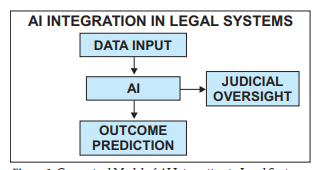
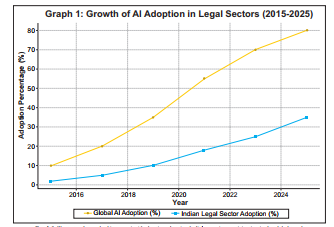
Artificial Intelligence (AI) has emerged as a transformative technology of the 21st century across various fields, including law. The legal profession, traditionally dependent on human reasoning and ethical judgment, is now witnessing increasing integration of AI in legal research, case prediction, and judicial administration. This paper examines the role, benefits, challenges, and ethical implications of Artificial Intelligence in the legal domain, with a particular focus on its application in the Indian judicial system. The study adopts a doctrinal and analytical research approach, relying on secondary data sources such as judicial pronouncements, government reports, international policy documents, and scholarly literature on AI and law. Findings indicate that AI enhances legal efficiency by automating routine tasks, improving research accuracy, and aiding in case management. In India, initiatives such as SUPACE and E-Courts demonstrate AI’s growing role in judicial processes. However, concerns about bias, accountability, and lack of regulation persist. It was concluded that AI holds immense potential to transform legal systems by increasing efficiency and accessibility. Yet, human oversight remains essential to ensure fairness and ethical integrity. AI should serve as an assistive tool—complementing, not replacing, human reasoning in the pursuit of justice.
References
- 1. Case Mine. CaseIQ: AI-driven legal research engine [Internet]. [place unknown]: CaseMine; [cited 2026 Mar 3]. Available from: https:// www.casemine.com
- 2. European Commission. Proposal for a Regulation of the European Parliament and of the Council laying down harmonised rules on artificial intelligence (Artificial Intelligence Act) and amending certain Union legislative acts. Brussels: European Commission; 2021 Apr 21. COM(2021) 206 final.
- 3. EDUCBA. Artificial Intelligence Techniques [Internet]. [place unknown]: EDUCBA; [cited 2026 Mar 3]. Available from: https:// www.educba.com/artificial-intelligencetechniques/
- 4. Wikibooks. Computer Science: Artificial Intelligence [Internet]. [place unknown]: Wikibooks; [updated 2023; cited 2026 Mar 3]. Available from: https://en.wikibooks. org/wiki/Computer_Science:Artificial_ Intelligence
- 5. HowStuffWorks. How Artificial Intelligence Works [Internet]. [place unknown]: HowStuffWorks; [cited 2026 Mar 3]. Available from: https://computer.howstuffworks.com/ artificial-intelligence.htm
- 6. Google India [Internet]. Gurgaon: Google; [cited 2026 Mar 3]. Available from: https:// www.google.co.in
- 7. Oracle Education Foundation. Think Quest Library [Internet]. Redwood Shores (CA): Oracle; [cited 2026 Mar 3]. Available from: http://www.library.thinkquest.org
- 8. Javatpoint. Application of AI [Internet]. [place unknown]: Javatpoint; [cited 2026 Mar 3]. Available from: https://www.javatpoint. com/application-of-ai
- 9. Shull A. The Cybersecurity Battlefield [Internet]. Waterloo (ON): Centre for International Governance Innovation; 2022 Mar 22 [cited 2026 Mar 3]. Available from: https://www.cigionline.org/articles/ cybersecurity-battlefield/
- 10. Susskind R. Tomorrow’s Lawyers: An Introduction to Your Future. 2nd ed. Oxford: Oxford University Press; 2019.
- 11. Surden H. Machine Learning and Law. Wash L Rev. 2014;89(1):87-115. Nazia Fayaz Azad, Yawer Khurshid, Bilal Ahmad Bhat. A Study on Benefits, Challenges and Role of Artificial Intelligence in Law20 Indian Journal of Waste Management Indian Journal of Waste Management / Volume 10, Number 1/January - June 2026
- 12. Supreme Court of India. Press Release: Software for Assistance in Court’s Efficiency (SUPACE). New Delhi: Supreme Court of India; 2021 Apr 6.
- 13. British Columbia Law Institute. Report on Artificial Intelligence and Civil Liability. Vancouver: BCLI; 2024 Apr. (BCLI Report no. 94).
- 14. Federal Court of Canada. Notice to the Profession and Public Regarding the Use of Artificial Intelligence in Documents Submitted to the Court. Ottawa: Federal Court; 2023 Dec 20.
Data Sharing Statement
:
There are no additional data available. All raw data and code are available upon request.
Funding
This research received no funding.
Author Contributions
All authors contributed significantly to the work and approve its publication.
Ethics Declaration
This article does not involve any human or animal subjects, and therefore does not require ethics approval.
Acknowledgements
We would like to express our gratitude to the patients, their families, and all those who have contributed to this study.
Conflicts of Interest
No conflicts of interest in this work.
About this article

Cite this article
Nazia Fayaz Azad, Yawer Khurshid, Bilal Ahmad Bhat. A Study on Benefits, Challenges and Role of Artificial Intelligence in Law. Ind. Jr. Waste Manag. 2026; 10(1): 13-20.
Licence:
Attribution-Non-commercial 4.0 International (CC BY-NC 4.0)This license enables reusers to distribute, remix, adapt, and build upon the material in any medium or format for noncommercial purposes only, and only so long as attribution is given to the creator.
| Received | Accepted | Published |
|---|---|---|
| January 27, 2026 | February 28, 2026 | June 30, 2026 |
DOI: 0
Keywords
Artificial Intelligence (AI)LawLegal Technology •Predictive AnalytiLegal ResearchSearch for Similar Articles
Similar Articles
- Pet Poop, Waste Management, Strays
- Recycling of Waste Materials Generated in the streets of Puducherry (Pondicherr...
- Evaluation of MPKV Central Campus (West), Rahuri (M.S.) Watershed for Priority...
- Indus Waters Treaty Hidden Tensions, Flowing Rivers
- SWM & Agricultural Residue Management Through Case Studies
Article Level Metrics
Last UpdatedSunday 18 October 2026, 12:28:16 (IST)
1003
Accesses
15
188
00
Citations
NA
NA
NA
Download citation
Article Keywords
Keyword Highlighting
Highlight selected keywords in the article text.
Timeline
| Received | January 27, 2026 |
| Accepted | February 28, 2026 |
| Published | June 30, 2026 |
licence
Attribution-Non-commercial 4.0 International (CC BY-NC 4.0)
This license enables reusers to distribute, remix, adapt, and build upon the material in any medium or format for noncommercial purposes only, and only so long as attribution is given to the creator.