Full Text (PDF)
Indian Journal of Diabetes and Endocrinology 7(2):p 43-49, July - Dec. 2025. | DOI: n.a
Original Article
Diabetic Eye Diseases: Clinical Spectrum, Risk Factors, and Emerging Management Strategies: An Observational Cross-sectional Study in a Tertiary Care Centre in North India
Author Information
Licence:
Attribution-Non-commercial 4.0 International (CC BY-NC 4.0)This license enables reusers to distribute, remix, adapt, and build upon the material in any medium or format for noncommercial purposes only, and only so long as attribution is given to the creator.
Indian Journal of Diabetes and Endocrinology 7(2):p 43-49, July - Dec. 2025. | DOI: n.a
How Cite This Article:
Rohit Raina, Neha Chhabra. Diabetic Eye Diseases: Clinical Spectrum, Risk Factors, and Emerging Management Strategies-An Observational Cross-sectional Study in a Tertiary Care Centre in North India. Ind Jl of Diabetes and Endo. 2025; 7(2): 43–49.Timeline
Received : September 05, 2025
Accepted : October 30, 2025
Published : December 30, 2025
Abstract
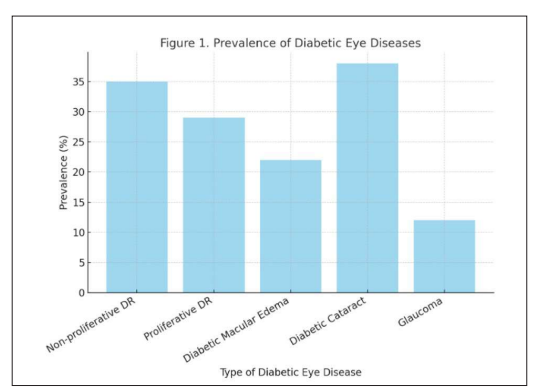
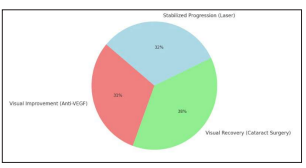
Background: Diabetic eye diseases (DEDs) represent one of the leading causes of preventable blindness worldwide. With the growing prevalence of diabetes mellitus, ocular complications such as diabetic retinopathy (DR), diabetic macular edema (DME), cataract, and glaucoma are becoming increasingly significant public health concerns. Objective: To evaluate the clinical spectrum, risk factors, and management strategies for diabetic eye diseases based on recent advances in ophthalmology and endocrinology. Methods: A descriptive review-based study was conducted using clinical records of 150 patients with type 2 diabetes mellitus attending a tertiary care ophthalmology unit between January 2022 and December 2023. Demographic data, clinical history, ocular examination findings, and treatment outcomes were analyzed. The grading of DR was based on the Early Treatment Diabetic Retinopathy Study (ETDRS) classification, and macular involvement was assessed using optical coherence tomography (OCT). Results: Among 150 patients (mean age 56.2 ± 9.3 years), 58% were male and 42% female. DR was present in 64% of patients, of which 35% had non-proliferative DR and 29% had proliferative DR. DME was identified in 22% of cases, while 38% had diabetic cataract and 12% had glaucoma. Poor glycemic control (HbA1c ≥ 8.0%) and duration of diabetes >10 years were strongly associated with DR severity (p < 0.001). Patients receiving anti-VEGF therapy for DME demonstrated significant improvement in central macular thickness (mean reduction: 85 µm) and best-corrected visual acuity over six months. Conclusion: Diabetic eye diseases remain highly prevalent among patients with longstanding and poorly controlled diabetes. Regular ophthalmic screening, strict glycemic control, and timely intervention with anti-VEGF agents and laser therapy play pivotal roles in reducing vision-related morbidity. Public health strategies focusing on early detection and awareness are crucial to combat the burden of diabetic blindness.
References
- 1. Yau JWY, Rogers SL, Kawasaki R, et al. Global prevalence and major risk factors of diabetic retinopathy. Diabetes Care. 2012;35(3):556–564.
- 2. Cheung N, Mitchell P, Wong TY. Diabetic retinopathy. Lancet. 2010;376(9735):124–136.
- 3. Varma R, Bressler NM, Doan QV, et al. Prevalence of and risk factors for diabetic macular edema in the United States. JAMA Ophthalmol. 2014;132(11):1334–1340.
- 4. Nguyen QD, Brown DM, Marcus DM, et al. Ranibizumab for diabetic macular edema: Results from 2 phase III randomized trials: RISE and RIDE. Ophthalmology. 2012; 119(4): 789–801.
- 5. Korobelnik JF, Do DV, Schmidt-Erfurth U, et al. Intravitreal aflibercept for diabetic macular edema: VIVID-DME and VISTA-DME studies. Ophthalmology. 2014; 121(11): 2247–2254.
- 6. Wells JA, Glassman AR, Ayala AR, et al. Aflibercept, bevacizumab, or ranibizumab for diabetic macular edema. N Engl J Med. 2015; 372: 1193–1203.
- 7. Ciulla TA, Pollack JS, Williams DF. Visual outcomes and anti-VEGF therapy in diabetic macular edema: A real-world experience. Am J Ophthalmol. 2018; 191: 83–91.
- 8. Pollreisz A, Schmidt-Erfurth U. Diabetic cataract Pathogenesis, epidemiology, and treatment. J Ophthalmol. 2010; 2010: 608751.
- 9. Dowler JGF. Laser management of diabetic retinopathy. J R Soc Med. 2003; 96(6): 277–279.49 IJDAE / Volume 7 Number 2/July – December 2025
- 10. Zhao D, Cho J, Kim MH, Friedman DS, Guallar E. Diabetes, fasting glucose, and the risk of glaucoma: A meta-analysis. Ophthalmology. 2015; 122(1): 72–78.
- 11. Pasquale LR, Kang JH. Lifestyle, nutrition, and glaucoma. J Glaucoma. 2009; 18(6): 423–428.
- 12. UK Prospective Diabetes Study Group. Tight blood pressure control and risk of macrovascular and microvascular complications in type 2 diabetes: UKPDS 38. BMJ. 1998; 317: 703–713
Data Sharing Statement
There are no additional data available. All raw data and code are available upon request.
Funding
This research received no funding.
Author Contributions
All authors contributed significantly to the work and approve its publication.
Ethics Declaration
This article does not involve any human or animal subjects, and therefore does not require ethics approval.
Acknowledgements
We would like to express our gratitude to the patients, their families, and all those who have contributed to this study.
Conflicts of Interest
No conflicts of interest in this work.
About this article

Cite this article
Rohit Raina, Neha Chhabra. Diabetic Eye Diseases: Clinical Spectrum, Risk Factors, and Emerging Management Strategies-An Observational Cross-sectional Study in a Tertiary Care Centre in North India. Ind Jl of Diabetes and Endo. 2025; 7(2): 43–49.
Licence:
Attribution-Non-commercial 4.0 International (CC BY-NC 4.0)This license enables reusers to distribute, remix, adapt, and build upon the material in any medium or format for noncommercial purposes only, and only so long as attribution is given to the creator.
| Received | Accepted | Published |
|---|---|---|
| September 05, 2025 | October 30, 2025 | December 30, 2025 |
DOI: n.a
Keywords
Diabetic retinopathyDiabetic macular edemaDiabetic cataractOcular complicationsAnti-VEGF therapySearch for Similar Articles
Similar Articles
- The Gut-Glycemic Axis in the Indian Geriatric Population: Evaluating Pre and Pro...
- Impact of One Mineral Density among Postmenopausal Women with Gestational DM usi...
- Evaluate the Knowledge about Hyperparathyroidism and Hyperthyroidism among Nursi...
- Comparative Study to Evaluate the Knowledge Level about Acromegaly and Gigantis...
- HbA1c in Diabetes: Indian Perspectives on Measurement, Interpretation, and Clini...
Article Level Metrics
Last UpdatedMonday 19 October 2026, 11:59:46 (IST)
1646
Accesses
50
154
00
Citations
NA
NA
NA
Download citation
Article Keywords
Keyword Highlighting
Highlight selected keywords in the article text.
Timeline
| Received | September 05, 2025 |
| Accepted | October 30, 2025 |
| Published | December 30, 2025 |
licence
Attribution-Non-commercial 4.0 International (CC BY-NC 4.0)
This license enables reusers to distribute, remix, adapt, and build upon the material in any medium or format for noncommercial purposes only, and only so long as attribution is given to the creator.