Full Text (PDF)
Journal of Dermatology 7(1):p 17-23, January-Febuary 2022. | DOI: na
Review Article
Conventional Vs Transdermal Drug Delivery System
Sandhiya V, Praveen Kumar M, Prasanth Raj C N, Nirmal P, Mano A, Suhaib I
Author Information
Licence:
Attribution-Non-commercial 4.0 International (CC BY-NC 4.0)This license enables reusers to distribute, remix, adapt, and build upon the material in any medium or format for noncommercial purposes only, and only so long as attribution is given to the creator.
Journal of Dermatology 7(1):p 17-23, January-Febuary 2022. | DOI: na
How Cite This Article:
Sandhiya V, Praveen Kumar M, Prasanth Raj C N, et al. Conventional Vs Transdermal Drug Delivery System. RFP Journal of Dermatology 2022;7(1):17-23Timeline
Received : March 02, 2022
Accepted : May 28, 2022
Published : June 25, 2022
Abstract
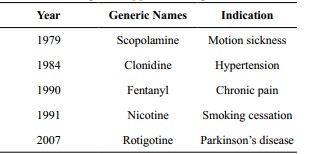
Many medications are now administered orally; however they are not as effective as they should be. Beyond the local application site, transdermal delivery technology is being explored to treat a wide range of diseases. Because of reduced first pass metabolism, avoidance of an adverse gastrointestinal environment, and the potential to provide extended and regulated drug delivery, transdermal drug administration offers substantial benefits over oral treatment. Transdermal drug delivery systems (TDDS) are topically applied patches that release medications for systemic effects at a predetermined and regulated rate. It works by putting a medication inside a patch and wearing it for a long time on the skin. As a result, a steady concentration of medication remains in the bloodstream for an extended period of time. TDDS products include Scopolamine, Nicotine, Testosterone, Fentanyl, and Clonidine. Numerous active compounds with variable molecular size and structure cannot be maintained in transdermal form, despite their many benefits.
References
- 1. Vega-Vásquez P, Mosier NS, Irudayaraj J. Nanoscale drug delivery systems: from medicine to agriculture. Front Bioeng Biotechnol. 2020;8:79.
- 2. Vargason AM, Anselmo AC, Mitragotri S. The evolution of commercial drug delivery technologies. Nat Biomed Eng. 2021.
- 3. Mali AD, Bathe R, Patil M. An updated review on transdermal drug delivery systems. Int J Adv Sci Res. 2015;1(6):244–54.
- 4. Li C, Wang J, Wang Y, Gao H, Wei G, Huang Y, et al. Recent progress in drug delivery. Acta Pharm Sin B. 2019;9(6):1145–62.
- 5. Kumar JA, Pullakandam N, Prabu SL, Gopal V. Transdermal drug delivery system: An overview. Int J Pharm Sci Rev Res. 2010;3(2):49– 54.
- 6. Jeong, W.Y., Kwon, M., Choi, H.E. et al. Recent advances in transdermal drug delivery systems: a review. Biomater Res 25, 24 (2021).
- 7. Jain, N. K., Controlled and Novel Drug Delivery, CBS Publishers, and Distributors, 2002, 107.
- 8. Reddy et al. “Transdermal Drug Delivery System: A Review.” Research Journal of Pharmaceutical Dosage Forms and Technology, vol. 5, no. 4, 2013, pp. 202-212.
- 9. Stücker M, Struk A, Altmeyer P, Herde M, Baumgärtl H, Lübbers DW (February 2002).
- 10. https://en.wikipedia.org/wiki/Human_ skin#cite_note-St%C3%BCcker2002-13.
- 11. Dr. B.Arul and Dr. R. Kothai, Noval Drug Delivery System, edition 2020, S.vikas and Company (Medical Publisers).
- 12. Otberg, N.; Patzelt, A.; Rasulev, U.; Hagemeister, T.; Linscheid, M.; Sinkgraven, R.; Sterry, W.; and Lademann, J. The role of hair follicles in the percutaneous absorption of caffeine. Br. J. Clin. Phamacol. 2007; 65: 488-492.
- 13. Transdermal patch, Wikipedia, 06-Apr-2017. [Online].Available: https://en.wikipedia.org/ wiki/Transdermal_patch. [Accessed: 03-Apr- 2017].
- 14. Lewis et al. Design and Evlauation of Matrix Type and Membrane Controlled Transdermal Delivery Systems of Nicotine Suitable for use in Smoking Cessation. Indian Journal of Pharmaceutical Sciences, 2006, pp. 179-184.
- 15. Marjukka Suhonen TA, Bouwstra J. Chemical enhancement of percutaneous absorption in relation to stratum corneum structural alterations. J Control Release 1999:59:149-161.
- 16. https://www.nursingtimes.net/clinicalarchive/dermatology/skin-1-the-structureand-functions-of-the-skin-25-11-2019/
- 17. https://biotextiles2017blog.wordpress.com/transdermal-patch/
Data Sharing Statement
There are no additional data available. All raw data and code are available upon request.
Funding
This research received no funding.
Author Contributions
All authors contributed significantly to the work and approve its publication.
Ethics Declaration
This article does not involve any human or animal subjects, and therefore does not require ethics approval.
Acknowledgements
We would like to express our gratitude to the patients, their families, and all those who have contributed to this study.
Conflicts of Interest
No conflicts of interest in this work.
About this article

Cite this article
Sandhiya V, Praveen Kumar M, Prasanth Raj C N, et al. Conventional Vs Transdermal Drug Delivery System. RFP Journal of Dermatology 2022;7(1):17-23
Licence:
Attribution-Non-commercial 4.0 International (CC BY-NC 4.0)This license enables reusers to distribute, remix, adapt, and build upon the material in any medium or format for noncommercial purposes only, and only so long as attribution is given to the creator.
| Received | Accepted | Published |
|---|---|---|
| March 02, 2022 | May 28, 2022 | June 25, 2022 |
DOI: na
Keywords
Transdermal patchSkinPermeation pathwaysMatrixSearch for Similar Articles
Similar Articles
- Delving into Wolf’s Isotopic Phenomenon: Tale of Two Cases of Psoriasis Localize...
- Pachydermoperiostosis, Complete Form: A Case Report of Rare Occurrence
- Role of Cyclical Negative Pressure Wound Therapy in Thermal Burns
- Behcets Disease in an Immunocompromised Female
- Tale of an Atypical Herpes Zoster Mimicking Ecthyma and Perforating Dermatosis i...
Article Level Metrics
Last UpdatedWednesday 21 October 2026, 05:05:34 (IST)
1725
Accesses
5
194
00
Citations
NA
NA
NA
Download citation
Article Keywords
Keyword Highlighting
Highlight selected keywords in the article text.
Timeline
| Received | March 02, 2022 |
| Accepted | May 28, 2022 |
| Published | June 25, 2022 |
licence
Attribution-Non-commercial 4.0 International (CC BY-NC 4.0)
This license enables reusers to distribute, remix, adapt, and build upon the material in any medium or format for noncommercial purposes only, and only so long as attribution is given to the creator.