Full Text (PDF)
Physiotherapy and Occupational Therapy Journal 15(4):p 173-179, October-December 2022. | DOI: https://doi.org/10.21088/potj.0974.5777.15422.4
Original Article
Comparison between Dynamic Surya Namaskar and High Intensity Interval Training to Determine their Effectiveness on Cardiorespiratory Endurance among Physiotherapy Students: An Experimental Study
Vikas. M. Dhimmar, Prince T. Ahir, Ravi A. Solanki, Nildeep A. Dava, Nirali C. Ahir, Dimpal M. Solanki
Author Information
Licence:
Attribution-Non-commercial 4.0 International (CC BY-NC 4.0)This license enables reusers to distribute, remix, adapt, and build upon the material in any medium or format for noncommercial purposes only, and only so long as attribution is given to the creator.
Physiotherapy and Occupational Therapy Journal 15(4):p 173-179, October-December 2022. | DOI: https://doi.org/10.21088/potj.0974.5777.15422.4
How Cite This Article:
Vikas. M. Dhimmar, Prince T. Ahir, Ravi A. Solanki, et al./Comparison between Dynamic Surya Namaskar and High Intensity Interval Training to Determine their Effectiveness on Cardiorespiratory Endurance among Physiotherapy Students: An Experimental Study/Physiotherapy and Occupational Therapy Journal. 2022;15(4): 173-179.Timeline
Received : October 12, 2022
Accepted : December 08, 2022
Published : December 25, 2022
Abstract
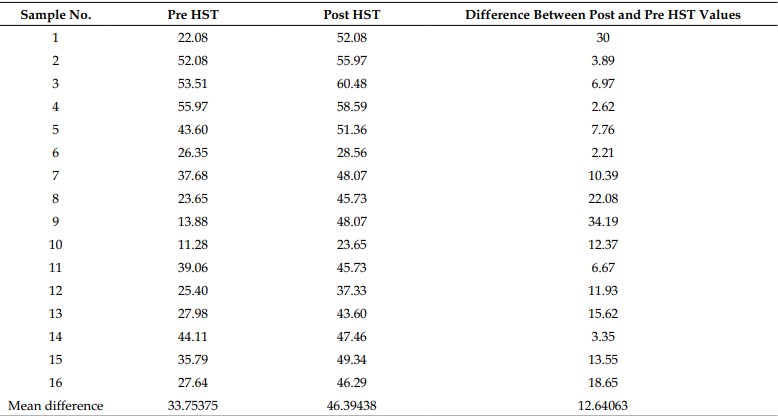
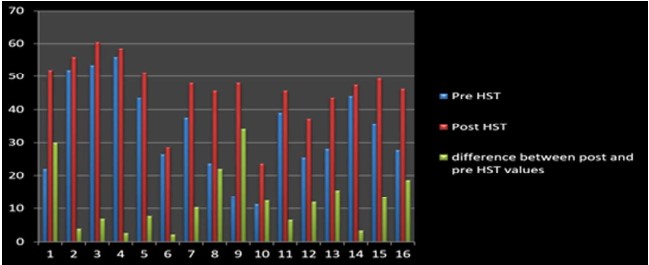
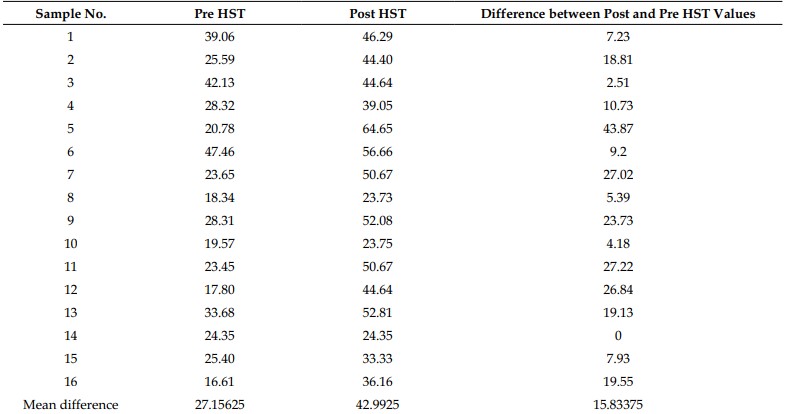
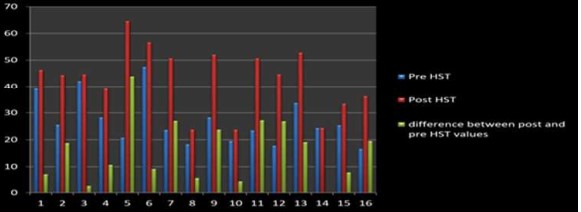
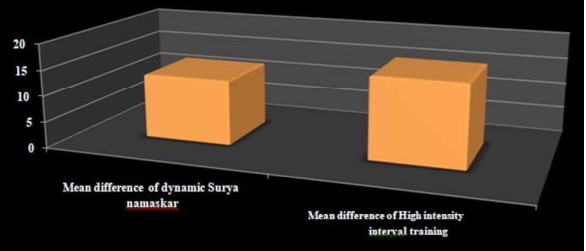
Background: Cardio-respiratory and muscular endurance are thepriority for the field of physiotherapy, this profession demands more physical effortsto treatpatients. So good cardiorespiratory endurance of physiotherapy students is must, in order toimprove cardiorespiratory endurance, there must be exercise training included in thecurriculum which is less time consuming and also have good results, and for the improvement of cardiorespiratory endurance there is two well known exercise protocol is there the Dynamic surya namaskara and High intensity interval training Hence this study was undertaken to compare both the protocol and find which one is good for physiotherapy student by measuring their cardiorespiratory endurance after the training and comparing them from the previous endurance value taken before the training. And the comparison is also made between both groups average value of endurance improvement. Purpose of the Study: Aim of this study is to compare 6 weeks exercise protocols effectiveness of two different cardiorespiratory endurance trainings namely the Dynamic surya namskara and High intensity interval training and state which training is good for physiotherapy student to have in their curriculum for improve their cardiorespiratory endurance and yet it should not impact their study time and be less time consuming. Method: A experimental study was conducted in M.B Gohil institute of medical science and researchcentre Navsari, Gujarat. The study has included 32 physiotherapy students, divided into two groups usingconvenient sampling who have normal BMI and no other cardiopulmonary diseases according to our inclusion and exclusion criteria, one groupundergone dynamic Surya namaskar training and other group undergone high intensity intervaltraining, the study was conducted over a period of 6 weeks. Outcome of the cardiorespiratory endurance wasmeasured by using Harvard step test both before and after the training with prior informed consent. Outcome Measure: Harvard Step Test. Statistical Analysis: Statistical analysis was done using Microsoft office excel 2010. Result: Study was done among the 32 students who completed the full training protocol whereas 16 students was undergone Dynamic Surya Namaskar training and other 16 students was undergone High intensity interval training. Cardiorespiratory endurance of students was measured by performing Harvard step test both previously and after the training protocol then comparison of previous values and post values were done to check the improvement inendurance, the endurance was increase in both the groups, 37.45% in Dynamic Surya Namaskar group and 58.31% improvement in High intensity interval training group so both the trainings are very effective to improve cardiorespiratory endurance. Comparison was done Among the two training Dynamic Surya Namaskar and High intensity interval training but there was no significant difference observed thus both the training are somewhat equally effective to improve cardiorespiratory endurance. Conclusion: The present study showed that both the trainings are very good to improve cardiorespiratory endurance here high intensity interval training has slightly better improvement result then dynamic Surya namaskar training, but it is not significant enough to state that High intensity interval training is far better than dynamic Surya namaskar training. Considering the limitation of High intensity interval training, dynamic Surya namaskar training is a very good alternative with similar results on cardiorespiratory endurance according to our research.
References
- 1. https://en.wikipedia.org/wiki/Physical_ fitness.
- 2. Williams and Wilkins; et al: ACSM’s Health Related Physical Fitness Assessment manual. Jan (2019), Fourth Edition. Chapter no-1’ Pg. no-2.
- 3. Sonia pawaria, Sheetal kalra, Sajjan pal, et al (2017) cardiorespiratory fitness of physiotherapy students: a cross sectional study.
- 4. Sunil kumar yadav, Anil kumar (2014) the effect of Dynamic Surya namaskar on cardiorespiratory endurance of male soccer players.
- 5. Zoran Milanovic, Goran Sporis, Matthew Weston [2015] Effectiveness of HighIntensity Interval Training (HIT) and Continuous Endurance Training for VO2max Improvements: A Systematic Review and Meta-Analysis of Controlled Trials.
- 6. https://statisticsbyjim.com/basics/centrallimit-theorem.
- 7. Vivek H. Ramanandi, Juhi K. panchal, Himangini chauhan, Prema karan, Mohini machhi, Zarana shah, et al (2019) evaluation of levels of cardiorespiratory finess in physiotherapy students of Gujarat between 18- 23 years – A cross sectional study.
- 8. Florian Azad Engel, Alexander Ackermann, Hamdi Chtourou2 and Billy Sperlich (2018) studied High intensity interval training performed by young athletes: A systemetic review and Meta-Analysis 39.
- 9. Dharmesh Parmar, et al (2015) Physical Fitness Index Using Modified Harvard Step Test in Relation with Gender in Physiotherapy Students.
- 10. Dr. K. Ranjith babu, et al (2015) determination of Physical Fitness Index with Modified Harvard Step Test in Male and Female Medical Students of Age 17-19 Yrs.
- 11. Parul Sharma, et al (2014) fitness scores of Indians assessed by the Harvard step test.
- 12. Dr. Vikas C. kathane, Dr. Lalit V. vithalani, Dr. Sanjay A. dalvi, (2013) effect of surya namaskar on cardiorespiratory endurance
- 13. Walid Soliman Ismail Mahmoud Elsaidy (2011) Evaluating the Validity and Reliability of Harvard Step Test to Predict VO2 max in Terms of the Step Height According to the Knee Joint Angle.
- 14. Wenger M.A. and Bagchi B.K. Studies of autonomic functions in practitioners of yoga in India. 1961 Behavioral science, 312-323.
- 15. Vempati RP, Telles S. Yoga-based guided relaxation reduces sympathetic activity judged from baseline levels. 2002 Psycho.Rep, 90: 487- 494.
- 16. Romeo B Batacan Jr, Et al (2016) Effects of highintensity interval training on cardio metabolic health: a systematic review and meta-analysis of intervention studies. 10.1136/bjsports–2015– 095841.
Data Sharing Statement
There are no additional data available. All raw data and code are available upon request.
Funding
This research received no funding.
Author Contributions
All authors contributed significantly to the work and approve its publication.
Ethics Declaration
This article does not involve any human or animal subjects, and therefore does not require ethics approval.
Acknowledgements
We would like to express our gratitude to the patients, their families, and all those who have contributed to this study.
Conflicts of Interest
No conflicts of interest in this work.
About this article

Cite this article
Vikas. M. Dhimmar, Prince T. Ahir, Ravi A. Solanki, et al./Comparison between Dynamic Surya Namaskar and High Intensity Interval Training to Determine their Effectiveness on Cardiorespiratory Endurance among Physiotherapy Students: An Experimental Study/Physiotherapy and Occupational Therapy Journal. 2022;15(4): 173-179.
Licence:
Attribution-Non-commercial 4.0 International (CC BY-NC 4.0)This license enables reusers to distribute, remix, adapt, and build upon the material in any medium or format for noncommercial purposes only, and only so long as attribution is given to the creator.
| Received | Accepted | Published |
|---|---|---|
| October 12, 2022 | December 08, 2022 | December 25, 2022 |
DOI: https://doi.org/10.21088/potj.0974.5777.15422.4
Keywords
High intensity interval training (HIIT)Dynamic Surya namaskarCardiorespiratory enduranceHarvard step testNavsariPhysiotherapy studentsSearch for Similar Articles
Similar Articles
- Leadership in Physiotherapy: A Narrative Review
- Effectiveness of Low Level Laser Theapy in the Management of Temporomandibular J...
- The Impact of Air Pollution on Cardiopulmonary Health: Molecular Mechanisms, Pre...
- Efectiveness of Physiotherapy in Postpartum Women with Diastasis Recti: A Review
- Pain Neuroscience Education: Transforming Physiotherapy Practice
Article Level Metrics
Last UpdatedFriday 23 October 2026, 16:19:26 (IST)
4358
Accesses
9
739
00
Citations
NA
NA
NA
Download citation
Article Keywords
Keyword Highlighting
Highlight selected keywords in the article text.
Timeline
| Received | October 12, 2022 |
| Accepted | December 08, 2022 |
| Published | December 25, 2022 |
licence
Attribution-Non-commercial 4.0 International (CC BY-NC 4.0)
This license enables reusers to distribute, remix, adapt, and build upon the material in any medium or format for noncommercial purposes only, and only so long as attribution is given to the creator.