Full Text (PDF)
Indian Journal of Anesthesia and Analgesia 10(4):p 205-208, October-December 2023. | DOI: https://doi.org/10.21088/ijaa.2349.8471.10423.9
Case Report
Clinical Evaluation: An Essential Tool for Diagnosis
Shubha V Fellow Hegde,, Khaja Javed Khan
Author Information
Licence:
Attribution-Non-commercial 4.0 International (CC BY-NC 4.0)This license enables reusers to distribute, remix, adapt, and build upon the material in any medium or format for noncommercial purposes only, and only so long as attribution is given to the creator.
Indian Journal of Anesthesia and Analgesia 10(4):p 205-208, October-December 2023. | DOI: https://doi.org/10.21088/ijaa.2349.8471.10423.9
How Cite This Article:
Hegde SV, Khan KJ. Clinical Evaluation: An Essential Tool for Diagnosis. Indian J Anesth Analg. 2023;10(4):205–8.Timeline
Received : September 15, 2023
Accepted : October 10, 2023
Published : October 30, 2023
Abstract
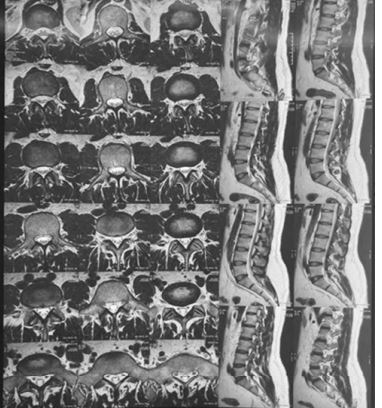
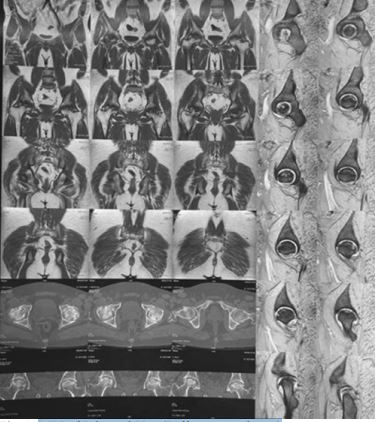
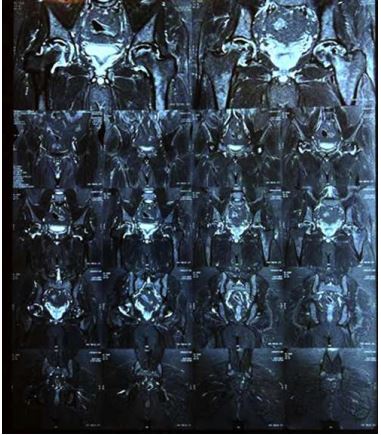
Low back pain is one of the commonest and leading causes of hospital visits, functional limitation and absence from work in the world.1 Low back pain can occur at any age, but its highest prevalence is in third decade of life. Avascular necrosis of Hip commonly presents at the age of 35-50 years with mean age being 36 years.3 Presenting complaints of both lumbar spine and hip pathologies are overlapping which include low back pain with associated buttock, groin, anterior thigh, and knee pain. Therefore, identifying the exact pain generator becomes crucial, where clinical evaluation plays a vital role.
References
- 1. Andersson GB. Epidemiological features of chronic low-back pain. Lancet. 1999;354(9178):581-5.
- 2. Kopec JA, Sayre EC, Esdaile JM. Predictors of back pain in a general population cohort. Spine (Phila Pa 1976). 2004;29(1):70-8.
- 3. Hsu H, Nallamothu SV. Hip Osteonecrosis. In: StatPearls. Treasure Island (FL): StatPearls Publishing; 2023. Available from: https://www.ncbi.nlm.nih.gov/books/NBK539958/ [Cited 2025 Nov 28].
- 4. Manchikanti L, Singh V, Pampati V, et al. Evaluation of the relative contributions of various structures in chronic low back pain. Pain Physician. 2001;4(4):308-16.
- 5. Julius D, Basbaum AI. Molecular mechanisms of nociception. Nature. 2001;413(6852):203-10.
- 6. Pincus T, Kent P, Bronfort G, Loisel P, Pransky G, Hartvigsen J. Twenty-five years with the biopsychosocial model of low back pain - is it time to celebrate? A report from the twelfth international forum for primary care research on low back pain. Spine (Phila Pa 1976). 2013;38(24):2118-23.
- 7. Stevens K, Tao C, Lee SU, et al. Subchondral fractures in osteonecrosis of the femoral head: comparison of radiography, CT, and MR imaging. AJR Am J Roentgenol. 2003;180(2):363-8.
- 8. Iida S, Harada Y, Shimizu K, et al. Correlation between bone marrow edema and collapse of the femoral head in steroid-induced osteonecrosis. AJR Am J Roentgenol. 2000;174(3):735-43.
- 9. Wainner RS, Whitman JM, Cleland JA, Flynn TW. Regional interdependence: a musculoskeletal examination model whose time has come. J Orthop Sports Phys Ther. 2007;37(11):658-60.
- 10. Lejkowski PM, Poulsen E. Elimination of intermittent chronic low back pain in a recreational golfer following improvement of hip range of motion impairments. J Bodyw Mov Ther. 2013;17(4):448-52.
- 11. Fogel GR, Esses SI. Hip spine syndrome: management of coexisting radiculopathy and arthritis of the lower extremity. Spine J. 2003;3(3):238-41.
- 12. Bohl WR, Steffee AD. Lumbar spinal stenosis. A cause of continued pain and disability in patients after total hip arthroplasty. Spine (Phila Pa 1976). 1979;4(2):168-73.
- 13. Baig SA, Baig MN. Osteonecrosis of the Femoral Head: Etiology, Investigations, and Management. Cureus. 2018;10(8):e3171.
- 14. Offierski CM, MacNab I. Hip-spine syndrome. Spine (Phila Pa 1976). 1983;8(3):316-21.
- 15. Parvizi J, Pour AE, Hillibrand A, Goldberg G, Sharkey PF, Rothman RH. Back pain and total hip arthroplasty: a prospective natural history study. Clin Orthop Relat Res. 2010;468(5):1325-30.
Data Sharing Statement
There are no additional data available. All raw data and code are available upon request.
Funding
This research received no funding.
Author Contributions
Whether all authors contributed significantly to the work and approve its publication.
Ethics Declaration
This article does not involve any human or animal subjects, and therefore does not require ethics approval.
Acknowledgements
Information not provided.
Conflicts of Interest
The authors report no conflicts of interest in this work.
About this article

Cite this article
Hegde SV, Khan KJ. Clinical Evaluation: An Essential Tool for Diagnosis. Indian J Anesth Analg. 2023;10(4):205–8.
Licence:
Attribution-Non-commercial 4.0 International (CC BY-NC 4.0)This license enables reusers to distribute, remix, adapt, and build upon the material in any medium or format for noncommercial purposes only, and only so long as attribution is given to the creator.
| Received | Accepted | Published |
|---|---|---|
| September 15, 2023 | October 10, 2023 | October 30, 2023 |
DOI: https://doi.org/10.21088/ijaa.2349.8471.10423.9
Keywords
Low back painHip OsteoarthritisSciaticaClinical EvaluationSearch for Similar Articles
Similar Articles
- Awake Fibreoptic Intubation for Airway Management in Massive Thyroid Enlargement...
- A Case of Thoracotomy with One Lung Ventilation for Carcinoma Oesophagus
- A Case of Empyema for Thoracotomy and Decortication-Anaesthesia Management
- Full Mouth Rehabilitation in a 3-Year-Old Female Child with Repaired Tetralogy o...
- Do Gel Manicures Affect SpO2 Readings ? A Clinical Investigation
Article Level Metrics
Last UpdatedFriday 11 September 2026, 04:42:33 (IST)
9033
Accesses
17
803
00
Citations
NA
NA
NA
Download citation
Article Keywords
Keyword Highlighting
Highlight selected keywords in the article text.
Timeline
| Received | September 15, 2023 |
| Accepted | October 10, 2023 |
| Published | October 30, 2023 |
licence
Attribution-Non-commercial 4.0 International (CC BY-NC 4.0)
This license enables reusers to distribute, remix, adapt, and build upon the material in any medium or format for noncommercial purposes only, and only so long as attribution is given to the creator.