Full Text (PDF)
Journal of Pharmaceutical and Medicinal Chemistry 8(1):p 11-24, January-June 2022. | DOI: https://doi.org/10.21088/jpmc.2395.6615.8122.1
Original Article
Botanical description, Photochemistry, Traditional Uses, and Pharmacology of the “Wonder Plant” Kalanchoe Pinnata (Linn.) Pers: An Updated Review
Ajay Garg, Ranjan Kumar Singh, Khushboo Shrimali
Author Information
Licence:
Attribution-Non-commercial 4.0 International (CC BY-NC 4.0)This license enables reusers to distribute, remix, adapt, and build upon the material in any medium or format for noncommercial purposes only, and only so long as attribution is given to the creator.
Journal of Pharmaceutical and Medicinal Chemistry 8(1):p 11-24, January-June 2022. | DOI: https://doi.org/10.21088/jpmc.2395.6615.8122.1
How Cite This Article:
Ranjan Kumar Singh, Ajay Garg, Khushboo Shrimali/Botanical description, Photochemistry, Traditional Uses, and Pharmacology of the “Wonder Plant” Kalanchoe Pinnata (Linn.) Pers: An Updated Review/J Pharmaceut Med Chem. 2022;8(1):11-24.Timeline
Received : April 26, 2022
Accepted : May 28, 2022
Published : June 25, 2022
Abstract
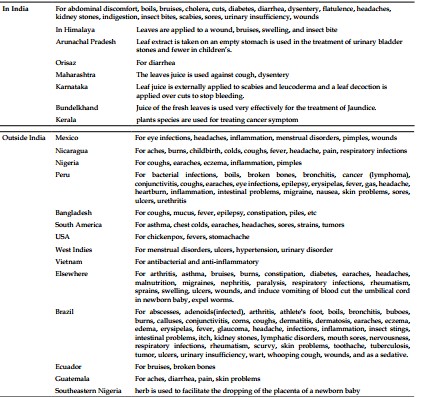
Background: Kalanchoe pinnata, an important medicinal plant of the stonecrop family, is widely distributed in India and tropical and subtropical parts of the world. It has been reported for its folkloric use in various disorders such as abdominal discomfort, boils, bruises, cholera, cuts, diabetes, diarrhea dysentery, flatulence, headaches, kidney stones, indigestion, insect bites, scabies, sores, urinary insufficiency, wounds. Results: The present review has focused on the botanical description, phytochemistry, and ethnomedicinal and traditional uses of Kalanchoe pinnata along with its reported pharmacological activities. Chief chemical constituents and pharmacological aspects of Kalanchoe pinnata have been deeply explored to unravel the unexplored folklore/ ethnomedicinal uses of this plant so that the researchers working on this plant may be able to find new insights to continue the further investigation on this plant. The pharmacological aspects like anti-diabetic, anti-inflammatory, anti-nociceptive, anti-diarrheal, anti-pyretic, and anti-cancer potentials evaluated by various in vitro/in vivo methods on this plant have been reported. Conclusion: Various traditional uses have been reported that need to be scientifically investigated in-depth and several pharmacological activities have been reported for the Kalanchoe pinnata, but more detailed and mechanismbased studies linked to a particular lead compound need to be targeted in the future. Moreover, this plant has not been completely assessed based on its safety and efficacy in humans. It is expected that this review will compile and improve the existing knowledge on the potential utilization of Kalanchoe pinnata in complementary and alternative medicine.
References
- 1. Saleh, N A M, and G H N Towers. 1972. “Flavanoides of Clermonta Persicifolia Leaves.” Phytochemistry. 11(November 1971): 998–99.
- 2. Kolodziejczyk-czepas, Joanna, and Anna Stochmal. 2017. “Bufadienolides of Kalanchoe Species : An Overview of Chemical Structure , Biological Activity and Prospects for Pharmacological Use.” Phytochemistry Reviews 16(6): 1155–71.
- 3. Kolodziejczyk-czepas, Authors Joanna et al. 2017. “Bufadienolides from Kalanchoe Daigremontiana as Thrombin Inhibitors − in Vitro and Silico Study.” International Journal of Biological Macromolecules. http://dx.doi.org/10.1016/j.ijbiomac.2017.02.051.
- 4. Agarwal, Happy, and Venkat Kumar Shanmugam. 2019. “Informatics in Medicine Unlocked Antiin Fl Ammatory Activity Screening of Kalanchoe Pinnata Methanol Extract and Its Validation Using a Computational Simulation Approach.” Informatics in Medicine Unlocked 14(January): 6–14. https:// doi.org/10.1016/j.imu.2019.01.002.
- 5. Zakharchenko, N. S. et al. 2017. “Immunomodulating and Revascularizing Activity of Kalanchoe Pinnata Synergize with Fungicide Activity of Biogenic Peptide Cecropin P1.” Journal of Immunology Research 2017.
- 6. Om Satyam Chaturvedi*, Amit Joshi, and Bal Krishna Dubey Department. 2012. “Pharmacognostical, Phytochemical Evaluation And.” IJPSR 3(4): 1133– 40.
- 7. Sylvain, Orelien et al. 2018. “Kalanchoe Pinnata Aqueous Extract Safety and Potential Cardioprotective Effects in Isoprenaline Treated Rats.” The Journal of Phytopharmacology 7(5): 404–11.
- 8. Lens, Cheryl A. 2006. “Ethnomedicines Used in Trinidad and Tobago for Urinary Problems and Diabetes Mellitus.” Journal of Ethnobiology and Ethnomedicine 11: 1–11.
- 9. Biswas, Subrata Kumar et al. 2011. “Literature Review on Pharmacological Potentials of Kalanchoe Pinnata (Crassulaceae).” African Journal of Pharmacy and Pharmacology 5(10): 1258–62.
- 10. Roubicek, Deborah, and Eva Maria A B Haebisch. 1999. “Mutagenic and Antimutagenic Evaluation of the Juice of the Leaves Of Bryophyllum Calycinum (Kalanchoe Pinnata), A” Environmental and Molecular Mutagenesis 33: 325–27.
- 11. Gao, Huimin, Ruxandra Popescu, and Zhimin Wang. 2011. “Bufadienolides and Their Antitumor Activity.” The Royal Society of Chemistry 86(10): 953–69.
- 12. Surendra H. bodhke 1, Devi P. pandey 2 Kiran S. bodhke, Kamta P. namdeo. 2013. “A New Flavonol Glycoside from Kalanchoe Pinnata Leaves.” Asian Journal of Chemistry 25(17): 9763–65.
- 13. Abdellaoui, Saïda El et al. 2010. “Bioactive Molecules in Kalanchoe Pinnata Leaves : Extraction, Purification, and Identification.” Anal Bioanal Chem 398: 1329–38.
- 14. Tor-anyiin, Amom, and John Anyam. 206AD. “Phytochemical Screening and Antimicrobial Activity of Bryophyllum Pinnatum Extracts Phytochemical Screening and Antimicrobial Activity of Bryophyllum Pinnatum Extracts.” British Biotechnology Journal 16(2): 1–8.
- 15. Rajsekhar, P B et al. 2016. “The ‘Wonder Plant’ Kalanchoe Pinnata (Linn.) Pers .: A Review.” Journal of Applied Pharmaceutical Science 6(03): 151–58.
- 16. Rahman, Rafia et al. 2019. “Phytochemical, Morphological, Botanical and Pharmacological Aspects of a Medicinal Plant: Kalanchoe Pinnata – A Review Article.” International Journal of Chemical and Biochemical Sciences 16(October): 5–10.
- 17. Quazi Majaz A.1*, A.U. Tatiya2, Molvi Khurshid1, Sayyed Nazim1, Shaikh Siraj1. 2011. “(kalanchoe pinnata): a phytochemical and pharmacological review.” IJRAP 2(5): 1478–82.
- 18. Singh, Harjinder, Amar Pal Singh, and Ajeet Pal Singh. 2021. “A Review on Kalanchoe Pinnata (Crassulaceae).” Indian Journal of Pharmacy and Pharmacology 8(3): 182–88.
- 19. Ahmed, Mushtaq, Zafer Ullah Wazir, and Rahmat Ali Khan. 2013. “Toxicological & Environmental Chemistry Pharmacological Evaluation of Crude Methanolic Extract of Kalanchoe Pinnata Leaves.” Toxicological & Environmental Chemistry (October 2014): 37–41.
- 20. Pattewar, Seema V. 2012. “Kalanchoe Pinnata : Phytochemical and Pharmacological Profile.” IJPSR 3(4): 993–1000.
- 21. Kumar, Sourab, and Santosh Kumar Vaidya. 2012. “Pharmacognostical, Phytochemical and Pharmacological Review on Bryophyllum Pinnata.” International Journal of Pharmaceutical & Biological Archives 2012; 3(3): 423–33.
- 22. Donatus Ebere Okwu* Fred Uchenna Nnamdi. 2015. “Journal of Chemical and Pharmaceutical Research Two Novel Flavonoids from Bryophyllum Pinnatum and There.” Journal of Chemical and Pharmaceutical Research • 3(2): 1–10.
- 23. Okwu, Donatus Ebere, and Fred Uchenna Nnamdi. 2011. “A Novel Antimicrobial Phenanthrene Alkaloid from Bryopyllum Pinnatum.” E-Journal of Chemistry 8(3): 1456–61.
- 24. Mishra, Rajshree, Yogesh Pounikar, and Mayank Gangwar. 2019. “Extraction, Phytochemical Screening and Quantitative Determination of Phenols and Flavonoids in Extract of Kalanchoe Pinnata and Pongamia Pinnata.” Journal of Drug Delivery & Therapeutics. 9(4): 192–96.
- 25. Begum, Samim Sofika, and Rajib Gogoi. 2007. “Herbal Recipe Prepared during Bohag or Rongali Bihu in Assam.” 6(July): 417–22.
- 26. Jaiswal, Sarita, and Sudhir Sawhney Ã. 2006. “Correlation of Epiphyllous Bud Differentiation with Foliar Senescence in Crassulacean Succulent Kalanchoe Pinnata as Revealed by Thidiazuron and Ethrel Application.” j.jplph 163: 717–22.
- 27. Ojewole, John A O. 2005. “Antinociceptive , Anti-Inflammatory and Antidiabetic Effects of Bryophyllum Pinnatum (Crassulaceae) Leaf Aqueous Extract.” Journal of Ethnopharmacology 99: 13–19
- 28. Dewiyanti, Indah Dwiatmi, Euis Filailla, and Tri Yuliani. 2012. “The Antidiabetic Activity of Color Bebek Leaves’ (Kalanchoe Pinnata Lam. Pers.) Ethanolic Extract from Various Areas Color Induced.” The journal of tropical life science 2(2): 37–39.
- 29. Patil, Swapnil B et al. 2013. “Diabetic Rats by Glucose Independent Insulin Secretagogue Action.” Pharmaceutical biology: 1–8.
- 30. Menon, Nikhil, Jean Sparks, and Felix Omoruyi. 2015. “Asian Pacific Journal of Tropical Biomedicine Leaves in Streptozotocin-Induced Diabetic Rats.” Asian Pacific Journal of Tropical Biomedicine 5(1): 3–9. http://dx.doi.org/10.1016/S2221- 1691(15)30162-3.
- 31. Pandey, Hari. 2004. “Seed Fume of Solanum Surattense: A Traditional Panacea for Teeth and Gums.” Indian Journal of Traditional Knowledge (IJTK) 03(2): 206–7.
- 32. Shashank Matthew*, 2Diwaker Singh, 2Swati Jaiswal, 3M.Kumar.B. Jayakar, 4Debjit Bhowmik. 2013. “Antidiabetic Activity of Kalanchoe Pinnata in Alloxan Induced Diabetic Rats.” Journal of Chemical and Pharmaceutical Sciences 6(1): 1–7.
- 33. Dr. Pradeep Goyal1*, Dr. Jitender Singh2, Nishant Thakur3, and Dr. Manish Goswami4. 2017. “Isolation and Characterization of Anti-Hyperglycemic Compound from Fraction of Ethanol Extract of Kalanchoe Pinnata Leaf.” Europian journal of pharmaceutical and medical research 4(7): 508–13.
- 34. Radha, H R, and B V Somasekariah. 2018. “In Vitro Anti-Diabetic Activity and GC-MS Analysis of Bioactive Compounds Present in the Methanol Extract of Kalanchoe Pinnata.” Indian Journal of Chemistry 57(September): 1213–21.
- 35. Agüero-hernández, Ana L, Catalina Rosales-lópez, Cristina Herrera, and Andrés Vargas-picado. 2020. “Hypoglycemic Effect of Kalanchoe Pinnata (Lam) Pers . Leaf Extract.” Pharmacogn J. 12(3): 557–61.
- 36. Harlalka, Gaurav Vijay, Chandragauda Raosaheb Patil, Mahesh Ramu Patil. 2007. “Protective Effect of Kalanchoe Pinnata Pers. (Crassulaceae) on Gentamicin-Induced Nephrotoxicity in Rats.” Indian Journal of Pharmacology 39(4): 201–5.
- 37. Ramesh, K, E Paari, and S Rajeshkumar. 2014. “In- Vivi Nephroprotective Activity of Kalanchoe Pinnata Leaves on Ethylene Glycol Induced Urolitihiasis in Albino Rats.” Indo American Journal of pharmaceutical research 4(07).
- 38. Movaliya, Vinit Ravjibhai, and Maitreyi Zaveri. 2019. “Development and Standardization of Novel Herbal Formula for the Management of Kidney Disease.” Journal of Pharmacognosy and Phytochemistry (4): 3245–49.
- 39. Ingole, Ranjit, et al. 2021. “Nephroprotective Effect of Bryophyllum Pinnatum Mediated Silver Nanoparticles in Ethylene Glycol Induced Urolithiasis in Rat.” IET Nanobiotechnology (March): 1–11.
- 40. Hernández-medel, M R. 2016. “Kalanchoe Pinnata (Lam.) Stems and Roots in Mice :” Neurología (English Edition) 31(3): 161–68. http://dx.doi. org/10.1016/j.nrleng.2015.06.004.
- 41. Nayak, B Shivananda, Julien R Marshall, and Godwin Isitor. 2010. “Wound Healing Potential of Ethanolic Extract of Kalanchoe Pinnata Lam. Leaf—A Preliminary Study.” Indian Journal of Experimental Biology 48(June): 572–76.
- 42. Rajesh, A, and Mohamed Shamsudin. 2017. “Evaluation of Ovicidal and Larvicidal Potential of Kalanchoe Pinnata Leaf Extracts against Filarial Mosquito Vector, Culex Quinquefasciatus.” International Journal of Mosquito Research 4(2): 142–47.
- 43. Tropica, Acta et al. 1995. “Therapeutic Effect of Oral Kalanchoe Pinnata Leaf Extract in Murine Leishmaniasis.” S.A.G. Da Silva a, S.S. Costa b, S.C.F, Mendonga, E.M. Silva, .c V.L.G. Moraes d, B. Rossi-Bergmann a 60: 201–10.
- 44. Muzitano, Michelle F et al. 2006. “The Antileishmanial Activity Assessment of Unusual Flavonoids from Kalanchoe Pinnata.” Phytochemistry 67: 2071–77.
- 45. Cruz, E A et al. 2008. “International Immunoph -armacology Immunomodulatory Pretreatment with Kalanchoe Pinnata Extract and Its Quercitrin Fl Avonoid Effectively Protects Mice against Fatal Anaphylactic Shock.” International Immunopharmacology 8: 1616–21.
- 46. Matthew, Shashank, Ajay Kumar Jain, Manoj James, et al. 2013. “Journal of Medicinal Plants Studies Analgesic and Anti-Inflammatory Activity of Kalanchoe Pinnata (Lam.) Pers Material :” Journal of Medicinal Plants Studies 1(2): 23–28.
- 47. Ferreira, Raquel Teixeira et al. 2014. “Mechanisms Underlying the Antinociceptive, Antiedematogenic, and Anti-Inflammatory Activity of the Main Flavonoid from Kalanchoe Pinnata.” EvidenceBased Complementary and Alternative Medicine 2014.
- 48. Agarwal, Happy, and Venkat Kumar Shanmugam. 2019. “Informatics in Medicine Unlocked Antiin Fl Ammatory Activity Screening of Kalanchoe Pinnata Methanol Extract and Its Validation Using a Computational Simulation Approach.” Informatics in Medicine Unlocked 14(January): 6–14. https:// doi.org/10.1016/j.imu.2019.01.002.
- 49. Pal, Saumen Kanti et al. 2020. “Analgesic, AntiInflammatory and Local Anesthetic Activity of Methanol Extract of Bryophyllum Pinnatum Leaves.” Journal of Entomology and Zoology Studies. 8(5): 7–11.
- 50. Phatak, Rohan Sharadanand. 2016. “Lack of Anthelmintic Activity of Kalanchoe Pinnata Fresh Leaves.” Journal of Pharmaceutical Negative Results • 7(February).51. Matthew, Shashank, et al. 2013. “Antidepressant Activity of Ethanolic Extract of Plant Kalanchoe Pinnata in Mice.” Indian Journal of Research in Pharmacy and Biotechnology 1(2).
- 51. Pradeep Bawane*, Meeta Jain, Jineetkumar Gawad, Angel Godad, Savita Tauro St. 2014. “Evaluation of Polyherbal Extract for In-Vitro Antiurolitiatic Activity Using Bioenhancer.” European journal of biomedical and pharmaceutical sciences 1(3): 480– 89.
- 52. Phatak, Rohan Sharadanand, and Anup Subhash Hendre. 2015. “In-Vitro Antiurolithiatic Activity of Kalanchoe Pinnata Extract.” International Journal of Pharmacognosy and Phytochemical Research 7(2): 275–79.
- 53. Sohgaura, Atul, Papiya Bigoniya, and Birendra Shrivastava. 2018. “Diuretic Potential of Cynodon Dactylon , Emblica Officinalis, Kalanchoe Diuretic Potential of Cynodon Dactylon , Emblica Officinalis, Kalanchoe Pinnata and Bambusa Nutans.” Journal of Pharmacognosy and Phytochemistry 7(3):2895– 2900.
- 54. Pandhare, R B et al. 2021. “Journal of Traditional and Complementary Medicine Anti-Urolithiatic Activity of Bryophyllum Pinnatum Lam. Hydroalcoholic Extract in Sodium Oxalate-Induced Urolithiasis in Rats.” Journal of Traditional Chinese Medical Sciences 11(6): 545–51. https://doi.org/10.1016/j. jtcme.2021.06.002.
- 55. Aishwarya Tripurasundari Devi1, Yashaswini N1, Farhan Zameer2, Nagendra Prasad MN1 2021. “Contributors : A Herbaceutical Approach.” bioRxiv doi: https://doi.org/10.1101/2021.06.01.446538.
- 56. Bigoniya, Papiya, Atul Kumar Sohgaura, and Birendra Shrivastava. 2021. “Antilithiatic Effect of C . Dactylon, E. Officinalis , K . Pinnata , and B. Nutans Ethyl Acetate Fraction on Glyoxylate-Induced Nephrolithiasis.” Future Journal of Pharmaceutical Sciences 1: 1–9.
- 57. Mahata, Sutapa et al. 2012. “Anticancer Property of Bryophyllum Pinnata (Lam.) Oken. Leaf on Human Cervical Cancer Cells.” Complementary and Alternative Medicine 12(15).
- 58. Pers, Lam et al. 2016. “Cytotoxic, Antibacterial and Antibiofilm Activities of Aqueous Extracts of Leaves and Flavonoids Occurring In.” Journal of Medicinal Plants Research 10(41): 763–70.
- 59. Bhavsar, Shruti, and Divya Chandel. 2019. “Cytotoxic and Genotoxic Effects of Kalanchoe Pinnata (Lam.) Pers. Fresh Leaf Juice in the Cultured Human Blood Lymphocytes.” Drug and Chemical Toxicology 0(0): 1–7. https://doi.org/10.1080/0148 0545.2019.1696814.
- 60. Verma, Sonia et al. 2020. “Effect of Ethanolic Extract of Solanum Virginianum Linn. on Neuropathic Pain Using Chronic Constriction Injury Rat Model and Molecular Docking Studies.” NaunynSchmiedeberg’s Archives of Pharmacology 393(9): 1715–28.
- 61. Lebedeva, A A et al. 2017. “Properties of Transgenic Kalanchoe Pinnata Synergize with Antimicrobial Peptide Cecropin P1 In Vivo.” Journal of Immunology Research 2017: 1–9.
- 62. Sobreira, Flávia et al. 2017. “Gastroprotective Activity of the Hydroethanolic Extract and Ethyl Acetate Fraction from Kalanchoe Pinnata ( Lam .) Pers .” Brazilian Journal of Pharmaceutical Sciences 53(1): 1–11.
- 63. Manisha Bhatti, Anjoo Kamboj, Ajay Kumar Saluja1, Upendra K. Jain. 2012. “In Vitro Evaluation and Comparison of Antioxidant Activities of Various Extracts of Leaves and Stems of Kalanchoe Pinnatum.” International Journal of Green Pharmacy (December).
- 64. S. Chandra Mohan*1, V. Balamurugan 2, R. Elayaraja 1 and A. S. Prabakaran 1. 2012. “Antioxidant and Phytochemical Potential of Medicinal Plant Kalanchoe Pinnata.” IJPSR 3(03): 881–85.
- 65. Ashfak, Kazi et al. 2016. “Antioxidant , Cytotoxic and Thrombolytic Activity of Leaves of Kalanchoe Pinnata ( LAM .) PERS .” Journal of Pharmacognosy and Phytochemistry 5(4): 309–15.
- 66. Yadav, N P, and V K Dixit. 2003. “Hepatoprotective Activity of Leaves of Kalanchoe Pinnata Pers .” Journal of Ethnopharmacology 86(February): 197– 202.
- 67. Niken Indriyanti,Joewono Soeroso Junaidi Khotib. 2017. “The Immunosupressant Effect Comparision between Ethyl Acetate and N-Butanol Fractions of Kalanchoe Pinnata in 2,6,10,14 Tetramethyl Pentadecaine- Treated Mice.” J. Trop. Pharm. Chem 4(1): 7–13.
- 68. Torres-Santos1, E. C., S. A. G. Da Silva2, A. P. Almeida3 , S. S. Costa4 , and B. Rossi-Bergmann5. 2003. “Toxicological Analysis and Effectiveness of Oral Kalanchoe Pinnata on a Human Case of Cutaneous Leishmaniasis.” Phytothearypy research803: 801–3.
- 69. Salami, Edward O et al. 2013. “Studies on the Anti - Asthmatic and Antitussive Properties of Aqueous Leaf Extract of Bryophyllum Pinnatum in Rodent Species.” Asian Pacific Journal of Tropical Medicine 6(6): 421–25. http://dx.doi.org/10.1016/S1995- 7645(13)60067.
Data Sharing Statement
There are no additional data available. All raw data and code are available upon request.
Funding
This research received no funding.
Author Contributions
All authors contributed significantly to the work and approve its publication.
Ethics Declaration
This article does not involve any human or animal subjects, and therefore does not require ethics approval.
Acknowledgements
We would like to express our gratitude to the patients, their families, and all those who have contributed to this study.
Conflicts of Interest
No conflicts of interest in this work.
About this article

Cite this article
Ranjan Kumar Singh, Ajay Garg, Khushboo Shrimali/Botanical description, Photochemistry, Traditional Uses, and Pharmacology of the “Wonder Plant” Kalanchoe Pinnata (Linn.) Pers: An Updated Review/J Pharmaceut Med Chem. 2022;8(1):11-24.
Licence:
Attribution-Non-commercial 4.0 International (CC BY-NC 4.0)This license enables reusers to distribute, remix, adapt, and build upon the material in any medium or format for noncommercial purposes only, and only so long as attribution is given to the creator.
| Received | Accepted | Published |
|---|---|---|
| April 26, 2022 | May 28, 2022 | June 25, 2022 |
DOI: https://doi.org/10.21088/jpmc.2395.6615.8122.1
Keywords
Kalanchoe pinnataEthano-BotanicalTraditionalPhytochemistryPharmacologySearch for Similar Articles
Similar Articles
- Pharmaceutical Care in Primary Healthcare: A Study of Nurses
- Artificial Intelligence in Pharmaceutical Research and Development: From Target...
- Developing a Structured Teaching Program for Precision Medicine in Nursing Pract...
- Comprehensive Scientific Review on the Natural Process of Aging, Anti-Aging Mech...
- Formulation and Evaluation of Curcumin Lozenges to Treat Throat Infections
Article Level Metrics
Last UpdatedTuesday 27 October 2026, 23:50:41 (IST)
1388
Accesses
10
118
00
Citations
NA
NA
NA
Download citation
Article Keywords
Keyword Highlighting
Highlight selected keywords in the article text.
Timeline
| Received | April 26, 2022 |
| Accepted | May 28, 2022 |
| Published | June 25, 2022 |
licence
Attribution-Non-commercial 4.0 International (CC BY-NC 4.0)
This license enables reusers to distribute, remix, adapt, and build upon the material in any medium or format for noncommercial purposes only, and only so long as attribution is given to the creator.