Full Text (PDF)
Journal of Global Public Health 5(1):p 25-42, January – June 2023. | DOI: NA
Review Article
Behavior Changes of Life Style & Innovative Choices for Quality Air Atmosphere in India: A Comprehensive Report
Author Information
Licence:
Attribution-Non-commercial 4.0 International (CC BY-NC 4.0)This license
enables reusers to distribute, remix, adapt, and build upon the material in any
medium or format for noncommercial purposes only, and only so long as attribution
is given to the creator.
Journal of Global Public Health 5(1):p 25-42, January – June 2023. | DOI: NA
How Cite This Article:
P.Chitra/Behavior Changes of Life Style & Innovative Choices for Quality Air Atmosphere in India: A Comprehensive Report/J of Global Pub Health. 2023; 5(1): 25–42.Timeline
Received : January 09, 2023
Accepted : January 20, 2023
Published : June 25, 2023
Abstract
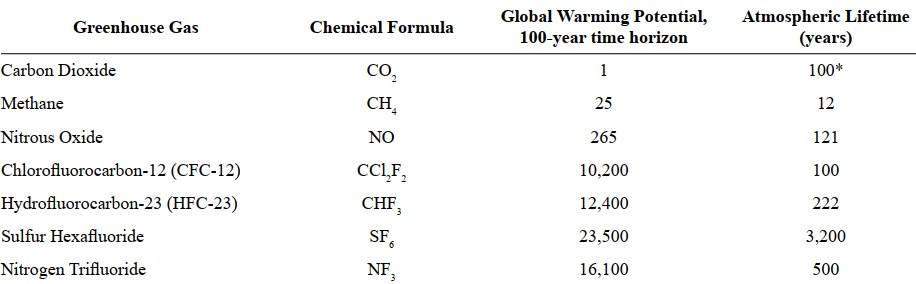
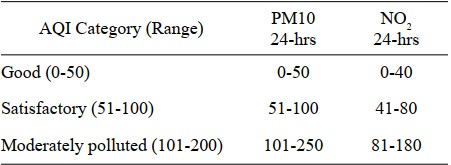
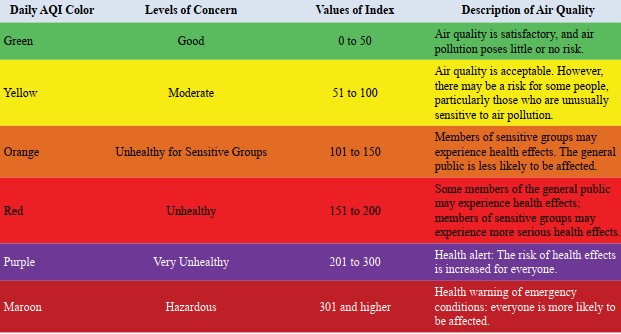
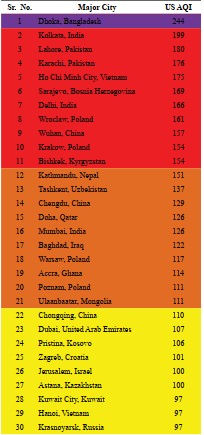
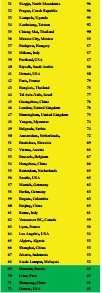
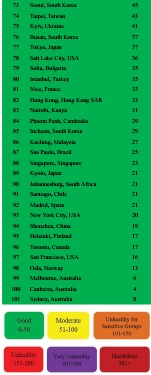
Climate change: The trophosphere layer is (approximately 15 km) very shortest length between the surface of Earth and to the next layer of stratosphere (50 km) is very important for life of livings. The World populations reached approximately 8 billions and 9 millions without including animal’s statistics. All of them required quality air for breath, portable water and fertile soil for cultivation of food sources. The trophosphere layer is highly polluted with increased anthropogenic activities for 100 of years, the next layer of stratosphere where the ozone layer formed to protect us from ultra violet rays, which the layer is penetrated by high toxic chemical pollutants is the reason to enter the ultra violet rays to trophosphere atmosphere of Earth. The clouds cause rains where the toxic harmful chemicals and gases are concentrated it falls as rain drops and it reaches soil and surface water sources, then it reaches ground water as well. Due to the climate change the temperature is globally changing either it is too hot or extreme cold and always fluctuating weather unable to predict the seasons of winter, spring, summer and monsoon. The temperature raises or it reaches extreme cold for oceans, Antartic glaciers is melting and raising sea level and invading land spaces. The climate policy initiatives aimed at maintaining global average temperatures 1.5OC and reaching zero emissions by 2050. Global warming: The Earth has a natural Green House Effect (GHE) due to trace amounts of water vapor (H2O), carbon dioxide (CO2), methane (CH4) and nitrous oxide (N2O) in the atmosphere.In the absence of the natural greenhouse effect the surface of the Earth would be approximately 33°C cooler. The enhanced greenhouse effect refers to the additional radiative forcing resulting from increased concentrations of greenhouse gases induced by human activities. The main greenhouse gases whose concentrations are raising carbon dioxide, hydrochlorofluorocarbons (HCFCs), hydrofluorocarbons (HFCs) methane, nitrous oxide, and ozone in the lower atmosphere. The major green house gases stay in the atmosphere for tens to hundreds of years after being released, their warming effects on the climate persists over a long time and it affects present and future generations. A green house gas emissions from human activities increase, they build up in the atmosphere, on land and in the oceans. E1 Nino is the warming of sea waters in the central-east Equatorial Pacific that occurs every few years. La Nina is the more cooler of sea waters than average temperature in the east Equatorial Pacific region. The neutral state between E1 Nina and La Nino this antithetical effects is called the E1 Nino Southern Oscillation. The Air Quality Index. Purity of air is assessed in atmosphere by AQI – it ranges from 0- 301+. The good index level is 0-50 (Green). Moderate level is 51-100 and unhealthy is 151-200. Very unhealthy is 201-300 and above 300 + is hazardous category. New Delhi already reached above 300 and few states are unhealthy to hazardous category in India. Life Style Changes & Innovative Choices: Recognizes that small individual actions can change the planet’s favor than framing the climate change in broader aspect, it is directed a life style changes or right choices and selected by the innovative choices to reduce the further worsening of health of people. The Government recommended activities are, each can consume vegetarian food (the less wastage), Alternate of using individual car and bike and to focus public transports of buses and trains, e-vehicles for the reduction of emissions. Cultivating paddy other than different choices of yield for economically equal to farmers of the states of Punjab, Haryana to prevent stubble burning land for thousands of acres at the same time line. It needs good collaboration with farmers and Government to work together to plan yield cultivation in different demographic lands at a time. Government Regulatories & Policy Making: It is ineffective and failure of laws and regulations to monitor and control measures. It is emergency need to revise the rules and mandatory to create new Indian penal code section of penalty and imprisonment of violating the act. The policy alone not going to change the people attitudes and made them to understand the real facts is important. Change is not easy, it takes time, but really we don’t have time for gradual progress to implement step by step procedure of initiation of pollution control by Government. Conclusion: It need revolutionary changes to contribute each one from society, follow the right behaviors and immediate behavior of life style changes. Government of India made goals and objectives of quality air atmosphere but it is not reach every citizen of India. Each member of universe can realize the seriousness of the issue and follow the right behaviors and actions to control further worsening of polluted atmosphere on Earth and humans need to follow the right choices for healthier life. Recommendations: on Behavior of Life style changes & Innovative choices, 1. Emission free environment, 2. Quality air atmosphere for healthy life, 3. Value based traditional practices, 4. Deforestation, 5. Policy making plan & Implementation process.
References
- 1. https://education.nationalgeographic.org/ resource/atmosphere
- 2. https://www.quora.com/What-is-the-thicknessof-the-4-main-layers-of-the-Earth-s-atmosphere/ answer/Vaughan-Pratt-1?ch=10&oid=79426 056&share=62d1710f&srid=pVZWC&target_ type=answer
- 3. https://www.who.int/news-room/featurestories/detail/what-are-the-who-air-qualityguidelines
- 4. Jose, V.S., Sejian, V., Bagath, M., Ratnakaran, A.P., Lees, A.M., Al-Hosni, Y.A.S.,Sullivan, M., Bhatta, R., Gaughan, J.B., 2016. Modeling of greenhouse gas emissionfrom livestock. Front. Environ. Sci. 4, 27.
- 5. EPA-Global Greenhouse Gas Emissions Data https://www.epa.gov/ghgemissions/globalgreenhouse-gas-emissions-data/, last access: 22 November 2020b.
- 6. EPA-United States Environmental Protection Agency. Climate Change Indicators:Greenhouse Gases. https://www.epa.gov/climate-indicators/ greenhouse-gases/, last access: 22 November 2020a.
- 7. https://epa.gov/climate-indicators/globalgreenhouse-gasemissions
- 8. https://epa.gov/climate-indicators/climateforcing
- 9. Ramya Kannan,Climate change Affecting Global Health. Wednesday, November 16,2022, The Hindu Newspaper, Mohali Edition.
- 10. Priyali Prakash, Are E1 Nino-La Nina weather patterns changing. Thursday, November 24, 2022, The Hindu Newspaper, Mohali Edition.
- 11. European Commission, A Clean Planet for All - A European Long-Term Strategic Vision for a Prosperous, Modern, Competitive and Climate Neutral Economy, 2018.
- 12. Tejal Kanitkar is Associate Professor, National Institute of Advanced Studies, Bangaluru, The real issue at COP27 is energy equity. Saturday, November 5, 2022, The Hindu, Mohali Edition.
- 13. Ankita Ranjan is a research scholar, National Institute of Advanced Studies, Bangaluru,The real issue at COP27 is energy equity. Saturday, November 5, 2022, The Hindu, Mohali Edition.
- 14. Fang, D., Chen, B., Hubacek, K., Ni, R., Chen, L., Feng, K., Lin, J., 2019. Clean air for some:unintended spillover effects of regional air pollution policies. Sci. Adv. 5. https://doi.org/10.1126/sciadv.aav4707
- 15. Das, S., Pal, D., Sarkar, A., 2021. Particulate matter pollution and global agricultural productivity. In: Kumar Singh, V., Singh, R., Lichtfouse, E. (Eds.), Sustainable Agriculture Reviews 50: Emerging Contaminants in Agriculture. Springer International Publishing,Cham, pp. 79–107Das et al., 2021
- 16. Budianu, M., Robu, B.M., Macoveanu, M., 2010. Influence of air pollution on forest ecosystems: ecological impact of heavy metals. Environ. Eng. Manag. J. 9, 1401–1405.https://doi.org/10.30638/ eemj.2010.185.
- 17. Carvalho, A.C., Carvalho, A., Gelpi, I., Barreiro, M., Borrego, C., Miranda, A.I., Pérez Muñuzuri, V., 2006. Influence of topography and land use on pollutants dispersion inthe Atlantic coast of Iberian Peninsula. Atmos. Environ. 40, 3969–3982. https:// doi.org/10.1016/j. atmosenv.2006.02.014.
- 18. Gao, Y., Yao, R., Li, B., Turkbeyler, E., Luo, Q., Short, A., 2012. Field studies on the effect ofbuilt forms on urban wind environments. Renew. Energ. 46, 148– 154. https://doi.org/10. 1016/j.renene.2012.03.005.
- 19. Xiao, F., Brajer, V., Mead, R.W., 2006. Blowing in the wind: the impact of China's Pearl RiverDelta on Hong Kong's air quality. Sci. Total Environ. 367, 96–111. https://doi.org/10. 1016/j.scitotenv.2006.01.010.
- 20. https://www.c2es.org/content/main-greenhousegases/
- 21. Bhargav Krishna is a Fellow at the Centre for Policy Research-Addressing north India’s burning issue sustainably. Friday, October 21, 2022, The Hindu Newspaper, Mohali Edition.
- 22. The Hindu Bureau, Kejriwal and Mann must resign over air pollution, says BJP.Wednesday, November 02, 2022 Mohali edition.
- 23. Jacob Koshy, As Delhi gasps, Arvind Kejriwal admits stubble burning in Punjab is major reason for bad air.The Hindu Newspaper, November 05, 2022, Mohali Edition.
- 24. The Hindu Bureau, No amount of exposure to air pollution is safe, babies at risk, say doctors. Saturday, November 5, 2022, The Hindu Newspaper, Mohali Edition.
- 25. https://www.airnow.gov/aqi/aqi-basics/
- 26. The Hindu Bureau, Pollution on, Modi and Kejriwal gone: Con. On air quality. Saturday, November 5, 2022, The Hindu Newspaper, Mohali edition.
- 27. Bhargav Krishna is fellow, centre for Policy Research Views are personal & Sagnik Dey is institute Chair Professor at the Centre for Atmospheric Sciences, IIT Delhi (Views are personal), Health as the focus of air pollution policy. Wednesday, November 16, 2022The Hindu Bureau, Mohali edition.
- 28. https://www.iqair.com/in-en/world-air-qualityranking
- 29. P.Chitra, Plastic Waste Management and Behavior Change/Indian Journal of Waste Management. 2022;6(2):61–70.
- 30. https://airly.org/en/6-natural-remedies-for-airpollution-what-can-you-do-to-improve-air-qualityaround-you/
- 31. https://main.ayush.gov.in/ayush-systems/ naturopathy/techniques-and-benefits-of-differentmodalities-of-naturopathy/air-therapy/
- 32. https://cowayindia.in/
- 33. https://www.newindianexpress.com/cities/ kochi/2015/mar/24/Hyperbaric-OxygenChamber-Installed-at-Amrita-Hosp-732657.html
- 34. https://www.nelda.org.in/15-indian-trees-thatproduce-the-most-oxygen/
- 35. Shibani Ghoshi & Bhargav Krishna is Fellow, Centre for Policy Research New Delhi published, The Weakest link in the air pollution fight. The Hindu Bureau, Wednesday, November 02, 2022.
- 36. OECD, Organization for Economic Co-operation and Development DAC External Development Finance Statistics, 2022. https://www.oecd. org/dac/financing-sustainable-development/ development-finance-topics/climate-change.htm. Accessed 25/01/2022.
- 37. https://www.who.int/news/item/22-09-2021- new-who-global-air-quality-guidelines-aim-tosave-millions-of-lives-from-air-pollution
Data Sharing Statement
There are no additional data available. All raw data and code are available upon request.
Funding
This research received no funding.
Author Contributions
All authors contributed significantly to the work and approve its publication.
Ethics Declaration
This article does not involve any human or animal subjects, and therefore does not require ethics approval.
Acknowledgements
We would like to express our gratitude to the patients, their families, and all those who have contributed to this study.
Conflicts of Interest
No conflicts of interest in this work.
About this article

Cite this article
P.Chitra/Behavior Changes of Life Style & Innovative Choices for Quality Air Atmosphere in India: A Comprehensive Report/J of Global Pub Health. 2023; 5(1): 25–42.
Licence:
Attribution-Non-commercial 4.0 International (CC BY-NC 4.0)This license
enables reusers to distribute, remix, adapt, and build upon the material in any
medium or format for noncommercial purposes only, and only so long as attribution
is given to the creator.
| Received | Accepted | Published |
|---|---|---|
| January 09, 2023 | January 20, 2023 | June 25, 2023 |
DOI: NA
Keywords
TroposphereStratosphere; Global Warming;StratosphereGlobal WarmingClimate ChangeGHE-Green House EffectE1 NinoLa NinaAir Quality IndexSmogFogFossil FuelPaddy StubbleLife Style ChangesInnovative ChoicesGas EmissionsOxygen Treese-vehiclesArticle Level Metrics
Last UpdatedSaturday 05 September 2026, 12:28:45 (IST)
780
Accesses
2
113
00
Citations
NA
NA
NA
Download citation
Article Keywords
Keyword Highlighting
Highlight selected keywords in the article text.
Timeline
| Received | January 09, 2023 |
| Accepted | January 20, 2023 |
| Published | June 25, 2023 |
licence
Attribution-Non-commercial 4.0 International (CC BY-NC 4.0)
This license
enables reusers to distribute, remix, adapt, and build upon the material in any
medium or format for noncommercial purposes only, and only so long as attribution
is given to the creator.