Full Text (PDF)
Journal of Global Public Health 5(1):p 47-49, January – June 2023. | DOI: NA
Case Report
Role of APRP in Management of Electric Burns
Ravi Kumar Chittoria, Neljo Thomas, Nishad K., Barath Kumar Singh P, Jacob Antony Chakiath
Author Information
Licence:
Attribution-Non-commercial 4.0 International (CC BY-NC 4.0)This license enables reusers to distribute, remix, adapt, and build upon the material in any medium or format for noncommercial purposes only, and only so long as attribution is given to the creator.
Journal of Global Public Health 5(1):p 47-49, January – June 2023. | DOI: NA
How Cite This Article:
Neljo Thomas, Nishad K., Ravi Kumar Chittoria et al./Role of APRP in Management of Electric Burns/J of Global Pub Health. 2023; 5(1): 47–49.Timeline
Received : December 13, 2022
Accepted : December 31, 2022
Published : June 25, 2023
Abstract
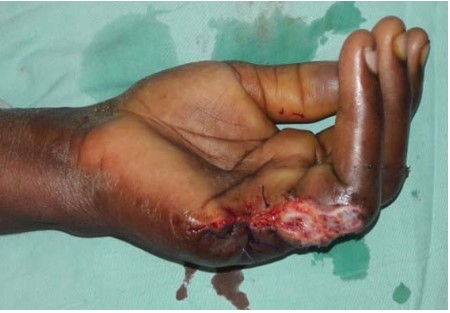
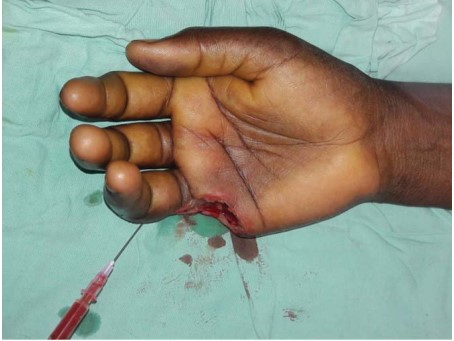
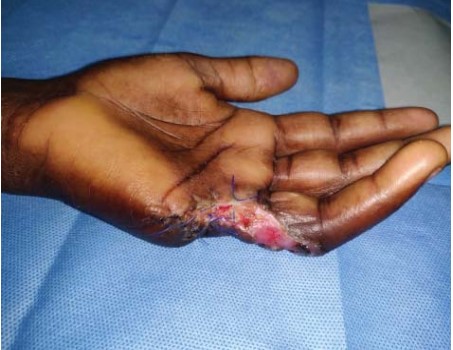
Electric burns causes severe morbidity an and is a common problem in our country despite the advancement in safety. Electric burns extend from mild blistering upto deep burns with extensive charring of tissues. Electric burns wound is known to cause difficulty in wound healing as there can be extensive necrosis and thrombosis of the vessels. Wound bed preparation may be needed in such difficult to heal wounds. Cost friendly alternatives to commercially available resources are essential in our population which can widen the acceptance of plastic surgery among the common people. In this study we have used the patient’s own blood for the preparation of platelet rich plasma using materials easily available in the hospital setup.
References
- 1. Alves R, Grimalt R: A randomized placebocontrolled, double blind, half head study to assess the efficacy of platelet rich plasma on the treatment of androgenetic alopecia. Dermatol Surg 2016;42:491–497.
- 2. Wroblewski AP, Melia HJ, Wright VJ: Application of platelet rich plasma to enhance tissue repair. Oper Tech Orthop 2010;20:98–105.
- 3. Lynch MD, Bashir S: Applications of plateletrich plasma in dermatology: a critical appraisal of the literature. J Dermatolog Treat 2016; 27:285–289.
- 4. Andia I, Abate M: Platelet rich plasma: underlying biology and clinical correlates. Regen Med 2013;8:645–658.
- 5. Ferrando J, Fernández-Sartorio C, González de Cossío AC, Navarra E: Tratamiento de la alopecia androgenetica con factores de crecimiento plaquetario. Monografías Dermatología 2016; 42:491–497.
Data Sharing Statement
There are no additional data available. All raw data and code are available upon request.
Funding
This research received no funding.
Author Contributions
All authors contributed significantly to the work and approve its publication.
Ethics Declaration
This article does not involve any human or animal subjects, and therefore does not require ethics approval.
Acknowledgements
We would like to express our gratitude to the patients, their families, and all those who have contributed to this study.
Conflicts of Interest
No conflicts of interest in this work.
About this article

Cite this article
Neljo Thomas, Nishad K., Ravi Kumar Chittoria et al./Role of APRP in Management of Electric Burns/J of Global Pub Health. 2023; 5(1): 47–49.
Licence:
Attribution-Non-commercial 4.0 International (CC BY-NC 4.0)This license enables reusers to distribute, remix, adapt, and build upon the material in any medium or format for noncommercial purposes only, and only so long as attribution is given to the creator.
| Received | Accepted | Published |
|---|---|---|
| December 13, 2022 | December 31, 2022 | June 25, 2023 |
DOI: NA
Keywords
Platelet rich plasmaElectric burnsArticle Level Metrics
Last UpdatedSaturday 05 September 2026, 13:17:12 (IST)
789
Accesses
1
120
00
Citations
NA
NA
NA
Download citation
Article Keywords
Keyword Highlighting
Highlight selected keywords in the article text.
Timeline
| Received | December 13, 2022 |
| Accepted | December 31, 2022 |
| Published | June 25, 2023 |
licence
Attribution-Non-commercial 4.0 International (CC BY-NC 4.0)
This license enables reusers to distribute, remix, adapt, and build upon the material in any medium or format for noncommercial purposes only, and only so long as attribution is given to the creator.