Full Text (PDF)
Indian Journal of Ancient Medicine and Yoga 19(3):p 150-158, July - September 2026. | DOI: 10.21088/ijamy.2455.8621.19326.2
Original Article
Balance Promotes Cognition: An Experimental Study with Balancing Asana in Early Adolescent Children
Kuntal Ghosh, Leitanthem Nganthoi Devi
Author Information
Licence:
Attribution-Non-commercial 4.0 International (CC BY-NC 4.0)This license enables reusers to distribute, remix, adapt, and build upon the material in any medium or format for noncommercial purposes only, and only so long as attribution is given to the creator.
Indian Journal of Ancient Medicine and Yoga 19(3):p 150-158, July - September 2026. | DOI: 10.21088/ijamy.2455.8621.19326.2
How Cite This Article:
Kuntal Ghosh, Leitanthem Nganthoi Devi. Balance Promotes Cognition: An Experimental Study with Balancing Asana in Early Adolescent Children. Ind J Anct Med Yoga. 2026; 19(3): 150-158.Timeline
Received : July 23, 2026
Accepted : August 24, 2026
Published : September 30, 2026
Abstract
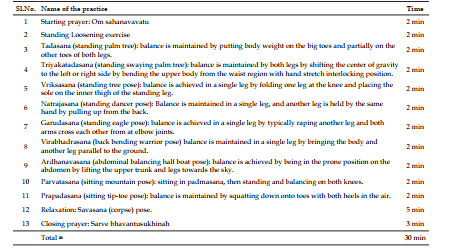
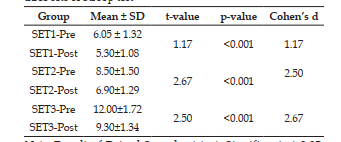
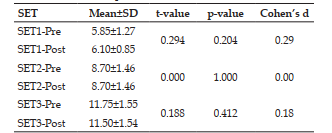
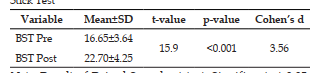
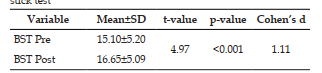
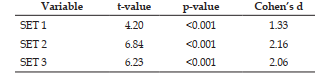
Introduction: Asana, the main component of yogic physical practice, is sure to promote motor skills and cognitive functions in normal and special needs children. Neural connectivity of vestibular organ with cognitive areas of the higher brain through the cerebellum and the locus coeruleus of the pons and induce neurotrophic factors, e.g., BDNF (brain-derived neurotrohphic factor) may transform balance motor skills to cognitive abilities with regular practice of asana. This open a scope of the role of Balancing Asana (BA) on cognition. So, the present study built on this premise of the mechanism of BA and cognition. Thus, a set of BA was introduced to children, and their balance and cognitive function were examined. Methods: Forty school children between 10 and 13 years were randomized as BA and control groups(n=20 each; mean age 11.4 ± 1.2 years). The children were assessed for cognition to the Stroop color-word task for children and balance the Bass stick test. After the pretest, the BA group practiced a set of BA 30 minutes daily, five days a week for six weeks,while the control group continued with their usual routine. Both groups were assessed at the end of six weeks. Results: Within-group and between-group results showed that the BA group significantly improved the Stroop color tasks (p<0.001) and Bass stick test balance (p<0.001) compared to a control group with larger effect sizes. Conclusion: Our findings demonstrated that BA impacts vestibular connectivity, which helps in inducing balance and improving balancing skills, thereby enhancing children's cognitive ability.
References
- 1. Bidzan-Bluma I, Lipowska M. Physical Activity and Cognitive Functioning of Children: A Systematic Review. Int J Environ Res Public Health. 2018;15(4):800. doi:10.3390/ ijerph15040800 2. Nanthakumar C. The benefits of yoga in children. J Integr Med. 2018;16(1):14-19. doi:10.1016/j.joim.2017.12.008
- 3. Eggleston B. The Benefits of Yoga for Children in Schools. The International Journal of Health, Wellness and Society; 2015;5(3):1-7. DOI:10.18848/2156-8960/CGP/v05i03/41125
- 4. Hagen I, Nayar US. Yoga for Children and Young People’s Mental Health and Well-Being: Research Review and Reflections on the Mental Health Potentials of Yoga. Front Psychiatry. 2014;5:35. doi:10.3389/fpsyt.2014.00035
- 5. Bhowmik BG, Ray US. Improvement in muscular strength, body flexibility and balance by yogasana and with reduced detraining effects by yoga breathing maneuvers: A nonrandomized controlled study. J Ayurveda Integr Med. 2024;15(1):100815. doi:10.1016/j. jaim.2023.100815
- 6. Omkar SN, Vishwas S, Tech B. Yoga techniques as a means of core stability training. J Bodyw Mov Ther. 2009;13(1):98-103. doi:10.1016/j. jbmt.2007.10.004; PMID: 19118798
- 7. Rathore M, Trivedi S, Abraham J, Sinha MB. Anatomical Correlation of Core Muscle Activation in Different Yogic Postures. Int J Yoga. 2017;10(2):59-66. doi:10.4103/0973- 6131.205515; PMID: 28546675
- 8. Ni M, Mooney K, Harriell K, Balachandran A, Signorile J. Core muscle function during specific yoga poses. Complement Ther Med. 2014;22(2):235-243. doi:10.1016/j. ctim.2014.01.007; PMID: 24731894
- 9. Pandit DP, Upadhyah A, Goyal P, Sharma D. Effect of short term yoga on body weight, BMI, body fat percentage & blood pressure. Indian J Clin Anat Physiol. 2019; 6(2), 179-182. doi. org/10.18231/j.ijcap.2019.040
- 10. Ray US, Pathak A, Tomer OS. Hatha yoga practices: energy expenditure, respiratory changes and intensity of exercise. Evid Based Complement Alternat Med. 2011;2011:241294. doi:10.1093/ecam/neq046; PMID: 21799675
- 11. Prakash RS, Voss MW, Erickson KI, Kramer AF. Physical activity and cognitive vitality. Annu Rev Psychol. 2015;66:769-797. doi:10.1146/annurev-psych-010814-015249; Kuntal Ghosh, Leitanthem Nganthoi Devi. Balance Promotes Cognition: An Experimental Study with Balancing Asana in Early Adolescent Children156 IJAMY / Volume 19 Number 1/July - September 2026 Indian Journal of Ancient Medicine and Yoga PMID: 25251492
- 12. Telles S, Singh N, Bhardwaj AK, Kumar A, Balkrishna A. Effect of yoga or physical exercise on physical, cognitive and emotional measures in children: a randomized controlled trial. Child Adolesc Psychiatry Ment Health. 2013;7(1):37. Published 2013 Nov 7. doi:10.1186/1753-2000- 7-37; PMID: 24199742 13. Parajuli N, Pradhan B, Bapat S. Effect of yoga on cognitive functions and anxiety among female school children with low academic performance: A randomized control trial. Complement Ther Clin Pract. 2022;48:101614. doi:10.1016/j.ctcp.2022.101614; PMID: 35688056
- 14. Mohanty S, Pradhan B, Hankey A. Yoga Practices as an Alternative Training for Physical Fitness in Children With Visual Impairment. Adapt Phys Activ Q. 2019;36(4):431-446. doi:10.1123/apaq.2018-0167 ; PMID: 31509796
- 15. Purohit SP, Pradhan B. Effect of yoga program on executive functions of adolescents dwelling in an orphan home: A randomized controlled study. J Tradit Complement Med. 2016;7(1):99- 105. Published 2016 Apr 20. doi:10.1016/j. jtcme.2016.03.001; PMID: 28053894
- 16. Jarraya S, Jarraya M, Nouira S. Effect of Yoga on Motor Skills and Self-Esteem in Kindergarten Children: A Randomized Controlled Trial. Int J Yoga Therap. 2022;32(2022): 10. doi:10.17761/2022-D-21-00060; PMID: 35997992
- 17. Ramakrishnan, R., & Sethu, S. Effects of Yogasanas practice on motor skills among school children. Children. 2018;14(4), 91-92.
- 18. M, Bhat A. Creative Yoga Intervention Improves Motor and Imitation Skills of Children With Autism Spectrum Disorder. Phys Ther. 2019;99(11):1520-1534. doi:10.1093/ ptj/pzz115; PMID: 31765484
- 19. Taylor M J. “Yoga Therapeutics: An Ancient Practice in a Twenty-First Century Setting.” Integrative Therapies in Rehabilitation. Routledge, 2024. 181-202.
- 20. Rao S, Pal R. “Exploring the Multidimensional Health Effects of Yogasana: A Comprehensive Overview.” Yoga-Exploring the Health Benefits and Diverse Dimensions, Intech Open, 2024. DOI: 10.5772/intechopen.1005096
- 21. Delhaye BP, Long KH, Bensmaia SJ. Neural Basis of Touch and Proprioception in Primate Cortex. Compr Physiol. 2018;8(4):1575-1602. Published 2018 Sep 14. doi:10.1002/cphy. c170033; PMID: 30215864 22. Winter L, Huang Q, Sertic JVL, Konczak J. The Effectiveness of Proprioceptive Training for Improving Motor Performance and Motor Dysfunction: A Systematic Review. Front Rehabil Sci. 2022;3:830166. doi:10.3389/ fresc.2022.830166 ; PMID: 36188962
- 23. Goldberg, Jay M., et al. The vestibular system: a sixth sense. Oxford University Press, 2011
- 24. Zwergal A, Grabova D, Schöberl F. Vestibular contribution to spatial orientation and navigation. Curr Opin Neurol. 2024;37(1):52-58. doi:10.1097/WCO.0000000000001230; PMID: 38010039
- 25. Diaz-Artiles A, Karmali F. Vestibular Precision at the Level of Perception, Eye Movements, Posture, and Neurons. Neuroscience. 2021;468:282-320. doi:10.1016/j. neuroscience.2021.05.028 ; PMID: 34087393 26. Hitier M, Besnard S, Smith PF. Vestibular pathways involved in cognition. Front IntegrNeurosci. 2014;8:59. Published 2014 Jul 23. doi:10.3389/fnint.2014.00059; PMID: 25100954
- 27. Dieterich M, Brandt T. Functional brain imaging of peripheral and central vestibular disorders. Brain. 2008;131(Pt 10):2538-2552. doi:10.1093/brain/awn042; PMID: 18515323
- 28. Epstein RA, Patai EZ, Julian JB, Spiers HJ. The cognitive map in humans: spatial navigation and beyond. Nat Neurosci. 2017;20(11):1504- 1513. doi:10.1038/nn.4656 ; PMID: 29073650
- 29. Ventre-Dominey J. Vestibular function in the temporal and parietal cortex: distinct velocity and inertial processing pathways. Front IntegrNeurosci. 2014;8:53. doi:10.3389/ fnint.2014.00053; PMID: 25071481
- 30. Koziol LF, Budding D, Andreasen N, et al. Consensus paper: the cerebellum’s role in movement and cognition. Cerebellum. 2014;13(1):151-177. doi:10.1007/s12311-013- 0511-x; PMID: 23996631
- 31. Baillieux H, De Smet HJ, Paquier PF, De Deyn PP, Mariën P. Cerebellar neurocognition: insights into the bottom of the brain. Clin Neurol Neurosurg. 2008;110(8):763-773. doi: 10.1016/j.clineuro.2008.05.013; PMID: 18602745
- 32. Smith LJ, Wilkinson D, Bodani M, Surenthiran SS. Cognition in vestibular disorders: state of the field, challenges, and priorities for the future. Front Neurol. 2024;15:1159174. doi:10.3389/fneur.2024.1159174; PMID: 38304077157 IJAMY / Volume 19 Number 3/July - September 2026
- 33. Smith PF, Geddes LH, Baek JH, Darlington CL, Zheng Y. Modulation of memory by vestibular lesions and galvanic vestibular stimulation. Front Neurol. 2010;1:141. doi:10.3389/ fneur.2010.00141 ; PMID: 21173897
- 34. Wiener-Vacher SR, Hamilton DA, Wiener SI. Vestibular activity and cognitive development in children: perspectives. Front IntegrNeurosci. 2013;7:92. doi:10.3389/fnint.2013.00092; PMID: 24376403
- 35. Craigmyle NA. The beneficial effects of meditation: contribution of the anterior cingulate and locus coeruleus. Front Psychol. 2013;4:731. doi:10.3389/fpsyg.2013.00731; PMID: 24137145
- 36. Melnychuk MC, Dockree PM, O’Connell RG, Murphy PR, Balsters JH, Robertson IH. Coupling of respiration and attention via the locus coeruleus: Effects of meditation and pranayama. Psychophysiology. 2018;55(9): e13091. doi:10.1111/psyp.13091; PMID: 29682753
- 37. Aitken P, Zheng Y, Smith PF. The modulation of hippocampal theta rhythm by the vestibular system. J Neurophysiol. 2018;119(2):548-562. doi:10.1152/jn.00548.2017; PMID: 29167325
- 38. Li JY, Kuo TBJ, Hung CT, Yang CCH. Voluntary exercise enhances hippocampal theta rhythm and cognition in the rat. Behav Brain Res. 2021;399:112916. doi:10.1016/j. bbr.2020.112916; PMID: 32949643
- 39. Soltani ZH, Ghadiri T, Seyedi M, et al. Theta Oscillations Through Hippocampal/ Prefrontal Pathway: Importance in Cognitive Performances. Brain Connect. 2020;10(4):157-169. doi:10.1089/brain.2019.0733; PMID: 32264690
- 40. Zuhtu BY. ‘The Potential Role of ExerciseInduced Neurotrophic Factors for Mental Health’. Mental Health - Preventive Strategies, Intech Open, 19 July 2023. Crossref, doi:10.5772/intechopen.106867
- 41. Sharma K, Pannu V, Sayal N, Bhalla A, Anand A. Effects of one month of Common Yoga Protocol practice appear to be mediated by the angiogenic and neurogenic pathway: A pilot study. Explore (NY). 2021;17(5):451- 457. doi:10.1016/j.explore.2020.09.007; PMID: 33059980
- 42. Nicastro TM, Greenwood BN. Central monoaminergic systems are a site of convergence of signals conveying the experience of exercise to brain circuits involved in cognition and emotional behavior. Curr Zool. 2016;62(3):293-306. doi:10.1093/cz/ zow027; PMID: 29491917
- 43. MacLeod CM. Half a century of research on the Stroop effect: an integrative review. Psychol Bull. 1991;109(2):163-203. doi:10.1037/0033- 2909.109.2.163; PMID: 2034749
- 44. Golden CJ, Freshwater SM, Golden Z: Stroop Color and Word Test Children’s Version for ages 5–14: A manual for clinical and experimental uses. U.S.A. Stoelting Co.; 2003.
- 45. Johnson BL, Nelson JK. Practical measurements for evaluation in physical education. (1979) 3rd edition, Burgess Publishing Company, Minneapolis. ISBN: 9780808710110, 0808710117
- 46. A. Executive functions. Annu Rev Psychol. 2013; 64:135-168. doi:10.1146/annurevpsych-113011-143750 ; PMID: 23020641
- 47. Thorell LB, Lindqvist S, Bergman Nutley S, Bohlin G, Klingberg T. Training and transfer effects of executive functions in preschool children. Dev Sci. 2009;12(1):106-113. doi:10.1111/j.1467-7687.2008.00745.x ; PMID: 19120418
- 48. TA, Laird AR, Ray KL, Dean YM, Glahn DC, Carter CS. Meta-analytic evidence for a superordinate cognitive control network subserving diverse executive functions. Cogn Affect BehavNeurosci. 2012;12(2):241- 268. doi:10.3758/s13415-011-0083-5 ; PMID: 22282036
- 49. Nachev P, Kennard C, Husain M. Functional role of the supplementary and pre-supplementary motor areas. Nat Rev Neurosci. 2008;9(11):856- 869. doi:10.1038/nrn2478; PMID: 18843271
- 50. Rogge AK, Röder B, Zech A, Nagel V, Hollander K, Braumann KM, Hötting K. Balance training improves memory and spatial cognition in healthy adults. Scientific reports. 2017; 7(1):5661. doi: 10.1038/s41598-017-06071- 9; PMID: 28720898
- 51. Silva MB, Martinho Fernandes LFR, Caetano E Souza RH, Rosa de Sá AA, Naves ELM. Analysis of ankle muscle activity: A study on static balance with eyes closed and high-heeled shoes. Foot (Edinb). 2024. 60:102100. doi:10.1016/j.foot.2024.102100; PMID: 38810470
- 52. Prosperini L, Pozzilli C. The clinical relevance of force platform measures in multiple sclerosis: a review. Mult Scler Int. 2013;2013:756564. doi:10.1155/2013/756564 ; PMID: 23766910
- 53. VanderFels IM, TeWierike SC, Hartman E, Elferink-Gemser MT, Smith J, Visscher C. Kuntal Ghosh, Leitanthem Nganthoi Devi. Balance Promotes Cognition: An Experimental Study with Balancing Asana in Early Adolescent Children158 IJAMY / Volume 19 Number 1/July - September 2026 Indian Journal of Ancient Medicine and Yoga The relationship between motor skills and cognitive skills in 4-16 year old typically developing children: A systematic review. J Sci Med Sport. 2015;18(6):697-703. doi:10.1016/j. jsams.2014.09.007; PMID: 25311901
- 54. O’Hagan AD, Behan S, Peers C, Belton S, O’Connor N, Issartel J. Do our movement skills impact our cognitive skills? Exploring the relationship between cognitive function and fundamental movement skills in primary school children. J Sci Med Sport. 2022;25(11):871- 877. doi:10.1016/j.jsams.2022.08.001; PMID: 36064502
- 55. Surgent OJ, Dadalko OI, Pickett KA, Travers BG. Balance and the brain: A review of structural brain correlates of postural balance and balance training in humans. Gait Posture. 2019;71:245- 252. doi:10.1016/j.gaitpost.2019.05.011; PMID: 31082657
- 56. Karadeniz S, Suveren C, Arslan Y, et al. Examination of basic motor skills in children and adolescents.Front Physiol. 2024;14:1346750. doi:10.3389/fphys.2023.1346750; PMID: 38481765
Data Sharing Statement
There are no additional data available. All raw data and code are available upon request.
Funding
This research received no funding.
Author Contributions
All authors contributed significantly to the work and approve its publication.
Ethics Declaration
This article does not involve any human or animal subjects, and therefore does not require ethics approval.
Acknowledgements
We would like to express our gratitude to the patients, their families, and all those who have contributed to this study.
Conflicts of Interest
No conflicts of interest in this work.
About this article

Cite this article
Kuntal Ghosh, Leitanthem Nganthoi Devi. Balance Promotes Cognition: An Experimental Study with Balancing Asana in Early Adolescent Children. Ind J Anct Med Yoga. 2026; 19(3): 150-158.
Licence:
Attribution-Non-commercial 4.0 International (CC BY-NC 4.0)This license enables reusers to distribute, remix, adapt, and build upon the material in any medium or format for noncommercial purposes only, and only so long as attribution is given to the creator.
| Received | Accepted | Published |
|---|---|---|
| July 23, 2026 | August 24, 2026 | September 30, 2026 |
DOI: 10.21088/ijamy.2455.8621.19326.2
Keywords
Balancing Asana •Vestibular OrganCerebellumBalanceCognitionSearch for Similar Articles
Similar Articles
- Effect of Ayurvedic Drugs on Fungal Infection: A Case Report
- Nabhi Chyuti in Hatha Yoga Literature: A Systematic Review of Textual Evidence...
- Integrative Role of Yogic Interventions in Epilepsy Management: A Systematic an...
- Stability Study of Bramhyadi Tablet’ used in the Management of PreOperative Anxi...
- A Comparison of Participant Rated Relaxation and affect following Yoga Nidra an...
Article Level Metrics
Last UpdatedSunday 18 October 2026, 12:31:41 (IST)
5221
Accesses
30
890
00
Citations
NA
NA
NA
Download citation
Article Keywords
Keyword Highlighting
Highlight selected keywords in the article text.
Timeline
| Received | July 23, 2026 |
| Accepted | August 24, 2026 |
| Published | September 30, 2026 |
licence
Attribution-Non-commercial 4.0 International (CC BY-NC 4.0)
This license enables reusers to distribute, remix, adapt, and build upon the material in any medium or format for noncommercial purposes only, and only so long as attribution is given to the creator.