Full Text (PDF)
Indian Journal of Ancient Medicine and Yoga 17(3):p 149-153, July - Sept. 2024. | DOI: https://doi.org/10.21088/ijamy.0974.6986.17324.5
Case Report
Ayurvedic Management of Tinea Corporis (Dadru Kustha): A Case Study
Yogeshkumar R. Meghani, P.B. Joshi
Author Information
Licence:
Attribution-Non-commercial 4.0 International (CC BY-NC 4.0)This license enables reusers to distribute, remix, adapt, and build upon the material in any medium or format for noncommercial purposes only, and only so long as attribution is given to the creator.
Indian Journal of Ancient Medicine and Yoga 17(3):p 149-153, July - Sept. 2024. | DOI: https://doi.org/10.21088/ijamy.0974.6986.17324.5
How Cite This Article:
Meghani YR, Joshi PB. Ayurvedic Management of Tinea Corporis (Dadru Kustha): A Case Study. Indian J Ancient Med Yoga. 2024;17(3):149-153.Timeline
Received : August 26, 2024
Accepted : October 05, 2024
Published : September 08, 2024
Abstract
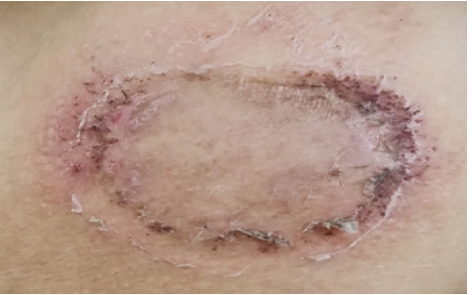
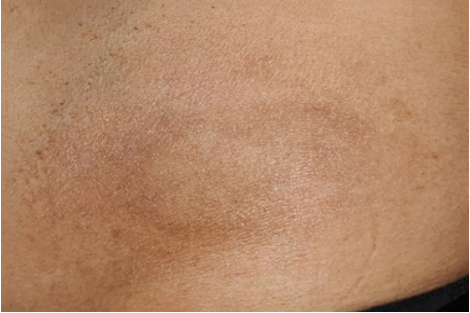
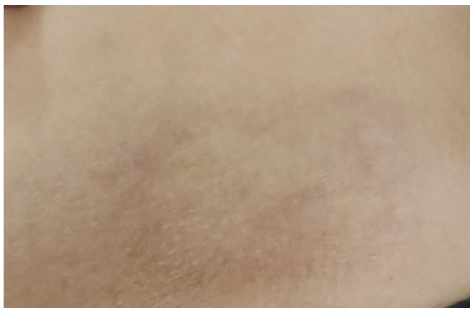
Tinea corporis is a superficial dermatophyte infection of the skin. Tinea corporis is most often caused by species of Trichophyton rubrum, T. tonsurans and Microsporum canis. Tinea corporis typically presents as a well-demarcated, sharply circumscribed, oval or circular, mildly erythematous, scaly patch or plaque with a raised leading edge. In Ayurveda, Tinea corporis can be co related with Dadru as per the symptoms of the disease. To evaluate the efficacy of an Ayurvedic treatment regimen for tinea corporis and assess its impact on symptom relief and lesion resolution. A 52-year-old male patient presented with itching, burning sensation, and a scaly ring-shaped patch on the left abdominal wall. The patient was treated with an Ayurvedic protocol comprising oral medicines and local application. The patient reported a significant reduction in itching, with the skin patch nearly disappearing. At the end of treatment, itching had ceased, and the skin patch was completely resolved. The treatment demonstrated effective resolution of symptoms and lesion clearance.
References
- 1. Hsu S, Le EH, Khoshevis MR. Differential diagnosis of annular lesions. Am Fam Physician. 2001;64(2):289–296. PMID: 11476274.
- 2. Leung AKC, Lam JM, Leong KF, Hon KL. Tinea corporis: an updated review. Drugs in Context 2020; 9: 2020-5-6. DOI: 10.7573/dic.2020-5-6.
- 3. Surendran KA, Bhat RM, Boloor R, Nandakishore B, Sukumar D. A clinical and mycological study of dermatophytic infections. Indian J Dermatol. 2014;59(3):262–267. https:// doi.org/10.4103/0019-5154.131391
- 4. Adams BB. Tinea corporis gladiatorum. J Am Acad Dermatol. 2002;47(2):286–290. https://doi. org/10.1067/mjd.2002.120603.
- 5. Yee G, Al Aboud AM. Tinea Corporis. [Updated 2023 Aug 8]. In: Stat Pearls [Internet]. Treasure Island (FL): Stat Pearls Publishing; 2024 Jan Available from: https://www.ncbi.nlm.nih. gov/books/NBK544360/.
- 6. Kelly BP. Superficial fungal infections. Pediatr Rev. 2012;33(4):e22–e37. https://doi. org/10.1542/pir.33-4-e22.
- 7. Weinstein A, Berman B. Topical treatment of common superficial tinea infections. Am Fam Physician. 2002;65(10):2095–2102. PMID: 12046779.
- 8. Goldstein AO, Goldstein BG. Dermatophyte (tinea) infections. Waltham, USA: UpToDate. https://www.uptodate.com/contents/ dermatophyte-tinea-infections. Accessed April 30, 2020.
- 9. Vd. Laxmi patishastri yogratnakar choukhamba prakashan Varanasi 2021, Uttaradh, Rasayana adhikar, page. No. 501-502.
- 10. Sharma PV, editor. Charak Samhita, Chikitsa Sthan, 7/23. Reprinted. Delhi: Chaukhambha Sanskrit Pratishthan. 2015:184.
- 11. Tripathi BN, editor. Astang Hrdayam, Nidan Sthana 14/24. Reprinted. Delhi: Chaukhambha Sanskrit Pratishthan. 2017: 530.
- 12. https://www.kisantak.in/crops/story/ kusum-flower-cultivation-is-profitable-forfarmers-to-protect-their-plants-from-these-4- diseases-694122-2023-10-13.
- 13. https://www.deepayurveda.com/atasilinum-usitatissimum-herb-ayurvedicoverview/.
- 14. Thakral KK, editor. Sushruta Samhita, Nidan Sthana 5/18. 1st ed. Varanasi: Chaukhambha Orientalia. 2014:756.
- 15. Lather, Dr Amit. (2011). An Ayurvedic Polyherbal Formulation Kaishore Guggulu: A Review.
- 16. Vd. Vidhyadhara, Rasa Tarangini Bhasha, Jagat Pustak Bhandar, Dehli, Astham Tarang, Page No 111.
- 17. Leena K C, Sanila V K, Noble T M, Arya R P. A critical review on Gandhakadya malahara. Kerala Journal of Ayurveda. 2022; 1(1): 49–53. https://doi.org/10.55718/kja.82.
- 18. Thakral KK, editor. Sushruta Samhita, Nidan Sthana 5/29, 30. 1st ed. Varanasi: Chaukhambha Orientalia. 2014:759.
- 19. Thakral KK, editor. Sushruta Samhita, Nidan Sthana 5/31,32. 1st ed. Varanasi: Chaukhambha Orientalia. 2014:760.
- 20. Thakral KK, editor. Sushruta Samhita, Nidan Sthana 9/72. 1st ed. Varanasi: Chaukhambha Orientalia. 2014:310.
Data Sharing Statement
There are no additional data available.
Funding
This research received no funding.
Author Contributions
All authors contributed significantly to the work and approve its publication.
Ethics Declaration
This article does not involve any human or animal subjects, and therefore does not require ethics approval.
Acknowledgements
Prof. (Dr.) B.J. Patgiri, Director, ITRA, Jamnagar and Prof. (Dr.) T.S. Dudhamal HOD of Shalya Tantra Department, ITRA, Jamnagar for providing all facilities in the department to conduct the research.
Conflicts of Interest
The authors report no conflicts of interest in this work.
About this article

Cite this article
Meghani YR, Joshi PB. Ayurvedic Management of Tinea Corporis (Dadru Kustha): A Case Study. Indian J Ancient Med Yoga. 2024;17(3):149-153.
Licence:
Attribution-Non-commercial 4.0 International (CC BY-NC 4.0)This license enables reusers to distribute, remix, adapt, and build upon the material in any medium or format for noncommercial purposes only, and only so long as attribution is given to the creator.
| Received | Accepted | Published |
|---|---|---|
| August 26, 2024 | October 05, 2024 | September 08, 2024 |
DOI: https://doi.org/10.21088/ijamy.0974.6986.17324.5
Keywords
Bruhat Manjisthadi KwathDadruGandhak RasayanKeshor GugguluTinea corporisSearch for Similar Articles
Similar Articles
- Efficacy of Katupila Ghrita in the Management of Itartha dagdha Vrana (Burn Woun...
- Clinical Outcomes of Ayurvedic Management in Acute Influenza Like Illness: A Cas...
- Effect of Ayurvedic Drugs on Scalp Psoriasis (Kitibha Kustha)
- Yogic Elements in the Brahma Mahapurana: A Textual and Comparative Study
- Management of Adenoid Hypertrophy: An Ayurvedic Perspective
Article Level Metrics
Last UpdatedTuesday 15 September 2026, 13:40:58 (IST)
4098
Accesses
9
833
00
Citations
NA
NA
NA
Download citation
Article Keywords
Keyword Highlighting
Highlight selected keywords in the article text.
Timeline
| Received | August 26, 2024 |
| Accepted | October 05, 2024 |
| Published | September 08, 2024 |
licence
Attribution-Non-commercial 4.0 International (CC BY-NC 4.0)
This license enables reusers to distribute, remix, adapt, and build upon the material in any medium or format for noncommercial purposes only, and only so long as attribution is given to the creator.