Full Text (PDF)
Indian Journal of Anesthesia and Analgesia 13(2):p 69-72, April-June 2026. | DOI: https://doi.org/10.21088/ijaa.2349.8471.13226.2
Review Article
Awake Fiberoptic-Guided Intubation in Suspected Esophageal Perforation: A Proactive Airway Strategy
Sanjay Kumar, Rajesh Kumar, Rekha Kumari, Saket Prakash, Sunil Kumar, Anil Kumar, Anurag Kumar, Majid Anwer
Author Information
Licence:
Attribution-Non-commercial 4.0 International (CC BY-NC 4.0)This license enables reusers to distribute, remix, adapt, and build upon the material in any medium or format for noncommercial purposes only, and only so long as attribution is given to the creator.
Indian Journal of Anesthesia and Analgesia 13(2):p 69-72, April-June 2026. | DOI: https://doi.org/10.21088/ijaa.2349.8471.13226.2
How Cite This Article:
Rajesh Kumar, Rekha Kumari, Sanjay Kumar, et al. Awake Fiberoptic-Guided Intubation in Suspected Esophageal Perforation: A Proactive Airway Strategy. Ind J Anesth Analg. 2026; 13(2): 69-72.Timeline
Received : March 31, 2026
Accepted : April 30, 2026
Published : June 30, 2026
Abstract
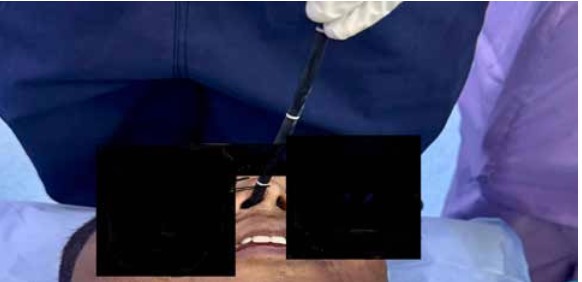
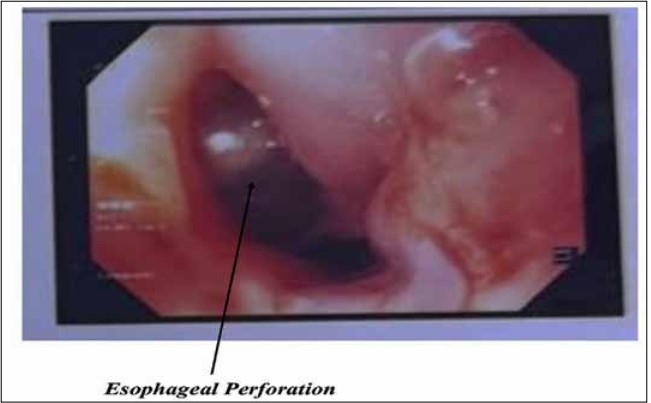
Esophageal perforation is a rare but potentially life-threatening condition associated with significant morbidity and mortality, particularly when diagnosis is delayed. Airway management in such patients presents unique challenges due to the risk of aspiration, mediastinal contamination, and airway compromise. We report the case of a 28-year-old male presenting with dysphagia who underwent upper gastrointestinal endoscopy. Anticipating a high aspiration risk, airway management was secured using awake fiberoptic-guided nasotracheal intubation. This approach allowed preservation of spontaneous ventilation, airway reflexes, and continuous visualisation. The procedure was uneventful, and the patient remained stable. This case highlights the importance of anticipatory airway planning and supports awake fiberoptic intubation as a proactive strategy in physiologically difficult airway scenarios.
References
- 1. Markar S.R., Mackenzie H., Wiggins T., Askari A., Faiz O., Zaninotto G., et al. Management and outcomes of esophageal perforation: A systematic review. Diseased Esophagus. 2020; 33: doz074. doi:10.1093/dote/doz074
- 2. Biancari F., Saarnio J., Mennander A. Outcome of patients with esophageal perforations. World J Surg. 2020; 44: 234–241. doi:10.1007/s00268-019-05247-8
- 3. Aiolfi A., Inaba K., Recinos G., et al. Esophageal perforation: A clinical review. World J Emerg Surg. 2021; 16: 15. doi:10.1186/s13017-021-00354-7
- 4. Apfelbaum J.L., Hagberg C.A., Connis R.T., Abdelmalak B.B., Agarkar M., Dutton R.P., et al. Practice guidelines for management of the difficult airway: 2022 update. Anesthesiology. 2022; 136: 31–81. doi:10.1097/ALN.0000000000004002
- 5. Ahmad I., El-Boghdadly K., Bhagrath R., Hodzovic I., McNarry A.F., Mir F., et al. Difficult Airway Society guidelines for awake tracheal intubation. Anaesthesia. 2020; 75: 509–528. doi:10.1111/anae.14904
- 6. Heidegger T. Management of the difficult airway. Br J Anaesth. 2021; 127: 14–24. doi:10.1016/j.bja.2021.03.012
Data Sharing Statement
There are no additional data available. All raw data and code are available upon request.
Funding
This research received no funding.
Author Contributions
All authors contributed significantly to the work and approve its publication.
Ethics Declaration
This article does not involve any human or animal subjects, and therefore does not require ethics approval.
Acknowledgements
We would like to express our gratitude to the patients, their families, and all those who have contributed to this study.
Conflicts of Interest
No conflicts of interest in this work.
About this article

Cite this article
Rajesh Kumar, Rekha Kumari, Sanjay Kumar, et al. Awake Fiberoptic-Guided Intubation in Suspected Esophageal Perforation: A Proactive Airway Strategy. Ind J Anesth Analg. 2026; 13(2): 69-72.
Licence:
Attribution-Non-commercial 4.0 International (CC BY-NC 4.0)This license enables reusers to distribute, remix, adapt, and build upon the material in any medium or format for noncommercial purposes only, and only so long as attribution is given to the creator.
| Received | Accepted | Published |
|---|---|---|
| March 31, 2026 | April 30, 2026 | June 30, 2026 |
DOI: https://doi.org/10.21088/ijaa.2349.8471.13226.2
Keywords
Esophageal perforationDifficult airwayAwake fiberoptic intubationAirway managementGastrointestinal endoscopySearch for Similar Articles
Similar Articles
- Awake Fibreoptic Intubation for Airway Management in Massive Thyroid Enlargement...
- A Case of Thoracotomy with One Lung Ventilation for Carcinoma Oesophagus
- A Case of Empyema for Thoracotomy and Decortication-Anaesthesia Management
- Full Mouth Rehabilitation in a 3-Year-Old Female Child with Repaired Tetralogy o...
- Do Gel Manicures Affect SpO2 Readings ? A Clinical Investigation
Article Level Metrics
Last UpdatedFriday 11 September 2026, 02:50:20 (IST)
9033
Accesses
26
803
00
Citations
NA
NA
NA
Download citation
Article Keywords
Keyword Highlighting
Highlight selected keywords in the article text.
Timeline
| Received | March 31, 2026 |
| Accepted | April 30, 2026 |
| Published | June 30, 2026 |
licence
Attribution-Non-commercial 4.0 International (CC BY-NC 4.0)
This license enables reusers to distribute, remix, adapt, and build upon the material in any medium or format for noncommercial purposes only, and only so long as attribution is given to the creator.