Full Text (PDF)
Journal of Dermatology 9(2):p 65-70, July-December 2024. | DOI: NA
Case Report
Application of Telemedicine in Wound Management and Follow-up after Discharging of Patients from Hospital
Ravi Kumar Chittoria, Karthikeyan , Jacob Antony Chakiath, Kanav Gupta
Author Information
Licence:
Attribution-Non-commercial 4.0 International (CC BY-NC 4.0)This license enables reusers to distribute, remix, adapt, and build upon the material in any medium or format for noncommercial purposes only, and only so long as attribution is given to the creator
Journal of Dermatology 9(2):p 65-70, July-December 2024. | DOI: NA
How Cite This Article:
Karthikeyan, Chittoria RK, et al. Application of Telemedicine in Wound Management and Follow-up after Discharging of Patients from Hospital. RFP Jr of Drea. 2024;9(2):65-70.Timeline
Received : May 06, 2024
Accepted : June 29, 2024
Published : December 31, 2024
Abstract
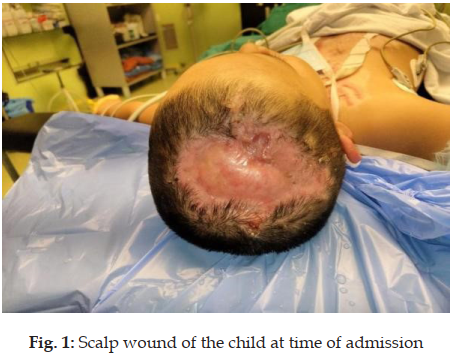
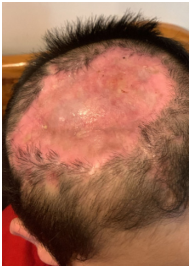
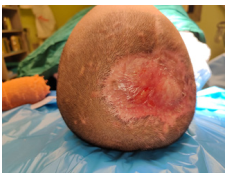
The increasing physical, mental, societal, and financial challenges posed by wounds and their care for individuals, families, and society underscore the urgent need for attention from the healthcare sector. Various factors contribute to the shifting landscape of healthcare provision for patients dealing with chronic wounds, including managed care dynamics, the scarcity of wound care specialists, a growing elderly and disabled population, regulatory concerns, and legal liabilities. Physicians also grapple with complex issues in managing chronic wound cases due to their time-intensive nature, high-risk profile, lack of profitability, and legal implications. Telemedicine emerges as a valuable tool to facilitate communication between physicians and specialized wound care experts. Utilizing digital imaging for skin lesions offers a safe, precise, and cost-efficient means of referral. Telemedicine employs two primary modes—store and forward (asynchronous transfer) and real-time transmission (synchronous transfer, such as video conferencing)—in the wound care context. In the hands of experienced clinicians, telemedicine technology can streamline the management of challenging wounds. While apprehension about technological change persists, the evolution of telemedicine in wound care has demonstrated a foreseeable process of advancement. In this case report, we have reported a case of 8 year old male child who sustained electrical burns over scalp, and was discharged later following wound healing. The child later developed pustule over the scalp which was picked up immediately and attended to, because of serial follow up everyday following discharge, because of telemedicine
References
- 1. Perednia D.A., Allen A. Telemedicine technology and clinical applications. JAMA. 1995;273:483–8.
- 2. Chittoria R.K., Singh U., Muralidhar A. Telemedicine for Doctors. 1st ed. New Delhi (India): AITBS Publishers; 2009.
- 3. Meyer B.C., Friedman L.S. Telemedicine-closing in on distance medicine. San Diego Physician. 2010; 97:36–9.
- 4. Dobke M.K., Renkielska A., De Neve J., Chao J., Bhavsar D. Telemedicine for problematic wound management: Enhancing communication between long-term care, skilled nursing, and home caregivers and a surgical wound specialist. WOUNDS: A Compendium of Clinical Research and Practice. 2006; 18:256–61.
- 5. Tadros A., Murdoch R., Stevenson J.H. Digital image referral for suspected skin malignancy - a pilot study of 300 patients. J Plast Reconstr Aesth Surg. 2009; 62:1048–53.
- 6. Dobke M.K., Bhavsar D., Gosman A.A., De Neve J., De Neve B. Streamlining the management of patients with problematic wounds: Must a multidisciplinary team formulate all patient management plans? WOUNDS: A Compendium of Clinical Research and Practice. 2007; 19:340–4.
- 7. Terry M., Halstead L.S., O’Hare P., Gaskill C., Ho P.S., Obecny J., et al. Feasibility study of home care wound management using telemedicine. Adv Skin Wound Care. 2009; 22:358–64.
- 8. Patricoski C., Ferguson A.S., Brudzinski J., Spargo G. Selecting the right digital camera for telemedicine. Telemed J E Health. 2010; 16:1–8.
- 9. Jones S.M., Banwell P.E., Shakespeare P.G. Telemedicine in wound healing. Int Wound J. 2004; 1:225–30.
- 10. Dobke M.K., Bhavsar D., Gosman A., De Neve J., De Neve B. Pilot trial of telemedicine as a decision aid for patients with chronic wounds. Telemed J E Health. 2008; 14:245–9.
- 11. Berguist T.F., Thompson K., Gehl C., Muno Pineda J. Satisfaction ratings after receiving Internet- based cognitive rehabilitation in persons with memory impairments after severe acquired brain injury. Telemed J.E. Health. 2010; 16:417–23.
- 12. Bridgen M., Minty A., Pilatzke S., Vidova L.D., Sherrington L., McPhail K. A survey of recipient client physician satisfaction with teleoncology services originating from Thunder Bay Regional Health Sciences Centre. Telemed J.E. Health. 2008; 14:250–4.
- 13. Hanson D., Calhoun J., Smith D. Changes in provider attitudes toward telemedicine. Telemed J.E. Health. 2009; 15:39–43.
- 14. Loera J.A. Generational differences in acceptance of technology. Telemed J.E. Health. 2008; 14:1087–90.
- 15. May C., Harrison R., MacFarlane A., Williams T., Mair F., Wallace P. Why do telemedicine systems fail to normalize as stable models of service delivery? J. Telemed Telecare. 2003; 9 (suppl 1):25–6.
- 16. McIntyre T., Monahan T., Villegas L., Doyle J., Jones D.B. Teleconferencing surgery enhances effective communication and enriches medical education. Surg Laparosc Endosc Percutan Tech. 2008; 18:45–8.
- 17. Nesbitt T.S., Hilty D.M., Siefkin A. Development of a telemedicine program. Western J. Med. 2000; 173:169–74.
- 18. Stanberry B. Legal and ethical aspects of telemedicine. J TelemedTelecare. 2006;22:166–74.
- 19. Nijland A., Julia E.W., Pinjen G.V. Increasing the use of e-consultation in primary care: Results of an online survey among non-users of e-consultation. Int J. Med Inform. 2009; 78:688–703.
- 20. Xiao Y., Gagliano D., LaMonte M., et al. Design and evaluation of a real-time mobile telemedicine system for ambulance transport. 2000;9:47–56.
- 21. Foltynski P., Ladyzynski P., Wojcicki J.M. Telemonitoring of diabetic foot ulcers being managed in the outpatient setting. The Diabetic Foot Journal. 2012; 15:74–82.
- 22. Caffery L.J., Smith A.C. A literature review of email-based telemedicine. Stud Health Technol Inform. 2010; 161:20–34.
- 23. Turk E., Karagulle E., Aydogan C., Oguz H., Tarim A., Karakayali H., et al. Use of telemedicine and telephone consultation in decision-making and follow-up of burn patients: Initial experience from two burn units. Burns. 2011; 37:415–9.
- 24. Waran V., Selladurai B.M., Bahuri N.F., George G.J., Lim G.P., Khine M. Teleconferencing using multimedia messaging service (MMS) for longrange consultation of patients with neurosurgical problems in an acute situation. J. Trauma. 2008; 64:362–5.
Data Sharing Statement
There are no additional data available
Funding
This research received no funding
Author Contributions
All authors contributed significantly to the work and approve its publication
Ethics Declaration
This article does not involve any human or animal subjects, and therefore does not require ethics approval
Acknowledgements
Information Not Provided
Conflicts of Interest
No conflicts of interest in this work
About this article

Cite this article
Karthikeyan, Chittoria RK, et al. Application of Telemedicine in Wound Management and Follow-up after Discharging of Patients from Hospital. RFP Jr of Drea. 2024;9(2):65-70.
Licence:
Attribution-Non-commercial 4.0 International (CC BY-NC 4.0)This license enables reusers to distribute, remix, adapt, and build upon the material in any medium or format for noncommercial purposes only, and only so long as attribution is given to the creator
| Received | Accepted | Published |
|---|---|---|
| May 06, 2024 | June 29, 2024 | December 31, 2024 |
DOI: NA
Keywords
TelemedicineWound managementFollow-up after dischargeSearch for Similar Articles
Similar Articles
- Role of Topical Cholecalciferol Granules in the Recovery and Management of Therm...
- Chitosan Liquid Wound Dressing in the Use of Deep Scald Burns
- Role of Biocellulose Occlusive Dressing in Partial Thickness Burn Wound Manageme...
- Artificial Intelligence in the Digital Transformation of Dermatology: Current E...
- Artificial Intelligence in Dermatology in India: A PRISMA-Compliant Systematic...
Article Level Metrics
Last UpdatedSaturday 05 September 2026, 21:01:52 (IST)
1128
Accesses
17
109
00
Citations
NA
NA
NA
Download citation
Article Keywords
Keyword Highlighting
Highlight selected keywords in the article text.
Timeline
| Received | May 06, 2024 |
| Accepted | June 29, 2024 |
| Published | December 31, 2024 |
licence
Attribution-Non-commercial 4.0 International (CC BY-NC 4.0)
This license enables reusers to distribute, remix, adapt, and build upon the material in any medium or format for noncommercial purposes only, and only so long as attribution is given to the creator