Full Text (PDF)
Indian Journal of Surgical Nursing 14(3):p 93-105, Sep- Dec. 2025. | DOI: 10.21088/ijsn.2277.467X.14325.3
Original Article
A Study to assess the Effectiveness of Structured Teaching Programme on Knowledge of Clients Regarding Prevention and Management of Renal calculi at Gandhi Hospital, Secunderabad, Andhra Pradesh
Author Information
Licence:
Attribution-Non-commercial 4.0 International (CC BY-NC 4.0)This license enables reusers to distribute, remix, adapt, and build upon the material in any medium or format for noncommercial purposes only, and only so long as attribution is given to the creator.
Indian Journal of Surgical Nursing 14(3):p 93-105, Sep- Dec. 2025. | DOI: 10.21088/ijsn.2277.467X.14325.3
How Cite This Article:
Biva Sinha. A Study to Assess the Effectiveness of Structured Teaching Programme on Knowledge of Clients Regarding Prevention and Management of Renal Calculi at Gandhi Hospital, Secunderabad, Andhra Pradesh. J Surg. Nurs. 2025; 14(3): 93-105.Timeline
Received : July 18, 2025
Accepted : October 06, 2025
Published : December 30, 2025
Abstract
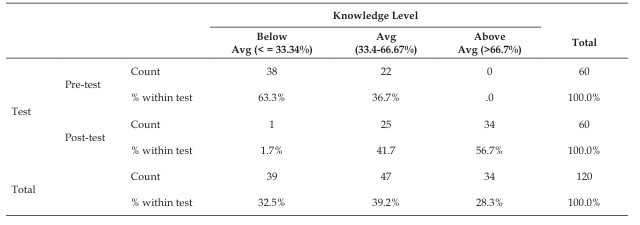
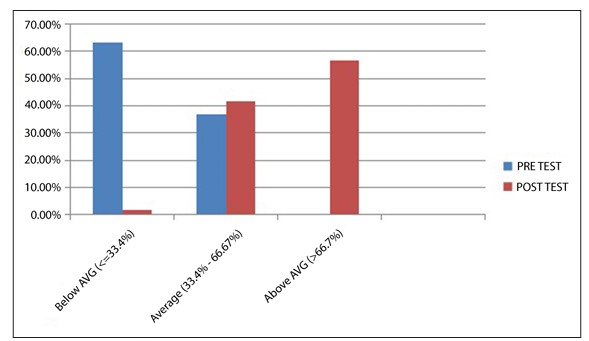
Background: Renal Calculi, or commonly known as Kidney Stones, are hard deposits made of crystals that accumulate in the urinary tract. These crystals are primarily formed when calcium and oxalate combine. These stones usually start in the kidney and find their way out through the urinary system. Renal Calculi is a painful condition that cause obstruction of urine flow in the renal collecting system, ureters, or urethra and result in severe pain, bleeding, or local erosion of kidney tissues. Aims: To assess the knowledge of client regarding Renal calculi. Material and Methods: An systematic approach with one group pre-test and posttest design (pre- experimental) was adopted in order to evaluate effectiveness of structured teaching programme on prevention and management of renal calculi at Gandhi hospital, Secunderabad, Andhra Pradesh. Results: Majority of the sample belonged to age group 21 – 35 years (76.10%.), male (51.67), having intermediate school education (63.3%), doing business (50%), having family income of Rs 9001 – 12000 (66.7%), Hindu background (68.33%), Non-vegetarian (60%). There was a significant difference between pre-test and post-test knowledge scores (t(47) =32.81, P<0.05; Tabled value = 2.02). • There was significant association between pre-test and post test knowledge scores and age. mean score in pretest 9.50 and post test: 21.05 (36-50 years). Conclusion: kidney stones can have significant implications for kidney health, potentially leading to changes in kidney shape through various mechanisms. As prevention is better than cure so adequate knowledge and proper care should be taken to reduce Morbidity.
References
- 1. Polit D.F., hungler B.P., “Nursing research principles and methods”, 6th edition, philadephia J B Lippincott Company, 1999, 250-265.
- 2. Basavanthappa B.T., “Nursing Research”, 1st edition Jaypee Brothers Publishers Bangalore, 2005, 190-215.
- 3. Kothari C.R., “Research Methodology Methods and Techniques”, new Delhi , Wiley Easter Ltd., 2005, 210 -230.
- 4. Abdellah., Faye, G. and Eugene Levine, (1986) “Better Patient Care Through Nursing Research”, New York, The MacMillan Publishing Company.
- 5. Brunner and Suddarth’s, (2002) “Text book of Medical — Surgical Nursing” 9th ed , Lippincott co philadelphia. pp: 808-815.
- 6. Lippincott, (2002) “Mannual of Nursing Practice”, 6th ed., Lippincott co Philadelphia. pp. 469-472.
- 7. Joyce. M. Black, Esther Matassarin Jacobs (2004), “Medical surgical Nursing”, 5th ed., V.B. Saunders Co., New Delhi. pp. 568-512, 1727-1728.
- 8. Kozier ERB et al, (2006) “Fundamentals of Nursing” -(h ed., 1998 Addison — Weslay—co California. p. 51.
- 9. Marilyn Parker, (2007) “Nursing theories and Nursing practice”, F.A. Davis co Philadelphia. pp. 171-179.
- 10. Lewis (2003) 6th edition “Medical-Surgical Nursing”, Philadephia; Mosby.
- 11. J. Pender, (2006) 6th edition, “The Health Promotion Model”, Elsevier publisher, Mosby company.
- 12. Luck Mans et al., (1996) 6th edition “Core principles and practice of Medical-Surgical Nursing”, W.B. Saunders Company
- 13. Collins A, Edward c. lippin c willams, “Ashort course in medical terminology,” 2005.
- 14. Sharada R. Deshmukh, zia, “Evaluation of urinary abnormalities in nephrolithiasis patients from marathwada region”, Indian journal of clinical biochemistry, 2006, 21st edition, 177-180.
- 15. Parmar, Malvinder S. (2004), “Kidney stones”, from British medical journal, vol. 328, 12th june, 1420-1424.
- 16. Rajnarayan Ind, Alka Rawal (2006), “Social impact of high incidence of kidney stone”, Junagadh, Gujarat.
- 17. Chen Y., Roseman J.M., Funkhpuer E., De vivo M.J., “Urine specific gravity and water hardness in relationto Urolithasis in person with spinal cord injury”, 2003, 571-76.
- 18. Ahmade Asr Badr Y. hazir S., “family history and age at the onset of upper tract calculi”, 2007, Summer, 142-5.
- 19. Valesieck E.W. “Nutrition history of recurrent calcium oxalate stone formers pre and post diet. Urinary stone”, New York: Churchill Livingston; 1984. pp. 41-6.
- 20. Guigan F.J., “Experimental psychology”, New Delhi: Prentice Hall of India; 1969.
- 21. Patwarden V.N., “Nutrition in India”, Indian journal of medical science 1954; 4: 113-5.
- 22. Suchman E.A., “Evaluative research”, New York: Russell sage foundation; 1967. pp. 75-77.
- 23. Reen V., “Idiopathic urinary bladder stones of childhood”, American Journal of Surgery 977; 50: 18-22.
- 24. Anita F.P., “Clinical dietetics and nutrition”, 2nd ed. Delhi: Oxford University: 1973.
- 25. Bailey, Love, “Short Practice of Surgery”, New York: International Students Edition; 2000. pp. 1143-56.
- 26. Atri SC. “Handbook of Surgery”, Patna: Scientific Book Company; 2001. pp. 106-16.
- 27. Aronson M.D., Rose B. “Diagnosis and acute management of suspected nephrolithiasis”, UpToDate, 2002 May 28.
- 28. Brenner, Rector, “The Kidney”, 6th ed. W.B. Saunders Company, 2000.
- 29. Eisendrath, Rolnick “Childhood disorders and diseases”, 4th ed. vol I, Philadelphia: W.B. Saunders, 1978.
- 30. Erkonen, William E. Radiology 101, “The basics and fundamentals if imaging”, Pliladelphia: Lippincott-Raven, 1998.
- 31. Tulasi T.V., “The effectiveness of Instructional Module on Self Care Practices of Renal Transplant Patients”, The Indian journal 1999; 2(1): 21-6.
Data Sharing Statement
There are no additional data available. All raw data and code are available upon request.
Funding
This research received no funding.
Author Contributions
All authors contributed significantly to the work and approve its publication.
Ethics Declaration
This article does not involve any human or animal subjects, and therefore does not require ethics approval.
Acknowledgements
We would like to express our gratitude to the patients, their families, and all those who have contributed to this study.
Conflicts of Interest
No conflicts of interest
About this article

Cite this article
Biva Sinha. A Study to Assess the Effectiveness of Structured Teaching Programme on Knowledge of Clients Regarding Prevention and Management of Renal Calculi at Gandhi Hospital, Secunderabad, Andhra Pradesh. J Surg. Nurs. 2025; 14(3): 93-105.
Licence:
Attribution-Non-commercial 4.0 International (CC BY-NC 4.0)This license enables reusers to distribute, remix, adapt, and build upon the material in any medium or format for noncommercial purposes only, and only so long as attribution is given to the creator.
| Received | Accepted | Published |
|---|---|---|
| July 18, 2025 | October 06, 2025 | December 30, 2025 |
DOI: 10.21088/ijsn.2277.467X.14325.3
Keywords
Sample sizeSignificantNot significantChi squareWorld health organizationCalciumPhosphorusUric acidSearch for Similar Articles
Similar Articles
Article Level Metrics
Last UpdatedFriday 24 July 2026, 06:50:10 (IST)
1071
Accesses
12
216
00
Citations
NA
NA
NA
Download citation
Article Keywords
Keyword Highlighting
Highlight selected keywords in the article text.
Timeline
| Received | July 18, 2025 |
| Accepted | October 06, 2025 |
| Published | December 30, 2025 |
licence
Attribution-Non-commercial 4.0 International (CC BY-NC 4.0)
This license enables reusers to distribute, remix, adapt, and build upon the material in any medium or format for noncommercial purposes only, and only so long as attribution is given to the creator.