Full Text (PDF)
Indian Journal of Medical and Health Sciences 12(1):p 09-21, jan-june 2025. | DOI: https://doi.org/10.21088/ijmhs.2347.9981.12125.2
Original Article
A Study on Clinical Correlation of Vitamin D3 (25 Hydroxyvitamin D) Status on Course and Outcome of Hospitalised Cases of Covid-19
Bal Kishan Gupta, Dinesh Kumar Mehra, Jigyasa Gupta, Vijay Puniya, Anjli Gupta
Author Information
Licence:
Attribution-Non-commercial 4.0 International (CC BY-NC 4.0)This license enables reusers to distribute, remix, adapt, and build upon the material in any medium or format for noncommercial purposes only, and only so long as attribution is given to the creator.
Indian Journal of Medical and Health Sciences 12(1):p 09-21, jan-june 2025. | DOI: https://doi.org/10.21088/ijmhs.2347.9981.12125.2
How Cite This Article:
Bal Kishan Gupta, Dinesh Kumar Mehra, et al. A Study on Clinical Correlation of Vitamin D3 (25 Hydroxyvitamin D) Status on Course and Outcome of Hospitalised Cases of Covid-19. Jr. Med. & Health Sci. 2025; 12(1): 09–21.Timeline
Received : January 13, 2025
Accepted : February 03, 2025
Published : June 30, 2025
Abstract
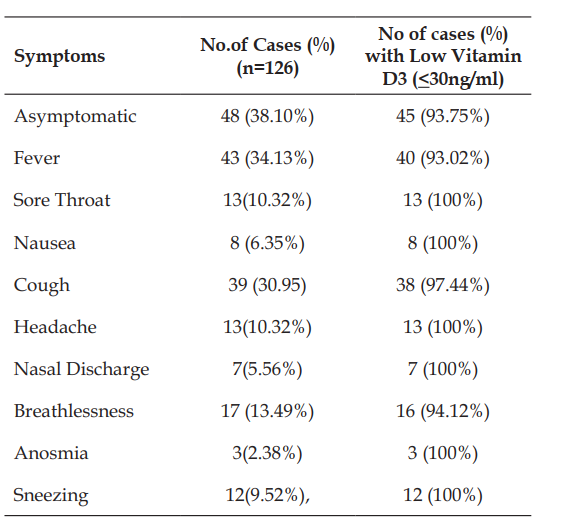
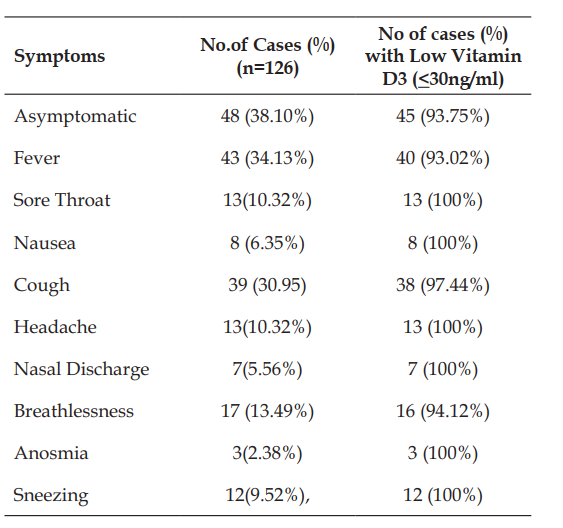
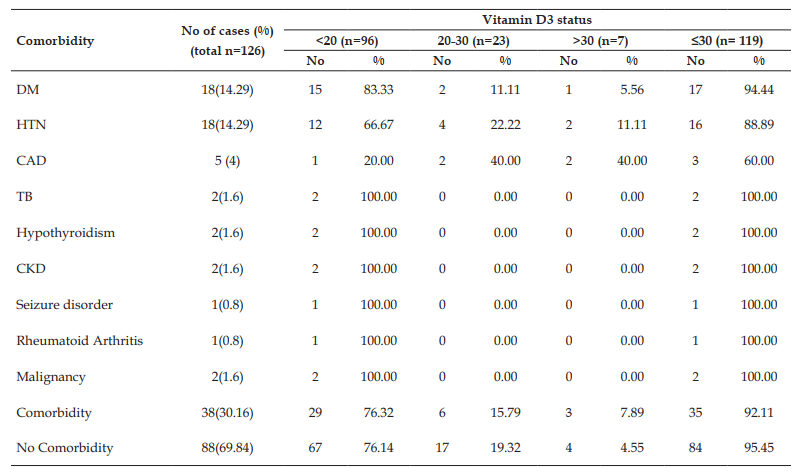
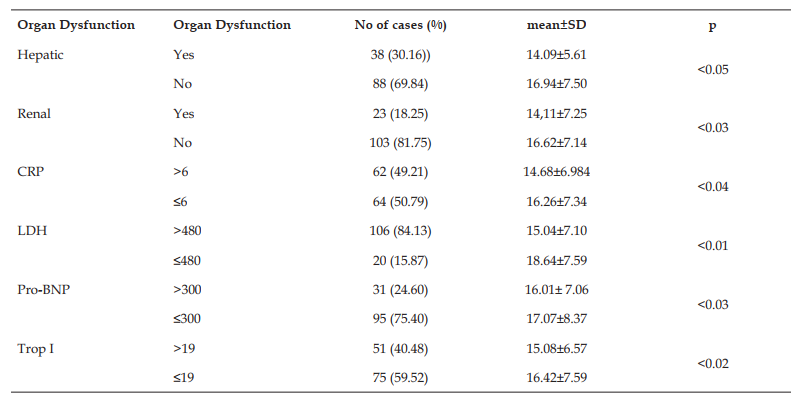
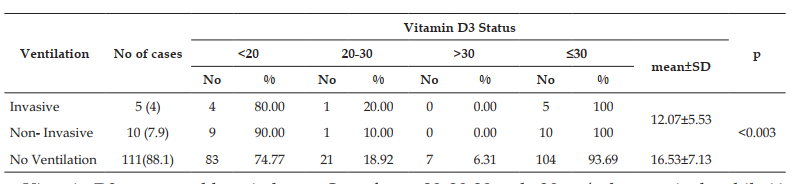
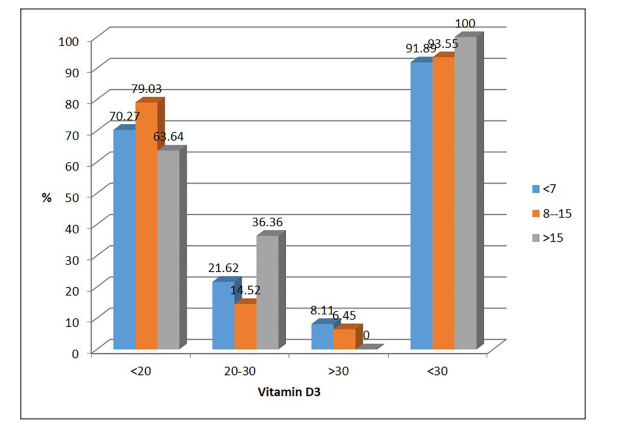
Introduction: Meta-analysis of various studies has shown association of vitamin-D3 status with prevention, morbidity and mortality associated with respirator-tract infection. Morbidity and mortality associated with Covid-19 infection is mainly because of respiratory-tract involvement. Therefore, this study was planned to evaluate vitamin-D3 status and its clinical significance in hospitalised cases of Covid-19. Methods: This study was conducted in the department of medicine, S.P. Medical College and AGH, Bikaneron hospitalized, RT-PCR confirmed cases of Covid-19 (study group). They were compared with normal healthy subjects living in the same vicinity with history of contact with covid-19 positive patients (control group). All patients were treated as per ICMR guidelines and followed up during hospital stay. Results: Our study shows mean vitamin-D3 was significantly low in study group (16.16±7.15ng/ml) as compared to control group (34.00 ±6.30ng/ml; p<0.0001). Hypovitaminosis D was present in 94.4% of the cases. The level of vitamin D3 was found to be correlated significantly with severity of covid-19 (Mean vitamin- D317.03±7.03ng/ml in mild, 18.70±6.61ng/ml in moderate and 11.22±6.05ng/ mlin severe cases; p<0.03), comorbidities (12.42±5.74ng/ml vs 16.84±7.37ng/ml; p<0.01), requirement for mechanical ventilation (12.07±5.53ng/mlvs16.53±7.15ng/ ml; p<0.003), hospital stay (17.99±6.89ng/ml in ≤7 days, 15.74±7.03ng/ml in 8-15 days, 15.81±5.45ng/ml in >15 days; p<0.006) and poor outcome (11.22±6.05ng/ mlvs 16.24± 7.06ng/ml; p<0.002). Vitamin-D3 status was also significantly correlated with CRP-titre (p<0.04), LDH (p<0.001), Trop-I (p<0.02) and Pro-BNP level (p<0.03). Conclusion: Our study shows vitamin-D3 may have preventive role in covid-19 infection. Hypovitaminosis-D is associated with high morbidity and mortality. Further studies are required to evaluate the benefit of vitamin-D3 supplementation in such cases.
References
- 1. Hu B., Guo H., Zhou P., Shi Z.L. Characteristics of SARS-CoV-2 and COVID-19. Nat Rev Microbiol. 2021 Mar; 19(3): 141-154. doi: 10.1038/s41579-020-00459-7. Epub 2020 Oct 6. Erratum in: Nat Rev Microbiol. 2022 May; 20(5): 315. doi: 10.1038/s41579-022-00711-2. PMID: 33024307; PMCID: PMC7537588.
- 2. Bergman P., Lindh A.U., Björkhem-Bergman L., Lindh J.D. Vitamin D and Respiratory Tract Infections: A Systematic Review and Meta-Analysis of Randomized Controlled Trials. PLoS One. 2013 Jun 19;8(6):e65835. doi: 10.1371/journal.pone.0065835. PMID: 23840373; PMCID: PMC3686844.
- 3. Martineau A.R., Jolliffe D.A., Hooper R.L., Greenberg L., Aloia J.F., Bergman P., DubnovRaz G., Esposito S., Ganmaa D., Ginde A.A., Goodall E.C., Grant C.C., Griffiths C.J., Janssens W, Laaksi I., Manaseki-Holland S, Mauger D., Murdoch D.R., Neale R., Rees J.R., Simpson S Jr, Stelmach I, Kumar GT, Urashima M., Camargo C.A. Jr. Vitamin D supplementation to prevent acute respiratory tract infections: systematic review and metaanalysis of individual participant data. BMJ. 2017 Feb 15; 356:i6583. doi: 10.1136/bmj.i6583. PMID: 28202713; PMCID: PMC5310969.
- 4. Pham H., Rahman A., Majidi A., et al. Acute respiratory tract infection and 25-hydroxyvitamin D concentration: a systematic review and meta-analysis. Int J Environ Res Public Health 2019; 16:3020.
- 5. Zhou Y.F., Luo B.A., Qin L.L. The association between vitamin D deficiency and communityacquired pneumonia: A meta-analysis of observational studies. Medicine (Baltimore). 2019 Sep; 98(38): e17252. doi: 10.1097/ MD.0000000000017252. PMID: 31567995; PMCID: PMC6756683.
- 6. Ooi J.H., Chen J., Cantorna M.T. Vitamin D regulation of immune function in the gut: why do T cells have vitamin D receptors? Mol Aspects Med. 2012 Feb; 33(1): 77-82. doi: 10.1016/j.mam.2011.10.014. Epub 2011 Nov 6. PMID: 22079836; PMCID: PMC3781946.
- 7. Hewison M. An update on vitamin D and human immunity. ClinEndocrinol (Oxf). 2012 Mar; 76(3): 315-25. doi: 10.1111/j.1365- 2265.2011.04261.x. PMID: 21995874.
- 8. Di Rosa M., Malaguarnera M., Nicoletti F, Malaguarnera L. Vitamin D3: a helpful immuno-modulator. Immunology. 2011 Oct; 134(2): 123-39. doi: 10.1111/j.1365- 2567.2011.03482.x. PMID: 21896008; PMCID: PMC3194221.
- 9. Van Belle T.L., Gysemans C., Mathieu C. Vitamin D in autoimmune, infectious and allergic diseases: a vital player? Best Pract Res Clin Endocrinol Metab. 2011 Aug; 25(4): 617- 32. doi: 10.1016/j.beem.2011.04.009. PMID: 21872803.
- 10. Hewison M. Vitamin D and immune function: an overview. Proc Nutr Soc. 2012 Feb; 71(1): 50-61. doi: 10.1017/S0029665111001650. Epub 2011 Aug 18. PMID: 21849106.
- 11. Sassi F., Tamone C., D’Amelio P. Vitamin D: Nutrient, Hormone, and Immunomodulator. Nutrients. 2018 Nov 3;10(11):1656. doi: 10.3390/nu10111656. PMID: 30400332; PMCID: PMC6266123.
- 12. Holick M.F., Binkley N.C., BischoffFerrari H.A., Gordon C.M., Hanley D.A., Heaney R.P., Murad MH, Weaver C.M; Endocrine Society. Evaluation, treatment, and prevention of vitamin D deficiency: an Endocrine Society clinical practice guideline. J ClinEndocrinolMetab. 2011 Jul; 96(7): 1911- 30. doi: 10.1210/jc.2011-0385. Epub 2011 Jun 6. Erratum in: J Clin Endocrinol Metab. 2011 Dec; 96(12): 3908. Erratum in: J Clin Endocrinol Metab. 2024 Sep 16; 109(10): e1991. doi: 10.1210/clinem/dgae373. PMID: 21646368.
- 13. 25-hydroxyvitamin D3 levels and association with severity of COVID-19 illness. PLoS ONE 17(2): e0263069. https://doi.org/10.1371/ journal.pone.0263069).Dror A.A., Morozov N., Daoud A., Namir Y., Yakir O., Shachar Y., et al. (2022) Pre-infection 25-hydroxyvitamin D3 levels and association with severity of COVID-19 illness. PLoS ONE 17(2): e0263069. https://doi.org/10.1371/ journal.pone.0263069)
- 14. Griffin G., Hewison M., Hopkin J., Kenny R., Quinton R., Rhodes J, Subramanian S, Thickett D. Vitamin D and COVID-19: evidence and recommendations for supplementation. R Soc Open Sci. 2020 Dec 1; 7(12): 201912. doi: 10.1098/rsos.201912. PMID: 33489300; PMCID: PMC7813231.
- 15. 15. Hernandez J.L., Nan D., Fernandez-Ayala M., García-Unzueta M., Hernandez-Hernandez M.A., Lopez-Hoyos M., Munoz-Cacho P., Olmos J.M., Gutierrez-Cuadra M., RuizCubillán JJ, Crespo J, Martinez-Taboada V.M. Vitamin D Status in Hospitalized Patients with SARS-CoV-2 Infection. J ClinEndocrinolMetab. 2021 Mar 8; 106(3): e1343-e1353. doi: 10.1210/ clinem/dgaa733. PMID: 33159440; PMCID: PMC7797757.
- 16. Jude E.B., Ling S.F., Allcock R., Yeap B.X.Y., Pappachan J.M. Vitamin D Deficiency Is Oct 21; 106(11): e4708-e4715. doi: 10.1210/ clinem/dgab439. PMID: 34139758; PMCID: PMC8344535.
- 17. Asghar M.S., Yasmin F., Dapke K., Shah S.M.I., Zafar MDB, Khan A.A., Mohiuddin O., Surani S. Evaluation of Vitamin-D Status and Its Association with Clinical Outcomes Among COVID-19 Patients in Pakistan. Am J Trop Med Hyg. 2021 Nov 10;106(1):150-155. doi: 10.4269/ajtmh.21-0577. PMID: 34758449; PMCID: PMC8733525.
- 18. Hastie C.E., Pell J.P., Sattar N. Vitamin D and COVID-19 infection and mortality in UK Biobank. Eur J Nutr. 2021 Feb; 60(1): 545-548. doi: 10.1007/s00394-020-02372-4. Epub 2020 Aug 26. PMID: 32851419; PMCID: PMC7449523.
- 19. Ben-Eltriki M., Hopefl R., Wright J.M., Deb S. Association between Vitamin D Status and Risk of Developing Severe COVID-19 Infection: A Meta-Analysis of Observational Studies. J Am Nutr Assoc. 2022 Sep-Oct; 41(7): 679-689. doi: 10.1080/07315724.2021.1951891. Epub 2021 Aug 31. PMID: 34464543; PMCID: PMC8425440.
- 20. Jain, A., Chaurasia, R., Sengar, N.S. et al. Analysis of vitamin D level among asymptomatic and critically ill COVID-19 patients and its correlation with inflammatory markers. Sci Rep 10, 20191 (2020). https://doi.org/10.1038/s41598-020-77093-z
- 21. Maghbooli Z., Sahraian M.A., Ebrahimi M, Pazoki M., Kafan S., Tabriz H.M., Hadadi A., Montazeri M., Nasiri M., Shirvani A., Holick M.F. Vitamin D. sufficiency, a serum 25-hydroxyvitamin D. at least 30 ng/mL reduced risk for adverse clinical outcomes in patients with COVID-19 infection. PLoS One. 2020 Sep 25; 15(9): e0239799. doi: 10.1371/journal.pone.0239799. Retraction in: PLoS One. 2024 Jun 6;19(6):e0305303. doi: 10.1371/ journal.pone.0305303. PMID: 32976513; PMCID: PMC7518605.
- 22. Shah K., Varna V.P., Sharma U., Mavalankar D. Does vitamin D. supplementation reduce COVID-19 severity?: a systematic review. QJM. 2022 Oct 25; 115(10): 665-672. doi: 10.1093/ qjmed/hcac040. PMID: 35166850; PMCID: PMC9383458.
- 23. Bassatne A., Basbous M., Chakhtoura M., El Zein O., Rahme M., El-Hajj Fuleihan G. The link between COVID-19 and VItamin D. (VIVID): A systematic review and metaanalysis. Metabolism. 2021 Jun;119:154753. doi: 10.1016/j.metabol.2021.154753. Epub 2021 Mar 24. PMID: 33774074; PMCID: PMC7989070.
- 24. 24. Gonen M.S., Alaylıoglu M., Durcan E., ozdemir Y., Sahin S., Konukoglu D., Nohut O.K., Urkmez S., Kucukece B., Balkan II, Kara H.V., Borekci S, Ozkaya H., Kutlubay Z., Dikmen Y., Keskindemirci Y., Karras SN, Annweiler C., Gezen-Ak D, Dursun E. Rapid and Effective Vitamin D Supplementation May Present Better Clinical Outcomes in COVID-19 (SARS-CoV-2) Patients by Altering Serum INOS1, IL1B, IFNg, Cathelicidin-LL37, and ICAM1. Nutrients. 2021 Nov 12;13(11):4047. doi: 10.3390/nu13114047. PMID: 34836309; PMCID: PMC8618389.
- 25. Nasiri M., Khodadadi J., Molaei S. Does vitamin D serum level affect prognosis of COVID-19 patients? Int J Infect Dis. 2021 Jun;107:264-267. doi: 10.1016/j.ijid.2021.04.083. Epub 2021 Apr 30. PMID: 33940189; PMCID: PMC8086264.
- 26. Campi I., Gennari L., Merlotti D., Mingiano C., Frosali A, Giovanelli L, Torlasco C, Pengo MF, Heilbron F., Soranna D., Zambon A., Di Stefano M., Aresta C., Bonomi M., Cangiano B., Favero V., Fatti L., Perego G.B., Chiodini I, Parati G, Persani L. Vitamin D and COVID-19 severity and related mortality: a prospective study in Italy. BMC Infect Dis. 2021 Jun 14;21(1):566. doi: 10.1186/s12879-021-06281-7. PMID: 34126960; PMCID: PMC8200788.
- 27. Gupta B.K., Narula K., Saini M.L., Baberwal R.K., Gupta J, Rulaniya S. Clinical Evaluation of Significance of 25(Oh) D (Vitamin D) Status in Swine Flu (H1N1) International Journal of Nutrition - 6(2):1-17. https://doi. org/10.14302/issn.2379-7835.ijn-20-3369
- 28. Davoudi A., Najafi N., Aarabi M., Tayebi A., Nikaeen R., Izadyar H., Salar Z., Delavarian L., Vaseghi N., Daftarian Z., Ahangarkani F. Lack of association between vitamin D insufficiency and clinical outcomes of patients with COVID-19 infection. BMC Infect Dis. 2021 May 18; 21(1): 450. doi: 10.1186/s12879-021-06168-7. PMID: 34006228; PMCID: PMC8130780.
- 29. Benskin L.L. A Basic Review of the Preliminary Evidence That COVID-19 Risk and Severity Is Increased in Vitamin D Deficiency. Front Public Health. 2020 Sep 10; 8: 513. doi: 10.3389/ fpubh.2020.00513. PMID: 33014983; PMCID: PMC7513835.
- 30. Saeed H., Osama H., Abdelrahman M.A., Madney Y.M., Harb H.S., Abdelrahim M.E.A., Ali F. Vitamins and other immune-supportive elements as cofactors for passing the COVID-19 pandemic. BeniSuefUniv J Basic Appl Sci. 2021; 10(1): 71. doi: 10.1186/s43088-021-00163- 2. Epub 2021 Oct 29. PMID: 34729372; PMCID: PMC8554510.
- 31. Borsche L., Glauner B., von Mendel J. COVID-19 Mortality Risk Correlates Inversely with Vitamin D3 Status, and a Mortality Rate Close to Zero Could Theoretically Be Achieved at 50 ng/mL 25(OH)D3: Results of a Systematic Review and Meta-Analysis. Nutrients. 2021 Oct 14; 13(10): 3596. doi: 10.3390/nu13103596. PMID: 34684596; PMCID: PMC8541492.
Data Sharing Statement
There are no additional data available. All raw data and code are available upon request.
Funding
This research received no funding.
Author Contributions
All authors contributed significantly to the work and approve its publication.
Ethics Declaration
This article does not involve any human or animal subjects, and therefore does not require ethics approval.
Acknowledgements
We would like to express our gratitude to the patients, their families, and all those who have contributed to this study.
Conflicts of Interest
No conflicts of interest in this work.
About this article

Cite this article
Bal Kishan Gupta, Dinesh Kumar Mehra, et al. A Study on Clinical Correlation of Vitamin D3 (25 Hydroxyvitamin D) Status on Course and Outcome of Hospitalised Cases of Covid-19. Jr. Med. & Health Sci. 2025; 12(1): 09–21.
Licence:
Attribution-Non-commercial 4.0 International (CC BY-NC 4.0)This license enables reusers to distribute, remix, adapt, and build upon the material in any medium or format for noncommercial purposes only, and only so long as attribution is given to the creator.
| Received | Accepted | Published |
|---|---|---|
| January 13, 2025 | February 03, 2025 | June 30, 2025 |
DOI: https://doi.org/10.21088/ijmhs.2347.9981.12125.2
Keywords
Covid-19Vitamin D25 Hydroxy Vitamin DARDSD3SARS-CoV-2Search for Similar Articles
Similar Articles
- Wound Assessment using a Smartphone-based Application: Imitomeasure in Pressure...
- Emerging Pandemic and Silent Killer – Non Aloholic Fatty Liver Disease: A Compr...
- Prenatal and Postnatal Healthcare in Odisha
- Assessment of Diabetic Foot Ulcers: A Review
- IBS – Irritable Bowel Syndrome – Management through Comprehensive Non-Pharmacolo...
Article Level Metrics
Last UpdatedFriday 23 October 2026, 07:21:33 (IST)
1889
Accesses
21
404
00
Citations
NA
NA
NA
Download citation
Article Keywords
Keyword Highlighting
Highlight selected keywords in the article text.
Timeline
| Received | January 13, 2025 |
| Accepted | February 03, 2025 |
| Published | June 30, 2025 |
licence
Attribution-Non-commercial 4.0 International (CC BY-NC 4.0)
This license enables reusers to distribute, remix, adapt, and build upon the material in any medium or format for noncommercial purposes only, and only so long as attribution is given to the creator.