Full Text (PDF)
Journal of Dermatology 7(2):p 69-72, July-December 2022. | DOI: na
Original Article
A Study on Adverse Effects of Topical Steroids
Dhruvi V Bhalala, Rahul Dixit, Raksha Patel, Foram Parikh
Author Information
Licence:
Attribution-Non-commercial 4.0 International (CC BY-NC 4.0)This license enables reusers to distribute, remix, adapt, and build upon the material in any medium or format for noncommercial purposes only, and only so long as attribution is given to the creator.
Journal of Dermatology 7(2):p 69-72, July-December 2022. | DOI: na
How Cite This Article:
Rahul Dixit, Dhruvi V Bhalala, Raksha Patel, et. al/A Study on Adverse Effects of Topical Steroids/RFP Journal of Dermatology 2022;7(2):69–72.Timeline
Received : May 05, 2022
Accepted : June 29, 2022
Published : December 25, 2022
Abstract
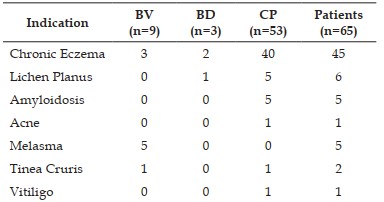
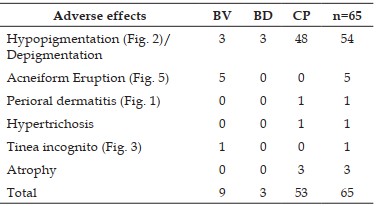
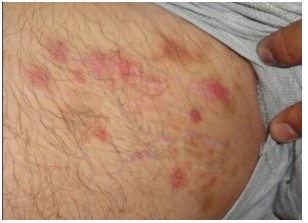
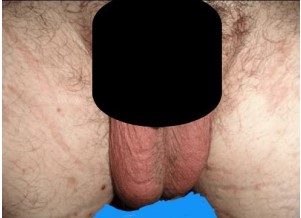
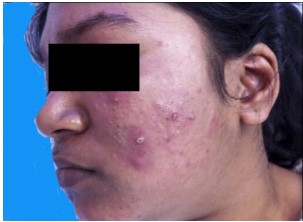
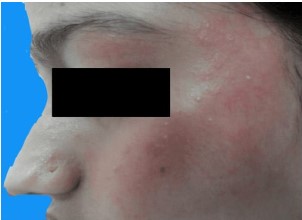
Background: Topical steroids are the most commonly prescribed topical medications for the treatment of psoriasis, eczema, lichen planus, vitiligo and dermatitis. Abuse of these topical steroids can lead to various adverse effects. Aims: To study adverse effects of following topical corticosteroids: (a) Betamethasone valerate cream 0.05% (BV) (b) Betamethasone dipropionate cream 0.05% (BD) (c) Clobetasol propionate cream 0.05% (CP). Methods and materials: Across sectional study of sixty five patients with side effects of topical steroids were studied in department of skin – VD, Tertiary care hospital from Jan 2010 to December 2010. Statistics and Analysis: Mean, standard deviation Results: Out of sixty five cases, eleven patients applied Betamethasone valerate 0.05%, three patients applied Betamethasone dipropionate 0.05% and fifty three patients applied Clobetasol propionate 0.05%. Maximum numbers of cases were in age group more than thirty years. Thirty five were male and nineteen were female. In our study the most common condition for which steroid was applied was chronic eczema. The most common side effect was change in skin color on application of Clobetasol propionate 0.05%. The maximum side effects appeared after three months of application of topical steroid. Conclusion: The most frequently applied steroid was Clobetasol propionate cream 0.05%. The most common condition for which steroid was applied is chronic eczema and adverse effect is hypopigmentation and depigmentation. In most of the patients adverse effects appeared after three months of steroid application.
References
- 1. Saraswat A, Lahiri K, Chatterjee M, Barua S, Coondoo A, Mittal A, et al. Topical corticosteroid abuse on the face:A prospective, multicentric study of dermatology outpatients.Indian J Dermatol Venereol Leprol 2011;77:160-6.
- 2. Nnoruka E, Okoye O. Topical steroid abuse: Its use as adepigementing agent. J Natl Med Assoc 2006; 98:934-9.
- 3. Hameed AF. Steroid Dermatitis Resembling Rosacea:A Clinical Evaluation of 75 Patients. ISRN Dermatol2013;2013:491376.
- 4. Bhat YJ, Manzoor S, Qayoom S. Steroid induced rosacea.A clinical study of 200 patients. Indian J Dermatol2011;56:30-2.
- 5. Sinha A, Kar S, Yadav N, Madke B. Prevalence of topical steroidmisuse among rural masses. Indian J Dermatol 2016;61:119.
- 6. Mahar S, Mahajan K, Agarwal S, Kar HK, Bhattacharya SK.Topical corticosteroid misuse: The scenario in patients attendinga tertiary care hospital in New Delhi. J Clin Diagn Res2016;10:16-20.
- 7. Nagesh T, Akhilesh A. Topical steroid awareness and abuse:A prospective study among dermatology outpatients. Indian JDermatol 2016;61:618-21.
- 8. Verma S. Sales, status, prescriptions and regulatory problemswith topical steroids in India. Indian J Dermatol Venereol Leprol2014;80:201-3.
- 9. Pande S. Steroid containing fixed drug combinations bannedby government of India: A big step towards dermatologic drugsafety. Indian J Drugs Dermatol 2016;2:1-2.
- 10. Press Information Bureau. Prohibition and restriction ofmanufacture, sale and distribution of Fixed Dose Combinations (FDCs).[Internet]. 2018. Available from: https://pib.gov.in/ Pressreleaseshare.aspx? PRID=1545741.
Data Sharing Statement
There are no additional data available. All raw data and code are available upon request.
Funding
This research received no funding.
Author Contributions
All authors contributed significantly to the work and approve its publication.
Ethics Declaration
This article does not involve any human or animal subjects, and therefore does not require ethics approval.
Acknowledgements
We would like to express our gratitude to the patients, their families, and all those who have contributed to this study.
Conflicts of Interest
No conflicts of interest in this work.
About this article

Cite this article
Rahul Dixit, Dhruvi V Bhalala, Raksha Patel, et. al/A Study on Adverse Effects of Topical Steroids/RFP Journal of Dermatology 2022;7(2):69–72.
Licence:
Attribution-Non-commercial 4.0 International (CC BY-NC 4.0)This license enables reusers to distribute, remix, adapt, and build upon the material in any medium or format for noncommercial purposes only, and only so long as attribution is given to the creator.
| Received | Accepted | Published |
|---|---|---|
| May 05, 2022 | June 29, 2022 | December 25, 2022 |
DOI: na
Keywords
Topical corticosteroidsSide effectsAbuseSearch for Similar Articles
Similar Articles
- Delving into Wolf’s Isotopic Phenomenon: Tale of Two Cases of Psoriasis Localize...
- Pachydermoperiostosis, Complete Form: A Case Report of Rare Occurrence
- Role of Cyclical Negative Pressure Wound Therapy in Thermal Burns
- Behcets Disease in an Immunocompromised Female
- Tale of an Atypical Herpes Zoster Mimicking Ecthyma and Perforating Dermatosis i...
Article Level Metrics
Last UpdatedWednesday 21 October 2026, 05:06:30 (IST)
1725
Accesses
10
194
00
Citations
NA
NA
NA
Download citation
Article Keywords
Keyword Highlighting
Highlight selected keywords in the article text.
Timeline
| Received | May 05, 2022 |
| Accepted | June 29, 2022 |
| Published | December 25, 2022 |
licence
Attribution-Non-commercial 4.0 International (CC BY-NC 4.0)
This license enables reusers to distribute, remix, adapt, and build upon the material in any medium or format for noncommercial purposes only, and only so long as attribution is given to the creator.