Full Text (PDF)
Indian Journal of Medical and Health Sciences 11(2):p 59-68, Oct - Dec. 2024. | DOI: https://doi.org/10.21088/ijmhs.2347.9981.11224.2
Original Article
A Prospective Study on Treatment Outcome Among Tuberculosis Patients With Diabetes Mellitus
Author Information
Licence:
Attribution-Non-commercial 4.0 International (CC BY-NC 4.0)This license
enables reusers to distribute, remix, adapt, and build upon the material in any
medium or format for noncommercial purposes only, and only so long as
attribution is given to the creator.
Indian Journal of Medical and Health Sciences 11(2):p 59-68, Oct - Dec. 2024. | DOI: https://doi.org/10.21088/ijmhs.2347.9981.11224.2
How Cite This Article:
Raghavendra F.N., Sowmya G.R., A Prospective Study on Treatment Outcome Among Tuberculosis Patients with Diabetes Mellitus. Jr. Med. & Health Sci. 2024;11(2):59–68.Timeline
Received : October 11, 2024
Accepted : November 21, 2024
Published : December 30, 2024
Abstract
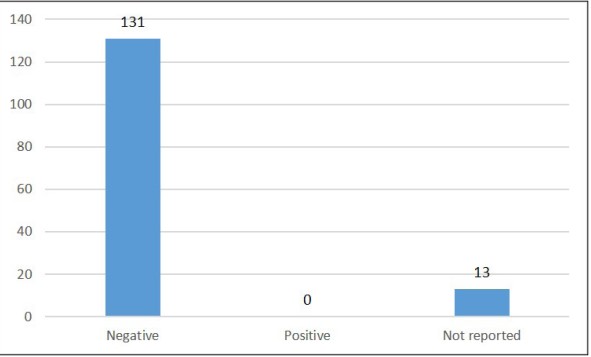
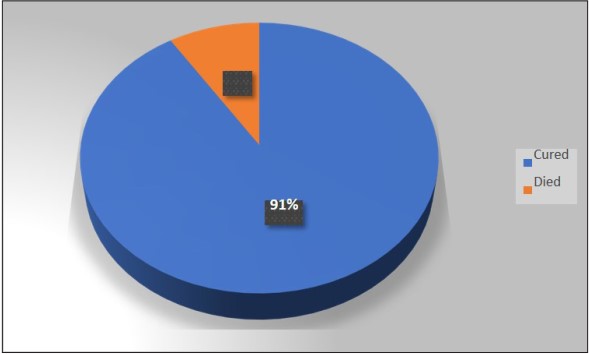
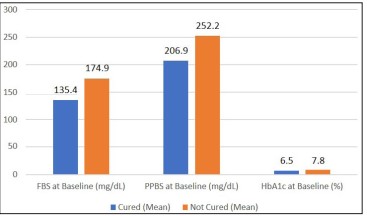
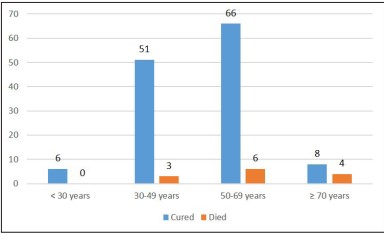
Introduction: Tuberculosis (TB) remains a significant global health challenge, causing substantial morbidity and mortality, particularly in low- and middle-income countries (LMICs). Despite global efforts to control and eliminate TB, the disease continues to affect millions, with an estimated 10 million new cases and 1.5 million deaths reported in 2019 alone.The burden of TB is further complicated by the increasing prevalence of diabetes mellitus (DM), a chronic metabolic disorder characterized by hyperglycemia resulting from defects in insulin secretion, insulin action, or both. Material and Method: This study was a prospective, non-interventional and observational study was carried out in the Department of General Medicine at Ballari Medical College and Research Centre, Ballari. The source of data for this study comprised tuberculosis (TB) patients with known diabetes mellitus (DM) and newly diagnosed diabetes mellitus visiting the TB Cell Hospital. Confirmed pulmonary tuberculosis as evidenced by either sputum for Acid-Fast Bacilli (AFB), Cartridge-Based Nucleic Acid Amplification Test (CBNAAT), or radiological investigations. Result: A vast majority of the participants (91.0%, 131 participants) had negative sputum status, while 9.0% (13 participants) did not have their sputum status reported. No participants had positive sputum status at the end of treatment. The p-value of < 0.001 suggests a highly statistically significant difference in sputum status at the end of treatment. The majority of the participants (91.0%, 131 participants) were cured, while 9.0% (13 participants) died. The p-value of 0.006 indicates a statistically significant difference in treatment outcomes. In this study, participants who were cured had lower mean FBS (135.4 ± 33.7 mg/dL), PPBS (206.9 ± 46.8 mg/dL), and median HbA1c (6.5%) at baseline compared to those who were not cured (FBS: 174.9 ± 46.5 mg/dL, PPBS: 252.2 ± 62.9 mg/dL, HbA1c (7.8%, IQR: 7.2 - 8.6%). Conclusion: This study provides valuable insights into the factors influencing treatment outcomes in patients with TB-DM comorbidity and underscores the need for personalized management strategies, routine DM screening, and appropriate treatment modalities to improve outcomes in this vulnerable population. Future research should focus on developing and evaluating targeted interventions to optimize treatment outcomes and reduce mortality in patients with TB-DM comorbidity.
References
- 1. World Health Organization. Global Tuberculosis Report 2020. Geneva: WHO; 2020.
- 2. American Diabetes Association. Diagnosis and classification of diabetes mellitus. Diabetes Care. 2014 Jan; 37 Suppl 1:S81-90.
- 3. Jeon C.Y., Murray MB. Diabetes mellitus increases the risk of active tuberculosis: a systematic review of 13 observational studies. PLoS Med. 2008 Jul 15;5(7):e152.
- 4. Restrepo B.I. Diabetes and tuberculosis. Microbiol Spectr. 2016 Apr;4(1).
- 5. Martinez N., Kornfeld H. Diabetes and immunity to tuberculosis. Eur J. Immunol. 2014 Mar; 44(3):617-26.
- 6. Baker M.A., Harries A.D., Jeon C.Y., et al. The impact of diabetes on tuberculosis treatment outcomes: a systematic review. BMC Med. 2011 Nov 23;9:81.
- 7. Dooley K.E., Chaisson R.E. Tuberculosis and diabetes mellitus: convergence of two epidemics. Lancet Infect Dis. 2009 Dec;9(12):737-46.
- 8. Pickup J.C. Inflammation and activated innate immunity in the pathogenesis of type 2 diabetes. Diabetes Care. 2004 Mar;27(3):813-23.
- 9. Chang J.T., Dou HY, Yen C.L., et al. Effect of type 2 diabetes mellitus on the clinical severity and treatment response in patients with pulmonary tuberculosis: a potential role in the emergence of multidrug-resistance. J. Formos Med Assoc. 2011 Jun; 110(6):372-81.
- 10. Faurholt-Jepsen D., Range N., Praygod G, et al. Diabetes is a risk factor for pulmonary tuberculosis: a case-control study from Mwanza, Tanzania. PLoS One. 2011 Aug 8;6 (8):e24215.
- 11. Magee M.J., Bloss E., Shin S.S., et al. Clinical characteristics, drug resistance, and treatment outcomes among tuberculosis patients with diabetes in Peru. Int J. Infect Dis. 2013 Jan; 17(1):e404.
- 12. Huangfu P., Ugarte-Gil C., Golub J., Pearson F., Critchley J. The effects of diabetes on tuberculosis treatment outcomes: an updated systematic review and meta-analysis. Int J. Tuberc Lung Dis. 2019 Jul;23(7):783-796.
- 13. Nhamoyebonde S., Leslie A. Biological differences between the sexes and susceptibility to tuberculosis. J. Infect Dis. 2014 Jun 1; 209 (Suppl 3): S100-S106.
- 14. Horton K.C., MacPherson P., Houben R.M., White R.G., Corbett E.L. Sex differences in tuberculosis burden and notifications in low-and middleincome countries: a systematic review and metaanalysis. PLoS Med. 2016 Sep 6;13(9):e1002119.
- 15. Feng J.Y., Huang S.F., Ting W.Y., Chen Y.C., Lin Y.Y., Huang R.M., Su W.J. Gender differences in treatment outcomes of tuberculosis patients in Taiwan: A prospective observational study. Clin Microbiol Infect. 2012 Sep; 18(9):E331-E337.
- 16. Lai H.H., Lai Y.J., Yen Y.F. Association of body mass index with timing of death during tuberculosis treatment. PLoS One. 2017 Jan 11; 12(1):e0170104.
- 17. Alavi-Naini R., Sharifi-Mood B., Metanat M. Association between tuberculosis and smoking. Int J. High Risk Behav Addict. 2012; 1(2):71-74.
- 18. Imtiaz S., Shield K.D., Roerecke M., Samokhvalov AV, Lönnroth K., Rehm J. Alcohol consumption as a risk factor for tuberculosis: meta-analyses and burden of disease. Eur Respir J. 2017 Jul; 50(1):1700216.
- 19. Viswanathan V., Vigneswari A., Selvan K., Satyavani K., Rajeswari R., Kapur A. Effect of diabetes on treatment outcome of smear-positive pulmonary tuberculosis—a report from South India. J. Diabetes Complications. 2014 Mar-Apr; 28(2):162-165.
- 20. Yoon Y.S., Jung J.W., Jeon EJ, Seo H., Ryu Y.J., Yim J.J., Lee B.H. The effect of diabetes control status on treatment response in pulmonary tuberculosis: a prospective study. Thorax. 2017 Mar; 72(3):263-270.
- 21. Kumpatla S., Sekar A, Achanta S., Sharath B.N., Kumar A.M., Harries A.D., Viswanathan V. Characteristics of patients with diabetes screened for tuberculosis in a tertiary care hospital in South India. Public Health Action. 2013 Jun 21; 3 (Suppl 1):S23-S28.
- 22. Baker M.A., Harries A.D., Jeon C.Y., Hart J.E., Kapur A., Lönnroth K., Murray M.B. The impact of diabetes on tuberculosis treatment outcomes: a systematic review. BMC Med. 2011 July 1; 9:81.
- 23. Mave V., Gaikwad S., Barthwal M., et al. Diabetes Mellitus and Tuberculosis Treatment Outcomes in Pune, India. Open Forum Infect Dis. 2021 Apr; 8(4):ofab097.
Data Sharing Statement
There are no additional data available. All raw data and code are available upon request.
Funding
This research received no funding.
Author Contributions
All authors contributed significantly to the work and approve its publication.
Ethics Declaration
This article does not involve any human or animal subjects, and therefore does not require ethics approval.
Acknowledgements
We would like to express our gratitude to the patients, their families, and all those who have contributed to this study.
Conflicts of Interest
No conflicts of interest in this work.
About this article

Cite this article
Raghavendra F.N., Sowmya G.R., A Prospective Study on Treatment Outcome Among Tuberculosis Patients with Diabetes Mellitus. Jr. Med. & Health Sci. 2024;11(2):59–68.
Licence:
Attribution-Non-commercial 4.0 International (CC BY-NC 4.0)This license
enables reusers to distribute, remix, adapt, and build upon the material in any
medium or format for noncommercial purposes only, and only so long as
attribution is given to the creator.
| Received | Accepted | Published |
|---|---|---|
| October 11, 2024 | November 21, 2024 | December 30, 2024 |
DOI: https://doi.org/10.21088/ijmhs.2347.9981.11224.2
Keywords
TuberculosisDiabetes mellitusAcid-Fast Bacilli.Search for Similar Articles
Similar Articles
- Wound Assessment using a Smartphone-based Application: Imitomeasure in Pressure...
- Emerging Pandemic and Silent Killer – Non Aloholic Fatty Liver Disease: A Compr...
- Prenatal and Postnatal Healthcare in Odisha
- Assessment of Diabetic Foot Ulcers: A Review
- IBS – Irritable Bowel Syndrome – Management through Comprehensive Non-Pharmacolo...
Article Level Metrics
Last UpdatedFriday 23 October 2026, 06:10:06 (IST)
1889
Accesses
24
404
00
Citations
NA
NA
NA
Download citation
Article Keywords
Keyword Highlighting
Highlight selected keywords in the article text.
Timeline
| Received | October 11, 2024 |
| Accepted | November 21, 2024 |
| Published | December 30, 2024 |
licence
Attribution-Non-commercial 4.0 International (CC BY-NC 4.0)
This license
enables reusers to distribute, remix, adapt, and build upon the material in any
medium or format for noncommercial purposes only, and only so long as
attribution is given to the creator.