Full Text (PDF)
Indian Journal of Anesthesia and Analgesia 9(2):p 63-67, March-April 2022. | DOI: https://doi.org/10.21088/ijaa.2349.8471.9222.8
Original Article
A Comparative Study of 0.1% Ropivacaine with Fentanyl and 0.1% Ropivacaine with Clonidine for Epidural Labour Analgesia
Upendra Kumar null, Varalakshmi Karasala 1 null, Mukesh Somvanshi 2 null, Archana Tripathi 3 null, Upendra Kumar 4 null
Author Information
Licence:
Attribution-Non-commercial 4.0 International (CC BY-NC 4.0)This license enables reusers to
distribute, remix, adapt, and build upon the material in any medium or format
for noncommercial purposes only, and only so long as attribution is given to
the creator.
Indian Journal of Anesthesia and Analgesia 9(2):p 63-67, March-April 2022. | DOI: https://doi.org/10.21088/ijaa.2349.8471.9222.8
How Cite This Article:
Varalakshmi Karasala, Mukesh Somvanshi, Archana Tripathi, Upendra Kumar/A Comparative Study of 0.1% Ropivacaine with Fentanyl and 0.1% Ropivacaine with Clonidine for Epidural Labour Analgesia/Indian J Anesth
Analg. 2022;9(2):63-67
Timeline
Received : January 29, 2022
Accepted : February 28, 2022
Published : April 15, 2022
Abstract
Background: Pain relief in labour has always been surrounded with myths and controversies. Hence providing effective and safe analgesia during labour has remain an ongoing challenge. This study was undertaken to compare fentanyl and clonidine with ropivacaine in epidural labour analgesia.
Methods: A total of 60 term parturients with uncomplicated pregnancy, vertex presentation, posted for on-demand epidural labour analgesia were divided into two groups. Group RF (n=30) patients received 10ml solution comprising 0.1% ropivacaine with fentanyl 20mcg. Group RC (n=30) patients received 10ml of 0.1% ropivacaine with clonidine 60mcg. Characteristics of the block, onset and duration of analgesia and total analgesic requirements were noted. Pain and overall satisfaction scores were assessed with a 10-point visual analogue scale. Mode of delivery and neonatal APGAR scores were recorded.
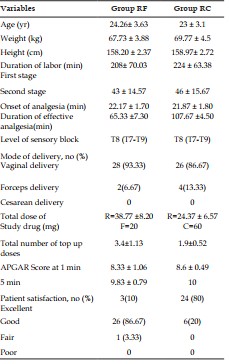
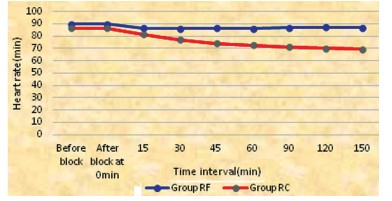
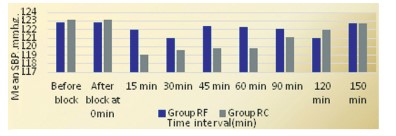
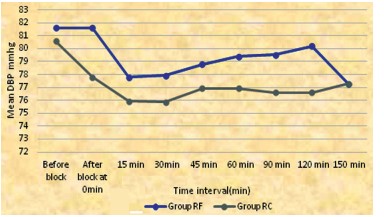
Result: At baseline, groups were matched demographically, haemodynamically as well as for intensity of pain. A significant difference among groups in VAS was observed from 120min intervals and lowest values were in group RC. No significant difference was observed in haemodynamic parameters, mode of delivery and expulsive efforts. Total analgesic dose and top up dose requirement was more in group RF. Six percent of patients in group RF and 10 percent of patients in group RC developed nausea.
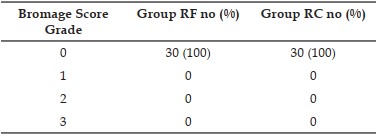
Conclusion: Ropivacaine 0.1% was effective in decreasing labour pain without any motor blockade. Clonidine was superior to fentanyl as an adjuvant in labour without any significant feto-maternal adverse effects.
References
- 1. David C. Campbell, Rhonda M. Zwack, Lesley-Ann L. Crone, Ray W. Yip. Ambulatory labor epidural analgesia: bupivacaine versus ropivacaine. Anesth Analg 2000; 90: 1384–9.
- 2. P. D. W. Fettes, C. S. Moore, J. B. Whiteside, G. A. Mcleod, J. A. W. Wildsmith. Intermittent vs continuous administration of epidural ropivacaine with fentanyl for analgesia during labour. Br J Anaesth 2000; 97: 359–64.
- 3. Firoz Satpathy, Archana Tripathi, Mukesh Somvanshi, Pallavi Huilgol. A comparative study of 0.1% ropivacaine with fentanyl and 0.1% bupivacaine with fentanyl for epidural labour analgesia. Ind J Anesth Analg.2020;7:41-5.
- 4. Helene Finegold, Gordon Mandell, Sivam Ramanathan. Comparison of ropivacaine 0.1%-fentanyl and bupivacaine 0.125% -fentanyl infusions for epidural labour analgesia. Can J Anesth 2000; 47(8): 740–45.
- 5. Meister GC, D’ Angelo R, Owen M, Nelson KE, Gaver R. A comparison of epidural analgesia with 0.125% ropivacaine with fentanyl versus 0.125% bupivacaine with fentanyl during labor. Anesth Analg 2000;90:632-7.
- 6. Scott DB, LeeA, Fagan D, Bowler GMR, Bloomfield P and Lundh R. Acute toxicity of ropivacaine compared with that of bupivacaine. Anesth Analg 1989;69:563-9.
- 7. Claes B, Soetens M, Zundert AV, Datta S. Clonidine added to bupivacaine-epinephrine-sufentanyl improves epidural analgesia during childbirth. Reg Anesth Pain Med.1998;23(6):540-47.
- 8. Aveline C, Metaoua SE, Masmoudi A, Boelle PY, Bonnet F. The effect of clonidine on the minimum local analgesic concentration of epidural ropivacaine during labour. Anesth Analg. 2002;95(3):735-40.
- 9. Roelants F. The use of neuraxial adjuvant drugs (neostigmine, clonidine) in obstetrics. Curr Opin Anaesth. 2006;19(3):233-37.
- 10. Ahirwar A, Prakash R, Kushwaha BB, Gaurav A Chaudhary AK, Verma R,et al. Patient Controlled Epidural Labour Analgesia (PCEA): A comparison between ropivacaine, ropivacainefentanyl, ropivacaine-clonidine. J Clin Diagn Res 2014;8:GC09-13.
- 11. Ismet T, E Tuna, T Selcen, K Oznar, I Rusen, S Melek. The Comparison of Efficiency of Ropivacaine and Addition of Fentanyl or Clonidine in Patient Controlled Epidural Analgesia for Labor. The Int J Anesth.2006;(11):2.
- 12. Smedvig JP, Soriede E, Gjessing L. Ropivacaine 1mg/ml, plus fentanyl 2mcg/ml for epidural analgesia during labour. Acta Anaesthesiol Scand.2001;45(5):595-99.
- 13. Celleno D, Capogna G, Costantino P, Zangrillo A. Comparison of fentanyl with clonidine as adjuncts for epidural analgesia with 0.125% bupivacaine in the first stage of labor. Int J Obstetr Anesth. 1995;4(1):26-9.
- 14. Kumari I, Sharma K, et al., Comparison of Ropivacaine 0.2% with or without clonidine 1mcg/ kg for epidural labor analgesia: A randomized controlled study. J Anaesthesiology pharmacol 2018;34;B-22.
- 15. Topcu I, Erincler T, Tekin S,Karaer O, Isik R, Sakarya M. The comparision of efficiency of ropivacaine and addition of fentanyl or clonidine in patient controlled epidural analgesia for labour.Internet J Anesthesiol 2006;11:1-7.
Data Sharing Statement
There are no additional data available. All raw data and code are available upon request.
Funding
This research received no funding.
Author Contributions
All authors contributed significantly to the work and approve its publication.
Ethics Declaration
Provide information related to the Ethics Committee approval with approval number OR write, This article does not involve any human or animal subjects, and therefore does not require ethics approval.
Acknowledgements
We would like to express our gratitude to the patients, their families, and all those who have contributed to this study.
Conflicts of Interest
The authors report no conflicts of interest in this work.
About this article

Cite this article
Varalakshmi Karasala, Mukesh Somvanshi, Archana Tripathi, Upendra Kumar/A Comparative Study of 0.1% Ropivacaine with Fentanyl and 0.1% Ropivacaine with Clonidine for Epidural Labour Analgesia/Indian J Anesth
Analg. 2022;9(2):63-67
Licence:
Attribution-Non-commercial 4.0 International (CC BY-NC 4.0)This license enables reusers to
distribute, remix, adapt, and build upon the material in any medium or format
for noncommercial purposes only, and only so long as attribution is given to
the creator.
| Received | Accepted | Published |
|---|---|---|
| January 29, 2022 | February 28, 2022 | April 15, 2022 |
DOI: https://doi.org/10.21088/ijaa.2349.8471.9222.8
Keywords
Ropivacainefentanylclonidineepidural labour analgesia.fentanylclonidineepidural labour analgesia.Search for Similar Articles
Similar Articles
- Awake Fibreoptic Intubation for Airway Management in Massive Thyroid Enlargement...
- A Case of Thoracotomy with One Lung Ventilation for Carcinoma Oesophagus
- A Case of Empyema for Thoracotomy and Decortication-Anaesthesia Management
- Full Mouth Rehabilitation in a 3-Year-Old Female Child with Repaired Tetralogy o...
- Do Gel Manicures Affect SpO2 Readings ? A Clinical Investigation
Article Level Metrics
Last UpdatedTuesday 14 July 2026, 10:01:54 (IST)
5690
Accesses
5
679
00
Citations
NA
NA
NA
Download citation
Article Keywords
Keyword Highlighting
Highlight selected keywords in the article text.
Timeline
| Received | January 29, 2022 |
| Accepted | February 28, 2022 |
| Published | April 15, 2022 |
licence
Attribution-Non-commercial 4.0 International (CC BY-NC 4.0)
This license enables reusers to
distribute, remix, adapt, and build upon the material in any medium or format
for noncommercial purposes only, and only so long as attribution is given to
the creator.