Full Text (PDF)
Indian Journal of Emergency Medicine 11(1):p 37-39, Jan -April 2025. | DOI: https://doi.org/10.21088/ijem.2395.311X.11125.5
Case Report
Yamaguchi Apical Cardiomyopathy: A Rare Presentation of an Autosomal Dominant Cardiac Illness in a Young Patient
Medha Sharma, Kamal Preet Palta, Bibhash Roy
Author Information
Licence:
Attribution-Non-commercial 4.0 International (CC BY-NC 4.0)Indian Journal of Emergency Medicine 11(1):p 37-39, Jan -April 2025. | DOI: https://doi.org/10.21088/ijem.2395.311X.11125.5
How Cite This Article:
Sharma M, Palta KP, Roy B. Yamaguchi apical cardiomyopathy: a rare presentation of an autosomal dominant cardiac illness in a young patient. Ind J Emerg Med. 2025;11(1):37-9.Timeline
Received : August 02, 2024
Accepted : February 14, 2025
Published : April 20, 2025
Abstract
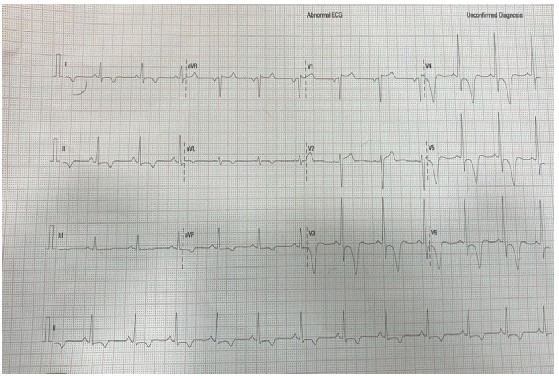
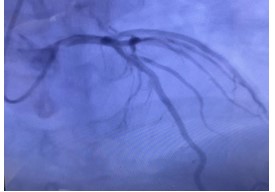
Yamaguchi apical cardiomyopathy, also known as Yamaguchi syndrome or apical hypertrophic cardiomyopathy, is a rare subtype of hypertrophic cardiomyopathy (HCM), which is itself a genetic cardiac disorder characterized by thickening of the heart muscle (myocardium). However, unlike the typical form of HCM where the thickening occurs primarily in the interventricular septum (the wall that separates the left and right ventricles), Yamaguchi apical cardiomyopathy predominantly affects the apex (tip) of the heart. The condition is autosomal dominant and presents with symptoms like chest pain, palpitations, dyspnea, syncope and other similar features of an acute coronary syndrome. Majority of mutations occur in genes encoding the sarcomere. The predominant gene mutations occur in “myosinbinding protein C (MYBPC3) and myosin heavy chain (MYH7). Here is a case of a 40-year-old male patient who presented to the emergency with complaints of chest heaviness and diaphoresis since the past one day. Patient had a similar complaint around 3 years back for which he underwent a coronary angiography and was found to have normal coronaries. On examination, patient had normal findings and including the primary and secondary survey. Patient’s ECG showed Deep T waves. In view of ECG findings, patient was shifted for a coronary angiography which showed normal epicardial coronaries. 2D echo showed an apical variant of HCM. Patient was discharged in a stable condition.
References
- 1. https://www.ncbi.nlm.nih.gov/pm c/ articles/PMC9337995/Cureus. 2022 Jun; 14(6): e26439. Published online 2022 Jun 29. doi: 10.7759/cureus.26439 Yamaguchi Syndrome: A Hidden Masquerader of Ischemic Heart Disease, Monitoring Editor: Alexander Muacevic and John R Adler.
- 2. https://practicingclinicians.com/theexchange/yamaguchi-syndrome The Xchange, March 5 2021.
Data Sharing Statement
There are no additional data available.
Funding
This research received no funding.
Author Contributions
All authors contributed significantly to the work and approve its publication.
Acknowledgements
Information not provided.
Conflicts of Interest
The authors report no conflicts of interest in this work.
About this article

Cite this article
Sharma M, Palta KP, Roy B. Yamaguchi apical cardiomyopathy: a rare presentation of an autosomal dominant cardiac illness in a young patient. Ind J Emerg Med. 2025;11(1):37-9.
Licence:
Attribution-Non-commercial 4.0 International (CC BY-NC 4.0)| Received | Accepted | Published |
|---|---|---|
| August 02, 2024 | February 14, 2025 | April 20, 2025 |
DOI: https://doi.org/10.21088/ijem.2395.311X.11125.5
Keywords
CardiomyopathyGeneticApexMyosinSearch for Similar Articles
Similar Articles
- Covid 19 Vaccine: Associated Henoch Schonlein Purpura in Young Adult Female
- A Rare Case of Intolerance to Medically Approved Dose of Sildenafil Citrate in a...
- Acute Mesenteric Ischemia: An Unusual Cause of Hematemesis in a 48 Year Old Man
- Brachial Artery Pseudoaneurysm Related Causally to Iatrogenic Coagulopathy in a...
- Combination Therapy for Acute Management of Yellow Oleander Poisoning: A Case Re...
Article Level Metrics
Last UpdatedSunday 06 September 2026, 20:52:04 (IST)
4083
Accesses
17
922
00
Citations
NA
NA
NA
Download citation
Article Keywords
Keyword Highlighting
Highlight selected keywords in the article text.
Timeline
| Received | August 02, 2024 |
| Accepted | February 14, 2025 |
| Published | April 20, 2025 |
licence
Attribution-Non-commercial 4.0 International (CC BY-NC 4.0)