Full Text (PDF)
Physiotherapy and Occupational Therapy Journal 15(4):p 147-155, October-December 2022. | DOI: https://doi.org/10.21088/potj.0974.5777.15422.1
Original Article
To Study the Immediate of Myofascial Decompression Cupping Therapy and Conventional Stretching on Hamstring Tightness and Balance in Physiotherapy Students: A Comparative Study
Amit S. Patel, Tanzeem Dhamdachhawala, Sonali Patel, Bhargavi Patel
Author Information
Licence:
Attribution-Non-commercial 4.0 International (CC BY-NC 4.0)This license enables reusers to distribute, remix, adapt, and build upon the material in any medium or format for noncommercial purposes only, and only so long as attribution is given to the creator.
Physiotherapy and Occupational Therapy Journal 15(4):p 147-155, October-December 2022. | DOI: https://doi.org/10.21088/potj.0974.5777.15422.1
How Cite This Article:
Amit S. Patel, Tanzeem Dhamdachhawala, Sonali Patel, et al./To Study the Immediate of Myofascial Decompression Cupping Therapy and Conventional Stretching on Hamstring Tightness and Balance in Physiotherapy Students: A Comparative Study/Physiotherapy and Occupational Therapy Journal. 2022;15(4): 147-155.Timeline
Received : October 12, 2022
Accepted : December 08, 2022
Published : December 25, 2022
Abstract
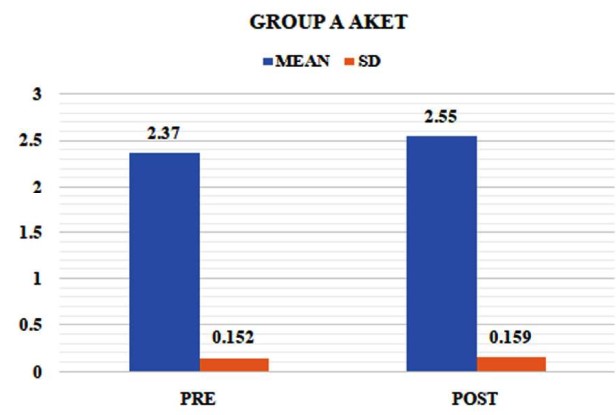
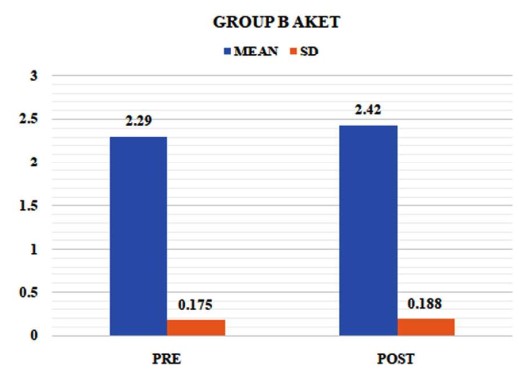
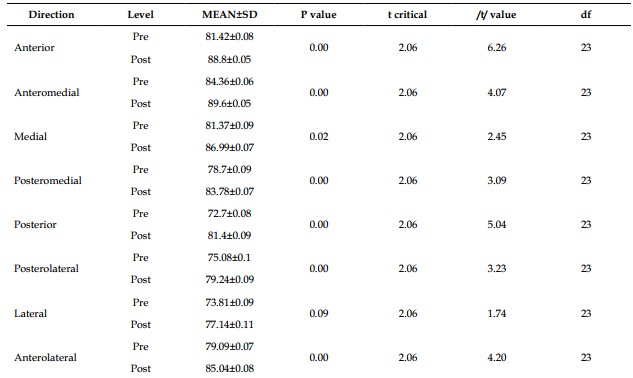
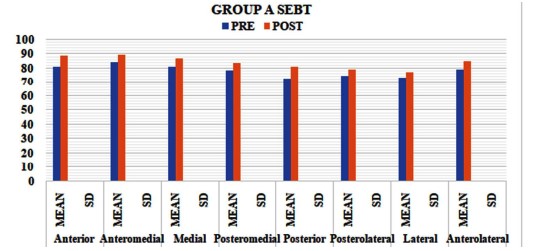
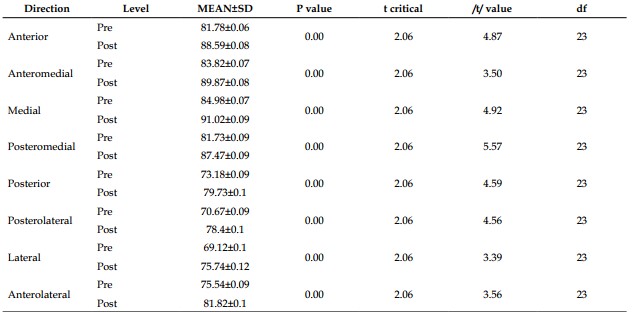
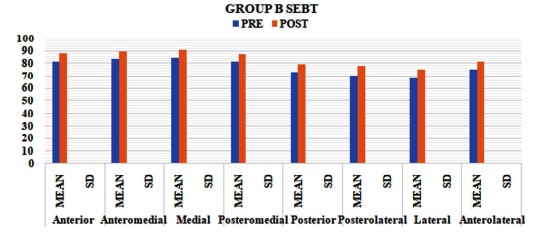
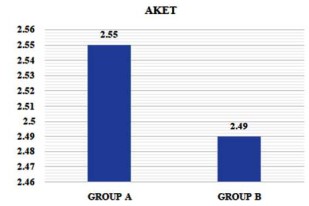
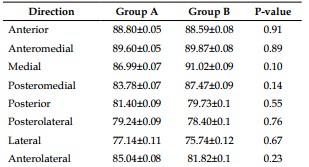
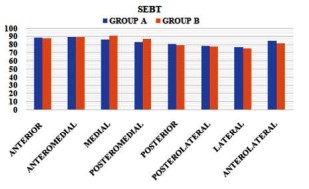
Background: Myofascial decompression (MFD), or cupping therapy and Conventional stretching are common techniques utilized to improve hamstring tightness and balance. MFD is a negative pressure soft tissue treatment technique using suction to manipulate the skin and underlying soft tissues. Stretching is also usually incorporated as pre-exercise as it has been suggested to improve muscle flexibility, prevent muscle injury and enhance physical performance. Purpose of the Study: Aim of this study was to assess whether Myofascial Decompression or Conventional Stretching techniques was more reliable in improving hamstring flexibility and balance improvement in Physiotherapy students. Method: The present study was conducted in M.B Gohil Institute of Medical Science and Research Center, Navsari, Gujarat. The study includes 50 physiotherapy students divided into two groups using convenient sampling who have age between 18-25 years. One group undergone MFD technique and the other group undergone conventional stretching, the study was conducted for only one day. The AKET was performed before and after the treatment to observe the improvement in range of motion and hamstring flexibility, likewise the SEBT was performed before and after the treatment to observe the improvement in balance. Outcome Measures: Active knee extension test (AKET) and Star excursion balance test (SEBT). Statistical Analysis: Statistical analysis was done using SPSS 26 software. Results: Study was done among 50 students, in which 25 students were undergone MFD technique and other 25 were undergone conventional stretching technique. The hamstring muscle flexibility increased in both the groups i.e., 2.55% in cupping group and 2.49% in stretching group. So, both the techniques are very effective to relieve hamstring tightness. The balance improves in each direction of both the groups i.e., anterior, anteromedial, medial, posteromedial, posterior, posterolateral, lateral and anterolateral. So, both the techniques are equally effective to improve balance. Conclusion: This study indicates that both the techniques are very effective to improve hamstring tightness. Here, myofascial decompression technique has slightly better improvement result than conventional stretching, but it is not significant enough to state that MFD is far better than Conventional stretching. Considering the limitation of MFD is very good alternative with similar results on hamstrings according to our research.
References
- 1. Cooper DRodger Avais Raja.(2021)Anatomy, Bony Pelvis and Lower Limb, Hamstring Muscle.
- 2. Diulian M. Medeiros PTAnelize Cini PT, Graciele Sbruzzi PT, ScD & Claudia S. Lima PT, ScD to cite this article: Diulian M. Medeiros PT, Anelize Cini PT, Graciele Sbruzzi PT, ScD & Cláudi. (2015), Influence of static stretching on hamstring flexibility in healthy young adults: Systematicreview andmetaanalysis, Physiotherapy Theory and Practice an International Journal of Physical Therapy.
- 3. Robert J. Bonser Christy L. Hancock, Bethany L. Hansberger, Rick A. Loutsch, Eric K. Stanford, Alli K. Zeigel, Russell T. Baker, James May, Alan Nasypany, and Scott Cheatham. (2017), Changes in Hamstring Range of Motion After Neurodynamic Sciatic Sliders:A Critically Appraised Topic, Journal of Sport Rehabilitation, [26, 311 -315].
- 4. Aric J. Warren,PhD, ATC, Zach LaCross, MS, ATC, Jennifer L. Volberding, PhD, ATC, and Matthew S. O’Biren, PhD, ATC (2020), Acute outcomes of Myofascial Decompression Cupping Therapy compared to Self– Myofascial Release on hamstring pathology After a single treatment, International journal of sports physical therapy.
- 5. Kieran O’Sullivanlaine Murray and David Sainsbury (2009) The effect of warm-up, static stretching and dynamic stretching on hamstring flexibility in previously injured subjects.
- 6. Jeffrey G. Williams PhD ATC; Hannah I. Gard, ATC; Jeana M. Gregory, ATC; Amy Gibson MS, ATC; Jennifer Austin PhD, ATC(2017), The Effects of cupping on hamstring flexibility in collegiate soccer players, Journal of Sport Rehabilitation.
- 7. Yi WanJennifer L Davies, Kate Button, and Mohammad Al-Amri (2019) Effect of visual feedback on the performance of the star excursion balance test, Journal of Rehabilitation and Assistive Technologies Engineering [Volume 6: 1–5].
- 8. Jin Hyuck Lee PT, MSc, Ki-Mo Jang, MD, PhD, Eunseon Kim, PT, Hye Chang Rhim, MD, and Hyeong-Dong Kim, PT, PhD (2020) Effects of Static and Dynamic Stretching with Strengthening Exercises in Patients with Patellofemoral Pain Who Have Inflexible Hamstrings: A Randomized Controlled Trial, [vol. 13 • no. 1].
- 9. Laura C. Decoster Rebecca L. Scanlon, Kevin D. Horn, Joshua Cleland (2004) Standing and supine hamstring stretching Are equally effective, Journal of Athletic Training [39(4): 330–334].
- 10. Bhagyashree K. Koli Deepak B. Anap (2018) Prevalence and severity of hamstring tightnessamong college student: A cross sectional study, International Journal of Clinical and Biomedical Research.
- 11. Carolyn Kisner, Lynn Allen Colby Therapeutic Exercise Foundation and Techniques.
- 12. Dr. Aderonke O. Akinpelu (2005) Influence of age on hamstring tightness in apparently healthy nigerians.
- 13. Yasuhiro Endo, PT, PhD1, 2), Masaaki Sakamoto, PT, PhD1 (2013) Relationship between Lower Extremity Tightness and Star Excursion Balance Test Performance in Junior High School Baseball Players.
- 14. Maitri Shukla and Purvi Patel (2021) Correlation of Hamstring Flexibility with Sitting Hours and physical Activity among Physiotherapy Students.
- 15. Matthew Schafer (2018) The Acute Effects of Cupping Therapy on Hams ROM compared to Sham.
- 16. Al-Rubaye KQA. (2012). The clinical and histological skin changes after the cupping therapy (al-hijamah). Journal of Turkish Academy of Dermatology.
- 17. Markowski A, Sanford S, Pikowski J, Fauvell D, Cimino D, Caplan S. (2014). A pilot study analyzing the effects of Chinese cupping as an adjunct treatment for 31 patients with subacute low back pain on relieving pain, improving range of motion, and improving function. Journal of Alternative & Complementary Medicine. February 20(2):113-117.
- 18. Huong S, Cao Y. (2006). Cupping therapy. Journal of Chinese Medicine. 82: 52- 57.
- 19. Liu W, Piao SA, Meng XW, Wei L. (2013). Effects of cupping on blood flow under skin of back in healthy human. World Journal of Acupuncture. 23(3) 50-52.
- 20. Ahmadi A, Schwebel DC, Rezeli M. (2008). The efficacy of wet-cupping in the treatment of tension and migraine headache. American Journal of Chinese Medicine. 36, 37-44. 21.Musial F, Spohn D, Rolke R. (2013). Naturopathic reflex therapies for the treatment of chronic back and neck pain – Part 1: Nuerobiological foundations. Forsch. Komplementärmedizin. 20 (3), 219-224.
- 21. Rozenfeld, E, Kalichman, L. (2016). New is the well-forgotten old: The use of dry cupping in musculoskeletal medicine. Journal of bodywork and movement therapies.
Data Sharing Statement
There are no additional data available. All raw data and code are available upon request.
Funding
This research received no funding.
Author Contributions
All authors contributed significantly to the work and approve its publication.
Ethics Declaration
This article does not involve any human or animal subjects, and therefore does not require ethics approval.
Acknowledgements
We would like to express our gratitude to the patients, their families, and all those who have contributed to this study.
Conflicts of Interest
No conflicts of interest in this work.
About this article

Cite this article
Amit S. Patel, Tanzeem Dhamdachhawala, Sonali Patel, et al./To Study the Immediate of Myofascial Decompression Cupping Therapy and Conventional Stretching on Hamstring Tightness and Balance in Physiotherapy Students: A Comparative Study/Physiotherapy and Occupational Therapy Journal. 2022;15(4): 147-155.
Licence:
Attribution-Non-commercial 4.0 International (CC BY-NC 4.0)This license enables reusers to distribute, remix, adapt, and build upon the material in any medium or format for noncommercial purposes only, and only so long as attribution is given to the creator.
| Received | Accepted | Published |
|---|---|---|
| October 12, 2022 | December 08, 2022 | December 25, 2022 |
DOI: https://doi.org/10.21088/potj.0974.5777.15422.1
Keywords
Hamstring tightnessActive knee extension test (AKET)Star excursion test (SEBT)Myofascial decompression (MFD)Conventional stretchingSearch for Similar Articles
Similar Articles
- Leadership in Physiotherapy: A Narrative Review
- Effectiveness of Low Level Laser Theapy in the Management of Temporomandibular J...
- The Impact of Air Pollution on Cardiopulmonary Health: Molecular Mechanisms, Pre...
- Efectiveness of Physiotherapy in Postpartum Women with Diastasis Recti: A Review
- Pain Neuroscience Education: Transforming Physiotherapy Practice
Article Level Metrics
Last UpdatedFriday 23 October 2026, 16:21:08 (IST)
4358
Accesses
13
739
00
Citations
NA
NA
NA
Download citation
Article Keywords
Keyword Highlighting
Highlight selected keywords in the article text.
Timeline
| Received | October 12, 2022 |
| Accepted | December 08, 2022 |
| Published | December 25, 2022 |
licence
Attribution-Non-commercial 4.0 International (CC BY-NC 4.0)
This license enables reusers to distribute, remix, adapt, and build upon the material in any medium or format for noncommercial purposes only, and only so long as attribution is given to the creator.