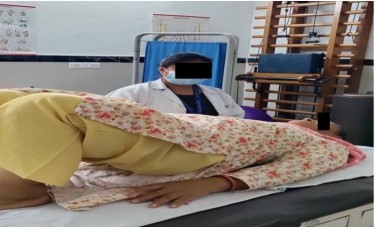
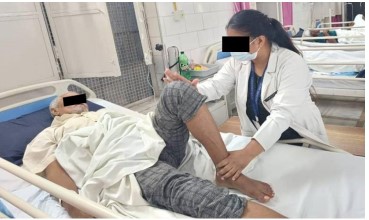
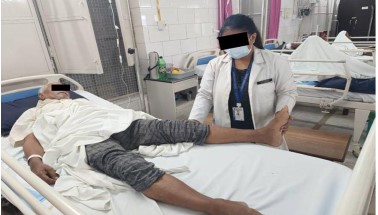
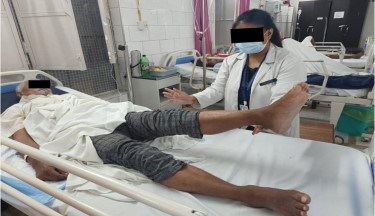
Full Text (PDF)
Physiotherapy and Occupational Therapy Journal 17(4):p 191-199, October-December 2024. | DOI: https://doi.org/10.21088/potj.0974.5777.17424.1
Original Article
To Compare the Effect of Core Strengthening with Conventional Therapy Versus Task Oriented Exercise with Conventional Therapy in Improving Balance and Function in Stroke
Niraj Kumar, R. Divya, P. Shama, A. Tabassum, Manjul Nautyal, Deepa Juyal
Author Information
Licence:
Attribution-Non-commercial 4.0 International (CC BY-NC 4.0)This license enables reusers to distribute, remix, adapt, and build upon the material in any medium or format for noncommercial purposes only, and only so long as attribution is given to the creator.
Physiotherapy and Occupational Therapy Journal 17(4):p 191-199, October-December 2024. | DOI: https://doi.org/10.21088/potj.0974.5777.17424.1
How Cite This Article:
R. Divya, P. Shama, A. Tabassum et al. To Compare the Effect of Core Strengthening with Conventional Therapy Versus Task Oriented Exercise with Conventional Therapy in Improving Balance and Function in Stroke. Physio. and Occ. Therapy Jr. 2024;17(4):191-199.Timeline
Received : September 09, 2024
Accepted : October 16, 2024
Published : December 25, 2024
Abstract
Introduction: Stroke is a medically defined syndrome of acute, focal neurological deficiency assigned to vascular injury (infarction bleeding) of the central nervous system. Stroke is the second main source of death and disability all around the world. Stroke consists of multiple diseases caused by a vast range of factors, disease course, and mechanisms. Method: A total of 36 stroke patients were selected according to the inclusion and exclusion criteria from the Department Of Physiotherapy and Neurology Dept., Shri Mahant Indiresh Hospital, Patel Nagar, Dehradun (Uttarakhand). They are divided into two groups, Group A and Group B, Group A received core strengthening along with conventional therapy and Group B received task oriented exercise along with conventional therapy to improve balance and function. The post-intervention data was compared with pre-intervention data and the data will be analyzed usingstatistical software SPSS 21 version and Microsoft Word, Excel has been used to generate graphs tables, etc. Various statistical measures such as mean, standard deviation, and paired t-test were utilized for all the scores of participants included in the study. Conclusion: This study provides valuable insights into the effectiveness of core strengthening with conventional therapy versus task-oriented exercises with conventional therapy in improving balance and function in stroke patients. Both interventions show promise, with core strengthening along with conventional therapy generally demonstrating slightly superior outcomes. Future research should aim to confirm these findings and explore additional factors that contribute to rehabilitation success.
References
- 1. Shiksha Verma et al (2022) “To Compare The Effectiveness Of Bobath Approach Along With Core Stability Training Versus Bobath Approach Along With Conventional Therapy On Trunk Function And Sitting Balance In Stroke Patients, NeuroQuantology, Volume 20(13), Page 3699- 3720, doi: 10.14704/nq.2022.20.13.NQ88454
- 2. Stephen JX.Murphy, David J.Werring Stroke: causes and clinical features, MedicineVolume 48, Issue 9, September 2020, DOI: https://doi. org/10.1016/j.mpmed.2020.06.002
- 3. Yu SH, Park SD. The effects of core stability strength exercise on muscle activity and trunk impairment scale in stroke patients. J Exerc Rehabil. 2013 Jun 30;9(3):362-7. doi: 10.12965/jer.130042. PMID: 24278885; PMCID: PMC3836527.
- 4. Eun-Jung Chung, Jung-Hee Kim, et al. The Effects of Core Stabilization Exercise on Dynamic Balance and Gait Function in Stroke Patients. Journal of Physical Therapy Sc, 2013 Volume 25 Issue 7. DOI: https://doi. org/10.1589/jpts.25.803
- 5. Sakina Katerawala,et al. Indian Journal of Physiotherapy and Occupational Therapy, October-December 2019, Vol. 13, No. 4. 10.5958/0973-5674.2019.00142.4
- 6. A. Anas Ahamad et.al. Comparison between the Effects of Task Oriented Training Program and Balance Training On Improving Balance in Stroke Patients. International Journal of Health Sciences & Research (www.ijhsr.org) Vol.9; Issue: 10; October 2019. ISSN: 2249-9571
- 7. Nishu Sharma et. Al (2018), Niraj Kumar2, Kshitij Uniyal3Intermittent Pneumatic Compression and Mirror Therapy Improve Hand Functions after Stroke physiotherapy and Occupational Therapy Journal Volume 11 Number 4, DOI: http://dx.doi.org/10.21088/ potj.0974.5777.11418.4
- 8. Niranjan Kumar, et al. (2020) Compare the Effectiveness of Modified Constraint Induced Movement Therapy and Mirror Therapy in Stroke Patients Based on Severity. Physiotherapy and Occupational Therapy Journal; Volume-13(1):29-39
- 9. Shama Praveen1, Niraj Kumar2, Archana Chauhan (2018), Physiotherapy and Occupational Therapy JournalVolume 11 Number 2, April - June 2018DOI: http://dx.doi. org/10.21088/potj.0974.5777.11218.2
Data Sharing Statement
There are no additional data available. All raw data and code are available upon request.
Funding
This research received no funding.
Author Contributions
All authors contributed significantly to the work and approve its publication.
Ethics Declaration
This article does not involve any human or animal subjects, and therefore does not require ethics approval.
Acknowledgements
We would like to express our gratitude to the patients, their families, and all those who have contributed to this study.
Conflicts of Interest
No conflicts of interest in this work.
About this article

Cite this article
R. Divya, P. Shama, A. Tabassum et al. To Compare the Effect of Core Strengthening with Conventional Therapy Versus Task Oriented Exercise with Conventional Therapy in Improving Balance and Function in Stroke. Physio. and Occ. Therapy Jr. 2024;17(4):191-199.
Licence:
Attribution-Non-commercial 4.0 International (CC BY-NC 4.0)This license enables reusers to distribute, remix, adapt, and build upon the material in any medium or format for noncommercial purposes only, and only so long as attribution is given to the creator.
| Received | Accepted | Published |
|---|---|---|
| September 09, 2024 | October 16, 2024 | December 25, 2024 |
DOI: https://doi.org/10.21088/potj.0974.5777.17424.1
Keywords
BBSTISSSQOLTUGCore strengtheningTask-oriented exercisesConventional therapySearch for Similar Articles
Similar Articles
- Leadership in Physiotherapy: A Narrative Review
- Effectiveness of Low Level Laser Theapy in the Management of Temporomandibular J...
- The Impact of Air Pollution on Cardiopulmonary Health: Molecular Mechanisms, Pre...
- Efectiveness of Physiotherapy in Postpartum Women with Diastasis Recti: A Review
- Pain Neuroscience Education: Transforming Physiotherapy Practice
Article Level Metrics
Last UpdatedSaturday 24 October 2026, 16:08:22 (IST)
4389
Accesses
11
739
00
Citations
NA
NA
NA
Download citation
Article Keywords
Keyword Highlighting
Highlight selected keywords in the article text.
Timeline
| Received | September 09, 2024 |
| Accepted | October 16, 2024 |
| Published | December 25, 2024 |
licence
Attribution-Non-commercial 4.0 International (CC BY-NC 4.0)
This license enables reusers to distribute, remix, adapt, and build upon the material in any medium or format for noncommercial purposes only, and only so long as attribution is given to the creator.