Full Text (PDF)
Indian Journal of Waste Management 7(2):p 63-69, July-December 2023. | DOI: na
Original Article
Role of Rural Women of District Ganderabal of Central Kashmir in Natural Resource Management
Bilal Ahmad Bhat, Anisa Ismail, S.N. Z. Geelani, Samira Khan, Sabreena Bhat, Snober Shah, Qamar un Nisa null, Intizar Ahmad
Author Information
Licence:
Attribution-Non-commercial 4.0 International (CC BY-NC 4.0)This license enables reusers to distribute, remix, adapt, and build upon the material in any medium or format for noncommercial purposes only, and only so long as attribution is given to the creator.
Indian Journal of Waste Management 7(2):p 63-69, July-December 2023. | DOI: na
How Cite This Article:
Bhat BA, Wani S, Yaseen K. Role of rural women of District Ganderabal of Central Kashmir in natural resource management. Ind Jr Waste Manag. 2023;7(2):63–69.Timeline
Received : February 28, 2023
Accepted : April 05, 2023
Published : May 30, 2023
Abstract
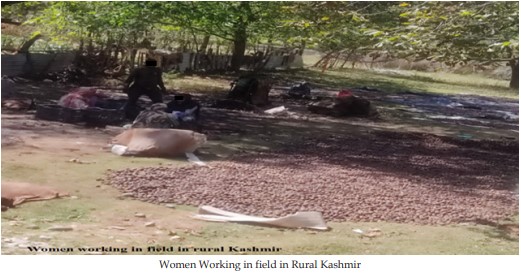
The natural resource management is the taking care of natural resources like land, water. It has been noticed that use and abuse of natural resources is a key issue that has been caused by man kind. The misuse of natural resources directly or indirectly refers to excessive use, destructive use or achieving imbalance between natural resources either individually or in combination. The purpose of current study was to investigate the role of Rural women in natural resources management and utilization in Ganderbal district, Central Kashmir of J&K region. The role of women in natural resource management is crucial for sustainable development. This abstract explores the multifaceted contributions of women of this domain, including their roles as farmers, forest users, and water managers women”s local knowledge and expertise often lead to effective resource conservation and community resilience. Despite the large contributions of women, women often face problems such as limited access to resources and decision making power. By providing women in natural resource management can enhance conservation efforts and promote equitable and inclusive development. In the current study quantitative as well as qualitative data was collected from 400 rural women selected at random using simple random sampling technique. The data collected were analyzed using appropriate statistical tools. The study revealed that the respondents understudy in majority have limited access of latest technology, skill training, education, extension services and current information. In order to strengthen the women’s participation in resources management and sustainable uses, the researchers suggest that suitable measures should be taken to empower women in decision making, skill training, education and extension activities.
References
- 1. Alkazi F. Srinagar: An Architectural Legacy. New Delhi: Roli Books; 2014.
- 2. Hugel CB. Travels in Kashmir and the Panjab. Jammu; 1972.
- 3. Kak RC. Ancient Monuments of Kashmir. Srinagar: Gulshan Publishers; 2002.
- 4. Kaul M. Kashmir: Hindu, Buddhist and Muslim Architecture. New Delhi: Sagar Publications; 1971. p. 123-139.
- 5. Khan FA. Draft Master Plan Srinagar Metropolitan Region-2035. Srinagar: Srinagar Development Authority; 2017.
- 6. Khan MI. History of Srinagar (1846-1947). Srinagar: Amir Publications; 1978.
- 7. Kaul M. Kashmir: Hindu, Buddhist and Muslim Architecture. New Delhi: Sagar Publications; 1971.
- 8. Hassan M. Kashmir Under the Sultans. Delhi: Aakar Books; 1959.
- 9. Zia al-din M. Tarikh-i-Masājid. Jammu; 1990.
- 10. Archaeological Survey of India. National Policy for the Conservation of the Ancient Monuments, Archaeological Sites and Remains. New Delhi: Archaeological Survey of India; 2017.
- 11. UNESCO World Heritage Centre. The UNESCO World Heritage Centre’s Natural Heritage Strategy. France: UNESCO World Heritage Centre; 2006.
- 12. The Calcutta Review. Digital Library of India; 1872.
- 13. Nicholls WH. Muhammadan Architecture in Kashmir. In: Annual Report of Archaeological Survey of India, 1906-7. Calcutta; 1909.
- 14. Lawrence WR. The Valley of Kashmir. 1895.
Data Sharing Statement
There are no additional data available. All raw data and code are available upon request.
Funding
This research received no funding.
Author Contributions
Whether all authors contributed significantly to the work and approve its publication.
Ethics Declaration
This article does not involve any human or animal subjects, and therefore does not require ethics approval.
Acknowledgements
We would like to express our gratitude to the patients, their families, and all those who have contributed to this study.
Conflicts of Interest
The authors report no conflicts of interest in this work.
About this article

Cite this article
Bhat BA, Wani S, Yaseen K. Role of rural women of District Ganderabal of Central Kashmir in natural resource management. Ind Jr Waste Manag. 2023;7(2):63–69.
Licence:
Attribution-Non-commercial 4.0 International (CC BY-NC 4.0)This license enables reusers to distribute, remix, adapt, and build upon the material in any medium or format for noncommercial purposes only, and only so long as attribution is given to the creator.
| Received | Accepted | Published |
|---|---|---|
| February 28, 2023 | April 05, 2023 | May 30, 2023 |
DOI: na
Keywords
HazratbalSrinagarKashmirHeritageCultureSurveySearch for Similar Articles
Similar Articles
- Pet Poop, Waste Management, Strays
- Recycling of Waste Materials Generated in the streets of Puducherry (Pondicherr...
- A Study on Benefits, Challenges and Role of Artificial Intelligence in Law
- Evaluation of MPKV Central Campus (West), Rahuri (M.S.) Watershed for Priority...
- Indus Waters Treaty Hidden Tensions, Flowing Rivers
Article Level Metrics
Last UpdatedSunday 27 September 2026, 14:22:08 (IST)
906
Accesses
18
183
00
Citations
NA
NA
NA
Download citation
Article Keywords
Keyword Highlighting
Highlight selected keywords in the article text.
Timeline
| Received | February 28, 2023 |
| Accepted | April 05, 2023 |
| Published | May 30, 2023 |
licence
Attribution-Non-commercial 4.0 International (CC BY-NC 4.0)
This license enables reusers to distribute, remix, adapt, and build upon the material in any medium or format for noncommercial purposes only, and only so long as attribution is given to the creator.