Full Text (PDF)
Indian Journal of Trauma and Emergency Pediatrics 15(2):p 55-57, April - June 2023. | DOI: https://doi.org/10.21088/ijtep.2348.9987.15223.3
Case Report
Role of Cyclical Negative Pressure Wound Therapy in Scald Bum
Ravi Kumar Chittoria, Venkatesh A., Jacob Antony
Author Information
Licence:
Attribution-Non-commercial 4.0 International (CC BY-NC 4.0)This license enables reusers to distribute, remix, adapt, and build upon the material in any medium or format for noncommercial purposes only, and only so long as attribution is given to the creator.
Indian Journal of Trauma and Emergency Pediatrics 15(2):p 55-57, April - June 2023. | DOI: https://doi.org/10.21088/ijtep.2348.9987.15223.3
How Cite This Article:
Venkatesh A., Ravi Kumar Chittoria, Jacob Antony/Role of Cyclical Negative Pressure Wound Therapy in Scald Bum /Indian J Trauma Emerg Pediatr.2023;15(2):55–57.Timeline
Received : April 17, 2023
Accepted : May 03, 2023
Published : June 30, 2023
Abstract
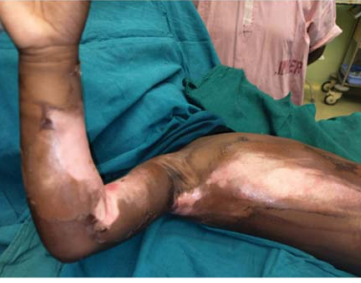
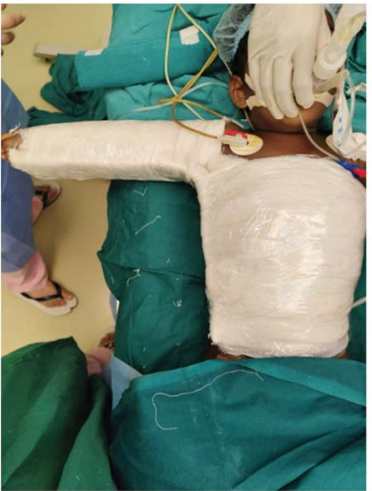
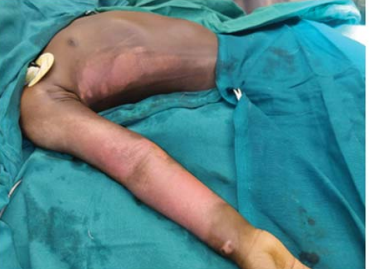
Aim of this case report is to assess role of negative pressure wound therapy in scalds to faster healing. Clinical examination of the extent of the burn was done. Standard management (antibiotics, Intravenous fluids, analgesics. Dressings, regenerative therapies, scar management) of the burns was done along with that autologous bone marrow aspirate. Autologous bone marrow aspirate is effective in preventing abnormal scarring. Negative pressure wound therapy may be used to promote faster wound healing.
References
- 1. Shore AC. Capillaroscopy and the measurement of capillary pressure. Br J Clin Pharmacol. 2000;50(6):501–13.
- 2. Fagrell B. Dynamics of skin microcirculation in humans. J Cardiovasc Pharmacol. 1985;7 Suppl 3:S53–8.
- 3. Mahy IR, Tooke JE, Shore AC. Capillary pressure during and after incremental venous pressure elevation in man. J Physiol. 1995;485(Pt 1):213–9.
- 4. Wong BJ, Hollowed CG. Current concepts of active vasodilation in human skin. Temperature (Austin). 2017;4(1):41–59.
- 5. Wilkin JK. Periodic cutaneous blood flow during postocclusive reactive hyperemia. Am J Physiol. 1986;250(5 Pt 2):H765–8.
- 6. Glass GE, Murphy GF, Esmaeili A, Lai LM, Nanchahal J. Systematic review of molecular mechanism of action of negative-pressure wound therapy. Br J Surg. 2014;101(13):1627–36.
- 7. Borgquist O, Ingemansson R, Malmsjö M. Individualizing the use of negative pressure wound therapy for optimal wound healing: a focused review of the literature. Ostomy Wound Manage. 2011;57(4):44–54.
Data Sharing Statement
There are no additional data available. All raw data and code are available upon request.
Funding
This research received no funding.
Author Contributions
All authors contributed significantly to the work and approve its publication.
Ethics Declaration
This article does not involve any human or animal subjects, and therefore does not require ethics approval.
Acknowledgements
We would like to express our gratitude to the patients, their families, and all those who have contributed to this study.
Conflicts of Interest
No conflicts of interest in this work.
About this article

Cite this article
Venkatesh A., Ravi Kumar Chittoria, Jacob Antony/Role of Cyclical Negative Pressure Wound Therapy in Scald Bum /Indian J Trauma Emerg Pediatr.2023;15(2):55–57.
Licence:
Attribution-Non-commercial 4.0 International (CC BY-NC 4.0)This license enables reusers to distribute, remix, adapt, and build upon the material in any medium or format for noncommercial purposes only, and only so long as attribution is given to the creator.
| Received | Accepted | Published |
|---|---|---|
| April 17, 2023 | May 03, 2023 | June 30, 2023 |
DOI: https://doi.org/10.21088/ijtep.2348.9987.15223.3
Keywords
Negative pressure wound therapyCellophaneBurnsArticle Level Metrics
Last UpdatedFriday 23 October 2026, 00:42:44 (IST)
1804
Accesses
12
248
00
Citations
NA
NA
NA
Download citation
Article Keywords
Keyword Highlighting
Highlight selected keywords in the article text.
Timeline
| Received | April 17, 2023 |
| Accepted | May 03, 2023 |
| Published | June 30, 2023 |
licence
Attribution-Non-commercial 4.0 International (CC BY-NC 4.0)
This license enables reusers to distribute, remix, adapt, and build upon the material in any medium or format for noncommercial purposes only, and only so long as attribution is given to the creator.