Full Text (PDF)
Journal of Biochemistry and Biophysics 7(1):p 9-12, January-June 2022. | DOI: https://doi.org/10.21088/rfpjbb.2582-3558.7122.1
Original Article
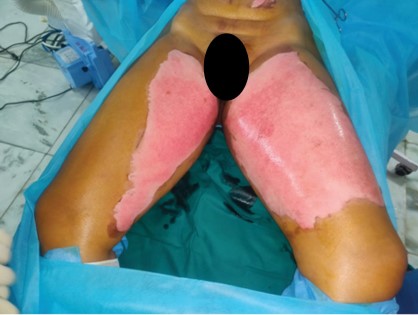
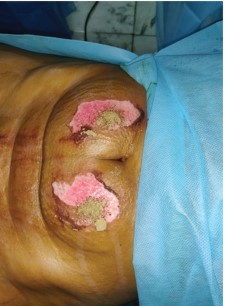
Role of Centella Asiatica Extract in Scald Burns
Ravi Kumar Chittoria, Gnaneshvar Manivannan, Neljo Thomas
Author Information
Licence:
Attribution-Non-commercial 4.0 International (CC BY-NC 4.0)This license enables reusers to distribute, remix, adapt, and build upon the material in any medium or format for noncommercial purposes only, and only so long as attribution is given to the creator.
Journal of Biochemistry and Biophysics 7(1):p 9-12, January-June 2022. | DOI: https://doi.org/10.21088/rfpjbb.2582-3558.7122.1
How Cite This Article:
Gnaneshvar Manivannan, Ravi Kumar Chittoria, Neljo Thomas /Role of Centella Asiatica Extract in Scald Burns / JBB Journal of Biochemistry and Biophysics. 2022;7(1):9–12Timeline
Received : April 16, 2022
Accepted : May 19, 2022
Published : June 26, 2022
Abstract
In recent times, the research involving the use of medicinal plants in the modern medicine has increased all over the world. Many traditional medicinal plants have been incorporated into the modern medicine to aid in the process of wound healing. One such medicinal herb is Centella asiatica.Centella asiatica has been used in traditional medicine because of its ability to heal wounds and prevent scarring. Triterpenoid, saponins, the important constituents of Centella asiatica are mainly believed to be responsible for its therapeutic action. Apart from wound healing, the herb is recommended for the treatment of various skin conditions such as leprosy, lupus, varicose ulcers, eczema, psoriasis, diarrhea, fever, amenorrhea, diseases of the female genitourinary tract and also for relieving anxiety and improving cognition. This article is about the role of Centella asiatica extract in scald burns.
References
- 1. Meo S. A., Al-Asiri S. A., Mahesar A. L., Ansari M. J. Role of honey in modern medicine. Saudi Journal of Biological Sciences. 2017;24(5):975–978.
- 2. Agyare C., Boakye Y. D., Bekoe E. O., Hensel A., Dapaah S. O., Appiah T. Review: African medicinal plants with wound healing properties. Journal of Ethnopharmacology. 2016;177:85–100.
- 3. van den Helder C. J. M., JorisHage J. Sense and nonsense of scar creams and gels. Aesthetic Plastic Surgery. 1994;18(3):307–313.
- 4. Somboonwong J., Kankaisre M., Tantisira B., Tantisira M. H. Wound healing activities of different extracts of Centella asiatica in incision and burn wound models: an experimental animal study. BMC Complementary and Alternative Medicine. 2012;12, article 103
- 5. Grossman A. J. A simplified technique for splitthickness skin graft donor-site care. Plastic and Reconstructive Surgery. 2004;113(2):796–797.
- 6. Bian D., Zhang J., Wu X., et al. Asiatic acid isolated from Centella asiatica inhibits TGF-β1-induced collagen expression in human keloid fibroblasts via PPAR-γ activation. International Journal of Biological Sciences. 2013;9(10):1032–1042.
- 7. Dang C. M., Beanes S. R., Lee H., Zhang X., Soo C., Ting K. Scarlessfetal wounds are associated with an increased matrix metalloproteinase-to-tissuederived inhibitor of metalloproteinase ratio. Plastic and Reconstructive Surgery. 2003;111(7):2273–2285.
- 8. Ju-Lin X., Shao-Hai Q., Tian-Zeng L., et al. Effect of asiaticoside on hypertrophic scar in the rabbit ear model. Journal of Cutaneous Pathology. 2009;36(2):234–239.
- 9. Chuangsuwanich A., Arunakul S., Kamnerdnakta S. The efficacy of combined herbal extracts gel in reducing scar development at a split-thickness skin graft donor site. Aesthetic Plastic Surgery. 2013;37(4):770–777.
- 10. Tang B., Zhu B., Liang Y., et al. Asiaticoside suppresses collagen expression and TGF-β/Smadsignaling through inducing Smad7 and inhibiting TGF-βRI and TGF-βRII in keloid
- 11. Qi S. H., Xie J.-L., Pan S., et al. Effects of asiaticoside on the expression of Smad protein by normal skin fibroblasts and hypertrophic scar fibroblasts. Clinical and Experimental Dermatology. 2008;33(2):171–175.
- 12. Wu F., Bian D., Xia Y., et al. Identification of Major Active Ingredients Responsible for Burn Wound Healing of Centella asiatica Herbs. EvidenceBased Complementary and Alternative Medicine. 2012;2012:13.
- 13. Gomes J., Pereira T., Vilarinho C., Duarte M. D. L., Brito C. Contact dermatitis due to Centella asiatica. Contact Dermatitis. 2010;62(1):54–55.
- 14. Hafeez F., Maibach H. An overview of parabens and allergic contact dermatitis. Skin Therapy Letter. 2013;18(5):5–7.
Data Sharing Statement
There are no additional data available. All raw data and code are available upon request.
Funding
This research received no funding.
Author Contributions
All authors contributed significantly to the work and approve its publication.
Ethics Declaration
This article does not involve any human or animal subjects, and therefore does not require ethics approval.
Acknowledgements
We would like to express our gratitude to the patients, their families, and all those who have contributed to this study.
Conflicts of Interest
No conflicts of interest in this work.
About this article

Cite this article
Gnaneshvar Manivannan, Ravi Kumar Chittoria, Neljo Thomas /Role of Centella Asiatica Extract in Scald Burns / JBB Journal of Biochemistry and Biophysics. 2022;7(1):9–12
Licence:
Attribution-Non-commercial 4.0 International (CC BY-NC 4.0)This license enables reusers to distribute, remix, adapt, and build upon the material in any medium or format for noncommercial purposes only, and only so long as attribution is given to the creator.
| Received | Accepted | Published |
|---|---|---|
| April 16, 2022 | May 19, 2022 | June 26, 2022 |
DOI: https://doi.org/10.21088/rfpjbb.2582-3558.7122.1
Keywords
Centella asiaticaWoundScald burns.Search for Similar Articles
Similar Articles
- Emergent Quantum Phenomena in Topological and Moiré Condensed Matter Systems: Re...
- The Molecular Architecture of Fragility: A Biophysical and Biochemical Dissectio...
- Silent Carcinogens at Home: Understanding Cancer Risks in Indian Kitchens
- Beyond Tone and Tissue: A Biochemical and Biophysical Perspective on Post-partum...
- GLP-1 Therapies as Essential Medicines: Opportunities and Barriers for Diabetes...
Article Level Metrics
Last UpdatedMonday 27 July 2026, 17:12:10 (IST)
865
Accesses
14
221
00
Citations
NA
NA
NA
Download citation
Article Keywords
Keyword Highlighting
Highlight selected keywords in the article text.
Timeline
| Received | April 16, 2022 |
| Accepted | May 19, 2022 |
| Published | June 26, 2022 |
licence
Attribution-Non-commercial 4.0 International (CC BY-NC 4.0)
This license enables reusers to distribute, remix, adapt, and build upon the material in any medium or format for noncommercial purposes only, and only so long as attribution is given to the creator.