Full Text (PDF)
Indian Journal of Ancient Medicine and Yoga 19(4):p 281-287, Oct - Dec. 2026. | DOI: 10.21088/ijamy.2455.8621.19426.9
Case Report
Role of Agnikarma in the Management of Calcaneal Spur (Vatakantaka): A Case Report
Hemangiben Ashokbhai Parmar,, Snehal Patil, Sonal Panchal
Author Information
Licence:
Attribution-Non-commercial 4.0 International (CC BY-NC 4.0)This license enables reusers to distribute, remix, adapt, and build upon the material in any medium or format for noncommercial purposes only, and only so long as attribution is given to the creator.
Indian Journal of Ancient Medicine and Yoga 19(4):p 281-287, Oct - Dec. 2026. | DOI: 10.21088/ijamy.2455.8621.19426.9
How Cite This Article:
Hemangiben Ashokbhai Parmar, Snehal Patil, Sonal Panchal. Role of Agnikarma in the Management of Calcaneal Spur (Vatakantaka): A Case Report. Ind J Anct Med Yoga. 2026; 19(4): 281-287.Timeline
Received : September 25, 2026
Accepted : October 28, 2026
Published : December 30, 2026
Abstract
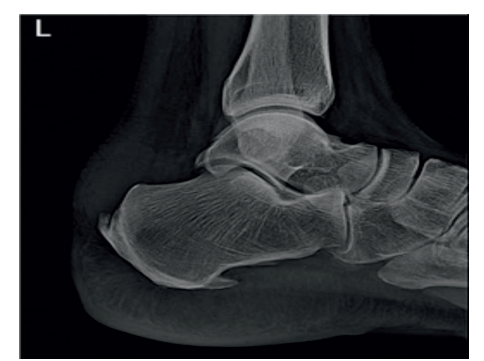
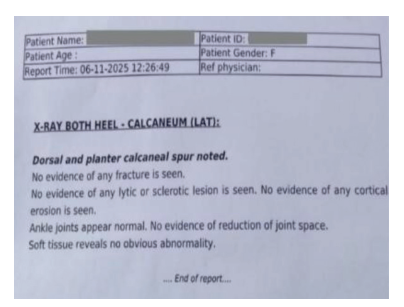
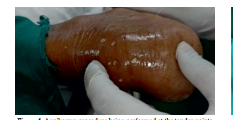
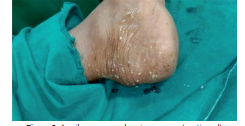
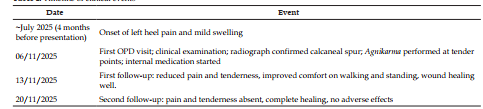
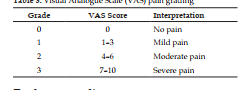
Background: Heel pain arising from a calcaneal spur is a common complaint that interferes with standing, walking and routine activity. Within Ayurveda, this presentation is correlated with Vatakantaka. Conventional management — physiotherapy, footwear modification and analgesics — often gives only partial or temporary relief. Aim: To report the outcome of Agnikarma, a heat-based para-surgical procedure described for pain of osteo-articular and soft-tissue origin, combined with adjunct oral Ayurvedic medication in a patient with symptomatic calcaneal spur (Vatakantaka). Objectives: To evaluate the short-term symptomatic and functional response — pain (Visual Analogue Scale), tenderness, morning stiffness and gait — following Agnikarma and four weeks of oral therapy. Material: A 45-year-old woman presented with a four-month history of left heel pain and mild swelling, worse on first rising and after prolonged standing or walking. A lateral radiograph (6 November 2025) confirmed a calcaneal spur. Agnikarma was delivered at the identified tender points using a heated Panchadhatu Shalaka under aseptic precautions, followed immediately by application of Shatadhouta Ghrita. Kaishor Guggulu, Sudarshana Ghanavati, Triphala Guggulu and Punarnava Mandura were prescribed as adjunct oral therapy for four weeks. Pain was tracked on the Visual Analogue Scale (VAS) at baseline and at each follow-up. Result: Pain relief was evident from the Agnikarma session onward. VAS score fell from 8/10 at baseline to 4/10 immediately after treatment and to 0/10 by the second follow-up (day 14), alongside resolution of tenderness, morning stiffness and gait disturbance. No adverse effects were recorded. Conclusion: In this case, a single session of Agnikarma combined with supportive Ayurvedic medication produced rapid and sustained relief from calcaneal spur pain, suggesting a role for this approach where conventional measures have proved inadequate.
References
- 1. Supports the 80%/10% figures in the Introduction. Only confirm page range 264-74 with the original.
- 2. Such spurs are highly prevalent in older people... below 50 years of age. in prevalence of calcaneal spurs in men & women: a random population from a trauma clinic. BMC Musculoskelet Disord. 2014;15:87.
- 3. Lourdes RK, Ram GG. Incidence of calcaneal spur in Indian population with heel pain. Int J Res Orthop. 2016;2(3):174-6.
- 4. Singhal GD. Sushruta Samhita, Nidana Sthana, Chapter 1. 2nd ed. Varanasi: Chaukhamba Sanskrit Pratishthan; 2007. p. 511.
- 5. Tripathi B. Ashtanga Hridaya, Nidana Sthana, Vatavyadhi Nidana Adhyaya, Chapter 15. Reprint ed. Varanasi: Chaukhamba Sanskrit Pratishthan; 2022. p. 544.
- 6. Singhal GD. Sushruta Samhita, Chikitsa Sthana, Chapter 4 Vata Vyadhi Chikitsa Adhyaya, Verse 8. Part 2. 2nd ed. Delhi: Chaukhamba Sanskrit Pratishthan; 2007. p. 196.
- 7. (CE4RT) completely - the radiograph is the patient's own data, no citation needed. 8. Int J Pharm Biol Arch. 2011;2(1):497-503. An ayurvedic
Data Sharing Statement
There are no additional data available. All raw data and code are available upon request.
Funding
This research received no funding.
Author Contributions
All authors contributed significantly to the work and approve its publication.
Ethics Declaration
This article does not involve any human or animal subjects, and therefore does not require ethics approval.
Acknowledgements
We would like to express our gratitude to the patients, their families, and all those who have contributed to this study.
Conflicts of Interest
No conflicts of interest in this work.
About this article

Cite this article
Hemangiben Ashokbhai Parmar, Snehal Patil, Sonal Panchal. Role of Agnikarma in the Management of Calcaneal Spur (Vatakantaka): A Case Report. Ind J Anct Med Yoga. 2026; 19(4): 281-287.
Licence:
Attribution-Non-commercial 4.0 International (CC BY-NC 4.0)This license enables reusers to distribute, remix, adapt, and build upon the material in any medium or format for noncommercial purposes only, and only so long as attribution is given to the creator.
| Received | Accepted | Published |
|---|---|---|
| September 25, 2026 | October 28, 2026 | December 30, 2026 |
DOI: 10.21088/ijamy.2455.8621.19426.9
Keywords
AgnikarmaVatakantakaCalcaneal SpurHeel PainPanchadhatu ShalakaPara-Surgical ProcedureSearch for Similar Articles
Similar Articles
- Impact of Nada-Bindu Upanisad on Holistic Health of University Staff
- Breast Milk Analysis of G2 of LSCS Third Day Mother with Widal Positive: Case R...
- Role of Matra Basti in Restoring Apana Vata Function in Pediatric Bowel Incontin...
- Restoring Cognitive Sovereignty: A Neurophysiological Perspective on Yoga Nidra...
- Mind and Mental Modifications (Chitta and Chitta-vrittis): A Synthesis of Yogic...
Article Level Metrics
Last UpdatedFriday 20 November 2026, 02:27:09 (IST)
6742
Accesses
9
1061
00
Citations
NA
NA
NA
Download citation
Article Keywords
Keyword Highlighting
Highlight selected keywords in the article text.
Timeline
| Received | September 25, 2026 |
| Accepted | October 28, 2026 |
| Published | December 30, 2026 |
licence
Attribution-Non-commercial 4.0 International (CC BY-NC 4.0)
This license enables reusers to distribute, remix, adapt, and build upon the material in any medium or format for noncommercial purposes only, and only so long as attribution is given to the creator.