Full Text (PDF)
Indian Journal of Maternal-Fetal & Neonatal Medicine 10(2):p 41-46, July - December 2023. | DOI: https://doi.org/10.21088/ijmfnm.2347.999X.10223.1
Original Article
Role of 75 mg Versus 150 mg Aspirin in Prevention of PreEclampsia in Women with Previous History of Pre-Eclampsia
Dinesh Tomar, Neetu Sangwan, Shikha Madan, Nidhi Kumar, Savita Singhal
Author Information
Licence:
Attribution-Non-commercial 4.0 International (CC BY-NC 4.0)This license enables reusers to distribute, remix, adapt, and build upon the material in any medium or format for noncommercial purposes only, and only so long as attribution is given to the creator.
Indian Journal of Maternal-Fetal & Neonatal Medicine 10(2):p 41-46, July - December 2023. | DOI: https://doi.org/10.21088/ijmfnm.2347.999X.10223.1
How Cite This Article:
Neetu Sangwan, Shikha Madan, Dinesh Tomar, et al./ Role of 75 mg Versus 150 mg Aspirin in Prevention of Pre-Eclampsia in Women with Previous History of Pre-Eclampsia/Indian Journal of Maternal-Fetal & Neonatal Medicine 2023;10(2):41–46.Timeline
Received : May 01, 2023
Accepted : June 15, 2023
Published : December 30, 2023
Abstract
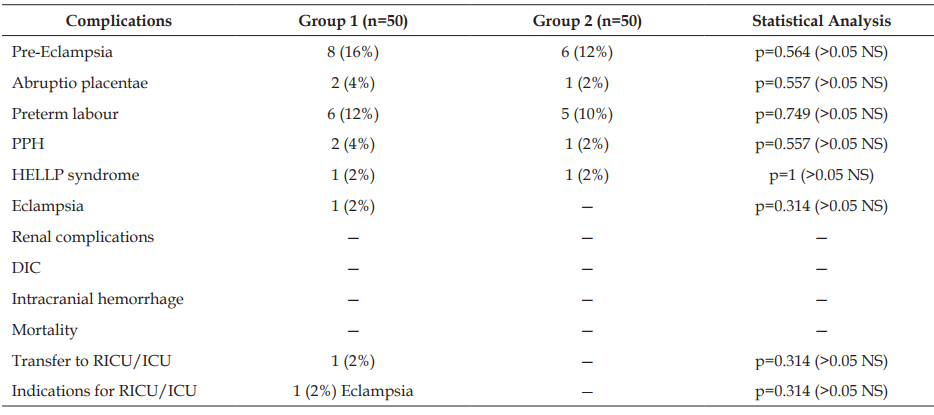
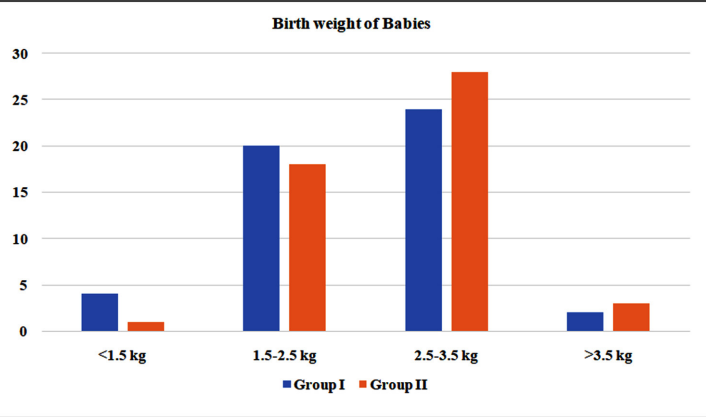
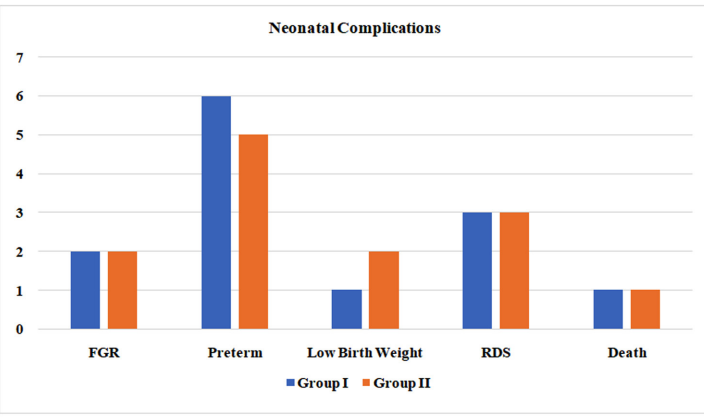
Objective: The objective of the study was to study the effect of 75 mg and 150 mg aspirin in prevention of pre-eclampsia in women with previous history of pre-eclampsia. Method: This prospective interventional study was carried out in the Department of Obstetrics and Gynecology, Pt. B.D. Sharma PGIMS, Rohtak from 2019-2020. Women with previous history of pre-eclampsia who presented at period of gestation less than 16 weeks were included in the study. The patients were divided in two groups, Group-I: 50 patients who received aspirin, 75 mg daily and Group-II: 50 patients who received aspirin, 150 mg daily. Results: Group I (75 mg of aspirin) and Group II (150 mg of Aspirin) were comparable with respect to age, education and socio-economic status. The mean gestational age of delivery was also comparable. Overall Incidence of pre-eclampsia in present study was 14%. Pre-eclampsia occurred in 8 (16%) women in group-I and 6 (12%) women in group-II. The difference was found to be statistically insignificant. Perinatal complications like low birth weight, preterm delivery, NICU transfer, respiratory distress syndrome and fetal growth restriction were not significantly different in both the groups. Conclusion: There is no correlation between 75 mg versus 150 mg dose of aspirin and the incidence of pre-eclampsia in women with previous history of pre-eclampsia. Also, 150 mg aspirin had no statistically significant effect on the incidence of secondary outcome (Abruptio placenta, any maternal morbidity, fetal outcome intrauterine growth restriction, intrauterine death, NICU admission, NICU stay and perinatal death) in comparison to 75 mg aspirin.
References
- 1. Walker JJ. Pre-eclampsia. Lancet. 2000;356(9237):1260-5.
- 2. Bedi N, Kambo I, Dhillon BS, Saxena BN, Singh P. Maternal deaths in India-Preventable tragedies. J Obstet Gynecol India. 2001;51:86-92.
- 3. James PR, Nelson-Piercy C. Management of hypertension before, during and after pregnancy. Heart. 2004;90(12):1499-504.
- 4. American College of Obstetricians and Gynecologists. Diagnosis and management of preeclampsia and eclampsia. ACOG Practice Bulletin No. 33. Obstet Gynecol. 2002;99(1):159-67.
- 5. Bringman JG, Ahokas R. Differences in serum calcium and magnesium between gravidas with severe preeclampsia and normotensive controls. Am J Obstet Gynecol. 2006;195:148.
- 6. Uzan J, Carbonnel M, Piconne O, Asmar R, Ayoubi JM. Pre-eclampsia: pathophysiology, diagnosis, and management. Vasc Health Risk Manag. 2011;7:467-74.
- 7. Al-Hylli EGS. The effect of aspirin on histology of placenta. Iraqi Postgrad Med J. 2014;13(3):434-41.
- 8. World Health Organization. WHO recommendations for prevention and treatment of pre-eclampsia and eclampsia. Geneva: WHO; 2011.
- 9. National Institute for Health and Care Excellence. Hypertension in pregnancy: quality standard. [QS35]. Manchester (UK): NICE; 2013.
- 10. Duley L, Henderson-Smart DJ, Meher S, King JF. Antiplatelet agents for preventing pre-eclampsia and its complications. Cochrane Database Syst Rev. 2007;(2):CD004659.
- 11. Schisterman EF, Silver RM, Lesher LL, Faraggi D, Wactawski-Wende J, Townsend JM, et al. Preconception low-dose aspirin and pregnancy outcomes: results from the EAGeR randomised trial. Lancet. 2014;384(9937):29-36.
- 12. Harrington K, Kurdi W, Aquilina J, England P, Campbell S. A prospective management study of slow-release aspirin in the palliation of uteroplacental insufficiency predicted by uterine artery Doppler at 20 weeks. Ultrasound Obstet Gynecol. 2000;15(1):13-8.
- 13. Sibai BM. Treatment of hypertension in pregnant women. N Engl J Med. 1996;335(4):257-65.
- 14. Werner EF, Hauspurg AK, Rouse DJ. A cost–benefit analysis of low-dose aspirin prophylaxis for the prevention of preeclampsia in the United States. Obstet Gynecol. 2015;126(6):1242-50.
- 15. Yu CK, Papageorghiou AT, Parra M, Palma Dias R, Nicolaides KH. Randomized controlled trial using low-dose aspirin in the prevention of pre-eclampsia in women with abnormal uterine artery Doppler at 23 weeks' gestation. Ultrasound Obstet Gynecol. 2003;22(3):233-9.
- 16. Villa PM, Kajantie E, Raikkonen K, Pesonen AK, Hamalainen E, Vainio M, et al. Aspirin in the prevention of pre-eclampsia in high-risk women: a randomised placebo-controlled PREDO Trial and a meta-analysis of randomised trials. BJOG. 2013;120(1):64-74.
- 17. Zhao YM, Xiao LP, Hu H, Yang XN, Xu YQ, Guo LM. Low dose aspirin prescribed at bedtime for the prevention of preeclampsia in high risk pregnant women. Reprod Contracept. 2012;32:355-9.
- 18. Caritis S, Sibai B, Hauth J, et al. Low-dose aspirin to prevent preeclampsia in women at high risk. N Engl J Med. 1998;338(11):701-5.
- 19. Rolnik DL, Wright D, Poon LC, O'Gorman N, Syngelaki N, Akolekar R, et al. Aspirin versus placebo in pregnancies at high risk for preterm pre-eclampsia. N Engl J Med. 2017;377(7):613-21.
- 20. Bakhti A, Vaiman D. Prevention of gravidic endothelial hypertension by aspirin treatment administered from the 8th week of gestation. Hypertens Res. 2012;35(2):244.
- 21. Xu TT, Zhou F, Deng CY, Huang GQ, Li JK, Wang XD. Low-dose aspirin for preventing pre-eclampsia and its complications: a meta-analysis. J Clin Hypertens (Greenwich). 2015;17(7):567-73.
Data Sharing Statement
There are no additional data available. All raw data and code are available upon request.
Funding
This research received no funding.
Author Contributions
All authors contributed significantly to the work and approve its publication.
Ethics Declaration
This article does not involve any human or animal subjects, and therefore does not require ethics approval.
Acknowledgements
We would like to express our gratitude to the patients, their families, and all those who have contributed to this study.
Conflicts of Interest
No conflicts of interest in this work.
About this article

Cite this article
Neetu Sangwan, Shikha Madan, Dinesh Tomar, et al./ Role of 75 mg Versus 150 mg Aspirin in Prevention of Pre-Eclampsia in Women with Previous History of Pre-Eclampsia/Indian Journal of Maternal-Fetal & Neonatal Medicine 2023;10(2):41–46.
Licence:
Attribution-Non-commercial 4.0 International (CC BY-NC 4.0)This license enables reusers to distribute, remix, adapt, and build upon the material in any medium or format for noncommercial purposes only, and only so long as attribution is given to the creator.
| Received | Accepted | Published |
|---|---|---|
| May 01, 2023 | June 15, 2023 | December 30, 2023 |
DOI: https://doi.org/10.21088/ijmfnm.2347.999X.10223.1
Keywords
Prevention of preeclampsiaLow dose aspirinSearch for Similar Articles
Similar Articles
- Maternal Mental-Health During Pregnancy and Postpartum Period: A Review of Recen...
- Prenatal Diagnosis of Costello Syndrome: A Case Report
- Innovations in Obstetric Hemorrhage Management: The Evolution of Transvaginal Ba...
- Maternal Plasma Cytokines and the Subsequent Risk of Uterine Atony and Postpartu...
- Amniotic Band Syndrome
Article Level Metrics
Last UpdatedSaturday 17 October 2026, 15:09:48 (IST)
1730
Accesses
10
189
00
Citations
NA
NA
NA
Download citation
Article Keywords
Keyword Highlighting
Highlight selected keywords in the article text.
Timeline
| Received | May 01, 2023 |
| Accepted | June 15, 2023 |
| Published | December 30, 2023 |
licence
Attribution-Non-commercial 4.0 International (CC BY-NC 4.0)
This license enables reusers to distribute, remix, adapt, and build upon the material in any medium or format for noncommercial purposes only, and only so long as attribution is given to the creator.