Full Text (PDF)
Indian Journal of Plant and Soil 13(1):p 11-22, January-June 2026. | DOI: https://doi.org/10.21088/ijps.2348.9677.13126.2
Original Article
Relationship between Yield and Yield Attributing Parameters of Rice (Oryza sativa L.) Crop as Affected by the Bay Leaf (Laurus nobilis L.), Potato (Solanum tuberosum L.) Peel and Banana (Musa species) Peel Extracts under Higher Iron and Manganese in Acid Soil Conditions
Bhagawan Bharali, Sotkiri Bey, Sabinay Das, Soibam Helena Devi
Author Information
Licence:
Attribution-Non-commercial 4.0 International (CC BY-NC 4.0)This license enables reusers to distribute, remix, adapt, and build upon the material in any medium or format for noncommercial purposes only, and only so long as attribution is given to the creator.
Indian Journal of Plant and Soil 13(1):p 11-22, January-June 2026. | DOI: https://doi.org/10.21088/ijps.2348.9677.13126.2
How Cite This Article:
Sotkiri Bey, Sabinay Das, Bhagawan Bharali, et al. Relationship between Yield and Yield Attributing Parameters of Rice (Oryza sativa L.) Crop as Affected by the Bay Leaf (Laurus nobilis L.), Potato (Solanum tuberosum L.) Peel and Banana (Musa species) Peel Extracts under Higher Iron and Manganese in Acid Soil Conditions. Ind J Plant Soil. 2026; 13(1): 11-22.Timeline
Received : April 14, 2026
Accepted : May 15, 2026
Published : June 30, 2026
Abstract
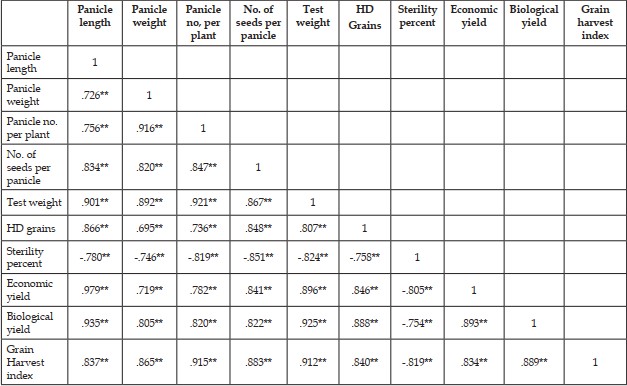
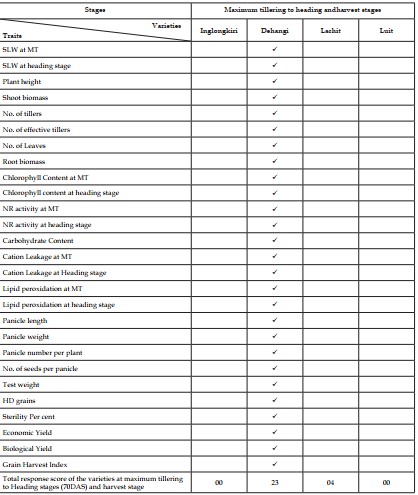
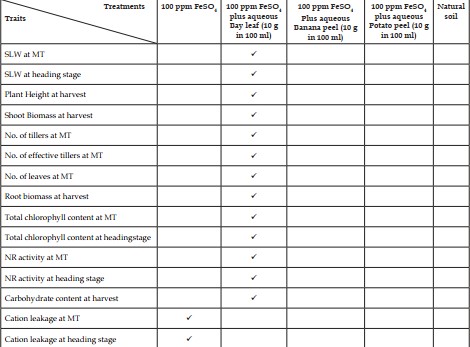
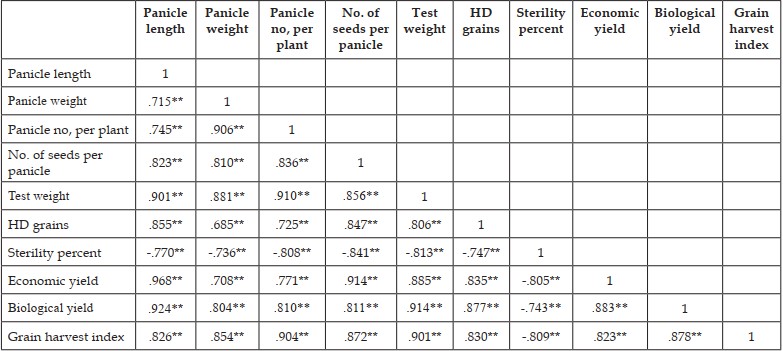
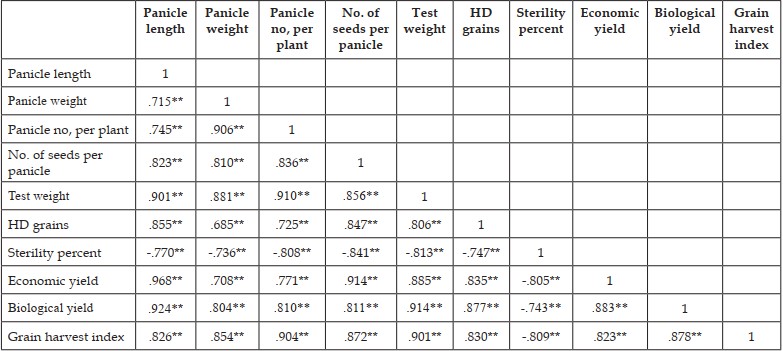
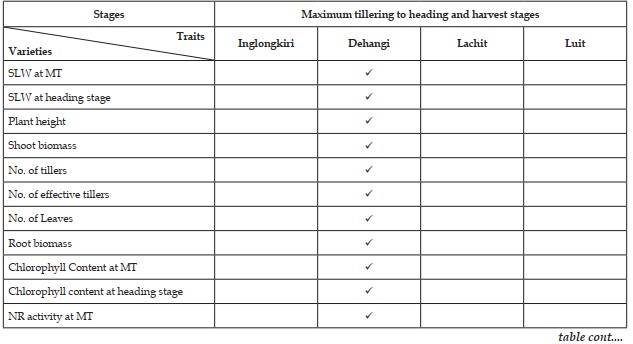
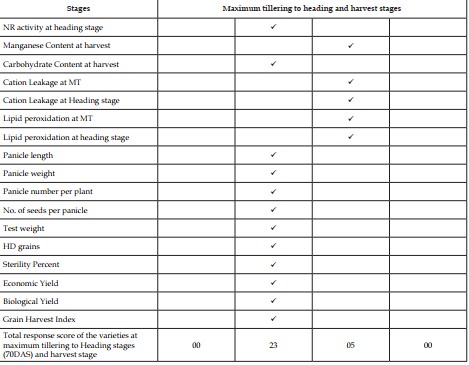
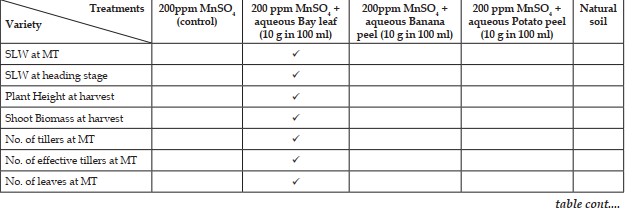
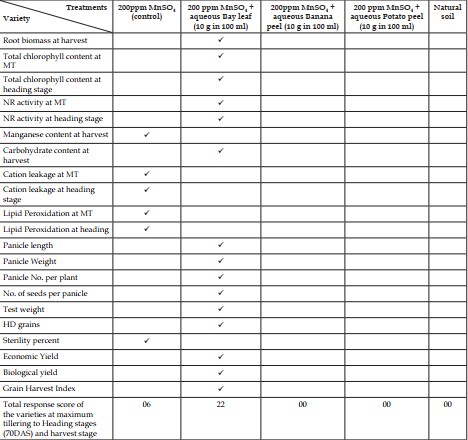
Introduction: Soil acidity is one of the environment driven factors impacting growth and productivity of rice crop. Because, leaching of base cations that causes soil acidic (lower pH), and enrichments of mineralized ions like iron and manganese in calcifuges (acid loving), mesophytic plants. Higher rainfall in summer especially in tropic and subtropics is influenced by elevated temperature due to anthropogenic activities causing climate change. Mathodology: Two laboratory experiments were carried out to investigate the effects of locally available bio-inputs viz., bay leaf, potato peel, and banana peel extracts on the physiological performance of some upland (Ahu) rice crop (varieties: Inglongkiri, Dehangi (tolerant), Lachit (susceptible), and Luit) under higher iron and manganese in acid soil conditions during the Autumn season (MarchSeptember, 2024). In the experiments, the treatments were viz.,100 ppm FeSO4 or 200 ppm Mn as MnSO4.3H2O as basal at vegetative stage (control), was kept constant. Along with this, treatments comprised of root dip before transplanting and foliar spray with bay leaf, banana peel and potato peel extracts (10% (w/v) separately at 20 days after transplanting. Natural soil without any treatment served as an absolute control. The Pearson correlation coefficient (r) was used to measure the strengh and direction of the linear relationship between two parametrs ranging from -1 to 1. Results: The studies revealed that seed yield was positively correlated with, panicle weight, panicle number per plant, seeds per panicle, test weight, HD grains, Economic yield, Biological yield, Grain Harvest Index under higher iron condition. In the other study, the application of 200 ppm of MnSO4 supplemented with aqueous bay leaf extract (10 g/100 mL) was found to be the most effective under higher manganese condition. Correlation analysis further revealed that economic yield had positive associations with panicle weight, number of panicles per plant, seeds per panicle, test weight, percentage of high-density grains, economic yield, biological yield, and grain harvest index but negatively correlated with sterility percentage. Conclusion: Among the treatments, bay leaf extract was the best and among the varieties, Dehangi consistently outperformed the other rice varieties under study ahhering the better physiological, biochemical, and yield traits.
References
- 1. Alejandro, S., Höller, S., Meier, B., & Peiter, E. (2020). Manganese in plants: From acquisition to subcellular allocation. Frontiers in Plant Science, 11, 300.
- 2. Amanullah, K.S. (2015). Phenology, growth and biomass yield response of maize (Zea mays L.) to integrated use of animal manures and phosphorus application with and without phosphate solubilizing bacteria. Journal of Microbial & Biochemical Technology, 7(6): 439- 444.
- 3. Asfika Begum and Ratul Mahanta (2017) Adaptation to Climate Change and Factors Affecting It in Assam I nd. Jn. of Agri. Econ. Vol.72, No.3, July-Sept. 2017
- 4. Aycicek, M., and Yildirim, T. (2006). Path coefficient analysis of yield and yield components in bread wheat (Triticum aestivum L.) genotypes. Pakistan journal of botany, 38(2): 417
- 5. Baruah, T. C., Pal, R., Poonia, S. R., & Siyag, R. S. (1983). Exchange equilibria of sodium versus calcium and potassium in some arid sols. Journal of the Indian Society of Soil Science, 31(3): 394-402.
- 6. Basumatary, A., Rashmi, B., and Medhi, B. K. (2014). Spatial variability of fertility status of soils of upper Brahmaputra valley zone of Assam. Asian Journal of Soil Science, 9(1): 142- 148.
- 7. Batool, S., Khera, R.A., Hanif, M.A., & Ayub, M. A. (2020). Bay leaf. In M.A. Hanif, H. Nawaz, M.M. Khan, & H.J. Byrne (Eds.), Mineral plants of South Asia: Novel sources for drug discovery (pp. 63–74). https://doi.org/10.1016/B978-0- 08-102659-5.00005-7
- 8. Belay, G., Tesemma, T., and Mitiku, D. (1993). Variability and correlation studies in durum wheat in Alem-Tena, Ethiopia. Rachis, 12(1/2): 38-41
- 9. Bey, A. (2022). Effects of cytokinin and some organic acids on physiological performance of rice (Oryza sativa L.) crop under higher iron condition [Master›s thesis, Assam Agricultural University].
- 10. Bey, S., Bharali, B., Devi, Helena Soibam (2026a) Effects of bay leaf (Laurus nobilis L.), potato (Solanum tuberosum L.) peel and banana (Musa Species) peel extracts on physiological performance of some upland (Ahu) rice (Oryza sativa L.) crop under higher iron in acid soil condition. International Journal of Environmental & Agriculture Research (IJOEAR) 12: 2), 53-69. doi.10.25125/agriculture-journal.
- 11. Bey, S., Bharali, B., Devi, Helena Soibam (2026b) Effects of bay leaf (Laurus nobilis L.), potato (Solanum tuberosum L.) peel and banana (Musa Species) peel extracts on biochemical indices of some upland (Ahu) rice (Oryza sativa L.) crop under higher iron in acid soil condition. International Journal of Environmental & Agriculture Research (IJOEAR) 12: 3), 54-67. doi.10.25125/ijoear-mar-2026-9.
- 12. Bharali, A., Ullah, Z., Haloi, B., Chutia, J., & Chack, S. (2016). Phytotoxicity of oxidised and reduced nitrogen aerosols on potato (Solanum tuberosum L.) crops. In: S. Londhe (Ed.), Sustainable potato production and the impact of climate change. IGI Global
- 13. Bora, D.K., & Borkakati, K. (1997). Soil acidity. In: H.P. Borthakur (Ed.), Managing acid soils for sustainable agriculture: Review of soil research in Assam (pp. 22–40). Department of Soil Science, Assam Agricultural University.
- 14. Borah, D.K., & Nath, A.K. (1979). Plant availability and yield potential of native and applied fixed phosphates as affected by pH and moisture regime of soils. Indian Journal of Agricultural Chemistry, 12(2), 97–108.
- 15. Buckenhüskes, H.J. (2005).Nutritionally relevant aspects of potatoes and potato constituents. In A.J. Haverkort & P. C. Struik (Eds.), Potato in progress (pp. 15–26). Wageningen Academic Publishers.
- 16. Burton, W.G. (1989). The potato (3rd ed., pp. 286–360). Longman Group.
- 17. Cakmak, H., Kumcuoglu, S., & Tavman, S. (2013). Thin layer drying of bay leaves (Laurus nobilis L.) in conventional and microwave oven. Akademik Gıda, 11(1), 20–26.
- 18. Chowdhury, M.A., Alam, K., and Khaliq, I. (1991). Harvest index in bread wheat. Pakistan Journal of Agricultural Sciences, 28(2): 207-210.
- 19. Chowdhury, M.A, Ali, Subhani, G.M Khaliq. I. (2000). Path. Coefficient Analysis for Water Use Efficiency, Evapo-Transpiration Efficiency, Transpiration Efficiency and Some Yield Related Traits in Wheat. Pak. J. Biol. Sci 3: 313-317.
- 20. Das, S. (2025) Effects of Bay leaf (Laurus nobilis L.), Potato (Solanum tuberosum L.) peel and Banana (Musa species) peel extracts on physiological performance of some upland (Ahu) rice (Oryza sativa L.) crop under higher manganese condition. M.Sc. (Agri) Thesis submitted to Assam Agricultural University, Jorhat. PP 1-180
- 21. De, U.K. and K. Bodosa (2015), “Crop Diversification in Assam and Use of Modern Inputs under Changing Climatic Condition”, Journal of Climatology & Weather Forecasting, Vol. 2, No. 2, http://dx.doi.org/10.4172/2332- 2594.1000120
- 22. Deka, R.L., C. Mahanta and K.K. Nath (2009), “Trends and Fluctuations of Temperature Regime of Northeast India”, Impact of Climate Change on Agriculture, ISPRS Archives XXXVIII-8/W3 Workshop Proceedings.
- 23. Emaga, T.H., Andrianaivo, R.H., Wathelet, B., Tchango, J.T., & Paquot, M. (2007). Effects of the stage of maturation and varieties on the chemical composition of banana and plantain peels. Food Chemistry, 103(2), 590–600.
- 24. Eunus, M., Sarker, D.C., Khan, Z.A., and Sarker, A.U. (1986). Inter-relationships among some quantitative characters in wheat. Bangladesh Journal of Agricultural Research (Bangladesh).
- 25. Fageria, N.K., Barbosa Filho, M.P., & Moreira, A. (2008). Screening upland rice genotypes for manganese-use efficiency. Communications in Soil Science and Plant Analysis, 39(19–20), 2873– 2882.
- 26. Food and Agriculture Organization of the United Nations. (2008). International year of the potato. https://www.fao.org/potato-2008
- 27. Gaddameedi, B.G., Bharali, B., Kumar, H.S., & Bandarupalli, Y.C. (2021). Inter-relationships among economic yield, physiological attributes and nitrogen sulphur status of wheat crop under the influence of sulphur aerosols. IJCS, 9(1), 2662-2665.
- 28. Gebrechristos, H.Y., Ma, X., Xiao, F., He, Y., Zheng, S., Oyungerel, G., & Chen, W. (2020). Potato peel extracts as an antimicrobial and potential antioxidant in active edible film. Food Science & Nutrition, 8(12), 6338–6345.
- 29. Gao, Y., Li, Y., Xia, W., Dai, M., Dai, Y., Wang, Y., ... & Ma, H. (2023). The regulation of grain weight in wheat. Seed Biology, 2(1).
- 30. Gupta, A.K., Mittal, R.K., and Ahmad, Z. (1999). Association and Factor Analysis in Spring Wheat (T. aestivum L.). New Botanist, 26(1/4): 67-73
- 31. Hauck, M., Paul, A., Gross, S., & Raubuch, M. (2003). Manganese toxicity in epiphytic lichens. Environmental and Experimental Botany, 49(2), 181–191.
- 32. Jaisi, S., Thapa, A., & Poudel, M.R. (2021). Study of correlation coefficient and path analysis among yield parameters of wheat: a review. INWASCON Technology Magazine, 3, 01-04.
- 33. Karan, Y.B. (2023). Mineral nutrient variability of potato (Solanum tuberosum L.) tubers with different colors grown in Niksar, Kazova and Artova locations of Tokat Province, Turkey. PeerJ, 11, Article e15262. https://doi. org/10.7717/peerj.15262
- 34. Laxmannarayanan, M., Basumatary, A., Ramesh, R., Ajith, S., Das, K.N., Kalita, P. and Majumdar, S. (2026) Iron toxicity mitigationin in lowland rice using rice husk and bamboo biochar under contrasting moisture regimesinsigh from adsorption and pot experiments. Journal of Soil Science and Plant Nutrition.http:// doi.org/10.1007/s42729-026-03061-7
- 35. Mandal, D.K Mandal, C. Jagdish Prasad and Tapas Bhattacharyya (2019) Acid Soils in AgroEcological Sub-regions of India: A Revisit. Indian Journal of Fertilisers 15 (10): 1156-1166.
- 36. Mandal, S.C. (1995). Nutrient dynamics and classification of acid soils. In: ‘Acid Soil management’ Edt. By Mohsin, M.A, Sarkar, A.K. and Mathur, B.S. pp. 82-91.
- 37. Mora, M.L., Alfaro, M.A., Jarvis, S.C., Demanet, R., & Cartes, P. (2009). Soil aluminium availability and its effect on forage and animal metabolism. Soil Use and Management, 25(1), 54–61.
- 38. Nath, K.K. and R.L. Deka (2010), “Climate Change and Agriculture Over Assam”, Climate Change and Agriculture over India, Edited by G.G.S.N. Rao, G.S.L.H.V. Rao, Prasada V.U.M. Rao, Eastern Economy Editions
- 39. Nguyen, T.B.T., Ketsa, S., & van Doorn, W. G. (2003). Relationship between browning and the activities of polyphenol oxidase and phenylalanine ammonia lyase in banana peel during low temperature storage. Postharvest Biology and Technology, 30(2), 187–193.
- 40. Panse, V.G., & Sukhatme, P.V. (1967). Statistical methods for agricultural workers (2nd ed.). Indian Council of Agricultural Research.
- 41. Provinch, N.A.A. (1967). In: Nichi Provinch, A.A. (eds.): Photosynthetic Production System, pp. 3-36.
- 42. Sandhu, B.S., & Mangat, N.S. (1985). Interrelationships in some quantitative traits in wheat. Indian Journal of Agricultural Research (India).
- 43. Shahryari, R., & Mollasadeghi, V. (2011). Correlation study of some traits affecting yield and yield components of wheat genotypes in terms of normal irrigation and end drought stress. Adv. Environ. Biol, 5(3), 523-552.
- 44. Sidhu, J.S., & Zafar, T.A. (2018). Bioactive compounds in banana fruits and their health benefits. Food Quality and Safety, 2(4), 183–188.
- 45. Singh, B.P., & Singh, B.N. (1987). Response to K application of rice in iron rich valley soils. International Rice Research Newsletter, 12(4), 31–32.
- 46. Virk, D.S., & Anand, S.C. (1970). Studies on correlations and their implications in selection in wheat T. aestivum L. Madras Agricultural Journal, 57: 713-17.
Data Sharing Statement
There are no additional data available. All raw data and code are available upon request.
Funding
This research received no funding.
Author Contributions
All authors contributed significantly to the work and approve its publication.
Ethics Declaration
This article does not involve any human or animal subjects, and therefore does not require ethics approval.
Acknowledgements
We would like to express our gratitude to the patients, their families, and all those who have contributed to this study.
Conflicts of Interest
No conflicts of interest in this work.
About this article

Cite this article
Sotkiri Bey, Sabinay Das, Bhagawan Bharali, et al. Relationship between Yield and Yield Attributing Parameters of Rice (Oryza sativa L.) Crop as Affected by the Bay Leaf (Laurus nobilis L.), Potato (Solanum tuberosum L.) Peel and Banana (Musa species) Peel Extracts under Higher Iron and Manganese in Acid Soil Conditions. Ind J Plant Soil. 2026; 13(1): 11-22.
Licence:
Attribution-Non-commercial 4.0 International (CC BY-NC 4.0)This license enables reusers to distribute, remix, adapt, and build upon the material in any medium or format for noncommercial purposes only, and only so long as attribution is given to the creator.
| Received | Accepted | Published |
|---|---|---|
| April 14, 2026 | May 15, 2026 | June 30, 2026 |
DOI: https://doi.org/10.21088/ijps.2348.9677.13126.2
Keywords
Bay kleafBanana peelIronManganesePotato peelRiceSearch for Similar Articles
Similar Articles
- Integrating Real-Time Soil Sensor Data with Precision Agriculture: A Comprehensi...
- Advances in Plant Phenotyping Tools for Agricultural Sustainability
- Organic and Natural Farming Based Disease Management Strategies in Pulse Crops
- Assessment of Weathering Pattern in Laterite Associated Soils of Nellore Schist...
- Influence of Weather Parameters on Alternaria Leaf Spot of Niger in Konkan Regio...
Article Level Metrics
Last UpdatedTuesday 08 September 2026, 00:04:04 (IST)
974
Accesses
29
208
00
Citations
NA
NA
NA
Download citation
Article Keywords
Keyword Highlighting
Highlight selected keywords in the article text.
Timeline
| Received | April 14, 2026 |
| Accepted | May 15, 2026 |
| Published | June 30, 2026 |
licence
Attribution-Non-commercial 4.0 International (CC BY-NC 4.0)
This license enables reusers to distribute, remix, adapt, and build upon the material in any medium or format for noncommercial purposes only, and only so long as attribution is given to the creator.