Full Text (PDF)
RFP Indian Journal of Medical Psychiatry 8(1):p 7-16, Jan-June 2025. | DOI: https://doi.org/10.21088/ijmp.2395.311X.11225.1
Original Article
Psychological State of Indians in the Aftermath of Two Waves of COVID-19
Suprakash Chaudhury, Pradnya Rohidas Gavhane, Alka Walujkar, Chetan Diwan, Vrushali Gaekwad
Author Information
Licence:
Attribution-Non-commercial 4.0 International (CC BY-NC 4.0)This license enables reusers to distribute, remix, adapt, and build upon the material in any medium or format for noncommercial purposes only, and only so long as attribution is given to the creator
RFP Indian Journal of Medical Psychiatry 8(1):p 7-16, Jan-June 2025. | DOI: https://doi.org/10.21088/ijmp.2395.311X.11225.1
How Cite This Article:
Pradnya Rohidas Gavhane, Suprakash Chaudhury, Alka Walujkar et. al, Psychological State of Indians in the Aftermath of Two Waves of COVID-19. RFP Ind Jr of Med Psy. 2025; 8(1): 07-16.Timeline
Received : April 22, 2025
Accepted : February 24, 2025
Published : June 20, 2025
Abstract
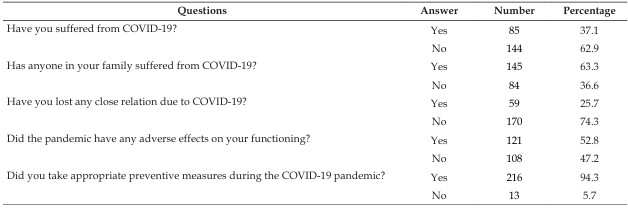
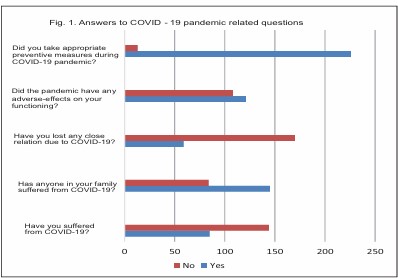
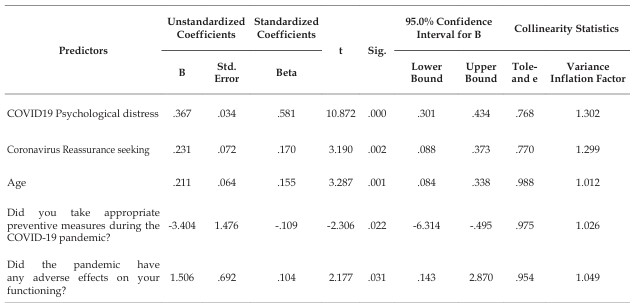
Background: India recorded its first case of COVID-19 on January 30, 2020, marking the onset of the first of many waves of the COVID-19 pandemic. The lockdown to curb its spread was instituted on March 25, 2020. The overall situation was unprecedented and dystopian, with imminent mental health corollaries specific to different sociodemographic variables. Aim: The present study aimed to assess coronavirus-related psychological distress, fear of COVID-19, and Coronavirus reassurance-seeking behavior in healthy individuals. Materials and Methods: Consenting individuals were selected by convenience sampling from the community after the end of the second wave of COVID-19 in India. They were required to fill out a Google form online over one year, comprising basic sociodemographic details and the following scales: COVID-19-related psychological distress in healthy public (CORPD), Fear of COVID-19 Scale (FCV- 19S), and Coronavirus Reassurance-Seeking Behaviors Scale. The information was then charted, tabulated, and statistically analyzed.Results: A total of 229 persons were included in the study. COVID-related psychological distress and fear in the study population were similar to the levels in the general population during the COVID-19 pandemic. Answers revealed that 37.1% of the subjects suffered from COVID-19, 25.7% had lost their close relative due to COVID-19, and 52.8% of candidates harmed their functionality. Most participants (94.3%) had taken preventive measures during the COVID-19 pandemic. Conclusion: The level of psychological distress predicted fear of COVID-19, Coronavirus reassurance seeking, age, adverse effects of the pandemic on functioning, and whether appropriate preventive measures were taken Fear of Coronavirus persisted even after the pandemic was over.
References
- 1. Roy A, Singh AK, Mishra S, Chinnadurai A, Mitra A, Bakshi O. Mental health implications of COVID-19 pandemic and its response in India. International Journal of Social Psychiatry. 2021 Aug;67(5):587-600.
- 2. Hughes P. Mental illness and health in Sierra Leone affected by Ebola: lessons for health workers. Intervention. 2015 Jan 1;13(1):60-9.
- 3. Chaudhury S, Samudra M. Covid 19 Lockdown: Psychological aspects. Medical Journal DY Patil Vidyapeeth 2020; 13: 580-4.
- 4. Srivastava K. Chaudhury S, Soumya B, Prakash J. Mental health aspects of Pandemics with special reference to COVID-19. Ind Psychiatry J 2020;29:1-8.
- 5. Chaudhury S, Ali T. Impact of COVID-19 on Daily Activities and Mental Health of All Ages. Acta Scientific Medical Sciences 2021; 5(8): 01-02.
- 6. Javadekar A, Javadekar S, Chaudhury S, Saldanha D. Depression, anxiety, stress, and sleep disturbances in doctors and general population during COVID-19 pandemic. Industrial Psychiatry Journal 2021; 30 (Suppl.1): S20 –S24.
- 7. Maggu G, Jaishy R, Srivastava M, Chaudhury S, Saldanha D, Sharma S. Effect of COVID-19 and sociocultural milieu on the psychopathology of mental health disorders: A hospital-based study. Industrial Psychiatry Journal 2021; 30 (Suppl.1): S29-S34.
- 8. Maggu G, Verma V, Chaudhury S, Indla V. Epidemic of Depression and Anxiety in child and adolescent population during COVID-19 pandemic: A systematic review and meta-analysis of the pooled prevalence of depression and anxiety. Indian J Psychiatry 2023; 65: 299-309.
- 9. Duong CD. Psychological distress related to COVID-19 in healthy public (CORPD): A statistical method for assessing the validation of scale. MethodsX. 2022;9:101645.
- 10. Ahorsu DK, Lin CY, Imani V, Saffari M, Griffiths MD, Pakpour AH. The Fear of COVID-19 Scale: Development and Initial Validation. Int J Ment Health Addict. 2022;20(3):1537-1545.
- 11. Lee SA, Jobe MC. Mathis AA, Gibbons JA. Incremental validity of coronaphobia: Coronavirus anxiety explains depression, generalized anxiety, and death anxiety. Journal of Anxiety Disorders. 2020; 74:102268.
- 12. Kushwaha S, Khanna P, Rajagopal V, Kiran T. Biological attributes of age and gender variations in Indian COVID-19 cases: A retrospective data analysis. Clinical epidemiology and global health. 2021 July 1;11:100788.
- 13. Feng LS, Dong ZJ, Yan RY, Wu XQ, Zhang L, Ma J, Zeng Y. Psychological distress in the shadow of the COVID-19 pandemic: Preliminary development of an assessment scale. Psychiatry Research. 2020; 291: 113202.
- 14. Sharma S, Joseph J, Dhandapani M, Varghese A, Radha K, Mathews E, Varkey BP. COVID-19 and Psychological Distress among the General Population of India: Meta-Analysis of Observational Studies. Indian J Community Med. 2022 Apr-Jun; 47(2):160-165. doi: 10.4103/ ijcm.ijcm_1365_21.
- 15. Sathe H S, Mishra KK, Saraf AS, John S. A Cross-Sectional Study of Psychological Distress and Fear of COVID-19 in the General Population of India During Lockdown. Annals of Indian Psychiatry 4(2): pp 181-189, Jul–Dec 2020. DOI: 10.4103/aip.aip_54_20.
- 16. Mohsen F, Bakkar B, Khadem alsrouji S, Abbas E, Najjar A, Marrawi M, et al. Fear among Syrians: A Proposed Cutoff Score for the Arabic Fear of COVID-19 Scale. PLoS ONE 2022; 17(3): e0264257. https://doi.org/10.1371/journal. pone. 0264257.
- 17. Doshi, D., Karunakar, P., Sukhabogi, J. R., Prasanna, J. S., & Mahajan, S. V. Assessing coronavirus fear in Indian population using the Fear of COVID-19 Scale. International Journal of Mental Health and Addiction, 2021; 19(6), 2383–2391. https://doi.org/10.1007/ s11469-020-00332-x.
- 18. Gaur G, Sharma M, Kundu M, Sekhon H, Chauhan N. Fear of COVID-19 among the Indian youth: A cross-sectional study. J Educ Health Promot. 2021 September 30;10:340. doi: 10.4103/jehp.jehp_1455_20.
- 19. Srivastava, A., Bala, R., Srivastava, A. K., Mishra, A., Shamim, R., Sinha, P. Anxiety, obsession and fear from Coronavirus in Indian population: a web-based study using COVID-19 specific scales. International Journal of Community Medicine And Public Health, 2020; 7(11), 4570–4577. https://doi. org/10.18203/2394-6040.ijcmph20204763.
- 20. Sreepada SS, Dulipala P, Dara JR. A study on anxiety, obsession, and reassurance-seeking behavior due to the COVID-19 pandemic. Journal of Dr. NTR University of Health Sciences 2021; 10(4): 233-237. DOI: 10.4103/ jdrntruhs.jdrntruhs_38_21.
- 21. Ahorsu, D. K., Lin, C. Y., Imani, V., Saffari, M., Griffiths, M. D., & Pakpour, A. H. (2020). The Fear of COVID-19 Scale: Development and initial validation. International Journal of Mental Health and Addiction, 20(3), 1537–1545. https://doi.org/10.1007/s11469-020-00270-8.
- 22. Taylor, S., Landry, C. A., Paluszek, M. M., Fergus, T. A., McKay, D., & Asmundson, G. J. (2020). Development and initial validation of the COVID Stress Scales. Journal of Anxiety Disorders, 72, 102232. https://doi. org/10.1016/j.janxdis.2020.102232.
- 23. Nikčević, A. V., & Spada, M. M. (2020). The COVID-19 anxiety syndrome scale: Development and psychometric properties. Psychiatry Research, 292, 113322. https://doi. org/10.1016/j.psychres.2020.113322.
- 24. Wheaton, M. G., Abramowitz, J. S., Berman, N. C., Fabricant, L. E., & Olatunji, B. O. (2012). Psychological predictors of health anxiety in response to the H1N1 (swine flu) pandemic. Cognitive Therapy and Research, 36(3), 210– 218. https://doi.org/10.1007/s10608-011- 9353-3.
- 25. Qiu, J., Shen, B., Zhao, M., Wang, Z., Xie, B., & Xu, Y. (2020). A nationwide survey of psychological distress among Chinese people in the COVID-19 epidemic: Implications and policy recommendations. General Psychiatry, 33(2), e100213. https://doi.org/10.1136/ gpsych-2020-100213.
- 26. Bhardwaj, P., Meena, J. K., & Agarwal, S. (2021). Urban-rural disparities in India: The need for policy interventions. Indian Journal of Public Health, 65(1), 3–7. https://doi.org/10.4103/ ijph.IJPH_1187_20.
- 27. Taylor, S. (2021). The Psychology of Pandemics: Preparing for the Next Global Outbreak of Infectious Disease. Cambridge Scholars Publishing.
- 28. Pakpour, A. H., & Griffiths, M. D. (2020). The fear of COVID-19 and its role in preventive behaviors. Journal of Concurrent Disorders, 2(1), 58–63.
Data Sharing Statement
There are no additional data available. All raw data and code are available upon request.
Funding
This research received no funding
Author Contributions
All authors contributed significantly to the work and approve its publication
Ethics Declaration
This article does not involve any human or animal subjects, and therefore does not require ethics approval
Acknowledgements
We would like to express our gratitude to the patients, their families, and all those who have contributed to this study.
Conflicts of Interest
No conflicts of interest in this work
About this article

Cite this article
Pradnya Rohidas Gavhane, Suprakash Chaudhury, Alka Walujkar et. al, Psychological State of Indians in the Aftermath of Two Waves of COVID-19. RFP Ind Jr of Med Psy. 2025; 8(1): 07-16.
Licence:
Attribution-Non-commercial 4.0 International (CC BY-NC 4.0)This license enables reusers to distribute, remix, adapt, and build upon the material in any medium or format for noncommercial purposes only, and only so long as attribution is given to the creator
| Received | Accepted | Published |
|---|---|---|
| April 22, 2025 | February 24, 2025 | June 20, 2025 |
DOI: https://doi.org/10.21088/ijmp.2395.311X.11225.1
Keywords
COVID-19 pandemicFear of COVID-19Psychological distressReassurance seekingSearch for Similar Articles
Similar Articles
- Relationship Between Mmitral Valve Prolapse and Panic Disorder
- Late-Onset Mania in a 73-Year-Old Male: A Case Report
- Internet Derived Information Obstruction Treatment (IDIOT) Syndrome and its Impa...
- Multivariable Regression Analysis of Depression, Anxiety and Stress in Male Alco...
- A Study to Evaluate the Effectiveness of Supportive Psychotherapy among the Elde...
Article Level Metrics
Last UpdatedTuesday 08 September 2026, 18:09:28 (IST)
903
Accesses
15
155
00
Citations
NA
NA
NA
Download citation
Article Keywords
Keyword Highlighting
Highlight selected keywords in the article text.
Timeline
| Received | April 22, 2025 |
| Accepted | February 24, 2025 |
| Published | June 20, 2025 |
licence
Attribution-Non-commercial 4.0 International (CC BY-NC 4.0)
This license enables reusers to distribute, remix, adapt, and build upon the material in any medium or format for noncommercial purposes only, and only so long as attribution is given to the creator