Full Text (PDF)
Physiotherapy and Occupational Therapy Journal 16(4):p 187-198, October - December 2023. | DOI: https://doi.org/10.21088/potj.0974.5777.16423.3
Review Article
Pressure Ulcer: Review Article
Ravi Kumar Chittoria, Amrutha J.S.
Author Information
Licence:
Attribution-Non-commercial 4.0 International (CC BY-NC 4.0)This license enables reusers to distribute, remix, adapt, and build upon the material in any medium or format for noncommercial purposes only, and only so long as attribution is given to the creator.
Physiotherapy and Occupational Therapy Journal 16(4):p 187-198, October - December 2023. | DOI: https://doi.org/10.21088/potj.0974.5777.16423.3
How Cite This Article:
Amrutha J.S., Ravi Kumar Chittoria/Pressure Ulcer: Review Article/Physio and Occ Therapy Jr. 2023;16(4): 187-198Timeline
Received : November 29, 2023
Accepted : December 18, 2023
Published : December 25, 2023
Abstract
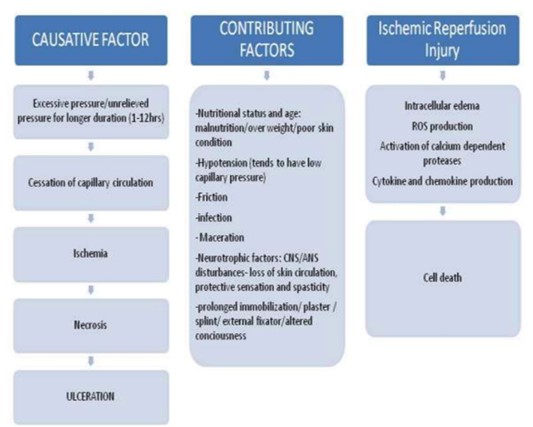
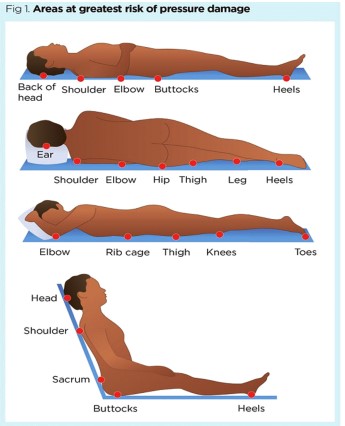
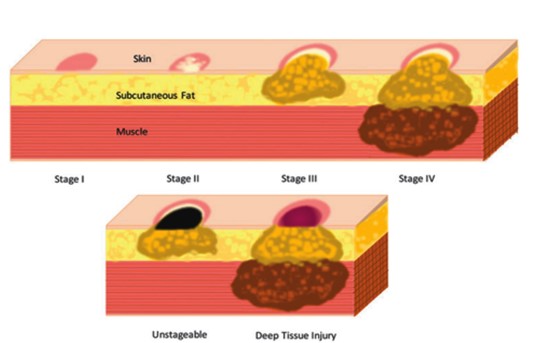
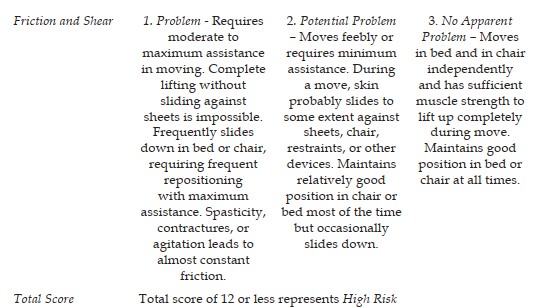
This article look into the etiopathogenesis, assessment, prevention and management of pressure ulcer. It also covers the role of pressure release devices and newer treatment methods in healing process of these wounds. Pressure ulcers occur from friction and shear and are progressive. It is usually found in bedridden and immobile people. Spinal cord injury patients have loss of sensation which adds on the problem. Pressure ulcers are preventable usually and based on severity management changes.
References
- 1. Guyton, A.C. Capillary fluid exchange, interestitial fluid dynamics and lymph flow. in: A.C. Guyton (Ed.) Human physiology and mechanism of disease. 5th ed. WB Saunders Company, Philadelphia; 1992: 124–135.
- 2. Gefen A. Reswick and Rogers pressure-time curve for pressure ulcer risk. Part 1. Nurs Stand. 2009;23:64. 66, 68 [PubMed: 19678520].
- 3. Gefen A. Reswick and Rogers pressure-time curve for pressure ulcer risk. Part 2. Nurs Stand. 2009;23:40–4. [PubMed:19685678].
- 4. Callam MJ, Ruckley CV, Harper DR, Dale JJ. Chronic ulceration of the leg: Extent of the problem and provision of care. Br Med J (Clin Res Ed) 1985;290:1855–6. [PMCID: PMC1416814] [PubMed: 3924283].
- 5. Dodd KT, Gross DR. Three-dimensional tissue deformation in subcutaneous tissues overlying bony prominences may help to explain external load transfer to the interstitium. J Biomech. 1991;24:11–9. [PubMed: 2026630].
- 6. Kuffler DP. Techniques for wound healing with a focus on pressure ulcers elimination. Open CircVasc J. 2010;3:72– 84.
- 7. Goossens RH, Snijders CJ, Holscher TG, Heerens WC, Holman AE. Shear stress measured on beds and wheelchairs. Scand J Rehabil Med. 1997;29:131–6. [PubMed: 9271146].
- 8. Allman RM. Pressure ulcer prevalence, incidence, risk factors, and impact. ClinGeriatr Med. 1997;13:421–36. [PubMed: 9227937].
- 9. Bliss MR. Hyperaemia. J Tissue Viability. 1998;8:4–13. [PubMed: 10480965].
- 10. NPUAP. 2007. National Pressure Ulcer Advisory Panel Support Surface Standards Initiative - Terms and Definitions Related to Support Surfaces. Available from: http:// www.npuap.org/NPUAP_S3I_TD.pdf.
- 11. Black J, Baharestani M, Cuddigan J, Dorner B et al. (NAPUAP. National Pressure Ulcer Advisory Panel’s Updated Pressure Ulcer Staging System. Urologic Nursing 2007; 27:144- 150.
- 12. Norton D. Calculating the risk: reflections on the Norton Scale. Decubitus 1989;2:24–31.
- 13. Bergstrom N, Braden BJ, Laguzza A, Holman V. The Braden Scale for predicting pressure sore risk.Nurs Res 1987;36:205–210.
- 14. McInnes E, Jammali-Blasi A, Bell-Syer SE, Dumville JC, Middleton V, Cullum N. Support surfaces for pressure ulcer prevention. Cochrane Database Syst Rev 2015; 9:CD001735.
- 15. Twersky J, Montgomery T, Sloane R, et al. A randomized, controlled study to assess the effect of silk-like textiles and high-absorbency adult incontinence briefs on pressure ulcer prevention. Ostomy Wound Manage 2012;58:18–24.
- 16. Harris C, Bates-Jensen B, Parslow N, Raizman R, Singh M, Ketchen R. Bates-Jensen wound assessment tool: pictorial guide validation project. J Wound Ostomy Continence Nurs 2010;37:253– 259.
- 17. van Lis MS, van Asbeck FW, Post MW. Monitoring healing of pressure ulcers: a review of assessment instruments for use in the spinal cord unit. Spinal Cord 2010;48:92–99.
- 18. Mumcuoglu KY, Lipo M, Ioffe-Uspensky I, Miller J, Galun R. Maggot therapy for gangrene and osteomyelitis. Harefuah. 1997;132:323–5. 382. [PubMed: 9153871].
- 19. Sherman RA. Maggot versus conservative debridement therapy for the treatment of pressure ulcers. Wound Repair Regen. 2002;10:208–14. [PubMed: 12191002].
- 20. Schönfeld M, Moll I, Maier K, Jung EG. Keratinocytes from cell culture for therapy of skin defects. Review and personal results. Hautarzt. 1993;44:281–9. [PubMed: 8320114].
Data Sharing Statement
There are no additional data available. All raw data and code are available upon request.
Funding
This research received no funding.
Author Contributions
All authors contributed significantly to the work and approve its publication.
Ethics Declaration
This article does not involve any human or animal subjects, and therefore does not require ethics approval.
Acknowledgements
We would like to express our gratitude to the patients, their families, and all those who have contributed to this study.
Conflicts of Interest
No conflicts of interest in this work.
About this article

Cite this article
Amrutha J.S., Ravi Kumar Chittoria/Pressure Ulcer: Review Article/Physio and Occ Therapy Jr. 2023;16(4): 187-198
Licence:
Attribution-Non-commercial 4.0 International (CC BY-NC 4.0)This license enables reusers to distribute, remix, adapt, and build upon the material in any medium or format for noncommercial purposes only, and only so long as attribution is given to the creator.
| Received | Accepted | Published |
|---|---|---|
| November 29, 2023 | December 18, 2023 | December 25, 2023 |
DOI: https://doi.org/10.21088/potj.0974.5777.16423.3
Keywords
Pressure UlcerReconstructionHyperbaric Oxygen TherapyNPWTSearch for Similar Articles
Similar Articles
- Leadership in Physiotherapy: A Narrative Review
- Effectiveness of Low Level Laser Theapy in the Management of Temporomandibular J...
- The Impact of Air Pollution on Cardiopulmonary Health: Molecular Mechanisms, Pre...
- Efectiveness of Physiotherapy in Postpartum Women with Diastasis Recti: A Review
- Pain Neuroscience Education: Transforming Physiotherapy Practice
Article Level Metrics
Last UpdatedFriday 23 October 2026, 15:17:10 (IST)
4358
Accesses
11
739
00
Citations
NA
NA
NA
Download citation
Article Keywords
Keyword Highlighting
Highlight selected keywords in the article text.
Timeline
| Received | November 29, 2023 |
| Accepted | December 18, 2023 |
| Published | December 25, 2023 |
licence
Attribution-Non-commercial 4.0 International (CC BY-NC 4.0)
This license enables reusers to distribute, remix, adapt, and build upon the material in any medium or format for noncommercial purposes only, and only so long as attribution is given to the creator.