Full Text (PDF)
Indian Journal of Emergency Medicine 8(1):p 23-25, January–March 2022. | DOI: https://doi.org/10.21088/ijem.2395.311X.8122.3
Case Report
Pneumomediastinum: An Early Predictor of Mortality in Paraquat Poisoning: A Rare Case Presentation
Aishwarya Nandy, Sonika Dhillon, Santosh Kumar Singh, Rayees Ahmad Sofi
Author Information
Licence:
Attribution-Non-commercial 4.0 International (CC BY-NC 4.0)This license enables reusers to distribute, remix, adapt, and build upon the material in any medium or format for noncommercial purposes only, and only so long as attribution is given to the creator
Indian Journal of Emergency Medicine 8(1):p 23-25, January–March 2022. | DOI: https://doi.org/10.21088/ijem.2395.311X.8122.3
How Cite This Article:
Sonika Dhillon, Aishwarya Nandy, Santosh Kumar Singh, et. al./Pneumomediastinum: An Early Predictor of Mortality in Paraquat Poisoning: A Rare Case Presentation/Indian J Emerg Med 2022;8(1):23–25Timeline
Received : October 29, 2021
Accepted : November 10, 2021
Published : March 30, 2022
Abstract
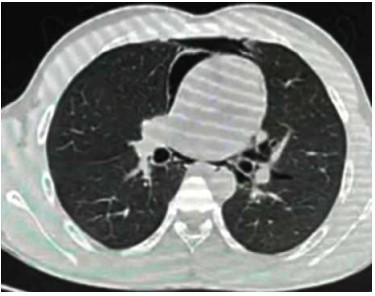
Background: Paraquat is a broad spectrum liquid herbicide (1,1'- dimethyl-4,4'- dipyridylium) associated with both accidental and intentional ingestion. It has a very high case fatality rate assuming to be due to inherent toxicity and lack of effective treatments. Poisoning by Paraquat herbicide has been a major medical problem in parts of Asia. Despite widespread availability, reports of Paraquat poisoning is not common due to very high case fatality rate might be due to not reaching to tertiary care centres and non specific clinical features with absence of proper history. Case Presentation: We report a case of previously healthy 19 years old male who was brought to the emergency department 3 days after intentional ingestion of approximately 100ml of 24% Paraquat herbicide with complaints of retrosternal chest pain while breathing & dysphagia followed by several episodes of vomiting followed by the development of pneumomediastinum and death from respiratory failure. Paraquat poisoning should always be considered in the differential diagnosis in patients presenting with spontaneous pneumothorax or pneumomediastinum in places with high paraquat poisoning prevalence. Conclusion: Though Pneumomediastinum being an early predictor of 100% mortality in Paraquat poisoning but an emergency physician should establish the diagnosis early and to pursue aggressive decontamination and prevention of further absorption. Increased awareness of the clinician and availability of the laboratory diagnostic methods will definitely help in successful management of paraquat poisoning and to decrease the case fatality rate. What we already know? There are quite a few case reports that already mentioned about possibilities of occurrence of spontaneous pneumomediastinum, pneumothorax or lung fibrosis along with acute renal failure, liver toxicity and mucosal injury. What this paper adds? This is rare case report of spontaneous pneumomediastinum in Paraquat poisoning presenting to our tertiary care centre. A chest radiograph or a CT chest should be performed which may be useful in early detection of pneumomediastinum, pneumothorax or lung fibrosis for assessing long term damage in survivors. We specifically point towards the fact that no obvious clinical guideline can decrease the case fatality rates in these kind of cases.
References
- 1. Paraquat poisoning: findings on chest radiography and CT in 42 patients. J G Im 1, K S Lee, M C Han, S J Kim, I O Kim1991 Oct;157(4):697-701
- 2. Pneumomediastinum predicts early mortality in acute paraquat poisoning Chun-Yu Zhou,Xin Kang,Chang-Bin Li,Xin-Hua Li,Yong Liu,Zhen Wang,Ling Wang,Tianfu Wu, Chandra Mohan,Da-Yong Hu & Ai Peng Pages 551-556 | 13 Jun 2015
- 3. A Case of Paraquat Poisoning Presenting With Spontaneous Pneumothorax and Pneumomediastinum Debananda Sahoo, Nilanjan Kar, Sujata Devi,Anupam Dey, Dhriti Sundar Das 2020 Dec 7
- 4. Forget G. Pesticides and the third world. J Toxicol Environ Health 1991;32(1):11–31.
- 5. Eddleston M, Haggalla S, Reginald K, Sudarshan K, Senthilkumaran M, Karalliedde L, et al. The hazards of gastric lavage for intentional self-poisoning in a resource poor location. Clin Toxicol (Phila) 2007;45:136–43
Data Sharing Statement
There are no additional data available. All raw data and code are available upon request.
Funding
This research received no funding.
Author Contributions
All authors contributed significantly to the work and approve its publication.
Ethics Declaration
This article does not involve any human or animal subjects, and therefore does not require ethics approval.
Acknowledgements
We would like to express our gratitude to the patients, their families, and all those who have contributed to this study.
Conflicts of Interest
No conflicts of interest in this work.
About this article

Cite this article
Sonika Dhillon, Aishwarya Nandy, Santosh Kumar Singh, et. al./Pneumomediastinum: An Early Predictor of Mortality in Paraquat Poisoning: A Rare Case Presentation/Indian J Emerg Med 2022;8(1):23–25
Licence:
Attribution-Non-commercial 4.0 International (CC BY-NC 4.0)This license enables reusers to distribute, remix, adapt, and build upon the material in any medium or format for noncommercial purposes only, and only so long as attribution is given to the creator
| Received | Accepted | Published |
|---|---|---|
| October 29, 2021 | November 10, 2021 | March 30, 2022 |
DOI: https://doi.org/10.21088/ijem.2395.311X.8122.3
Keywords
ParaquatPneumomediastinumPneumothoraxLiquid herbicideCase fatalitySearch for Similar Articles
Similar Articles
- Covid 19 Vaccine: Associated Henoch Schonlein Purpura in Young Adult Female
- A Rare Case of Intolerance to Medically Approved Dose of Sildenafil Citrate in a...
- Acute Mesenteric Ischemia: An Unusual Cause of Hematemesis in a 48 Year Old Man
- Brachial Artery Pseudoaneurysm Related Causally to Iatrogenic Coagulopathy in a...
- Combination Therapy for Acute Management of Yellow Oleander Poisoning: A Case Re...
Article Level Metrics
Last UpdatedSunday 06 September 2026, 20:51:42 (IST)
4083
Accesses
8
922
00
Citations
NA
NA
NA
Download citation
Article Keywords
Keyword Highlighting
Highlight selected keywords in the article text.
Timeline
| Received | October 29, 2021 |
| Accepted | November 10, 2021 |
| Published | March 30, 2022 |
licence
Attribution-Non-commercial 4.0 International (CC BY-NC 4.0)
This license enables reusers to distribute, remix, adapt, and build upon the material in any medium or format for noncommercial purposes only, and only so long as attribution is given to the creator