Full Text (PDF)
Indian Journal of Dental Education 15(1):p 23-26, January-March 2022. | DOI: https://doi.org/10.21088/ijde.0974.6099.15122.3
Case Report
One Step Apexification using PRF as Matrix and MTA Apical Barrier
Pankaj Datta, Swati Tomar, Ritika Malhotra, Hirojit null, Akanksha Garg
Author Information
Licence:
Attribution-Non-commercial 4.0 International (CC BY-NC 4.0)This license enables reusers to distribute, remix, adapt, and build upon the material in any medium or format for noncommercial purposes only, and only so long as attribution is given to the creator.
Indian Journal of Dental Education 15(1):p 23-26, January-March 2022. | DOI: https://doi.org/10.21088/ijde.0974.6099.15122.3
How Cite This Article:
Swati Tomar, Ritika Malhotra, Hirojit, Akanksha Garg, Pankaj Datta/One Step Apexification using PRF as Matrix and MTA Apical Barrier/Indian J Dent Educ. 2022;15(1): 23-26Timeline
Received : August 31, 2021
Accepted : January 22, 2022
Published : March 30, 2022
Abstract
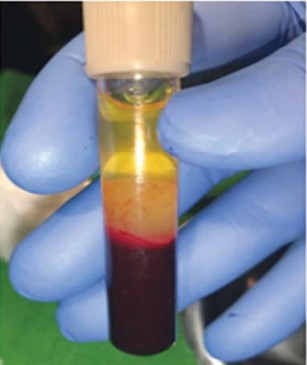
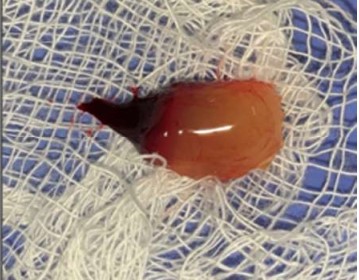
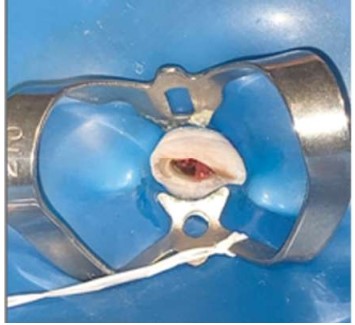
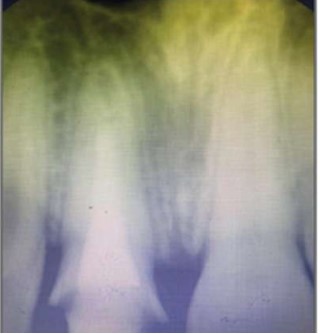
Carious exposure of young permanent tooth during the time of root development may lead to caseation of root completion, which leads to the absence of physiological apex closure and makes any endodontic treatment a challenge. For the success of the treatment and to create an apical barrier onto which obturating materials are condensed. This can be achieved in many ways traditionally; calcium hydroxide was used but due to drawbacks like long treatment duration and unpredictable results it is replaced by materials like mineral trioxide aggregate (MTA) and regenerative endodontics which appears as a newer modality to treat young permanent tooth with open apex. The only drawback is the over extrusion of MTA. To encounter that a favorable matrix is being used called Platelet-rich fibrin (PRF), this can be used as an apical matrix onto which MTA is condensed and an apical seal with favorable treatment outcomes can be achieved. Key Messages: Young permanent tooth with open apex makes any endodontic treatment a challenging task. As a treatment modality MTA with an apical matrix barrier like PRF gives favorable results and a good apical seal can be achieved for the success of the treatment.
References
- 1. Andreasen JO, Flores MT. Injuries to developing teeth. In: Andreasen JO, Andreasen FM, Andersson L, editors. Textbook and Color Atlas of Traumatic Injuries to the Teeth. 4th ed. Copenhagen: Munksgaard; 2007. p. 542 76.
- 2. Morse DR, O’Larnic J, Yesilsoy C. Apexification: Review of the literature. Quintessence Int 1990; 21:589 98.
- 3. Cvek M. Prognosis of luxated non vital maxillary incisors treated with calcium hydroxide and filled with gutta percha. A retrospective clinical study. Endod Dent Traumatol1992; 8:45 55.
- 4. Simon S, Rilliard F, Berdal A, Machtou P. The use of mineral trioxide aggregate in one visit apexification treatment: A prospective study. Int Endod J 2007; 40:186 97.
- 5. Lemon RR. Nonsurgical repair of perforation defects. Internal matrix concept. Dent Clin North Am 1992; 36:439 57.
- 6. Dohan DM, Choukroun J, Diss A, Dohan SL, Dohan AJ, Mouhyi J, et al. Platelet rich fibrin (PRF): A second generation platelet concentrate. Part I: Technological concepts and evolution. Oral Surg Oral Med Oral Pathol Oral RadiolEndod 2006; 101:e37 44.
- 7. El-Meligy OA, Avery DR. Comparison of apexification with mineral trioxide aggregate and calcium hydroxide. Pediatr Dent. 2006 MayJun;28(3):248-53.
- 8. E. Bonte, A. Beslot, T. Boukpessi, J.J. Lasfargues MTA versus Ca(OH)2 in apexification of non-vital immature permanent teeth: a randomized clinical trial comparison.Clin Oral Investig, 19 (2015), pp. 1381-1388.
- 9. Torabinejad M, Chivian N. Clinical applications of mineral trioxide aggregate. J Endod. 1999;25 3:197–205.
Data Sharing Statement
There are no additional data available. All raw data and code are available upon request.
Funding
This research received no funding.
Author Contributions
All authors contributed significantly to the work and approve its publication.
Ethics Declaration
This article does not involve any human or animal subjects, and therefore does not require ethics approval.
Acknowledgements
We would like to express our gratitude to the patients, their families, and all those who have contributed to this study.
Conflicts of Interest
No conflicts of interest in this work.
About this article

Cite this article
Swati Tomar, Ritika Malhotra, Hirojit, Akanksha Garg, Pankaj Datta/One Step Apexification using PRF as Matrix and MTA Apical Barrier/Indian J Dent Educ. 2022;15(1): 23-26
Licence:
Attribution-Non-commercial 4.0 International (CC BY-NC 4.0)This license enables reusers to distribute, remix, adapt, and build upon the material in any medium or format for noncommercial purposes only, and only so long as attribution is given to the creator.
| Received | Accepted | Published |
|---|---|---|
| August 31, 2021 | January 22, 2022 | March 30, 2022 |
DOI: https://doi.org/10.21088/ijde.0974.6099.15122.3
Keywords
Non-vital toothMineral trioxide aggregateOne-step apexificationImmature toothOpen apexinternal matrixPlatelet-rich fibrinSearch for Similar Articles
Similar Articles
- Infective Ulcers in the Oral Cavity: A Review
- Effect of COVID-19 Lockdown on Patients Undergoing Orthodontic Therapy in Distri...
- Wire Splinting: An Effective Management Approach for Lateral Luxation: A Clinica...
- Prosthodontics in Healthy Ageing and Longevity Medicine: A Critical Narrative R...
- Comparative Susceptibility of Streptococcus Mutans and Lactobacilli to Antimicr...
Article Level Metrics
Last UpdatedSaturday 17 October 2026, 08:23:32 (IST)
3426
Accesses
6
611
00
Citations
NA
NA
NA
Download citation
Article Keywords
Keyword Highlighting
Highlight selected keywords in the article text.
Timeline
| Received | August 31, 2021 |
| Accepted | January 22, 2022 |
| Published | March 30, 2022 |
licence
Attribution-Non-commercial 4.0 International (CC BY-NC 4.0)
This license enables reusers to distribute, remix, adapt, and build upon the material in any medium or format for noncommercial purposes only, and only so long as attribution is given to the creator.