Full Text (PDF)
New Indian Journal of Surgery 14(1):p 15-19, January-March 2023. | DOI: https://doi.org/10.21088/nijs.0976.4747.14123.2
Original Article
Neutrophil Lymphocyte Ratio: A Prognostic Indicator of Limb Survival in CLI Patients
Akhila N. T., Sandesh Nair, Suraj Pattar, Nagashree Iyer
Author Information
Licence:
Attribution-Non-commercial 4.0 International (CC BY-NC 4.0)This license enables reusers to distribute, remix, adapt, and build upon the material in any medium or format for noncommercial purposes only, and only so long as attribution is given to the creator.
New Indian Journal of Surgery 14(1):p 15-19, January-March 2023. | DOI: https://doi.org/10.21088/nijs.0976.4747.14123.2
How Cite This Article:
Akhila N. T., Sandesh Nair, Suraj Pattar, et al./Neutrophil Lymphocyte Ratio: A Prognostic Indicator of Limb Survival in CLI Patients/New Indian J Surg. 2023;14(1):15–19.Timeline
Received : November 30, 2022
Accepted : January 25, 2023
Published : March 30, 2023
Abstract
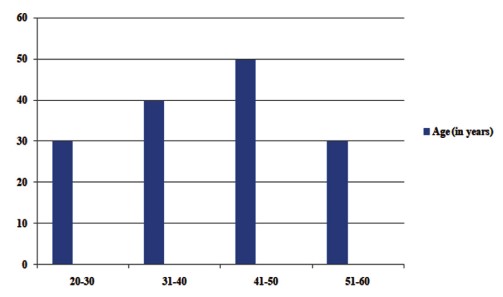
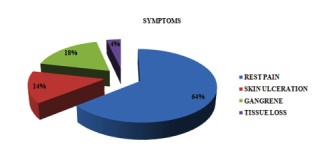
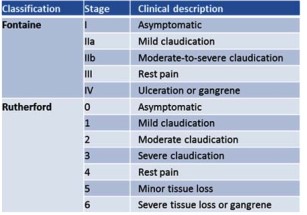
Aims and Objectives: This study was designed to evaluate admission neutrophil lymphocyte ratio in predicting risk of amputation in critical limb ischemia patients who could not get surgical or radiological (percutaneous transluminal angioplasty) revascularization. Methods: A total of 150 patients presented with CLI to our hospital between June 2017 and June 2018 who could not have radiological or surgical revascularization are included in the study. Critical limb ischemia patients are those with is defined with ischemic rest pain and/or skin ulceration/gangrene in accordance to current guidelines reflecting patients with Fontaine class 3 and 4. This is a comparative study, 75 with CLI and rest pain and 75 without rest pain, so the NLR was significant in the rest pain group substantiated with the p value thus proving a vascular end point. An optimal cut-off value for the continuous NLR was calculated by applying a receiver operating curve analysis to discriminate between CLI and non-CLI. In our study occurrence of CLI significantly increased with an increase in NLR. A P value <0.05 was considered statistically significant and the CI was 95%. Analyses were performed using SPSS software. Results: Using an NLR cutoff of ≥3.2, the area under the receiver–operating characteristic curve was 0.71 (95% CI 0.54-0.78). Overall, there were a total of 9 (0.06%) deaths and 135(90%) amputations. The amputations were above ankle in 103 (77%) and below ankle in 32 (23%). Conclusion: The neutrophil lymphocyte ratio is an independent predictive factor for amputation in critical limb ischemia patients. An increased NLR is significantly associated with patients at high risk for CLI and other vascular endpoints. Stratification of patients with CLI according to admission NLR should be considered in the limb survival analyses of future adjuvant and neoadjuvant trials to validate these findings.
References
- 1. Bertomeu V, Morillas P, Gonzalez-Juanatey JR, Quiles J, Guindo J, et al. (2008) Prevalence and prognostic influence of peripheral arterial disease in patients >or = 40 years old admitted into hospital following an acute coronary event. Eur J Vasc Endovasc Surg 36: 189–196. [PubMed]
- 2. Norgren L, Hiatt WR, Dormandy JA, Nehler MR, Harris KA, et al. (2007) Inter-Society Consensus for the Management of Peripheral Arterial Disease (TASC II). J Vasc Surg 45 Suppl S: S5–67. [PubMed]
- 3. Novo S, Coppola G, Milio G (2004) Critical limb ischemia: definition and natural history. Curr Drug Targets Cardiovasc Haematol Disord 4: 219– 225. [PubMed]
- 4. Bertele V, Roncaglioni MC, Pangrazzi J, Terzian E, Tognoni EG (1999) Clinical outcome and its predictors in 1560 patients with critical leg ischaemia. Chronic Critical Leg Ischaemia Group. Eur J Vasc Endovasc Surg 18: 401–410. [PubMed]
- 5. Gary T, Belaj K, Hafner F, Hackl G, Froehlich H, et al. (2012) A high CHA(2)DS(2)-VASc score is associated with a high risk for critical limb ischemia in peripheral arterial occlusive disease patients. Atherosclerosis 225: 517–520. [PubMed]
- 6. Aerden D, Massaad D, von Kemp K, van Tussenbroek F, Debing E, et al. (2011) The ankle– brachial index and the diabetic foot: a troublesome marriage. Ann Vasc Surg 25: 770–777. [PubMed]
- 7. Spark JI, Sarveswaran J, Blest N, Charalabidis P, Asthana S (2010) An elevated neutrophillymphocyte ratio independently predicts mortality in chronic critical limb ischemia. J Vasc Surg 52: 632–636. [PubMed]
- 8. Bhutta H, Agha R, Wong J, Tang TY, Wilson YG, Walsh SR. Neutrophil-lymphocyte ratio predicts medium-term survival following elective major vascular surgery: a cross-sectional study. Vasc Endovascular Surg. 2011;45(3):227-231.
- 9. Pereira IA, Borba EF. The role of inflammation, humoral and cell mediated autoimmunity in the pathogenesis of atherosclerosis. Swiss Med Wkly. 2008;138(37-38):534-539.
- 10. Aboyans V, Criqui MH, Denenberg JO, Knoke JD, Ridker PM, Fronek A. Risk factors for progression of peripheral arterial disease in large and small vessels. Circulation. 2006;113(22):2623-2629.
- 11. Van Der Meer IM, De Maat MP, Hak AE, et al. C-reactive protein progression of atherosclerosis measured at various sites in the arterial tree: the Rotterdam Study. Stroke. 2002;33(12):2750-2755.
- 12. Akinci B, Yener S, Yesil S, Yapar N, Kucukyavas Y, Bayraktar F Acute phase reactants predict the risk of amputation in diabetic foot infection. J Am Podiatr Med Assoc. 2011;101(1):1-6.
- 13. Violi F, Criqui M, Longoni A, Castiglioni C. Relation between risk factors and cardiovascular complications in patients with peripheral vascular disease. Results from the A.D.E.P. study. Atherosclerosis. 1996;120(1-2):25-35.
- 14. Kalay N, Dogdu O, Koc F, et al. Hematologic parameters and angiographic progression of coronary atherosclerosis. Angiology. 2012;63(3):213-217.
- 15. Muhmmed Suliman MA, Bahnacy Juma AA, Ali Almadhani AA, Pathare AV, Alkindi SS, Uwe Werner F. Predictive value of neutrophil to lymphocyte ratio in outcomes of patients with acute coronary syndrome. Arch Med Res. 2010;41(8):618-622.
- 16. Hajj-Ali R, Zareba W, Ezzeddine R, Moss AJ. Relation of the leukocyte count to recurrent cardiac events in stable patients after acute myocardial infarction. Am J Cardiol. 2001;88(11):1221-1224.
- 17. Gibson PH, Croal BL, Cuthbertson BH, et al. Preoperative neutrophil-lymphocyte ratio and outcome from coronary artery bypass grafting. Am Heart J. 2007;154(5):995-1002.
- 18. Duffy BK, Gurm HS, Rajagopal V, Gupta R, Ellis SG, Bhatt DL. Usefulness of an elevated neutrophil to lymphocyte ratio in predicting long-term mortality after percutaneous coronary intervention. Am J Cardiol. 2006;97(7):993-996.
- 19. Klinger MH, Jelkmann W. Role of blood platelets in infection and inflammation. J Interferon Cytokine Res. 2002;22(9):913-922.
- 20. Alexandrakis MG, Passam FH, Moschandrea IA, et al. Levels of serum cytokines and acute phase proteins in patients with essential and cancerrelated thrombocytosis. Am J CLIn Oncol. 2003; 26(2):135-140.
- 21. Wu¨rtz M, Hvas AM, Kristensen SD, Grove EL. Platelet aggregation is dependent on platelet count in patients with coronary artery disease. Thromb Res. 2012;129(1):56-61.
- 22. Stissing T, Dridi NP, Ostrowski SR, Bochsen L, Johansson PI. The influence of low platelet count on whole blood aggregometry assessed by Multiplate. CLIn Appl Thromb Hemost. 2011;17(6): 211-217.
- 23. Thaulow E, Erikssen J, Sandvik L, Stormorken H, Cohn PF. Blood platelet count and function are related to total and cardiovascular death in apparently healthy men. Circulation. 1991; 84(2):613-617.
- 24. Furman MI, Benoit SE, Barnard MR, et al. Increased platelet reactivity and circulating monocyteplatelet aggregates in patients with stable coronary artery disease. J Am Coll Cardiol. 1998; 31(2):352- 358.
- 25. Ault KA, Cannon CP, Mitchell J, et al. Platelet activation in patients after an acute coronary syndrome: results from the TIMI-12 trial: thrombolysis in myocardial infarction. J Am Coll Cardiol. 1999;33(3):634-639.
- 26. Grau AJ, Ruf A, Vogt A, et al. Increased fraction of circulating activated platelets in acute and previous cerebrovascular ischaemia. Thromb Haem. 1998;80(2):298-301.
- 27. Zeller J, Tschoepe D, Kessler C. Circulating platelets show increased activation in patients with acute cerebral ischaemia. Thromb Haem. 1999;81(3):373-377.
- 28. Thaulow E, Erikssen J, Sandvik L, Stormorken H, Cohn P. Blood platelet count and fuction are related to total and cardiovascular death in apparently healthy men. Circulation. 1991;84(2):613-617.
Data Sharing Statement
There are no additional data available. All raw data and code are available upon request.
Funding
This research received no funding.
Author Contributions
All authors contributed significantly to the work and approve its publication.
Ethics Declaration
This article does not involve any human or animal subjects, and therefore does not require ethics approval.
Acknowledgements
We would like to express our gratitude to the patients, their families, and all those who have contributed to this study.
Conflicts of Interest
No conflicts of interest in this work.
About this article

Cite this article
Akhila N. T., Sandesh Nair, Suraj Pattar, et al./Neutrophil Lymphocyte Ratio: A Prognostic Indicator of Limb Survival in CLI Patients/New Indian J Surg. 2023;14(1):15–19.
Licence:
Attribution-Non-commercial 4.0 International (CC BY-NC 4.0)This license enables reusers to distribute, remix, adapt, and build upon the material in any medium or format for noncommercial purposes only, and only so long as attribution is given to the creator.
| Received | Accepted | Published |
|---|---|---|
| November 30, 2022 | January 25, 2023 | March 30, 2023 |
DOI: https://doi.org/10.21088/nijs.0976.4747.14123.2
Keywords
NLRchronic limb ischemiagangreneSearch for Similar Articles
Similar Articles
- End Stage Renal Disease: AVF for Hemodialysys: Clinical Assessment with/without...
- Role of Pan-Tilt Camera in Tele-interaction During Surgery at the Time of COVID-...
- Rare Case of Gall Bladder Perforation following acute Calculus Cholecystitis in...
- Early Detection of Common Bile Duct Injury Post Cholecystectomy, What are the Op...
- Role of External Tissue Expansion Wound Closure in the Electrical Burn Wound to...
Article Level Metrics
Last UpdatedFriday 09 October 2026, 04:03:47 (IST)
5943
Accesses
4
636
00
Citations
NA
NA
NA
Download citation
Article Keywords
Keyword Highlighting
Highlight selected keywords in the article text.
Timeline
| Received | November 30, 2022 |
| Accepted | January 25, 2023 |
| Published | March 30, 2023 |
licence
Attribution-Non-commercial 4.0 International (CC BY-NC 4.0)
This license enables reusers to distribute, remix, adapt, and build upon the material in any medium or format for noncommercial purposes only, and only so long as attribution is given to the creator.