Full Text (PDF)
New Indian Journal of Surgery 17(4):p 205-211, October-December 2026. | DOI: https://doi.org/10.21088/nijs.0976.4747.17426.9
Case Report
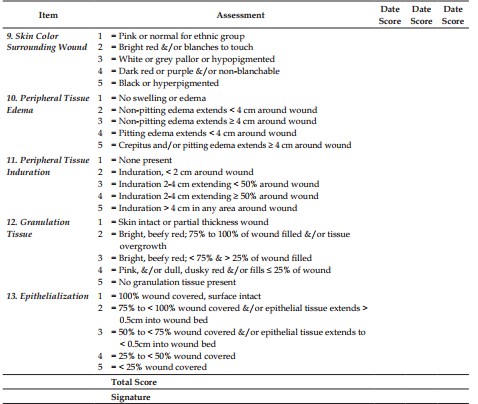
Role of Bates-Jenson Wound Assessment Tool (BJWAT) in Wound Management
Ravi Kumar Chittoria, Nabiel Salam, Kanav Gupta, Padmalakshmi Bharati Mohan, Jacob Antony Chakiath
Author Information
Licence:
Attribution-Non-commercial 4.0 International (CC BY-NC 4.0)This license enables reusers to distribute, remix, adapt, and build upon the material in any medium or format for noncommercial purposes only, and only so long as attribution is given to the creator.
New Indian Journal of Surgery 17(4):p 205-211, October-December 2026. | DOI: https://doi.org/10.21088/nijs.0976.4747.17426.9
How Cite This Article:
Nabiel Salam, Kanav Gupta, Ravi Kumar Chittoria et al. Role of Bates-Jenson Wound Assessment Tool (BJWAT) in Wound Management. New Indian J Surg. 2026; 17(4): 205-211.Timeline
Received : September 29, 2026
Accepted : October 30, 2026
Published : December 30, 2026
Abstract
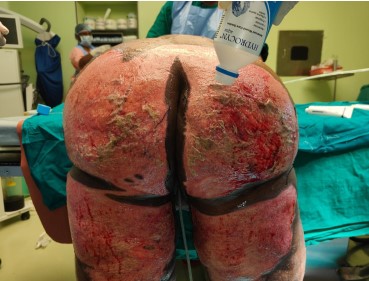
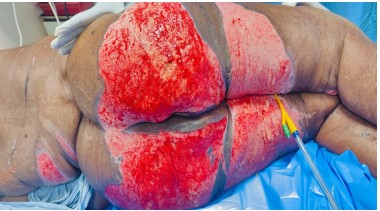
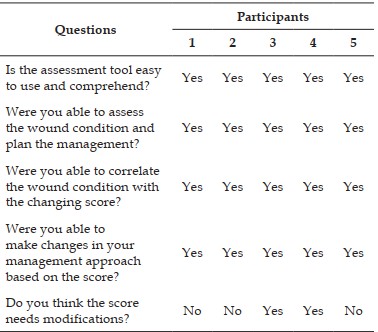
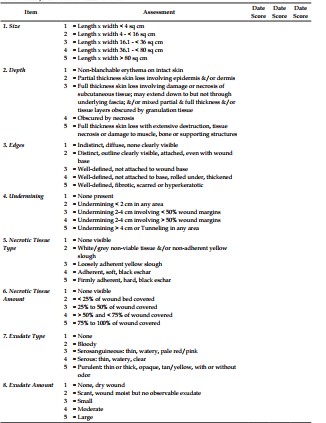
Background: Accurate wound assessment is essential to effective wound management. Systematic evaluation of wound characteristics enables clinicians to monitor tissue changes, assess healing progression and make informed treatment decisions. Standardised assessment instruments can improve consistency in clinical evaluation and documentation. Aim: This article describes the clinical application of the Bates-Jensen Wound Assessment Tool (BJWAT) to monitor wound status and guide treatment decisions. Methods: BJWAT was used for serial wound assessment in a 32-year-old female patient with a buttock wound managed at a tertiary care centre. We evaluated wound characteristics using the standardised scoring system and repeated assessments during the treatment period. We also sought feedback from plastic surgery trainees on the assessment tool’s practical usefulness. Results: Serial wound assessments demonstrated a progressive reduction in BJWAT scores from 52 at the initial assessment to 32 during the treatment period. The scoring system provided a structured approach to documenting wound characteristics and helped clinicians monitor wound progression and plan further interventions. However, the clinical team recognised the importance of considering systemic factors that may influence wound healing. Conclusion: BJWAT provides a systematic approach to wound assessment and documentation. Its application alongside evaluation of patient-related systemic factors may support more comprehensive clinical decision-making in wound management.
References
- 1. Beitz JM, Van Rijswijk L, using wound care algorithm, a content validity study.J. Wound Ostomy Continence Nurs. 1999;26(5):238-49.
- 2. Doughty DB. Wound assessment tips and techniques. Adv skin Wound care. 2004;17:369-72.
- 3. Harris C, Bates-Jensen B, Parslow N, Raizman R, Singh M, Ketchen R. Bates-Jensen wound assessment tool: pictorial guide validation project. J Wound Ostomy Continence Nurs [Internet]. 2010 [cited 2018 Dec 31];37(3):253-9.
- 4. Kobza L, Scheurich A. The impact of telemedicine on outcomes of chronic wounds in the home care setting. Ostomy wound management. 2000; 46:48-53.
- 5. Sibbald R G, Williamson D, Orsted H L, et al. Preparing the wound bed-debridement, bacterial balance, and moisture balance. Ostomy Wound Management. 2000;46:14-35.
- 6. Bolton L, McNees P, van Rijswijk L, de Leon J, Lyder C, Kobza L, et al. Wound-Healing Outcomes Using Standardised Assessment and Care in Clinical Practice. J Wound Ostomy Cont Nurs [Internet]. 2004 [cited 2018 Dec 31];31(2):65-71.
- 7. Bates Janeson BM, Vredeaue DL, Bretch ML. Validity and reliability of the pressure sore status tool. Decubitus. 1992;55(6):20-8.
Data Sharing Statement
There are no additional data available. All raw data and code are available upon request.
Funding
This research received no funding.
Author Contributions
All authors contributed significantly to the work and approve its publication.
Ethics Declaration
This article does not involve any human or animal subjects, and therefore does not require ethics approval.
Acknowledgements
We would like to express our gratitude to the patients, their families, and all those who have contributed to this study.
Conflicts of Interest
No conflicts of interest in this work.
About this article

Cite this article
Nabiel Salam, Kanav Gupta, Ravi Kumar Chittoria et al. Role of Bates-Jenson Wound Assessment Tool (BJWAT) in Wound Management. New Indian J Surg. 2026; 17(4): 205-211.
Licence:
Attribution-Non-commercial 4.0 International (CC BY-NC 4.0)This license enables reusers to distribute, remix, adapt, and build upon the material in any medium or format for noncommercial purposes only, and only so long as attribution is given to the creator.
| Received | Accepted | Published |
|---|---|---|
| September 29, 2026 | October 30, 2026 | December 30, 2026 |
DOI: https://doi.org/10.21088/nijs.0976.4747.17426.9
Keywords
Bates-Jensen Wound Assessment ToolBJWATWound AssessmentWound ManagementWound HealingNursing CareSearch for Similar Articles
Similar Articles
- Role of New Antimicrobial Solution in the Management of a Chronic Left Foot Woun...
- Laparoscopic Excision of a Giant Retroperitoneal Benign Mesenteric Cyst Encasing...
- Endoscopic-Assisted Sural Nerve and Biceps Femoris Muscle Biopsy in a Young Woma...
- Amniotic Membrane in Wound Healing: Biological Basis, Clinical Evidence and Futu...
- Comparative Study of Limberg Flap and Karydakis Flap Surgery For Pilonidal Sinus
Article Level Metrics
Last UpdatedSunday 22 November 2026, 02:26:47 (IST)
9527
Accesses
15
878
00
Citations
NA
NA
NA
Download citation
Article Keywords
Keyword Highlighting
Highlight selected keywords in the article text.
Timeline
| Received | September 29, 2026 |
| Accepted | October 30, 2026 |
| Published | December 30, 2026 |
licence
Attribution-Non-commercial 4.0 International (CC BY-NC 4.0)
This license enables reusers to distribute, remix, adapt, and build upon the material in any medium or format for noncommercial purposes only, and only so long as attribution is given to the creator.