Full Text (PDF)
Ophthalmology and Allied Sciences 12(1):p 07-17, Jan -June 2026. | DOI: 10.21088/oas.2454.7816.12126.1
Original Article
Management of Corneal Perforation in a Tertiary Care Hospital: An Observational Study
Veeresh Korwar, Sumeet Deshpande, Anagha N K
Author Information
Licence:
Attribution-Non-commercial 4.0 International (CC BY-NC 4.0)This license enables reusers to distribute, remix, adapt, and build upon the material in any medium or format for noncommercial purposes only, and only so long as attribution is given to the creator.
Ophthalmology and Allied Sciences 12(1):p 07-17, Jan -June 2026. | DOI: 10.21088/oas.2454.7816.12126.1
How Cite This Article:
Veeresh Korwar, Sumeet Deshpande, Anagha N K. Management of Corneal Perforation in a Tertiary Care Hospital – An Observational Study. Ophthalmol Allied Sci. 2026;12(1): 07-17.Timeline
Received : June 25, 2026
Accepted : July 20, 2026
Published : June 30, 2026
Abstract
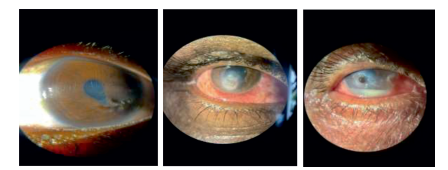
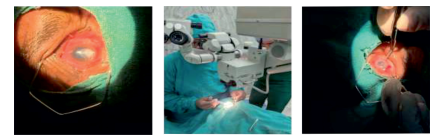
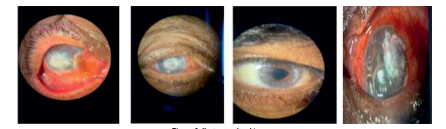
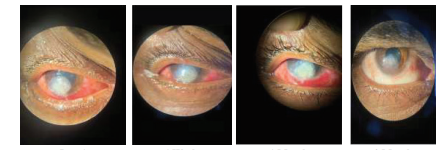
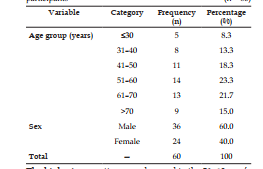
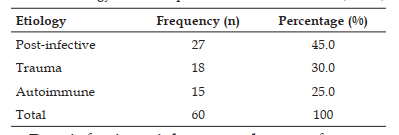
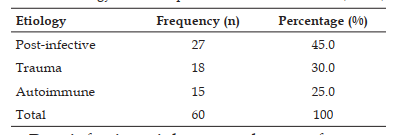
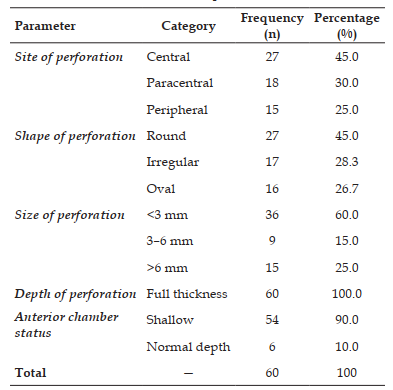
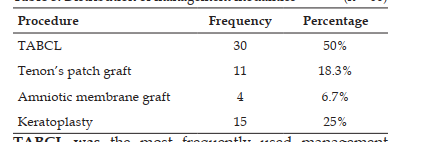
Background: Corneal perforation is a vision-threatening ophthalmic emergency characterized by a full-thickness defect in the cornea, leading to loss of globe integrity and potential irreversible visual impairment. Prompt diagnosis and appropriate management are essential to restore anatomical integrity and preserve vision. The study was conducted to evaluate the clinical profile, etiological factors, management modalities, and outcomes of corneal perforation in a tertiary care hospital setting. Methods: This prospective observational study included 60 patients with fullthickness corneal perforation managed over 18 months at a tertiary care hospital. Patients were assessed for demographic characteristics, etiology, site, size, and clinical presentation. Management strategies included medical therapy, tissue adhesive with bandage contact lens (TABCL), Patch graft, amniotic membrane transplantation, and keratoplasty. Outcomes were evaluated based on anatomical integrity, epithelial healing, visual improvement, and complications over a followup period of up to three months. Results: The mean age was 53.27 ± 15.81 years, with a male predominance (60%). Post-infective causes were most common (45%), followed by trauma (30%) and autoimmune conditions (25%). Central perforations (45%) and small-sized defects <3 mm (60%) were predominant. TABCL was the most frequently employed treatment (50%), followed by keratoplasty (25%). Anatomical success was achieved in all cases (100%), with 92% epithelial healing. Visual improvement was observed in 40% of cases, with better outcomes in peripheral perforations (60%) compared to central ones (37%) (p = 0.0421). Post-procedural complications were minimal (10%).
References
- 1. Deshmukh, Rashmi et al. “Management of corneal perforations: An update.” Indian journal of ophthalmology vol. 68,1 (2020): 7-14. Veeresh Korwar, Sumeet Deshpande, Anagha N K. Management of Corneal Perforation in a Tertiary Care Hospital – An Observational Study16 Ophthalmology and Allied Sciences OAS/ Volume 12 Number 1/ January - June 2026 doi:10.4103/ijo.IJO_1151_19 .
- 2. Stamate, Alina-Cristina et al. “Emergency penetrating keratoplasty in corneal perforations.” Romanian journal of ophthalmology vol. 62,4 (2018): 253-259.
- 3. Castano G, Elnahry AG, Mada PK. Fungal Keratitis.[Updated 2024 Feb 12]. In: StatPearls [Internet]. Treasure Island (FL): StatPearls Publishing; 2025 Jan-. Available from: https:// www.ncbi.nlm.nih.gov/books/NBK493192/
- 4. Ting, Darren Shu Jeng et al. “Infectious keratitis: an update on epidemiology, causative microorganisms, risk factors, and antimicrobial resistance.” Eye (London, England) vol. 35,4 (2021): 1084-1101. doi:10.1038/s41433-020- 01339-3
- 5. Gour, Abha et al. “A Case-Based Approach to the Management of Corneal Melts and Perforations in Ocular Surface Disorders.” Cureus vol. 17,3 e81293. 27 Mar. 2025, doi:10.7759/cureus.81293
- 6. Jhanji, Vishal et al. “Management of corneal perforation.” Survey of ophthalmology vol. 56,6 (2011): 522-38. doi:10.1016/j. survophthal.2011.06.003
- 7. Korah, Sanita et al. “Tenons Patch Graft in the Management of Large Corneal Perforations.” Cornea vol. 35,5 (2016): 696-9. doi:10.1097/ ICO.0000000000000808
- 8. Shekhawat, Nakul Singh et al. “Tenon Patch Graft with Vascularized Conjunctival Flap for Management of Corneal Perforation.” Cornea vol. 41,11 (2022): 1465-1470. doi:10.1097/ ICO.0000000000003068
- 9. Gurnani B, Kaur K. Penetrating Keratoplasty. [Updated 2023 Jun 11]. In: StatPearls [Internet]. Treasure Island (FL): StatPearls Publishing; 2025 Jan-. Available from: https://www.ncbi. nlm.nih.gov/books/NBK592388/
- 10. Gupta, Noopur et al. “Burden of corneal blindness in India.” Indian journal of community medicine: official publication of Indian Association of Preventive & Social Medicine vol. 38,4 (2013): 198-206. doi:10.4103/0970-0218.120153
- 11. Asai T, Nakagami T, Mochizuki M, Hata N, Tsuchiya T, Hotta Y. Three cases of corneal melting after instillation of a new nonsteroidal anti-inflammatory drug. Cornea. 2006 Feb;25(2):224-7. doi: 10.1097/01. ico.0000177835.93130.d4. PMID: 16371788.
- 12. Masuda I, Matsuo T, Okamoto K, Matsushita K, Ohtsuki H. Two cases of corneal perforation after oral administration of nonsteroidal anti-inflammatory drugs: oral NSAID-induced corneal damage. Eur J Ophthalmol. 2010 Mar-Apr;20(2):454-6. doi: 10.1177/112067211002000230. PMID: 20037896.
- 13. Deshmukh R, Stevenson LJ, Vajpayee R. Management of corneal perforations: An update. Indian J Ophthalmol. 2020 Jan;68(1):7- 14. doi: 10.4103/ijo.IJO_1151_19. PMID: 31856457; PMCID: PMC6951192.
- 14. Kate A, Deshmukh R, Donthineni PR, Sharma N, Vajpayee RB, Basu S. Management of corneal perforations in dry eye disease: Preferred practice pattern guidelines. Indian J Ophthalmol. 2023 Apr;71(4):1373-1381. doi: 10.4103/IJO.IJO_2826_22. PMID: 37026269; PMCID: PMC10276684.
- 15. Aljehani R, Almutlaq M, Aldossari S, AlAbduljabbar K. Corneal Melt and Perforation Associated with Prolonged Oral Non-Steroidal Anti-Inflammatory Drug (NSAID) Use: A Case Report. Cureus. 2024 May 22;16(5):e60853. doi: 10.7759/cureus.60853. PMID: 38910677; PMCID: PMC11192065.
- 16. Khalifa YM, Bailony MR, Bloomer MM, Killingsworth D, Jeng BH. Management of nontraumatic corneal perforation with tectonic drape patch and cyanoacrylate glue. Cornea. 2010 Oct;29(10):1173-5. doi: 10.1097/ ICO.0b013e3181d5d996. PMID: 20622669.
- 17. Rana M, Savant V. A brief review of techniques used to seal corneal perforation using cyanoacrylate tissue adhesive. Cont Lens Anterior Eye. 2013 Aug;36(4):156-8. doi: 10.1016/j.clae.2013.03.006. Epub 2013 Apr 24. PMID: 23623338.
- 18. You J, Frazer H, Sayyar S, Chen Z, Liu X, Taylor A, Filippi B, Beirne S, Wise I, Petsoglou C, Hodge C, Wallace G, Sutton G. Development of an in Situ Printing System With Human Platelet Lysate-Based Bio-Adhesive to Treat Corneal Perforations. Transl Vis Sci Technol. 2022 Jun 1;11(6):26. doi: 10.1167/tvst.11.6.26. PMID: 35767274; PMCID: PMC9251791.
- 19. Onuma E, Mukai K, Terada O, Chiban K, Ishii Y, Senoo T.[Application of biological adhesives for corneal perforation treatment]. Nippon Ganka Gakkai Zasshi. 2012 May;116(5):467-75. Japanese. PMID: 22690537.17 OAS/ Volume 12 Number 1/ January - June 2026
- 20. Sharma A, Sharma N, Basu S, Sharma R, Aggarwal S, Gupta PC, Ram J, Nirankari VS. Tissue Adhesives for the Management of Corneal Perforations and Challenging Corneal Conditions. Clin Ophthalmol. 2023 Jan 15;17:209-223. doi: 10.2147/OPTH.S394454. PMID: 36685088; PMCID: PMC9851054.
Data Sharing Statement
There are no additional data available. All raw data and code are available upon request.
Funding
This research received no funding.
Author Contributions
All authors contributed significantly to the work and approve its publication.
Ethics Declaration
This article does not involve any human or animal subjects, and therefore does not require ethics approval.
Acknowledgements
We would like to express our gratitude to the patients, their families, and all those who have contributed to this study.
Conflicts of Interest
No conflicts of interest in this work.
About this article

Cite this article
Veeresh Korwar, Sumeet Deshpande, Anagha N K. Management of Corneal Perforation in a Tertiary Care Hospital – An Observational Study. Ophthalmol Allied Sci. 2026;12(1): 07-17.
Licence:
Attribution-Non-commercial 4.0 International (CC BY-NC 4.0)This license enables reusers to distribute, remix, adapt, and build upon the material in any medium or format for noncommercial purposes only, and only so long as attribution is given to the creator.
| Received | Accepted | Published |
|---|---|---|
| June 25, 2026 | July 20, 2026 | June 30, 2026 |
DOI: 10.21088/oas.2454.7816.12126.1
Keywords
Corneal PerforationKeratitisTissue AdhesiveKeratoplastyPatch GraftAmniotic Membrane TransplantationVisual OutcomeSearch for Similar Articles
Similar Articles
Article Level Metrics
Last UpdatedSaturday 24 October 2026, 19:01:37 (IST)
1905
Accesses
16
157
00
Citations
NA
NA
NA
Download citation
Article Keywords
Keyword Highlighting
Highlight selected keywords in the article text.
Timeline
| Received | June 25, 2026 |
| Accepted | July 20, 2026 |
| Published | June 30, 2026 |
licence
Attribution-Non-commercial 4.0 International (CC BY-NC 4.0)
This license enables reusers to distribute, remix, adapt, and build upon the material in any medium or format for noncommercial purposes only, and only so long as attribution is given to the creator.