Full Text (PDF)
Physiotherapy and Occupational Therapy Journal 17(2):p 117-121, April – June 2024. | DOI: http://dx.doi.org/10.21088/potj.0974.5777.17224.7
Case Report
Lumbar Segmental Exercises for Reducing Pain and Improving Functional Activiy in a Post Operative Spinal Fusion Patient: A Case Study
Sanaya Baliga, Anusmitha K Vijayan, Priya S
Author Information
Licence:
Attribution-Non-commercial 4.0 International (CC BY-NC 4.0)This license enables reusers to distribute, remix, adapt, and build upon the material in any medium or format for noncommercial purposes only, and only so long as attribution is given to the creator.
Physiotherapy and Occupational Therapy Journal 17(2):p 117-121, April – June 2024. | DOI: http://dx.doi.org/10.21088/potj.0974.5777.17224.7
How Cite This Article:
Vijayan AK, Priya S, Baliga S. Lumbar segmental exercises for reducing pain and improving functional activity in a post operative spinal fusion patient: a case study. Physio Ther Occup Ther J. 2024;17(2):117-121.Timeline
Received : May 24, 2024
Accepted : August 29, 2024
Published : June 30, 2024
Abstract
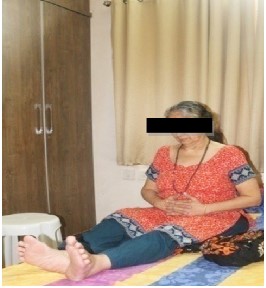
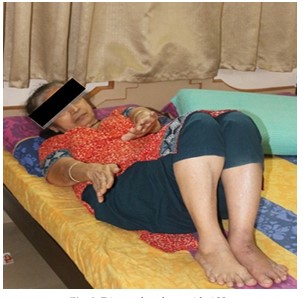
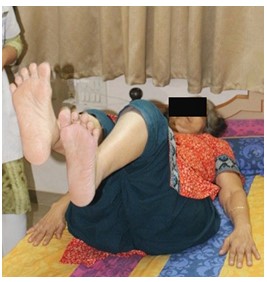
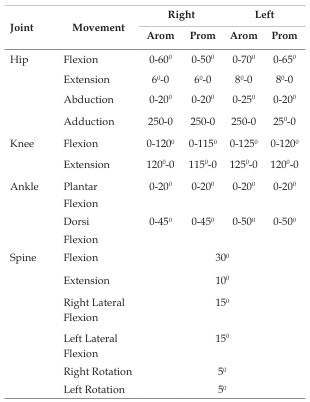
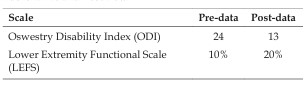
Background: Degenerative disc and facet joint disease of the lumbar spine is common in the ageing population. Lumbar segmental instability is a prominent disorder after a posterior lumbar interbody fusion surgery. Segmental stabilization exercises enhance muscle activation and help patients regain functional capacity lost due to pain hence could be a beneficial intervention. Case Description: A 67-year-old female with gradual low back pain underwent PLIF at L4 L5 and L5-S1, using Depuy Moss-Miami pedicle screws and a Concorde carbon fiber interbody cage. Post surgery she received physiotherapy. She was scheduled for daily 60-minute physiotherapy sessions for four weeks, focusing on pain reduction, functional improvement, range of motion, and ADLs. Progress was assessed using the Lower Extremity Functional Scale (LEFS) and Oswestry Disability Index. Literature Review: A comparative study was conducted by Fabio Franca et.al (2010) used the same treatment intervention to contrast the efficiency of two exercise programs, segmental stabilization and muscular strengthening in chronic low back pain. The study concluded that both techniques lessened pain and reduced disability, however, segmental stabilization proved superior as it had significant gains for all variables including transverses abdominis activation.3 A randomized controlled trial conducted by Stefan Kostadinovic et al (2020) used the same treatment intervention as this study, to compare the lumbar stabilization exercise program in a closed and open kinetic chain (LSCO) and lumbar stabilization exercises and thoracic mobilization program in a closed kinetic chain (LSTMC), and evaluated the clinical effectiveness of each program, in a batch of 4 weeks and 8 weeks programmes. It concluded that patients who performed the lumbar stabilization and thoracic mobilization exercise program in a closed kinetic chain had the most effective reduction of pain intensity and functional disability.
References
- 1. Binkley JM, Stratford PW, Lott SA, Riddle DL. The Lower Extremity Functional Scale (LE development, measurement properties, and clinical application. North American Orthopaedic Reh Research Network. Phys Ther. 1999;79(4):371–83.
- 2. França FR, Burke TN, Caffaro RR, Ramos LA, Marques AP. Effects of muscular stretching and segmental stabilization on functional disability and pain in patients with chronic low back pain: A randomized, controlled trial. J Manipulative Physiol Ther 2012;35(4):279–85.
- 3. França FR, Burke TN, Hanada ES, Marques AP. Segmental stabilization and muscular strengthening in chronic low back pain - a comparative study. Clinics (Sao Paulo) 2010;65(10):1013–7.
- 4. Fritz JM, Whitman JM, Childs JD. Lumbar spine segmental mobility assessment: An examination of validity for determining intervention strategies in patients with low back pain. Arch Phys Med Rehabil 2005;86(9):1745–52.
- 5. Kostadinović S, Milovanović N, Jovanović J, Tomašević-Todorović S. Efficacy of the lumbar stabilization and thoracic mobilization exercise program on pain intensity and functional disability reduction in chronic low back pain patients with lumbar radiculopathy: A randomized controlled trial. J Back Musculoskelet Rehabil 2020;33(6):897–907.
- 6. Kumar P, Sen R, Aggarwal S, Agarwal S, Rajnish RK. Reliability of Modified Harris Hip Score as a tool for outcome evaluation of Total Hip Replacements in Indian population. J Clin Orthop Trauma 2019 [cited 2024 Jul 6];10(1):128–30
- 7. Mobbs RJ, Phan K, Malham G, Seex K, Rao PJ. Lumbar interbody fusion: techniques, indications and comparison of interbody fusion options including PLIF, TLIF, MI-TLIF, OLIF/ ATP, LLIF and ALIF. Journal of Spine Surgery 2015 [cited 2024 Jul 6];1(1):2.
- 8. Moon HJ, Choi KH, Kim DH, Kim HJ, Cho YK, Lee KH, et al. Effect of lumbar stabilization and dynamic lumbar strengthening exercises in patients with chronic low back pain. Ann Rehabil Med 2013;37(1):110.
- 9. O’Sullivan PB. Masterclass. Lumbar segmental ‘instability’: clinical presentation and specific stabilizing exercise management. Man Ther 2000 [cited 2024 Jul 6];5(1):2–12.
- 10. Rogério M. Íris Camila Oliveira Pinheiro3, Karen Vantin4, Heitor Donizetti Gualberto5. In: Diego Galace de Freitas2. Nilza Aparecida Almeida de Carvalho;
- 11. Santos RM, Freitas DG, Pinheiro Í, Vantin K. A RTIGO DE REVISÃO Estabilização Segmentar lombar Lumbar segmental stability. Estabilização Segmentar lombar Lumbar segmental stability Med Reabil. 2011;30(1):14–7.
- 12. Vianin M. Psychometric properties and clinical usefulness of the Oswestry Disability Index. J Chiropr Med 2008; 7(4):161–3.
Data Sharing Statement
There are no additional data available.
Funding
This research received no funding.
Author Contributions
All authors contributed significantly to the work and approve its publication.
Ethics Declaration
This article does not involve any human or animal subjects, and therefore does not require ethics approval
Acknowledgements
Information Not Provided
About this article

Cite this article
Vijayan AK, Priya S, Baliga S. Lumbar segmental exercises for reducing pain and improving functional activity in a post operative spinal fusion patient: a case study. Physio Ther Occup Ther J. 2024;17(2):117-121.
Licence:
Attribution-Non-commercial 4.0 International (CC BY-NC 4.0)This license enables reusers to distribute, remix, adapt, and build upon the material in any medium or format for noncommercial purposes only, and only so long as attribution is given to the creator.
| Received | Accepted | Published |
|---|---|---|
| May 24, 2024 | August 29, 2024 | June 30, 2024 |
DOI: http://dx.doi.org/10.21088/potj.0974.5777.17224.7
Keywords
Segmental Stabilization ExercisesPost-op Spinal fusionSearch for Similar Articles
Similar Articles
- Cross-Cultural Adaptation, Reliability, and Validity of the Gujarati Version of...
- Physiotherapy Management of Multiple Sclerosis: An Overview of Recent Technologi...
- Converging Technologies in Cardiopulmonary Physiotherapy: A Review of VR, AR, AI...
- Cross-Cultural Adaptation, Reliability, and Validity of the Gujarati Version of...
- Effects of Kinesiotaping in Lateral Epicondylitis: A Narrative Review
Article Level Metrics
Last UpdatedTuesday 28 July 2026, 17:54:00 (IST)
1954
Accesses
8
425
00
Citations
NA
NA
NA
Download citation
Article Keywords
Keyword Highlighting
Highlight selected keywords in the article text.
Timeline
| Received | May 24, 2024 |
| Accepted | August 29, 2024 |
| Published | June 30, 2024 |
licence
Attribution-Non-commercial 4.0 International (CC BY-NC 4.0)
This license enables reusers to distribute, remix, adapt, and build upon the material in any medium or format for noncommercial purposes only, and only so long as attribution is given to the creator.