Full Text (PDF)
Physiotherapy and Occupational Therapy Journal 18(4):p 329-337, Oct. -Dec. 2025. | DOI: 10.21088/potj.0974.5777.18425.6
Original Article
Normative Values of One Leg Stance in Urban Adults of 20-40 Years
Madhavi Santosh Doke, Vidhi Kalantri, Medha Deo
Author Information
Licence:
Attribution-Non-commercial 4.0 International (CC BY-NC 4.0)This license enables reusers to distribute, remix, adapt, and build upon the material in any medium or format for noncommercial purposes only, and only so long as attribution is given to the creator.
Physiotherapy and Occupational Therapy Journal 18(4):p 329-337, Oct. -Dec. 2025. | DOI: 10.21088/potj.0974.5777.18425.6
How Cite This Article:
Kalantri V, Doke MS, Deo M. Normative Values of One Leg Stance in Urban Adults of 20-40 Years. Therapy Jr. 2025;18(4):329-37.Timeline
Received : June 13, 2025
Accepted : August 01, 2025
Published : December 30, 2025
Abstract
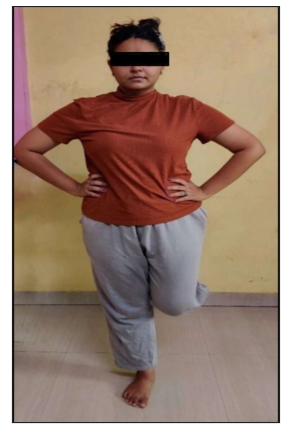
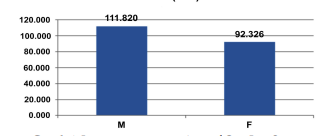
Background: The One-Leg Stance (OLS) test is a simple, cost-effective, and reliable tool used in clinical settings to assess static balance, particularly in those with musculoskeletal problems such as ACL or ankle injuries. It also holds prognostic value in sports. Aim: This study aimed to establish normative values for One-Leg Stance (OLS) in urban adults aged 20–40 years. Objectives: To assess balance with both eyes open and eyes closed in males and females. Material: A total of 284 healthy participants were recruited from community settings. Balance was evaluated by measuring the duration each participant could maintain a stance on their dominant leg. Result: Statistical analysis was done using an Unpaired t-test, and the findings revealed that males aged 20–40 years achieved a mean OLS time of 111.81 ± 6.76 seconds with eyes open and 35.65 ± 2.89 seconds with eyes closed. In comparison, females recorded a mean OLS time of 92.32 ± 5.84 seconds with eyes open and 22.06 ± 1.72 seconds with eyes closed. A statistically significant difference was observed between genders in the eyes-closed condition, with males demonstrating superior balance performance. Conclusion: This study provides normative data for OLS in urban adults aged 20– 40 years and highlights a gender-based difference in balance ability, particularly under eyes-closed conditions.
References
- 1. Schorderet C., Hilfiker R., Allet L. The role of the dominant leg while assessing balance performance. A systematic review and metaanalysis. Gait and Posture. 2021; 84(1): 66–78.
- 2. Shaikh A.A., Chavan U. Influence of leg dominance on single leg stance test in healthy children between 12-14 years. International Journal of Basic and Applied Medical Sciences. 2015; 5(3): 62-5.
- 3. Salwa B. El-Sobkey. Normative Values for OneLeg Stance Balance Test in Population-Based Sample of Community Dwelling Older People. Middle-East Journal of Scientific Research. 2011; 7(4): 497-503.
- 4. Weir C.B., Jan A,. BMI classification percentile and cut off points. StatPearls: Treasure Island, FL, USA. 2023.
- 5. Springer B.A., Marin R., Cyhan T., Roberts H., Gill N.W. Normative values for the unipedal stance test with eyes open and closed. Journal of Geriatric Physical Therapy. 2007; 30(1): 8–15. 6. Dhanani S.D., Parmar L.D. Normative values of tandem and unipedal stance in school children. Int J Cur Res Rev. 2014 December;6(24).
- 7. Bohannon R.W., Larkin P.A., Cook A.C., Gear J., Singer J. Decrease in timed balance test scores with aging. Physical Therapy.1984; 64(7): 1067–70.
- 8. Nakhostin-Ansari A., Naghshtabrizi N., Naghdi S., Ghafouri M., Khalifeloo M., Mohammadzadeh M., et al. Normative values of functional reach test, single-leg stance test, and timed “UP and GO” with and without dual-task in healthy Iranian adults: A crosssectional study. Annals of Medicine and Surgery. 2022; 80: 104053.
- 9. McKay M.J., Baldwin J.N., Ferreira P., Simic M., Vanicek N., Burns J., et al. Reference values for developing responsive functional outcome measures across the lifespan. American Academy of Neurology. 2017; 88(16): 1512–9.
- 10. Butler A.A., Lord S.R., Rogers M.W., Fitzpatrick R.C. Muscle weakness impairs the proprioceptive control of human standing. Brain Research. 2008; 1242(1): 244–51.
- 11. Stones M.J., Kozma A. Balance and age in the sighted and blind. Arch Phys Med Rehabil. 1987; 68(2): 85–9.
- 12. Liaw M.Y., Chen C.L., Pei Y.C., Leong C.P., Lau Y.C. Comparison of the static and dynamic balance performance in young, middle-aged, and elderly healthy people. Chang Gung Med J. 2009; 32(3): 297–304.
- 13. Lee AJY, Lin W.H. The influence of gender and somatotype on single-leg upright standing postural stability in children. Journal of Applied Biomechanics. 2007; 23(3): 173–9.
- 14. Fitzpatrick R., Rogers D.K., McCloskey D.I. Stable human standing with lower-limb muscle afferents providing the only sensory input. J Physiol. 1994; 480 (2): 395–403.
- 15. Lord S.R., Clark R.D., Webster I.W. Postural stability and associated physiological factors in a population of aged persons. J Gerontol. 1991; 46(3): 69-76.
- 16. Paulus W., Straube A., Krafczyk S., Brandt T. Differential effects of retinal target displacement, changing size and changing disparity in the control of anterior/posterior and lateral body sway. Exp Brain Res. 1989; 78(2): 243–52.
- 17. Hageman P.A., Leibowitz J.M., Blanke D. Age and gender effects on postural control measures. Arch Phys Med Rehabil. 1995; 76(10): 961–5.
- 18. Kim S.G., Kim W.S. Effect of ankle range of motion (ROM) and lower-extremity muscle strength on static balance control ability in young adults: A regression analysis. Med Sci Monit. 2018; 24(1): 3168–75.
- 19. Giagazoglou P., Amiridis I.G., Zafeiridis A., Thimara M., Kouvelioti V., Kellis E. Static balance control and lower limb strength in blind and sighted women. Eur J Appl Physiol. 2009; 107(5): 571–9.
- 20. Alonso A.C., Mochizuki L., Silva Luna N.M., Ayama S., Canonica A.C., Greve JMDA. Relation between the sensory and anthropometric variables in the quiet standing postural control: Is the inverted pendulum important for the static balance control? Biomed Research International. 2015: 985312.
- 21. Gatev P., Thomas S., Kepple T., Hallett M. Feedforward ankle strategy of balance during quiet stance in adults. J Physiol. 1999; 514(3): 915–28.
- 22. Wiesław Błaszczyk J., Fredyk A., Mikołaj Błaszczyk P. Transition from double-leg to single-leg stance in the assessment of postural stability. J Biomech. 2020 Sep 18; 110.
- 23. Alonso A.C., Mochizuki L., Silva Luna NM, Ayama S., Canonica A.C., Greve JMDA. Relation between the sensory and anthropometric variables in the quiet standing postural control: Is the inverted pendulum important for the static balance control? Biomed Research International. 2015: 985312.
- 24. Balogun A.J., Ajayi O.L., Alawale F. Determinants of single limb stance balance performance. Afr J Med Med Sci. 1997; 26(3–4): 153–7.
- 25. Okabe T., Suzuki M., Goto H., Iso N., Cho K., Hirata K., et al. Sex differences in age- related physical changes among community-dwelling adults. J Clin Med. 2021; 10(20): 4800.
- 26. Vereeck L., Wuyts F., Truijen S., Van de Heyning P. Clinical assessment of balance: normative data, and gender and age effects. International Journal of Audiology. 2008; 47(2): 67–75.
- 27. Melam R.G., Buragadda S., Alhusaini A. Gender Differences in Static and Dynamic Postural Stability Parameters in Community Dwelling Healthy Older Adults. Middle-East Journal of Scientific Research. 2014; 22(9): 1259-1264.
- 28. Pincivero D.M., Coelho A.J., Campy R.M. Perceived exertion and maximal quadriceps femoris muscle strength during dynamic knee extension exercise in young adult males and Femalees. Eur J Appl Physiol. 2003; 89(2): 150–6.
- 29. Miller A.E., MacDougall J.D., Tarnopolsky M.A., Sale D.G. Gender differences in strength and muscle fiber characteristics. Eur J Appl Physiol. 1993; 66(3): 254–62.
- 30. Prince F.P., Hikida R.S., Hagerman F.C. Muscle fiber types in women athletes and non-athletes. Pflugers Arch. 1977; 371(1–2): 161–5. Lindle R.S., Metter E.J., Lynch N.A., Fleg J.L., Fozard J.L, Tobin J, et al. Age and gender comparisons of muscle strength in 654 women and men aged 20-93 yr. J Appl Physiol. 1997; 83(5): 1581–7.
- 31. Sale D.G., MacDougall J.D., Alway S.E., Sutton JR. Voluntary strength and muscle
- 32. characteristics in untrained men and women and male bodybuilders. J Appl Physiol. 1987; 62(5): 1786–93.
- 33. Dwyer M.K., Boudreau S.N., Mattacola C.G., Uhl T.L., Lattermann C. Comparison of lower extremity kinematics and hip muscle activation during rehabilitation tasks between sexes. Journal of Athletic Training. 2010; 45(2): 181–90.
- 34. Hu X., Li J., Wang L. Sex differences in lower limb proprioception and mechanical function among healthy adults. Motor Control. 2020; 24(4): 571–87.
- 35. Pincivero D.M., Coelho A.J., Erikson W.H. Perceived exertion during isometric quadriceps contraction. A comparison between men and women. J Sports Med Phys Fitness. 2000; 40(4): 319–26.
- 36. Pincivero D.M., Coelho A.J., Campy R.M., Salfetnikov Y., Bright A. The effects of voluntary contraction intensity and gender on perceived exertion during isokinetic quadriceps exercise. Eur J Appl Physiol. 2001; 84(3): 221–6.
- 37. Ku P.X., Abu Osman N.A., Yusof A., Wan Abas WAB. Biomechanical evaluation of the relationship between postural control and body mass index. Journal of Biomechanics. 2012; 45(9): 1638–42.
- 38. Aurichio T.R., Rebelatto J.R., de Castro AP. The relationship between the body mass index (BMI) and foot posture in elderly people. Arch Gerontol Geriatr. 2011; 52(2): e89-92.
- 39. Muaidi Q.I. Does gender make a difference in knee rotation proprioception and range of motion in healthy subjects? Journal of Back and Musculoskeletal Rehabilitation. 2017; 30(6): 1237–43.
- 40. Rozzi S.L., Lephart S.M., Gear W.S., Fu F.H. Knee joint laxity and neuromuscular characteristics of male and female soccer and basketball players. The American Journal of Sports Medicine.1999; 27(3): 312–9.
- 41. Hewett T.E. Neuromuscular and hormonal factors associated with knee injuries in female athletes: Strategies for intervention. Sports Med. 2000; 29(5): 313–27.
- 42. Emami F., Kordi Yoosefinejad A., Motealleh A. Comparison of static and dynamic balance during early follicular and ovulation phases in healthy women, using simple, clinical tests: a cross sectional study. Gynecological Endocrinology. 2019; 3 5(3): 257–60.
- 43. Carol A. Oatis. Kinesiology The Mechanics and Pathomechanics of Human Movement. Second. 2009.
Data Sharing Statement
There are no additional data available. All raw data and code are available upon request.
Funding
This research received no funding.
Author Contributions
All authors contributed significantly to the work and approve its publication.
Ethics Declaration
This article does not involve any human or animal subjects, and therefore does not require ethics approval.
Acknowledgements
We would like to express our gratitude to the patients, their families, and all those who have contributed to this study.
Conflicts of Interest
No conflicts of interest in this work.
About this article

Cite this article
Kalantri V, Doke MS, Deo M. Normative Values of One Leg Stance in Urban Adults of 20-40 Years. Therapy Jr. 2025;18(4):329-37.
Licence:
Attribution-Non-commercial 4.0 International (CC BY-NC 4.0)This license enables reusers to distribute, remix, adapt, and build upon the material in any medium or format for noncommercial purposes only, and only so long as attribution is given to the creator.
| Received | Accepted | Published |
|---|---|---|
| June 13, 2025 | August 01, 2025 | December 30, 2025 |
DOI: 10.21088/potj.0974.5777.18425.6
Keywords
Normative ValuesOne Leg StanceBalanceEyes openEyes closedSearch for Similar Articles
Similar Articles
- Leadership in Physiotherapy: A Narrative Review
- Effectiveness of Low Level Laser Theapy in the Management of Temporomandibular J...
- The Impact of Air Pollution on Cardiopulmonary Health: Molecular Mechanisms, Pre...
- Efectiveness of Physiotherapy in Postpartum Women with Diastasis Recti: A Review
- Pain Neuroscience Education: Transforming Physiotherapy Practice
Article Level Metrics
Last UpdatedSaturday 24 October 2026, 19:01:52 (IST)
4392
Accesses
57
739
00
Citations
NA
NA
NA
Download citation
Article Keywords
Keyword Highlighting
Highlight selected keywords in the article text.
Timeline
| Received | June 13, 2025 |
| Accepted | August 01, 2025 |
| Published | December 30, 2025 |
licence
Attribution-Non-commercial 4.0 International (CC BY-NC 4.0)
This license enables reusers to distribute, remix, adapt, and build upon the material in any medium or format for noncommercial purposes only, and only so long as attribution is given to the creator.