Full Text (PDF)
Journal of Microbiology and Related Research 9(1):p 9-16, January-June 2023. | DOI: https://doi.org/10.21088/jmrr.2395.6623.9123.1
Original Article
Isolation and Characterization of Pseudomonas Aeruginosa Bacteriophages
Chand Pasha, Jangili Pavan Kumar, Shaik Muzammil Pasha, Yemgdda Goutham Sudhan
Author Information
Licence:
Attribution-Non-commercial 4.0 International (CC BY-NC 4.0)This license enables reusers to distribute, remix, adapt, and build upon the material in any medium or format for noncommercial purposes only, and only so long as attribution is given to the creator.
Journal of Microbiology and Related Research 9(1):p 9-16, January-June 2023. | DOI: https://doi.org/10.21088/jmrr.2395.6623.9123.1
How Cite This Article:
Jangili Pavan Kumar, Shaik Muzammil Pasha, Yemgdda Goutham Sudhan et al./Isolation and Characterization of Pseudomonas Aeruginosa Bacteriophages/J Microbiol Relat Res. 2023;9(1): 09–16.Timeline
Received : December 03, 2022
Accepted : December 23, 2022
Published : June 25, 2023
Abstract
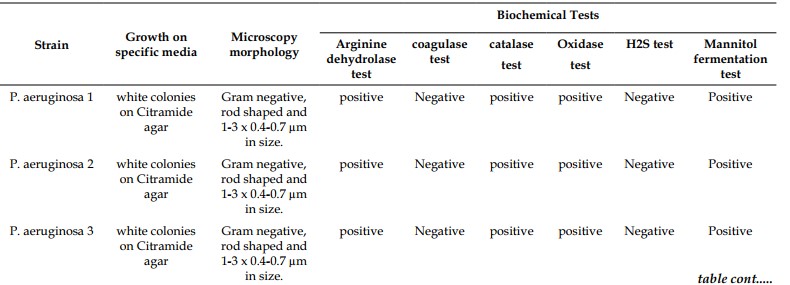
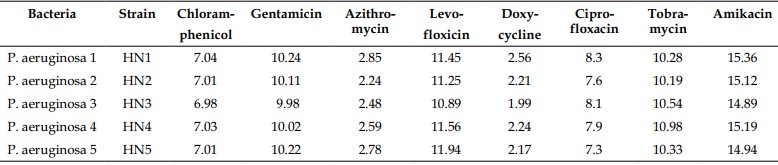
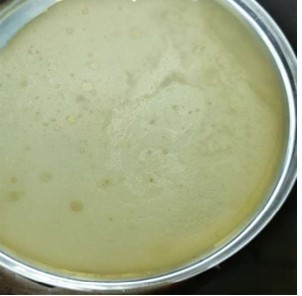
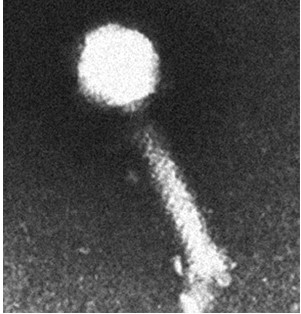
Pseudomonas aeruginosa is a notorious, opportunistic pathogen and has ability of biofilm formation making it possible to survive in extreme conditions. As antibiotics and disinfectants have shown limited activity, P. aeruginosa phage based treatments are proposed as a promising way for biofilm control. P. aeruginosa isolates and PB1 like phage particles were isolated from sewage samples collected from sewage treatment plants. PB1 like phage was featured with large burst size of 151PFU/cell, host inactivation in 6 hrs, 80% of host range and had icosahedral head with a diameter of 85X80nm and long non contractile tail of 135nm. PB1 like phages are suitable for lysis of broad range MDR Pseudomonas biofilms, which could be used in phage therapy.
References
- 1. Azizian R, Nasser A, Askari H, Kalani MT, Sadeghifard N, Pakzad I, et al. (2015). Sewage as a rich source of phage study against Pseudomonas aeruginosa PAO. Biologicals, 43, 238–241.
- 2. Bassetti, M. et al. (2017). Antimicrobial resistance in the next 30 years, humankind, bugs, and drugs: A visionary approach. Intensive Care Med, 43, 1464– 1475.
- 3. Brzozowski M, Krukowska Z, Galant K, JursaKulesza J, Kosik-Bogacka D. (2020). Genotypic characterisation and antimicrobial resistance of Pseudomonas aeruginosa strains isolated from patients of different hospitals and medical centres in Poland. BMC Infect Dis, 20, 693.
- 4. Cao Z, Zhang J, Niu YD, Cui N, Ma Y, Cao F, et al. (2015). Isolation and characterization of a “phiKMVlike” bacteriophage and its therapeutic effect on mink hemorrhagic pneumonia. PLoS One, 10(1), e0116571.
- 5. 5. Ciofu, O. &Tolker-Nielsen, T. (2019). Tolerance and resistance of Pseudomonas aeruginosabioflms to antimicrobial agents: How P. aeruginosa can escape antibiotics. Front Microbiol, 10, 913.
- 6. Harper D.R. & EnrightM.C. (2011). Bacteriophages for the treatment of Pseudomonas aeruginosa infections. Journal of Applied Microbiology, 111, 1–7.
- 7. DBT.(2021).http://dbtindia.gov.in/latestannouncement/indian-priority-pathogen-listjointly-developed-dbt-and-who-india-office.
- 8. De Oliveira, D. M. P. et al.(2020). Antimicrobial resistance in ESKAPE pathogens. ClinMicrobiol Rev, 33, e00181-19.
- 9. Diggle, S. P. & Whiteley, M.(2020). Microbe Profile: Pseudomonas aeruginosa: Opportunistic pathogen and lab rat. Microbiology (Reading), 166, 30–33.
- 10. Driscoll JA, Brody SL, Kollef MH. (2007). The epidemiology, pathogenesis and treatment of Pseudomonas aeruginosa infections. Drugs, 67, 351–368.
- 11. Duplessis, C. et al.(2018). Refractory Pseudomonas bacteremia in a 2-year-old sterilized by bacteriophage therapy. J Pediatric Infect Dis Soc, 7, 253–256.
- 12. El Didamony G, Askora A, Shehata AA.(2015). Isolation and characterization of T7-like lytic bacteriophages infecting multidrug resistant Pseudomonas aeruginosa isolated from Egypt. CurrMicrobiol, 70, 786–791.
- 13. El Haddad, L., Harb, C. P., Gebara, M. A.,Stibich, M. A. & Chemaly, R. F.(2019). A Systematic and critical review of bacteriophage therapy against multidrugresistant ESKAPE organisms in Humans. Clin Infect Dis, 69, 167–178.
- 14. Eman M. Marei.(2020). Isolation and characterization of Pseudomonas aeruginosa and its virulent bacteriophages. Pak J BiolSci, 23, 491-500.
- 15. Essoh C, Latino L, Midoux C, Blouin Y, Loukou G, Nguetta S-PA, et al. (2015). Investigation of a Large Collection of Pseudomonas aeruginosa Bacteriophages Collected from a Single Environmental Source in Abidjan, Cote d’Ivoire. PLoS One, 10(6), e0130548.
- 16. Fu, W. et al.(2010). Bacteriophage cocktail for the prevention of bioflm formation by Pseudomonas aeruginosa on catheters in an in vitro model system. Antimicrob Agents Chemother, 54, 397–404.
- 17. Hall-Stoodley, L., Costerton, J.W. & Stoodley, P. (2004). Bacterial biofilms: from the natural environment to infectious diseases. Nat Rev Microbiol, 2, 95–108.
- 18. Hancock RE & Speert DP.(2000). Antibiotic resistance in Pseudomonas aeruginosa: mechanisms and impact on treatment. Drug Resist Updat, 3, 247–255.
- 19. Harper DR, Parracho HM, Walker J, Sharp R, Hughes G, Werthén M, Lehman S, Morales S.(2014). Bacteriophages and bioflms. Antibiotics, 3, 270–84.
- 20. Harrison, J.J., Turner, R.J., Joo, D.A., Stan, M.A., Chan, C.S., Allan, N.D., Vrionis, H.A., Olson, M.E. et al. (2008). Ammonium cations exert synergistic bactericidal and antibiofilm activity against Pseudomonas aeruginosa. Antimicrob Agents hemother, 52, 2870–2881.
- 21. Hosu MC, Vasaikar S, Okuthe GE, Apalata T.(2021). Molecular detection of antibiotic-resistant genes in Pseudomonas aeruginosa from nonclinical environment: public health implications in Mthatha, Eastern Cape province, South Africa. Int J Microbiol,8861074.
- 22. Jamal M, Andleeb S, Jalil F, Imran M, Nawaz MA, Hussain T, et al.(2017). Isolation and characterization of a bacteriophage and its utilization against multidrug resistant Pseudomonas aeruginosa-2995. Life Sci, 190, 21–28.
- 23. Jurczak-Kurek A, Gąsior T, Nejman-Faleńczyk B, Bloch S, Dydecka A, Topka G, et al.(2016). Biodiversity of bacteriophages: morphological and biological properties of a large group of phages isolated from urban sewage. Sci Rep, 6, 34338.
- 24. Kumari, S., K. Harjai and S. Chhibber. (2009). Characterization of Pseudomonas aeruginosa PAO specific bacteriophages isolated from sewage samples. Am J Biomed Sci, 1, 91-102.
- 25. Marza, J.A., Soothill, J.S., Boydell, P. and Collyns, T.A. (2006). Multiplication of the rapeutically administered bacteriophages in Pseudomonas aeruginosa infected patients. Burns, 32, 644–646.
- 26. Mulani, M. S., Kamble, E. E., Kumkar, S. N., Tawre, M. S. & Pardesi, K. R.(2019). Emerging strategies to combat ESKAPE pathogens in the era of antimicrobial resistance: A Review. Front Microbiol, 10, 539.
- 27. Nair, S., Desai, S., Poonacha, N., Vipra, A. & Sharma, U. (2016). Antibiofilm activity and synergistic inhibition of Staphy lococcus aureus biofilms by bactericidal protein P128 in combination with antibiotics. Antimicrob Agents Chemother, 60, 7280–7289.
- 28. Nathan, C.(2020). Resisting antimicrobial resistance. Nat Rev Microbiol, 18, 259–260.
- 29. P. Gupta, A. Sarkar, P. Sandhu, A. Daware, M.C. Das, Y. Akhter & S. Bhattacharjee.(2017). Potentiation of antibiotic against Pseudomonas aeruginosa biofilm: a study with plumbagin and gentamicin. Journal of Applied Microbiology, 123, 246—261.
- 30. Pallavali RR, Degati VL, Lomada D, Reddy MC, Durbaka VRP.(2017). Isolation and in vitro evaluation of bacteriophages against MDRbacterial isolates from septic wound infections. PLoS One,12(7), e0179245.
- 31. Patil, A., Banerji, R., Kanojiya, P., Koratkar, S. & Saroj, S.(2021). Bacteriophages for ESKAPE: Role in pathogenicity and measures of control. Expert Rev Anti Infect Ter, 19, 845–865.
- 32. Petrovic Fabijan, A. et al.(2020). Westmead Bacteriophage Terapy Team. Safety of bacteriophage therapy in severe Staphylococcus aureus infection. Nat Microbiol, 5, 465–472.
- 33. Piracha, Z.Z., U. Saeed, A. Khurshid & W.N. Chaudhary.(2014). Isolation and partial characterization of virulent phage specific against Pseudomonas aeruginosa. Global J Med Res, 14, 1-8.
- 34. Qin, J. et al. (2021). Heterogeneous Klebsiell apneumoniae co-infections complicate personalized bacteriophage therapy. Front Cell Infect Microbiol, 10, 608402.
- 35. Raheleh Majdani & Elham Shams Ghahfarokhi. (2022). Isolation and characterization of lytic bacteriophages against Pseudomonas aeruginosa isolates from human infections in the north-west of Iran. Iran J MicrobiolApr, 14(2), 203–213.
- 36. Remold SK, Brown CK, Farris JE, Hundley TC, erpich JA, Purdy ME.(2011). Differential habitat use and niche partitioning by Pseudomonas species in human homes. MicrobEcol, 62, 505.
- 37. Reygaert, W. C. (2018). An overview of the antimicrobial resistance mechanisms of bacteria. AIMS Microbiol, 4, 482–501.
- 38. Schooley, R. T. et al.(2017). Development and use of personalized bacteriophage-based therapeutic cocktails to treat a patient with a disseminated resistant Acinetobacter baumannii infection. Antimicrob Agents Chemother, 61, e00954-e1017.
- 39. Sharahi JY, Ahovan ZA, Maleki DT, Rad ZR, Rad ZR, Goudarzi M, Shariati A, Bostanghadiri N, Abbasi E, Hashemi A. (2020). In vitro antibacterial activity of curcumin-meropenem combination against extensively drug-resistant (XDR) bacteria isolated from burn wound infections. Avicenna J Phytomed,10, 3.
- 40. Sonika Sharma, Sibnarayan Datta, Soumya Chatterjee, Moumita Dutta, Jhuma Samanta, Mohan G.Vairale, Rajeev Gupta, VijayVeer & Sanjai K. Dwivedi. (2021). Isolation and characterization of a lytic bacteriophage against Pseudomonas aeruginosa. Scientific Reports,11, 19393.
- 41. Wright, A., Hawkins, C.H., Anggard, E.E. &Harper, D.R. (2009). A controlled clinical trial of a therapeutic bacteriophage preparation in chronic otitis due to antibiotic-resistant Pseudomonas aeruginosa; a preliminary report of efficacy. Clin Otolaryngol, 34, 349–357.
- 42. Xie H, Zhuang X, Kong J, Ma G & Zhang H. (2005). Bacteriophage Esc-A is an efficient therapy for Escherichia coli 3-1 caused diarrhea in chickens. The Journal of General and Applied Microbiology, 51, 159-163.
- 43. Yu X, Xu Y, Gu Y, Zhu Y, Liu X. (2017). Characterization and genomic study of “phiKMVLike” phage PAXYB1 infecting Pseudomonas aeruginosa. Sci Rep, 7, 13068.
- 44. Zahra Chegini, Amin Khoshbayan, Majid Taati Moghadam, Iman Farahani, Parham Jazireian & Aref Shariati. (2020). Bacteriophage therapy against Pseudomonas aeruginosabioflms: a review. Ann ClinMicrobiolAntimicrob,19, 45.
Data Sharing Statement
There are no additional data available. All raw data and code are available upon request.
Funding
This research received no funding.
Author Contributions
All authors contributed significantly to the work and approve its publication.
Ethics Declaration
This article does not involve any human or animal subjects, and therefore does not require ethics approval.
Acknowledgements
We would like to express our gratitude to the patients, their families, and all those who have contributed to this study.
Conflicts of Interest
No conflicts of interest in this work.
About this article

Cite this article
Jangili Pavan Kumar, Shaik Muzammil Pasha, Yemgdda Goutham Sudhan et al./Isolation and Characterization of Pseudomonas Aeruginosa Bacteriophages/J Microbiol Relat Res. 2023;9(1): 09–16.
Licence:
Attribution-Non-commercial 4.0 International (CC BY-NC 4.0)This license enables reusers to distribute, remix, adapt, and build upon the material in any medium or format for noncommercial purposes only, and only so long as attribution is given to the creator.
| Received | Accepted | Published |
|---|---|---|
| December 03, 2022 | December 23, 2022 | June 25, 2023 |
DOI: https://doi.org/10.21088/jmrr.2395.6623.9123.1
Keywords
Pseudomonas aeruginosaBacteriophagesPB1Cell lysisBiofilmArticle Level Metrics
Last UpdatedThursday 10 September 2026, 16:15:31 (IST)
1320
Accesses
1
164
00
Citations
NA
NA
NA
Download citation
Article Keywords
Keyword Highlighting
Highlight selected keywords in the article text.
Timeline
| Received | December 03, 2022 |
| Accepted | December 23, 2022 |
| Published | June 25, 2023 |
licence
Attribution-Non-commercial 4.0 International (CC BY-NC 4.0)
This license enables reusers to distribute, remix, adapt, and build upon the material in any medium or format for noncommercial purposes only, and only so long as attribution is given to the creator.