Full Text (PDF)
Pediatric Education and Research 12(2):p 55-59, July - Dec 2024. | DOI: https://doi.org/10.21088/per.2321.1644.12224.4
Case Report
Hyper Eosinophilia with Hereditary Angioedema (HAE): Case Report
Author Information
Licence:
Attribution-Non-commercial 4.0 International (CC BY-NC 4.0)This license
enables reusers to distribute, remix, adapt, and build upon the material in any
medium or format for noncommercial purposes only, and only so long as attribution
is given to the creator.
Pediatric Education and Research 12(2):p 55-59, July - Dec 2024. | DOI: https://doi.org/10.21088/per.2321.1644.12224.4
How Cite This Article:
Menaka J., Malarvizhi G., Hyper Eosinophilia with Hereditary Angioedema (HAE): Case Report. Pediatr. Edu. Res. 2024;12(2): 55-59.Timeline
Received : October 31, 2024
Accepted : November 29, 2024
Published : December 25, 2024
Abstract
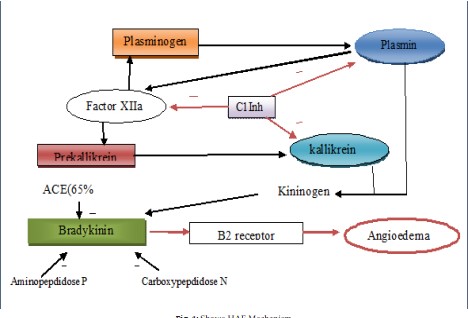
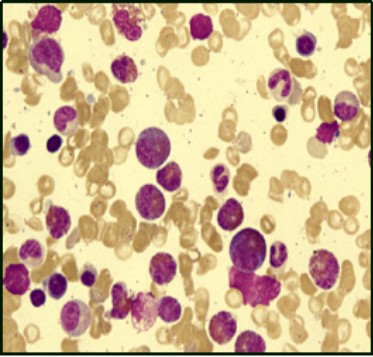
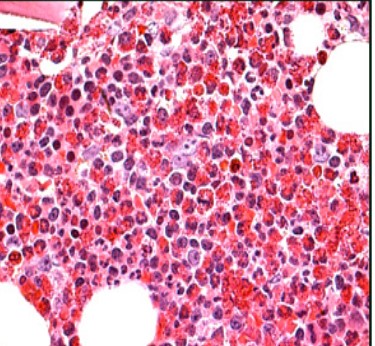
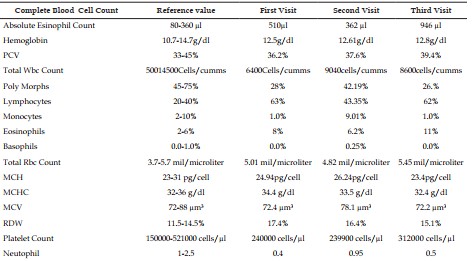
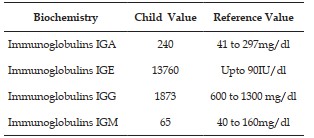
Background: Hyperesinophilia (HES)with Hereditary angioedema (HAE), is a rare disease characterized by peripheral blood eosinophilia > 1500/mcl (> 1.5 × 10⁹/L) persisting ≥ 6 months and the presence of end-organ damage. Hereditary angioedema is a lifelong illness characterized by recurrent swelling of the skin, intestinal tract, and, the upper airway. It results from insufficient activity of the C1-inhibitor protein, leading to disturbances in the kallikrein/bradykinin pathway. Case presentation: We reviewed a case of Hypereosinophilia with hereditary angioedema (HAE) in 7-year-old boy who was referred from another hospital in Coimbatore for further management. He had elevated absolute eosinophilic count & elevated IgE. Bone marrow aspiration and biopsy were done which showed increased eosinophil. Stool for ova/ cyst was negative. He was initiated on oral prednisolone (10mg), pantaprozole (20mg) & dexamethasone (50mg). Conclusion: Hereditary angioedema (HAE) is a genetic condition that poses a threat to life; this condition necessitates rapid diagnosis and treatment to control acute attacks and avert potentially lethal complications, especially when swelling impacts the airway, and can despite recent developments in treatment options, a child quality of life can be significantly affected.
References
- 1. Chen E. Rosenberg MD, Patricia C. Fulkerson MD, PhD , Kelli W. Williams MD, MPH(2022). Diagnosis and Management of Paediatric Hypereosinophilic Syndrome. The Journal of Allergy and Clinical Immunology,10(5). 1131-1138 https://doi.org/10.1016/j.jaip.2022.02.007.
- 2. Magerl M, Gothe H, Krupka S, Lachmann A. (2020). A Germany-wide survey study on the patient journey of patients with hereditary angioedema. Orphanet J Rare Dis. 15(1). 221-229.
- 3. Maurer M, Magerl M. (2021). Differences and similarities in the mechanisms and clinical expression of bradykinin-mediated vs. Mast cell– mediated angioedema. Clin Rev Allergy Immunol. 61(1). 40-49.
- 4. Schwartz JT, Fulkerson PC. (2018). An Approach to the Evaluation of Persistent Hyper
- 5. eosinophilia in Pediatric Patients. Front Immunol9(2). 1944.
- 6. William Shomali,Jason Gotlib (2021). World Health Organization-defined eosinophilic disorders: 2021 update on diagnosis, risk stratification, and management. Am J Hematol 2021; 97(10): 1243-1259.American Journal of Hematology 97(10). DOI:10.1002/ajh.26352.
- 7. Burris D, Rosenberg CE, Schwartz JT, et al (2019). Paediatric hyper eosinophilia: characteristics, clinical manifestations, and diagnoses. J Allergy ClinImmunolPract.7(8) .2750- 2758.
- 8. Maurer M, Magerl M, Ansotegui I, AygorenPursun E, Betschel S, Bork K, Bowen T et al (2018) The international WAO/EAACI guideline for the management of hereditary angioedema-The 2017 revision and update. Allergy 73:1575–1596
- 9. Roufosse F, Kahn J-E, Rothenberg ME, Wardlaw AJ, Klion AD, Kirby SY, Gilson MJ, Bentley JH, Bradford ES, Yancey SW, Steinfeld J, Gleich GJ. (2020), Efficacy and safety of mepolizumab in hypereosinophilic syndrome: a Phase III, randomized, placebo-controlled trial, Journal of Allergy and Clinical Immunology , doi: https://doi. org/10.1016/j.jaci.2020.08.037
- 10. Herández-Benítez R, Vicencio-Rivas J, IglesiasLeboreiro J, Martina-Luna M, Madrazo-Miranda MR, Lases-RufeilS(2019). Hypereosinophilic syndrome in an infant. Bol Med Hosp Infant Mex. 76:134-137.
- 11. Kristine AppelUldall Pallesen, TroelsHerlin, Mette Holm, Christian Høst, Mette Christiansen, MetteRamsing, MadsKirchheiner Rasmussen, MetteSommerlund (2020).Idiopathic hypereosinophilic syndrome: A rare diagnosis in children.Clin Case Rep..8(10): 2013–2016.
Data Sharing Statement
There are no additional data available. All raw data and code are available upon request.
Funding
This research received no funding.
Author Contributions
All authors contributed significantly to the work and approve its publication.
Ethics Declaration
This article does not involve any human or animal subjects, and therefore does not require ethics approval.
Acknowledgements
We would like to express our gratitude to the patients, their families, and all those who have contributed to this study.
Conflicts of Interest
No conflicts of interest in this work.
About this article

Cite this article
Menaka J., Malarvizhi G., Hyper Eosinophilia with Hereditary Angioedema (HAE): Case Report. Pediatr. Edu. Res. 2024;12(2): 55-59.
Licence:
Attribution-Non-commercial 4.0 International (CC BY-NC 4.0)This license
enables reusers to distribute, remix, adapt, and build upon the material in any
medium or format for noncommercial purposes only, and only so long as attribution
is given to the creator.
| Received | Accepted | Published |
|---|---|---|
| October 31, 2024 | November 29, 2024 | December 25, 2024 |
DOI: https://doi.org/10.21088/per.2321.1644.12224.4
Keywords
HyperesinophiliaHereditary angioedemaProtein C1-inhibitorKallikrein/ bradykininBone marrowBiopsySearch for Similar Articles
Similar Articles
- Colonic Atresia with Rectal Atresia: The Management of a Rare Presentation: A Ca...
- Apert’s Syndrome: A Rare Case Report
- Diagnostic Dilemma in Diagnosis of Annular Pancreas: A Case Report
- Mass Abdomen in an Infant: A Pandora Box
- Penetrating Injury Over the Back Due to Wooden Stick – Don’t Leave the Fragments...
Article Level Metrics
Last UpdatedSaturday 17 October 2026, 09:43:36 (IST)
2855
Accesses
8
240
00
Citations
NA
NA
NA
Download citation
Article Keywords
Keyword Highlighting
Highlight selected keywords in the article text.
Timeline
| Received | October 31, 2024 |
| Accepted | November 29, 2024 |
| Published | December 25, 2024 |
licence
Attribution-Non-commercial 4.0 International (CC BY-NC 4.0)
This license
enables reusers to distribute, remix, adapt, and build upon the material in any
medium or format for noncommercial purposes only, and only so long as attribution
is given to the creator.