Full Text (PDF)
Indian Journal of Medical and Health Sciences 9(2):p 81-87, July-December 2022. | DOI: https://doi.org/10.21088/ijmhs.2347.9981.9222.8
Review Article
Gynecomastia: Review Article
Ravi Kumar Chittoria, Marenika Manisekaran, Neljo Thomas
Author Information
Licence:
Attribution-Non-commercial 4.0 International (CC BY-NC 4.0)This license enables reusers to distribute, remix, adapt, and build upon the material in any medium or format for noncommercial purposes only, and only so long as attribution is given to the creator.
Indian Journal of Medical and Health Sciences 9(2):p 81-87, July-December 2022. | DOI: https://doi.org/10.21088/ijmhs.2347.9981.9222.8
How Cite This Article:
Marenika Manisekaran, Neljo Thomas, Ravi Kumar Chittoria/Gynecomastia: Review Article/Indian Journal of Medical & Health Sciences. 2022;9(2):81–87.Timeline
Received : July 04, 2022
Accepted : August 05, 2022
Published : December 30, 2022
Abstract
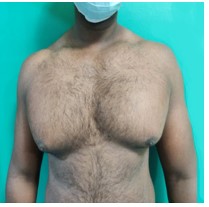
Gynecomastia is a benign enlargement of the male breast that results from an overgrowth of the glandular portion of the breast, which is often bilateral but can occasionally be unilateral. Clinically, it can be identified by the presence of a rubbery or firm mass extending concentrically from the nipples. Pseudogynecomastia (lipomastia), which is characterised by fat accumulation without glandular development, should be distinguished from gynecomastia. Gynecomastia develops when the estrogen androgen ratio is altered in favour of oestrogen or when the breasts become more sensitive to a normal level of circulating oestrogen. The antagonistic effects of testosterone and oestrogen are what are causing the imbalance. (The typical ratio of testosterone to oestrogen during pregnancy is about 100:1, while the usual testosterone to oestrogen ratio in the blood is about 300:1). The goal of surgery is to reduce the size of breast and to improve cosmetic appearance.
References
- 1. Carlson HE. Approach to the patient with gynecomastia. J Clin Endocrinol Metab. 2011;96:15–21.
- 2. Binder G, Iliev DI, Dufke A, Wabitsch M, Schweizer R, Ranke MB, et al. Dominant transmission of prepubertal gynecomastia due to serum estrone excess: Hormonal, biochemical and genetic analysis in a large kindred. J Clin Endocrinol Metab. 2005;90:484–92.
- 3. Johnson RE, Kermott CA, Murad MH. Gynecomastia-evaluation and current treatment options. Ther Clin Risk Manag. 2011;7:145–8.
- 4. Gikas P, Mokbel K. Management of gynaecomastia: an update. Int J Clin Pract.2007;61:1209–15.
- 5. Binder G, Iliev DI, Dufke A, Wabitsch M, Schweizer R, Ranke MB, et al. Dominant transmission of prepubertal gynecomastia due to serum estrone excess: Hormonal, biochemical and genetic analysis in a large kindred. J Clin Endocrinol Metab. 2005;90:484–92.
- 1. Kearon C, Ageno W, Cannegieter SC, et al. Categorization of patients as having provoked or unprovoked venous thromboembolism: guidance from the SSC of ISTH. J Thromb Haemost 2016; 14:1480.
- 2. Husted S, de Caterina R, Andreotti F, et al. Nonvitamin K antagonist oral anticoagulants (NOACs): No longer new or novel. Thromb Haemost 2014; 111:781.
- 3. Barnes GD, Ageno W, Ansell J, et al. Recommendation on the nomenclature for oral anticoagulants: communication from the SSC of the ISTH. J Thromb Haemost 2015; 13:1154.
- 4. Browse NL, Thomas ML. Source of non-lethal pulmonary emboli. Lancet 1974; 1:258.
- 5. Havig O. Deep vein thrombosis and pulmonary embolism. An autopsy study with multiple regression analysis of possible risk factors. Acta Chir Scand Suppl 1977; 478:1.
- 6. Galanaud JP, Sevestre-Pietri MA, Bosson JL, et al. Comparative study on risk factors and early outcome of symptomatic distal versus proximal deep vein thrombosis: results from the Optimev study. Thromb Haemost 2009; 102:493.
- 7. Schwarz T, Schmidt B, Beyer J, Schellong SM. Therapy of isolated calf muscle vein thrombosis with low-molecular-weight heparin. Blood Coagul Fibrinolysis 2001; 12:597.
- 8. Macdonald PS, Kahn SR, Miller N, Obrand D. Shortterm natural history of isolated gastrocnemius and soleal vein thrombosis. J Vasc Surg 2003; 37:523.
- 9. Gillet JL, Perrin MR, Allaert FA. Short-term and midterm outcome of isolated symptomatic muscular calf vein thrombosis. J Vasc Surg 2007; 46:513.
- 10. Lautz TB, Abbas F, Walsh SJ, et al. Isolated gastrocnemius and soleal vein thrombosis: should these patients receive therapeutic anticoagulation? Ann Surg 2010; 251:735.
- 11. Schwarz T, Buschmann L, Beyer J, et al. Therapy of isolated calf muscle vein thrombosis: a randomized, controlled study. J Vasc Surg 2010; 52:1246.
- 12. Sales CM, Haq F, Bustami R, Sun F. Management of isolated soleal and gastrocnemius vein thrombosis. J Vasc Surg 2010; 52:1251.
- 13. Palareti G, Cosmi B, Lessiani G, et al. Evolution of untreated calf deep-vein thrombosis in high risk symptomatic outpatients: the blind, prospective Calthro study. Thromb Haemost 2010; 104:1063.
- 14. De Martino RR, Wallaert JB, Rossi AP, et al. A metaanalysis of anticoagulation for calf deep venous thrombosis. J Vasc Surg 2012; 56:228.
- 15. Brateanu A, Patel K, Chagin K, et al. Probability of developing proximal deep-vein thrombosis and/ or pulmonary embolism after distal deep-vein thrombosis. Thromb Haemost 2016; 115:608.
- 16. Palareti G, Cosmi B, Legnani C, et al. D-dimer to guide the duration of anticoagulation in patients with venous thromboembolism: a management study. Blood 2014; 124:196.
- 17. Horner D, Hogg K, Body R, et al. The anticoagulation of calf thrombosis (ACT) project: results from the randomized controlled external pilot trial. Chest 2014; 146:1468.
- 18. Stevens SM, Woller SC, Kreuziger LB, et al. Antithrombotic Therapy for VTE Disease: Second Update of the chest Guideline and Expert Panel Report. Chest 2021; 160: e545.
- 19. Galanaud JP, Sevestre MA, Pernod G, et al. Longterm outcomes of cancer-related isolated distal deep vein thrombosis: the Optimev study. J Thromb Haemost 2017;15:907.
- 20. Franco L, Giustozzi M, Agnelli G, Becattini C. Anticoagulation in patients with isolated distal deep vein thrombosis: a meta-analysis. J Thromb Haemost 2017; 15:1142.
- 21. Kirkilesis G, Kakkos SK, Bicknell C, et al. Treatment of distal deep vein thrombosis. Cochrane Database Syst Rev 2020; 4:CD013422.
- 22. Kuczmik W, Wysokinski WE, Macedo T, et al. Calf Vein Thrombosis Outcomes Comparing Anticoagulation and Serial Ultrasound Imaging Management Strategies. Mayo Clin Proc 2021; 96:1184.
- 23. Boutitie F, Pinede L, Schulman S, et al. Influence of preceding length of anticoagulant treatment and initial presentation of venous thromboembolism on risk of recurrence after stopping treatment: analysis of individual participants' data from seven trials. BMJ 2011; 342:d3036.
- 24. Klok FA, Hösel V, Clemens A, et al. Prediction of bleeding events in patients with venous thromboembolism on stable anticoagulation treatment. Eur Respir J 2016; 48:1369.
- 25. Boccalon H, Elias A, Chalé JJ, et al. Clinical outcome and cost of hospital vs home treatment of proximal deep vein thrombosis with a low-molecular-weight heparin: the Vascular Midi-Pyrenees study. Arch Intern Med 2000; 160:1769.
- 26. O'Shaughnessy D, Miles J, Wimperis J. UK patients with deep-vein thrombosis can be safely treated as out-patients. QJM 2000; 93:663.
- 27. Daskalopoulos ME, Daskalopoulou SS, Tzortzis E, et al. Long-term treatment of deep venous thrombosis with a low molecular weight heparin (tinzaparin): a prospective randomized trial. Eur J Vasc Endovasc Surg 2005; 29:638.
- 28. Ramacciotti E, Araújo GR, Lastoria S, et al. An open-label, comparative study of the efficacy and safety of once-daily dose of enoxaparin versus unfractionated heparin in the treatment of proximal lower limb deep-vein thrombosis. Thromb Res 2004; 114:149.
- 29. Othieno R, Okpo E, Forster R. Home versus inpatient treatment for deep vein thrombosis. Cochrane Database Syst Rev 2018; 1:CD003076.
- 30. Trujillo-Santos J, Lozano F, Lorente MA, et al. A prognostic score to identify low-risk outpatients with acute deep vein thrombosis in the lower limbs. Am J Med 2015; 128:90. e9.
- 31. Kline JA, Jimenez D, Courtney DM, et al. Comparison of Four Bleeding Risk Scores to Identify Rivaroxaban-treated Patients with Venous Thromboembolism at Low Risk for Major Bleeding. Acad Emerg Med 2016; 23:144.
- 32. Tung CS, Soliman PT, Wallace MJ, et al. Successful catheter-directed venous thrombolysis in phlegmasia cerulea dolens. Gynecol Oncol 2007; 107:140.
- 33. Oguzkurt L, Tercan F, Ozkan U. Manual aspiration thrombectomy with stent placement: rapid and effective treatment for phlegmasia cerulea dolens with impending venous gangrene. Cardiovasc Intervent Radiol 2008; 31:205.
- 34. Vedantham S. Interventional approaches to acute venous thromboembolism. Semin Respir Crit Care Med 2008; 29:56.
- 35. Casey ET, Murad MH, Zumaeta-Garcia M, et al. Treatment of acute iliofemoral deep vein thrombosis. J Vasc Surg 2012; 55:1463.
- 36. Bashir R, Zack CJ, Zhao H, et al. Comparative outcomes of catheter-directed thrombolysis plus anticoagulation vs anticoagulation alone to treat lower-extremity proximal deep vein thrombosis. JAMA Intern Med 2014; 174:1494.
- 37. Aschwanden M, Labs KH, Engel H, et al. Acute deep vein thrombosis: early mobilization does not increase the frequency of pulmonary embolism. Thromb Haemost 2001; 85:42.
- 38. Snow V, Qaseem A, Barry P, et al. Management of venous thromboembolism: a clinical practice guideline from the American College of Physicians and the American Academy of Family Physicians. Ann Intern Med 2007; 146:204.
- 39. Prandoni P, Lensing AW, Prins MH, et al. Belowknee elastic compression stockings to prevent the post-thrombotic syndrome: a randomized, controlled trial. Ann Intern Med 2004; 141:249.
- 40. Brandjes DP, Büller HR, Heijboer H, et al. Randomised trial of effect of compression stockings in patients with symptomatic proximal-vein thrombosis. Lancet 1997; 349:759.
- 41. Kahn SR, Ginsberg JS. The post-thrombotic syndrome: current knowledge, controversies, and directions for future research. Blood Rev 2002; 16:155.
- 42. Ginsberg JS, Hirsh J, Julian J, et al. Prevention and treatment of postphlebitic syndrome: results of a 3-part study. Arch Intern Med 2001; 161:2105.
- 43. Partsch H, Kaulich M, Mayer W. Immediate mobilisation in acute vein thrombosis reduces postthrombotic syndrome. Int Angiol 2004; 23:206.
- 44. Aschwanden M, Jeanneret C, Koller MT, et al. Effect of prolonged treatment with compression stockings to prevent post-thrombotic sequelae: a randomized controlled trial. J Vasc Surg 2008; 47:1015.
- 45. Kahn SR, Comerota AJ, Cushman M, et al. The postthrombotic syndrome: evidence-based prevention, diagnosis, and treatment strategies: a scientific statement from the American Heart Association. Circulation 2014; 130:1636.
- 46. Kahn SR, Shapiro S, Wells PS, et al. Compression stockings to prevent post-thrombotic syndrome: a randomised placebo-controlled trial. Lancet 2014; 383:880.
- 47. Mousa A, Henderson P, Dayal R, et al. Endoluminal recanalization in a patient with phlegmasia cerulea dolens using a multimodality approach. Vascular 2005; 13:313.
- 48. White RH, Brunson A, Romano PS, et al. Outcomes After Vena Cava Filter Use in Noncancer Patients with Acute Venous Thromboembolism: A Population-Based Study. Circulation 2016; 133:2018.
- 49. Mismetti P, Rivron-Guillot K, Quenet S, et al. A prospective long-term study of 220 patients with a retrievable vena cava filter for secondary prevention of venous thromboembolism. Chest 2007; 131:223.
- 50. Nicholson W, Nicholson WJ, Tolerico P, et al. Prevalence of fracture and fragment embolization of Bard retrievable vena cava filters and clinical implications including cardiac perforation and tamponade. Arch Intern Med 2010; 170:1827.
Data Sharing Statement
There are no additional data available. All raw data and code are available upon request.
Funding
This research received no funding.
Author Contributions
All authors contributed significantly to the work and approve its publication.
Ethics Declaration
This article does not involve any human or animal subjects, and therefore does not require ethics approval.
Acknowledgements
We would like to express our gratitude to the patients, their families, and all those who have contributed to this study.
Conflicts of Interest
No conflicts of interest in this work.
About this article

Cite this article
Marenika Manisekaran, Neljo Thomas, Ravi Kumar Chittoria/Gynecomastia: Review Article/Indian Journal of Medical & Health Sciences. 2022;9(2):81–87.
Licence:
Attribution-Non-commercial 4.0 International (CC BY-NC 4.0)This license enables reusers to distribute, remix, adapt, and build upon the material in any medium or format for noncommercial purposes only, and only so long as attribution is given to the creator.
| Received | Accepted | Published |
|---|---|---|
| July 04, 2022 | August 05, 2022 | December 30, 2022 |
DOI: https://doi.org/10.21088/ijmhs.2347.9981.9222.8
Keywords
GynecomastiaDrugsSurgerySearch for Similar Articles
Similar Articles
- Wound Assessment using a Smartphone-based Application: Imitomeasure in Pressure...
- Emerging Pandemic and Silent Killer – Non Aloholic Fatty Liver Disease: A Compr...
- Prenatal and Postnatal Healthcare in Odisha
- Assessment of Diabetic Foot Ulcers: A Review
- IBS – Irritable Bowel Syndrome – Management through Comprehensive Non-Pharmacolo...
Article Level Metrics
Last UpdatedFriday 23 October 2026, 04:58:06 (IST)
1889
Accesses
17
404
00
Citations
NA
NA
NA
Download citation
Article Keywords
Keyword Highlighting
Highlight selected keywords in the article text.
Timeline
| Received | July 04, 2022 |
| Accepted | August 05, 2022 |
| Published | December 30, 2022 |
licence
Attribution-Non-commercial 4.0 International (CC BY-NC 4.0)
This license enables reusers to distribute, remix, adapt, and build upon the material in any medium or format for noncommercial purposes only, and only so long as attribution is given to the creator.