Full Text (PDF)
Indian Journal of Forensic Odontology 16(1):p 9-17, January-June 2023. | DOI: https://doi.org/10.21088/ijfo.0974.505X.16123.1
Original Article
Frontal Sinus & Nasal Septum Patterns & Pneumatisation of Sphenoid Sinus: An Obscure Path for Personal Identification: A Retrospective Cone Beam Computed Tomography Study
Saraswathi Gopal K, Kalai Selvi Ravishankar, Mahesh Kumar P
Author Information
Licence:
Attribution-Non-commercial 4.0 International (CC BY-NC 4.0)This license enables reusers to distribute, remix, adapt, and build upon the material in any medium or format for noncommercial purposes only, and only so long as attribution is given to the creator.
Indian Journal of Forensic Odontology 16(1):p 9-17, January-June 2023. | DOI: https://doi.org/10.21088/ijfo.0974.505X.16123.1
How Cite This Article:
Kalai Selvi Ravishankar, Saraswathi Gopal. K, Mahesh Kumar. P/Frontal Sinus & Nasal Septum Patterns & Pneumatisation of Sphenoid Sinus: An Obscure Path for Personal Identification: A Retrospective Cone Beam Computed Tomography Study/Indian Journal of Forensic Odontology. 2023;16(1):9–17.Timeline
Received : March 29, 2023
Accepted : June 16, 2023
Published : June 30, 2023
Abstract
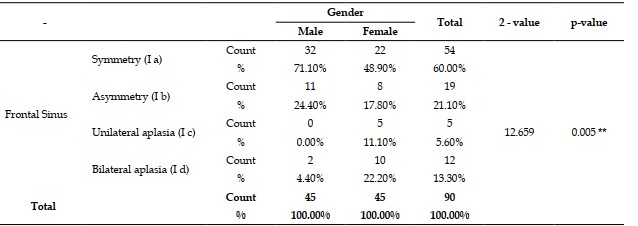
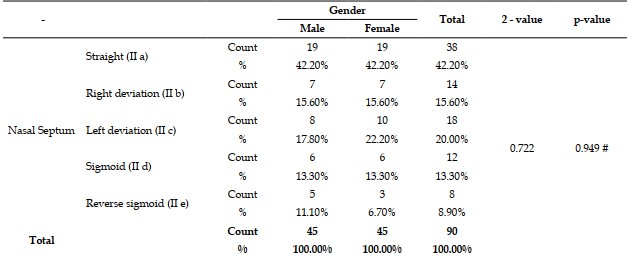
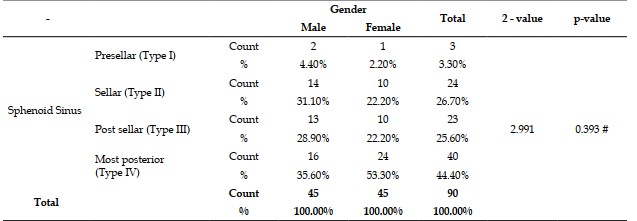
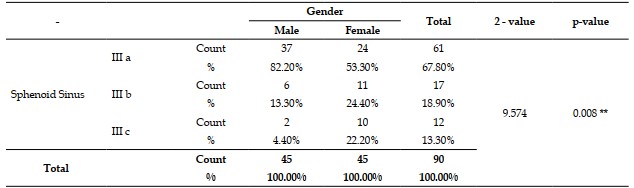
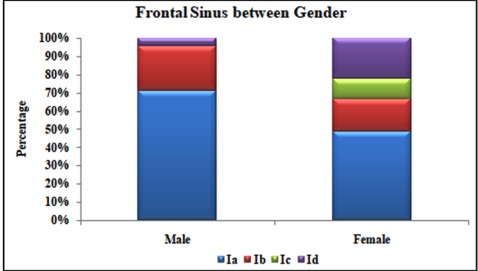
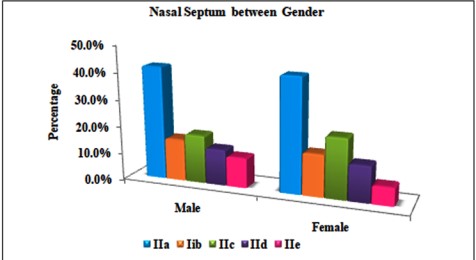
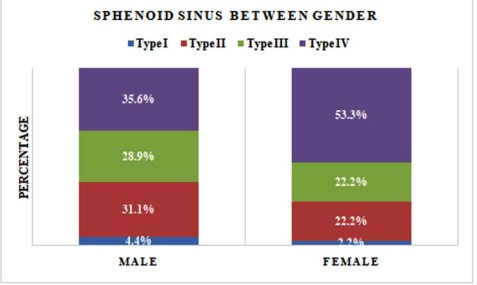
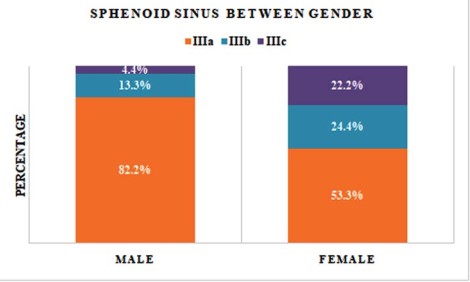
Background: Identification of a body is the cornerstone of forensic investigation. If primary methods of identification are impossible (absence of comparative DNA samples, fingerprints, and teeth records), it can be performed using radiographic techniques, whenever antemortem images are available. Visual comparison of antemortem and postmortem images, such as frontal sinuses radiographics and CBCTs can allow identification. The uniqueness and reliability of frontal sinus and nasal septum patterns is used for human identification in forensic science. personal identification can also be done by assessment of pneumatisation of sphenoidal sinus. Aim & Objectives: This study aims to evaluate the use of frontal sinus and nasal septum patterns and the pneumatisation of sphenoidal sinus for personal identification. To correlate all the parameters to find which is more accurate for identifying a person. Materials & Method: Study Design: A Retrospective Study. Study Population: A study of 90 CBCT images, (45 males and 45 females) acquired from the archives that were generated using Planmeca Promax 3D MID Proface CBCT machine and assessed with Planmeca Romexis Software. Sample size: Sample of 90 CBCT images obtained from the archives. CBCT images of patients between 18 - 69 years of age. Result: Pearson’s Chi-Square test between gender for frontal sinus were 2=12.659, p=0.005<0.01 which shows highly statistical significance between frontal sinus and gender, for nasal septum were 2=0.722, p=0.949>0.05 which shows no statistical significance between nasal septum and gender, for sphenoid sinus were 2=9.574, p=0.008<0.01 which shows highly statistical significance between sphenoid sinus and gender. But his study had individual variations in frontal sinus, nasal septum and sphenoid sinus for every person. Conclusion: Imaging of the human body, especially the head and neck region, has been useful in forensic dentistry for proving medicolegal cases and in human identifications during mass disasters. Hence, this study determines the reliability and accuracy of frontal sinus, sphenoidal sinus and nasal septum pattern as a tool for personal identification.
References
- 1. Pramod JB, Marya AV, Sharma V. Role of forensic odontologist in post mortem person identification. Dental research journal. 2013 May 1; 9(5).
- 2. Sidhu R, Chandra S, Devi P, Taneja N, Sah K, Kaur N. Forensic importance of maxillary sinus in gender determination: a morphometric analysis from Western Uttar Pradesh, India. European Journal of General Dentistry. 2014 Jan 1; 3(1):53.
- 3. David MP, Saxena R. Use of frontal sinus and nasal septum patterns as an aid in personal identification: A digital radiographic pilot study. J Forensic Dent Sci. 2010;2(2):77-80.
- 4. Disaster Victim Identification guide. Interpol 2014; 2014 [http://www.interpol.int/en/Internet/ Interpol-expertise/ Forensics/DVI].
- 5. Brown KA. Dental identification of unknown bodies. Ann Acad Med Singapore 1984;13(1):3—7.
- 6. Lorkiewicz - Muszynska´ D, Łabecka M, Zaba C, et al. Trudno´s ciidenty fikacjizw łokiszczatków˛ ludzkich woparciuodokumentacje˛ibadaniastomatologiczne [Difficulties in identification of human corpses and skeletal remains on the basis of dental records and examinations]. Arch Med Sadowej Kryminol 2009;59(3):218—24.
- 7. Thali MJ, Markwalder T, Jackowski C, Sonnenschein M, Dirnhofer R. Dental CT imaging as a screening tool for dental profiling: advantages and limitations. J Forensic Sci 2006;51(1):113—9.
- 8. Pfaeffli M, Vock P, Dirnhofer R, et al. Post-mortem radiological CT identification based on classical ante-mortem X-ray examinations. Forensic SciInt 2007;171(2—3):111—7.
- 9. Kanthem RK, Guttikonda VR, Yeluri S, Kumari G. Sex determination using maxillary sinus. J Forensic Dent Sci 2015;7(2):163—7.
- 10. Pasquier E, De Saint Martin Pernot L, Burdin V, Mounayer C, Le Rest C, Colin D, et al. Determination of age at death: assessment of an algorithm of age prediction using numerical three-dimensional CT data from pubic bones. Am J Phys Anthropol 1999;108(3):261—8.
- 11. Mehta M, Saini V, Nath S, Menon SK. CT scan images for sex discrimination—a preliminary study on Gujarati population. J Forensic Radiol Imaging 2015;3(1):43—8.
- 12. ˇStokovi´c N, Trkulja V, Dumi´c-Cule ˇ I, Cukovi ˇ ´c-Bagi´c I, Lauc T, Vukiˇcevi´c S, et al. Sphenoid sinus types, dimensions and relationship with surrounding structures. Ann Anat 2016;203:69—76.
- 13. Vidya CS, Shamsundar NM. Computerized tomographic study of frontal sinus patterns in skulls of south Indian population. Int J of Sci and Research Pub. 2014;4(9):1-5.
- 14. Vidya CS, Shamsundar NM. Computerized tomographic study of frontal sinus patterns in skulls of south Indian population. Int J of Sci and Research Pub. 2014;4(9):1-5
- 15. Belaldavar C, Kotrashetti VS, Hallikerimath SR, Kale AD. Assessment of frontal sinus dimensions to determine sexual dimorphism among Indian adults. J Forensic Dent Sci. 2014;6(1):25-30
- 16. Taniguchi M, Sakoda S, Kano T, Zhu BL, Kamikodai Y, Fujita MQ, et al. Possible use of nasal septum and frontal sinus patterns to radiographic identification of unknown human remains. Osaka City Med J. 2003;49(1):31-38.
- 17. Dawidson I. Case reports and background: difficulties with identification—Sweden. J Forensic Odontostomatol 2011;29(1):44—50.
- 18. Byard RW, Gilbert JD, Kostakis C, Heath KJ. Circumstances of death and diagnostic difficulties in brushfire fatalities. J Forensic Sci 2012;57(4):969— 72.
- 19. Barghouth G, Prior JO, Lepori D, et al. Paranasal sinuses in children: size evaluation of maxillary, sphenoid, and frontal sinuses by magnetic resonance imaging and proposal of volume index percentile curves. EurRadiol 2002;12(6):1451—8.
- 20. Scuderi AJ, Harnsberger HR, Boyer RS. Pneumatization of the paranasal sinuses: normal features of importance to the accurate interpretation of CT scans and MR images. AJR Am J Roentgenol 1993;160(5):1101—4.
- 21. Casselman JW. Le sphénoïde: anatomie. J Neuroradiol 2003;30(4):201—10.
- 22. Peele JC. Unusual anatomical variations of the sphenoid sinuses. Laryngoscope 1957;67(3):208— 37.
- 23. Kazkayasi M, Karadeniz Y, Arikan OK. Anatomic variations of the sphenoid sinus on computed tomography. Rhinology 2005;43(2):109—14.
- 24. Sirikci A, Bayazit YA, Bayram M, et al. Variations of sphenoid and related structures. EurRadiol 2000;10(5):844—8.
- 25. Güldner C, Pistorius SM, Diogo I, et al. Analysis of pneumatization and neurovascular structures of the sphenoid sinus using cone-beam tomography (CBT). ActaRadiol 2012;53(2): 214—9.
- 26. Hatch GM, Dedouit F, Christensen AM, Thali MJ, Ruder TD. RADid: a pictorial review of radiologic identification using postmortem CT. J Forensic Radiol Imaging 2014;2:52—9, http://dx.doi. org/10.1016/j.jofri.2014.02.039
- 27. Modi JP (2011) A Textbook of Medical Jurisprudence and Toxicology, 24th Edn, LexisNexis Butterworths, Nodia
- 28. Taniguchi M, Sakoda S, Kano T, Zhu BL, Kamikoddai Y, Fujita MQ, et al. Possible use of nasal septum and frontal sinus patterns to radiographic identification of unknown human remains. Osaka City Med J. 2003; 49: 31-8.
- 29. Gopal KS, Vijayan BP. Significance of Frontal Sinus and Nasal Septum Patterns in Personal Identification in Forensics: A Retrospective CBCT Study. Int J Oral Health Med Res. 2016; 2: 57-61
- 30. MP David, Saxena R. Use of Frontal sinus and nasal septum as an aid in personal identification: A digital radiographic pilot study. J Forensic Dent Sci. 2010; 2: 77-80
- 31. Auffret M, et al. Contribution of the computed tomography of the anatomical aspects of the sphenoid sinuses to forensic identification. J Neuroradiol (2016), http://dx.doi.org/10.1016/j. neurad.2016.03.007
Data Sharing Statement
There are no additional data available. All raw data and code are available upon request.
Funding
This research received no funding.
Author Contributions
All authors contributed significantly to the work and approve its publication.
Ethics Declaration
This article does not involve any human or animal subjects, and therefore does not require ethics approval.
Acknowledgements
We would like to express our gratitude to the patients, their families, and all those who have contributed to this study.
Conflicts of Interest
No conflicts of interest in this work.
About this article

Cite this article
Kalai Selvi Ravishankar, Saraswathi Gopal. K, Mahesh Kumar. P/Frontal Sinus & Nasal Septum Patterns & Pneumatisation of Sphenoid Sinus: An Obscure Path for Personal Identification: A Retrospective Cone Beam Computed Tomography Study/Indian Journal of Forensic Odontology. 2023;16(1):9–17.
Licence:
Attribution-Non-commercial 4.0 International (CC BY-NC 4.0)This license enables reusers to distribute, remix, adapt, and build upon the material in any medium or format for noncommercial purposes only, and only so long as attribution is given to the creator.
| Received | Accepted | Published |
|---|---|---|
| March 29, 2023 | June 16, 2023 | June 30, 2023 |
DOI: https://doi.org/10.21088/ijfo.0974.505X.16123.1
Keywords
Frontal sinusNasal septumSphenoid sinusPersonal identificationCBCTSearch for Similar Articles
Similar Articles
- Determination of Anthropometric Correlation of Golden Proportions Existing in Ma...
- Oral Autopsy in Forensic Odontology as an Effort for Human Identification in Med...
- Exploring the Global Use of Artificial Intelligence in Forensic Investigations
- Comparative Study of Lip Print between Multigender Community using Suzuki Classf...
- Turkey Teeth
Article Level Metrics
Last UpdatedThursday 19 November 2026, 02:22:22 (IST)
2393
Accesses
5
327
00
Citations
NA
NA
NA
Download citation
Article Keywords
Keyword Highlighting
Highlight selected keywords in the article text.
Timeline
| Received | March 29, 2023 |
| Accepted | June 16, 2023 |
| Published | June 30, 2023 |
licence
Attribution-Non-commercial 4.0 International (CC BY-NC 4.0)
This license enables reusers to distribute, remix, adapt, and build upon the material in any medium or format for noncommercial purposes only, and only so long as attribution is given to the creator.