Full Text (PDF)
Indian Journal of Forensic Odontology 16(2):p 47-56, July - December 2023. | DOI: https://doi.org/10.21088/ijfo.0974.505X.16223.1
Original Article
Comparative Study of Lip Print between Multigender Community using Suzuki Classfication
Vijayalakshmi V., Priyanka Verma, Rohith M.
Author Information
Licence:
Attribution-Non-commercial 4.0 International (CC BY-NC 4.0)This license enables reusers to distribute, remix, adapt, and build upon the material in any medium or format for noncommercial purposes only, and only so long as attribution is given to the creator.
Indian Journal of Forensic Odontology 16(2):p 47-56, July - December 2023. | DOI: https://doi.org/10.21088/ijfo.0974.505X.16223.1
How Cite This Article:
Vijayalakshmi V., Priyanka Verma, Rohith M., Comparative Study of Lip Print between Multigender Community using Suzuki Classfication. Ind J Forensic Odontol 2023;16(2):47–56.Timeline
Received : August 18, 2023
Accepted : October 20, 2023
Published : December 25, 2023
Abstract
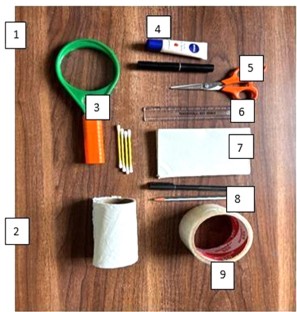
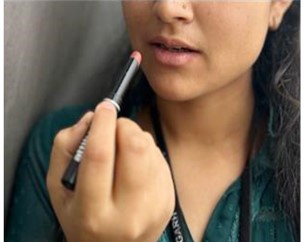
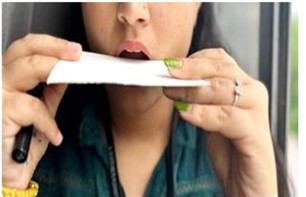
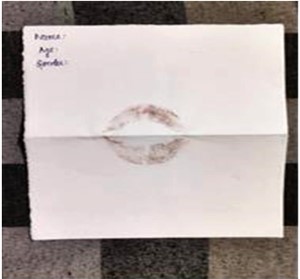
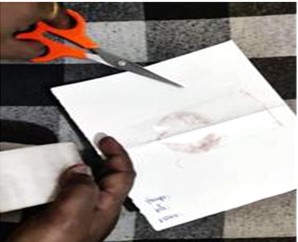
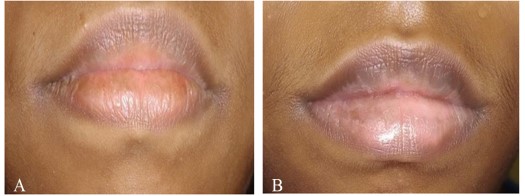
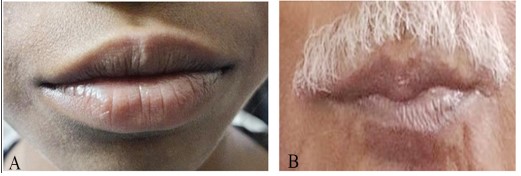
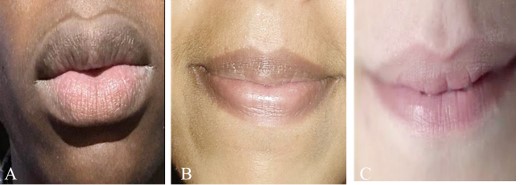
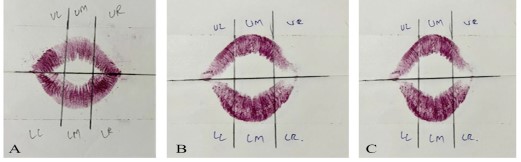
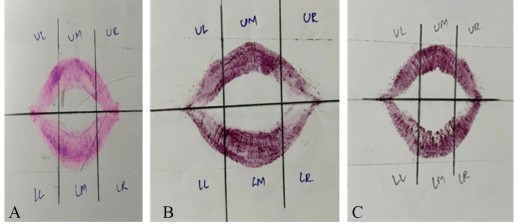
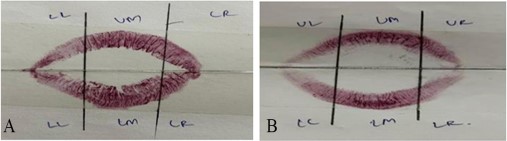
A crucial part of forensic investigations is personal identification. Lip prints, a unique pattern in the labial mucosa, can be studied used in chelioscopy. These prints can vary in each person, making them admissible in courts. Homosapiens can change their gender through hormone therapy, and progesterone exposure can be related to high non-heterosexual self-esteem. This study explores the interdisciplinary landscape of forensics, material science, and medicine, addressing gender identities like lesbian, gay, bisexual, non-binary gender, and gender queer using there lip traces. In chelioscopy technique lip wrinkles are to identify suspect/victim in cases of crime where clues left like lip print traces in the cases like rape, bulgarly etc... Since lip prints are distinct and even identical in twins, they are useful in the investigation of crimes. Lip print analysis is crucial since it can reroute cases because it's a sensitive shift among people. Aims and Objectives: The current study's objectives were to assess the most common lip grooves among the three genders (male, female, and LGBT) and improve the effectiveness of crime solving.
References
- 1. Reddy KS. The essentials of forensic medicine and toxicology. 21st ed. Hyderabad: K Suguna publisher; 2005. Identification; pp. 49–84. [ Google Scholar]
- 2. Kasprzak J. Possibilities of cheiloscopy. Forensic Sci Int. 90;46:145–51. [Google Scholar]
- 3. Saraswathi TR, Gauri Mishra, Raganthan K (2009) Study of lipprints. J Forensic Dent Sci 1: 28-31.
- 4. Bindal U, Jethani SL, Mehrotra N, Rohatgi RK, Arora M, et al. (2009) Lip Prints as a Method of Identification in Human being.
- 5. Singh NN, Brave VR, Khanna S (2010) Natural dyes versus lysochrome dyes in cheiloscopy: A comparative evaluation. J Forensic Dent Sci 2:11-17.
- 6. El Domiaty MA, Al-gaidi SA, Elayat AA, Safwat MD, Galal SA (2010) Morphological patterns of lip prints in Saudi Arabiaat Almadinah Almonawarah province..Forensic Sci Int 179.1-179.
- 7. Venkatesh, R., & David, M. P.Cheiloscopy: An aid for personal identification. Journal of Forensic Dental Sciences, 2011.3(2), 67–70.
- 8. Malaysian passport. (2023, October 8). In Wikipediahttps://en. wikipedia.org/ wiki/ Malaysian_passport
- 9. Costa S, Caldas IM. Morphologic patterns of lip prints in a Portuguese population:A preliminary analysis. J Forensic Sci Int. 1974;3:233–48.
- 10. Kasprzak J. Cheiloscopy. In: Siegal JA, Saukko PJ, Knupfer GC, editors. Encyclopedia of forensic sciences. Vol. 1. London: Academic Press; 2000. pp. 58–61. [Google Scholar] [Ref list].
- 11. Costa S, Caldas IM. Morphologic patterns of lip prints in a Portuguese population:A preliminary analysis. J Forensic Sci Int. 1974;3:233–48.
- 12. Moshfeghi M, Beglou A, Mortazavi H, Bahrololumi N. Morphological patterns of lip prints in an Iranian population. J Clin Exp Dent. 2016;8:e550–55. [PMC free article] [PubMed] [Google Scholar]
- 13. Tsuchihashi Y. Studies on personal identification by means of lip print. Forensic Sci Int. 1974;3:233–48.
- 14. Caldas IM, Magalhães T, Afonso A. Establishing identity using cheiloscopy and palatoscopy. Forensic Sci Int. 2007;165:1–9. [PubMed] [Google Scholar]
- 15. Suzuki K, Tsuchihashi Y. A new attempt of personal identification by means of lip print. Cann Soc Forens Sci J. 1971;4:154–8. [Google Scholar]
- 16. Castello A, Segui MA, Verdu FA. Lumenous lip-prints as criminal evidence. Forensic Sci Int. 2005;155:185–7. [PubMed] [Google Scholar]
- 17. Augustine J, Barpande SR, Tupkari JV. Cheiloscopy as an adjunct to forensic identification:A study of 600 individuals. J Forensic Odontostomatol. 2008; 26:44–52. [PubMed] [Google Scholar]
- 18. Naik SK, Prabhu A, Nargund R. Forensic odontology: Cheiloscopy. Hong Kong Dent J. 2001; 8:25–8.
- 19. Morphological analysis of cholecystectomy specimens. Sharma Sangeeta, B Ran, K Anjali, S Priti, S Suprabha, S Mirza Journal of Anatomical sciences 19 (1), 16-21.
- 20. Randhava K, Narang RS, Arora PC. Study of the effect of age changes on lip print pattern and its reliability in sex determination. J Forensic Odontostomatol. 2011;29:45–51. [PMC free article] [PubMed] [Google Scholar]
- 21. Multani S, Thombre V, Thombre A, Surana P. Assessment of lip print patterns and its use for personal identification among the populations of Rajnandgaon, Chhattisgarh, India. J Int Soc Prev Community Dent.
- 22. Multani S, Thombre V, Thombre A, Surana P. 22. Assessment of lip print patterns and its use for personal identification among the populations of Rajnandgaon, Chhattisgarh, 2014 Sep; 4(3):170-4. doi: 10.4103/2231-0762.142018. PMID: 25374835; PMCID: PMC4209616 India. J Int Soc Prev Community Dent.
Data Sharing Statement
There are no additional data available. All raw data and code are available upon request.
Funding
This research received no funding.
Author Contributions
All authors contributed significantly to the work and approve its publication.
Ethics Declaration
This article does not involve any human or animal subjects, and therefore does not require ethics approval.
Acknowledgements
We would like to express our gratitude to the patients, their families, and all those who have contributed to this study.
Conflicts of Interest
No conflicts of interest in this work.
About this article

Cite this article
Vijayalakshmi V., Priyanka Verma, Rohith M., Comparative Study of Lip Print between Multigender Community using Suzuki Classfication. Ind J Forensic Odontol 2023;16(2):47–56.
Licence:
Attribution-Non-commercial 4.0 International (CC BY-NC 4.0)This license enables reusers to distribute, remix, adapt, and build upon the material in any medium or format for noncommercial purposes only, and only so long as attribution is given to the creator.
| Received | Accepted | Published |
|---|---|---|
| August 18, 2023 | October 20, 2023 | December 25, 2023 |
DOI: https://doi.org/10.21088/ijfo.0974.505X.16223.1
Keywords
GenderLip printsSimilarityCrime solvingSearch for Similar Articles
Similar Articles
- Determination of Anthropometric Correlation of Golden Proportions Existing in Ma...
- Oral Autopsy in Forensic Odontology as an Effort for Human Identification in Med...
- Exploring the Global Use of Artificial Intelligence in Forensic Investigations
- Turkey Teeth
- Pulp Volume: An Indepth Tool in Age Estimation a Comparative Retrospective Foren...
Article Level Metrics
Last UpdatedThursday 19 November 2026, 01:56:30 (IST)
2393
Accesses
5
327
00
Citations
NA
NA
NA
Download citation
Article Keywords
Keyword Highlighting
Highlight selected keywords in the article text.
Timeline
| Received | August 18, 2023 |
| Accepted | October 20, 2023 |
| Published | December 25, 2023 |
licence
Attribution-Non-commercial 4.0 International (CC BY-NC 4.0)
This license enables reusers to distribute, remix, adapt, and build upon the material in any medium or format for noncommercial purposes only, and only so long as attribution is given to the creator.