Full Text (PDF)
Journal of Social Welfare and Management 17(3):p 147-153, Sept. Dec. 2025. | DOI: 10.21088/jswm.0975.0231.17325.2
Original Article
From Home to the Gig: Empowering Women in Thoothukudi District of Tamil Nadu state
Author Information
Licence:
Attribution-Non-commercial 4.0 International (CC BY-NC 4.0)This license enables reusers to distribute, remix, adapt, and build upon the material in any medium or format for noncommercial purposes only, and only so long as attribution is given to the creator.
Journal of Social Welfare and Management 17(3):p 147-153, Sept. Dec. 2025. | DOI: 10.21088/jswm.0975.0231.17325.2
How Cite This Article:
Amutha D. From home to the gig: empowering women in Thoothukudi district of Tamil Nadu state. J Soc Welfare Manag. 2025;17(3):147-53.Timeline
Received : September 29, 2025
Accepted : December 19, 2025
Published : December 30, 2025
Abstract
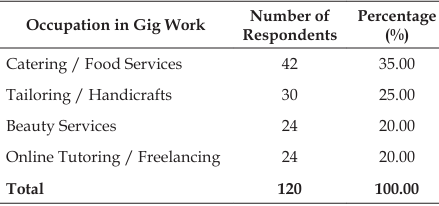
The rise of the gig economy has opened new pathways for women to engage in income-generating activities, providing flexibility, autonomy, and opportunities for economic empowerment. This study examines the experiences of women gig workers in Thoothukudi district, focusing on their socio-economic characteristics, occupational patterns, income levels, and factors influencing earnings. A total of 120 women working in diverse gig sectors such as catering, tailoring, beauty services, and online freelancing were surveyed using structured questionnaires. Data were analyzed using descriptive statistics, Garrett Ranking, correlation, and multiple regression techniques.
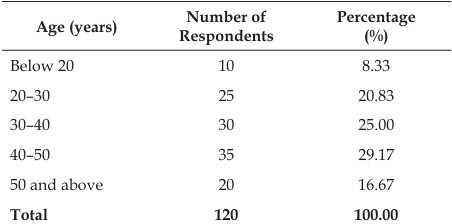
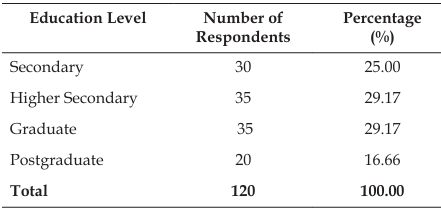
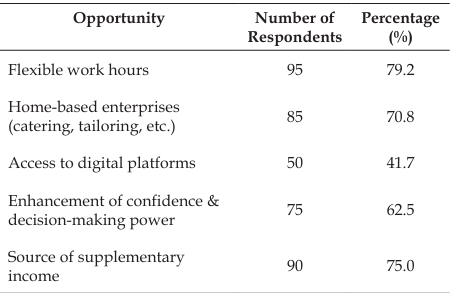
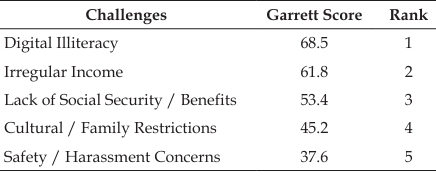
Results indicate that most participants are middle-aged and have completed higher secondary or graduate-level education. Gig work offers flexible hours, supplementary income, opportunities to apply skills, and enhanced confidence, thereby serving as a platform for both economic and social empowerment. Nevertheless, challenges such as digital illiteracy, irregular earnings, absence of social security, cultural constraints, and safety concerns hinder full participation. Statistical findings highlight education as the strongest predictor of monthly income, while age and prior employment experience exert a smaller, yet positive influence.
The study concludes that while gig work provides significant opportunities for women, interventions such as digital literacy training, skill development initiatives, and social protection measures are crucial for promoting income stability, safety, and long-term empowerment. Such strategies can help women in Thoothukudi district maximize the benefits of gig work and contribute effectively to local economic development.
References
- 1. Abubakar NH, Dasuki SI. Empowerment in their hands: use of WhatsApp by women in Nigeria. Gend Technol Dev. 2018;22(2):164–83.
- 2. Amutha D. Development of capacity building through self-help groups in Tuticorin District. Manag Today. 2015;5(2).
- 3. Amutha D. Economic well-being of rural women through self-help groups with special reference to coastal villages of Tuticorin District [Internet]. Rochester (NY): SSRN; 2012 [cited 2026 Jan 9]. Available from: https://ssrn.com/abstract=2128783
- 4. Anitha S, Kumar P. Women and informal work in Tamil Nadu: social norms and economic participation. J Rural Dev. 2017;36(4):525–40.
- 5. Berg J, Furrer M, Harmon E, Rani U, Silberman M. Digital labour platforms and the future of work: towards decent work in the online world. Geneva: International Labour Organization; 2018.
- 6. Chakravarty R. Education and income inequality in the gig economy: evidence from India. Econ Polit Wkly. 2020;55(42):45–52.
- 7. Amutha D. An analysis of economic empowerment of women SHGs in Tuticorin District. J Econ Sustain Dev. 2011;2(1):
- 8. • Amutha D. Role of self-help groups in women development: an empirical study. Int J Bio-resource Stress Manag. 2011;2(3):349–52.
- 9. • Amutha D. Socio-economic impact through self-help groups. J Econ Sustain Dev. 2011;2(6):[pages unknown].
- 10. • De Stefano V. The rise of the “just-in-time workforce”: on-demand work, crowdwork, and labor protection in the gig economy. Comp Labor Law Policy J. 2016;37(3):471–504.
- 11. • International Labour Organization (ILO). Women and digital work in the gig economy. Geneva: ILO Publications; 2021.
- 12. • Kalleberg AL, Dunn M. Good jobs, bad jobs in the gig economy. Perspect Work. 2016;20(1):10–4.
- 13. • Mukherjee P. Women in the gig economy: opportunities and challenges in India. Asian J Manag Res. 2020;11(2):112–25.
- 14. • Rani U, Singh P. Digital platforms and women’s entrepreneurship in India: prospects and barriers. J Entrep Innov. 2021;7(1):33–48.
- 15. • Waldkirch M, Nordqvist M, Melin L, et al. Controlled by the algorithm, coached by the crowd–how HRM activities take shape on digital work platforms in the gig economy. Int J Hum Resour Manag. 2021;32(12):2643–82.
- 16. • Wood AJ, Graham M, Lehdonvirta V, Hjorth I. Good gig, bad gig: autonomy and algorithmic control in the global gig economy. Work Employ Soc. 2019;33(1):56–75.
Data Sharing Statement
There are no additional data available. All raw data and code are available upon request.
Funding
This research received no funding.
Author Contributions
Whether all authors contributed significantly to the work and approve its publication.
Ethics Declaration
This article does not involve any human or animal subjects, and therefore does not require ethics approval.
Acknowledgements
We would like to express our gratitude to the patients, their families, and all those who have contributed to this study.
Conflicts of Interest
The authors report no conflicts of interest in this work.
About this article

Cite this article
Amutha D. From home to the gig: empowering women in Thoothukudi district of Tamil Nadu state. J Soc Welfare Manag. 2025;17(3):147-53.
Licence:
Attribution-Non-commercial 4.0 International (CC BY-NC 4.0)This license enables reusers to distribute, remix, adapt, and build upon the material in any medium or format for noncommercial purposes only, and only so long as attribution is given to the creator.
| Received | Accepted | Published |
|---|---|---|
| September 29, 2025 | December 19, 2025 | December 30, 2025 |
DOI: 10.21088/jswm.0975.0231.17325.2
Keywords
Women Gig WorkersOpportunitiesChallengesIncomeDigital LiteracySearch for Similar Articles
Similar Articles
- Legal and Technological Challenges of IPR in Digital Library Services
- Navigating the New India: Gen Z at the Intersection of Aspiration, Anxiety, and...
- A Comparative Analysis of Financial Performances of Sail and JSW Steel Company’...
- Tourism-Driven Local Business Growth and Economic Progress in Tirunelveli: An An...
- The Credential Crunch: Academic Degree Inflation and the Reimagining of Universi...
Article Level Metrics
Last UpdatedTuesday 07 July 2026, 10:40:30 (IST)
1165
Accesses
3
112
00
Citations
NA
NA
NA
Download citation
Article Keywords
Keyword Highlighting
Highlight selected keywords in the article text.
Timeline
| Received | September 29, 2025 |
| Accepted | December 19, 2025 |
| Published | December 30, 2025 |
licence
Attribution-Non-commercial 4.0 International (CC BY-NC 4.0)
This license enables reusers to distribute, remix, adapt, and build upon the material in any medium or format for noncommercial purposes only, and only so long as attribution is given to the creator.