Full Text (PDF)
Indian Journal of Dental Education 17(2):p 65-77, April - June 2024. | DOI: https://doi.org/10.21088/ijde.0974.6099.17224.1
Original Article
Evaluation of Salivary Changes Following Intake of Different Beverages in Children at Different Time Intervals: A Randomized Controlled Trial
Author Information
Licence:
Attribution-Non-commercial 4.0 International (CC BY-NC 4.0)This license enables reusers to distribute, remix, adapt, and build upon the material in any medium or format for noncommercial purposes only, and only so long as attribution is given to the creator.
Indian Journal of Dental Education 17(2):p 65-77, April - June 2024. | DOI: https://doi.org/10.21088/ijde.0974.6099.17224.1
How Cite This Article:
Srinivasan Kannaiah. Evaluation of Salivary Changes Following In take of Different Beverages in Children at Different Time Intervals: A Randomized Controlled Trial. Ind J Dent Educ. 2024;17(2):65-77.Timeline
Received : March 15, 2024
Accepted : April 30, 2024
Published : June 11, 2024
Abstract
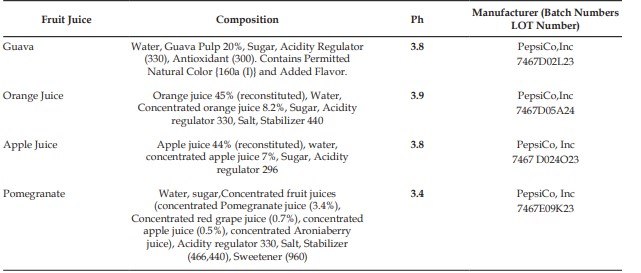
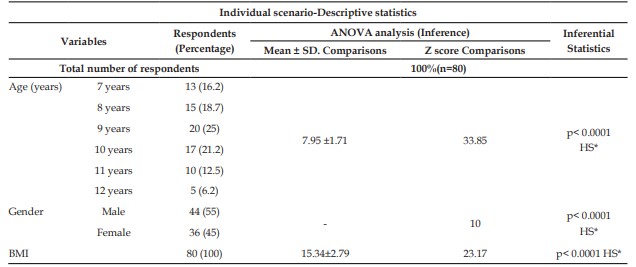
Aim: The purpose of this study was to evaluate changes in the salivary pH after the consumption of different beverages in children at different time intervals. Material and Methods: In this cross-over, single blinded, eighty children between the ages of 7 to 12 years having a strict vegetarian diet were included in the study for consumption of four different fruit juices (i.e. Guava, Orange, Apple, Pomegranate) by dividing them into 4 groups based on caries experience selected. The endogenous pH of the salivary samples was measured at the baseline and after consumption of the fruit juices at 5, 15 and 30 minutes. Data was collected separately for simple fruits, fresh fruit juices and processed juices. The intrinsic pH of fruit juices was noted by the digital electronic pH meter. The collected Data were statistically analyzed by using ANOVA. Results: The processed fruit juices caused acidity in saliva than fresh juices and fruits after 5 mins. After 15 mins of intake of juices and fruits, the pH of fresh fruit juices moved towards neutral pH while that of processed fruit juices was found to be still acidic. After 30 mins, pH tends to be alkaline for both fresh and processed juices. There was the least change in salivary pH with the use of pomegranate fruits and juices during the whole study. Conclusion: Pomegranate has less changing effect on saliva pH than all other fruits used in the study and processed fruit juices have a significant influence on the change of salivary pH. The use of fresh fruit juices can be suggested in future.
References
- 1. World Health Organization, “Oral health,” Fact Sheet 318, WHO, 2012.
- 2. Takahashi N. Microbial Ecosystem in the Oral Cavity: Metabolic Diversity in an Ecological Niche and Its Relationship with Oral Diseases, International Congress Series, Elsevier2005; 571–80.
- 3. Moynihan P. “The interrelationship between diet and oral health,” Proceedings of the Nutrition Society 2005; vol. 64(4): 571–80.
- 4. Aasim Farooq Shah. Comparison of changes in salivary pH levels after consumption of plain milk and milk mixed with Sugar. IAIM 2016; 3(10): 174-78.
- 5. Willershausen B, Callaway A, Azrak BandDuschnerH.Influence of apple juice on human enamel surfaces of the first and second dentition- an in vitro study. EurJMed Res 2008; 13(7):349-54.
- 6. Neha Awasthi, Sukhdeep Singh, Nikhil Grover. Comparative evaluation of salivary pH and buffering capacity of commonly available flavoured drinks in India. 2020; International Journal of Psychosocial Rehabilitation 24(06):12849- 12860.
- 7. Anum Nazir, Uswa Ahmad, Nizwa Qamar, Zunaira Abaid, Nishat Zafar, and Sidra Anam. Evaluation of changes in salivary pH after the intake of fruits, fresh fruit juices and processed juices: A randomized control trial. Pure Appl. Biol 2020; 9(3): 1976-81.
- 8. Preethi BP, Maintreyee DS and Dodawad R. The effect of Four Fruit Juices on the pH of Dental Plaque. Journal of Clinical and Diagnostic Research 2010; 4:2587-93.
- 9. Demircia M, Tuncera S, and Yuceokurb A. A. Prevalence of caries on individual tooth surfaces and their distribution by age and gender in university clinic patients. European Journal of Dentistry2010; 4: 270–79. 10. Hajifattahi F, Hosseini Jeddi S and Khatibi M. Comparison of the Effect of Pomegranate Juice and Orange Juice on the Level of pH of Dental Plaque. J Res Dent Maxillofac Sci 2016;1(3): 23-27.
- 11. Shagun Agarwal Jain. A comparative evaluation of the effect of different commercially available flavoured milk on salivary pH values in children-An in vivo study, Pediatrics Healthcare 2021;9(7):04-07.
- 12. Jaykaran, Saxena D, Yadav Pand Kantharia N D. Negative studies published in medical journals of India do not give sufficient information regarding power/sample size calculation and confidence interval. J Postgrad Med 2011; 57:176–7.
- 13. Sudeep C B, Peter Simon Sequeira, Jthesh Jain, Vipin Jain,andMathew Maliyil. Effects on pH Value of Saliva Following Intake of Three Beverages Containing Apple Juice – A DoubleBlind Cross-over Study.National Journal of Medical and Dental Research 2013; Vol 1(4): 18-23.
- 14. Senthilkumar S, Jagadeson M, Krupa NC, Smith JJ, Ahimsa MK,andDhiveya A. Comparison of changes in salivary pH after chewing guava leaves (Psidium guajava) and xylitol gum: A randomised, single-blind, crossover study. J Indian Assoc Public Health Dent 2021; 19:134-38.
- 15. Shetgar S, Kemparaj U, Chavan S and Patel R. Effect of Fresh Fruit Juices on Salivary pH: A Randomized Controlled Trial. Int J Oral Health Med Res 2017; 3(5): 28-32.
- 16. Fernández-García E, Carvajal-Lérida I and PérezGálvez A. In vitro bioaccessibility assessment as a prediction tool of nutritional efficiency. Nut Res 2009; 29(11): 751-60.
- 17. Gil Montoya JA, SubiráCandRamónJMand González Moles MA. Oral health related quality of life and nutritional status. J Pub Health Dentistry 2008; 68(2): 88-93.
- 18. Sunil Babu Kotha, Shayma Abdulaziz Terkawi, Sarah Ali Mubarak, Abdurrahman Dahham Al Saffan, Sree Lalita Kotha, and Sreekanth Kumar Mallineni. Association between Body Mass Index (BMI) and Dental Caries among 6–12-Year-Old School Children Children. (Basel) 12-608 :(5)9 ;2022.
- 19. Franklin S, Masih S and Thomas AM. Effect on oral pH changes and taste perception in 10–14-year-old children, after calcium fortification of a fruit juice. Eur Arch Paediatr Dent 2015; 16: 483–89.
- 20. Maldupa I, Brinkmann A, Mihailova A. Comparative analysis of CRT buffer, GC saliva check buffer tests and laboratory titration to evaluate saliva buffering capacity. Stomatologija 2011; 13(2):55-61.
- 21. Gupta, Bhuvan and Gupta, Neha. Evaluation of change in salivary, following consumption of different snacks and beverages and Estimation of their oral clearance time. International Journal of Preventive and Clinical Dental Research2020; 2: 11-16.
- 22. Touger-Decker R, Loveren C. Sugars, and dental caries. Am J Clin Nutr 2003;78: 881- 92.
- 23. Hitoshi Uchida, and Catherine E. Ovitt. Novel impacts of saliva with regard to oral health.J Prosthet Dent 2022; 127(3): 383–391.
- 24. Dawes C., Wong D.T.W. Role of Saliva, and Salivary Diagnostics in the Advancement of Oral Health. J. Dent. Res. 2019;98:133–141.
- 25. Meghana Reddy J., Gayathri R., Vishnu Priya V. Variation in salivary pH and buffering capacity of saliva in normal and diabetes mellitus patients—A pilot study. Drug Invent. Today. 2018; 10:895.
- 26. Azima Hanin S.M, Vishnu Priya. V and Gayathri. R. Analysis of Salivary pH Before and After Intake of Sugary Drinks - An In vitro Study. Biosc.Biotech. Res.Comm. Special Issue 2020; 13 (8) :441-444.
- 27. Lata K Mehta , Amitha Hegde , Ann Thomas, Mandeep Singh Virdi. Acidogenic Potential of Packaged Fruit Juices and its Effect on Plaque and Salivary pH.Int J Clin Pediatr Dent -312:(4)12;2019 317.
- 28. Anum Nazir, Uswa Ahmad, Nizwa Qamar, Zunaira Abaid, Nishat Zafar, Sidra Anam. Evaluation of changes in salivary pH after the intake of fruits, fresh fruit juices and processed juices: a randomized control trial. Pure and applied biology 2020; 9(3): 1976-1981.
Data Sharing Statement
The authors declare that no patient personal data appear in this article.
Funding
The authors declare that the research was conducted in the absence of any commercial or financial relationships from the funding agency that could be construed as a potential conflict of interest or bias among the authors.
Author Contributions
The authors have obtained the written informed consent of the patients or legal guardians/next of kin mentioned in the article. The corresponding author owns this document.
Ethics Declaration
This article does not involve any human or animal subjects, and therefore does not require ethics approval.
Acknowledgements
The author expresses sincere gratitude to all respondents, coordinators, and administrators whose honest attention, help, support, and study participants (school children and their parents) lead the Research project to a worthwhile outcome.
Conflicts of Interest
The authors report no conflicts of interest in this work.
About this article

Cite this article
Srinivasan Kannaiah. Evaluation of Salivary Changes Following In take of Different Beverages in Children at Different Time Intervals: A Randomized Controlled Trial. Ind J Dent Educ. 2024;17(2):65-77.
Licence:
Attribution-Non-commercial 4.0 International (CC BY-NC 4.0)This license enables reusers to distribute, remix, adapt, and build upon the material in any medium or format for noncommercial purposes only, and only so long as attribution is given to the creator.
| Received | Accepted | Published |
|---|---|---|
| March 15, 2024 | April 30, 2024 | June 11, 2024 |
DOI: https://doi.org/10.21088/ijde.0974.6099.17224.1
Keywords
Fresh JuiceSalivary BufferProcessed JuiceSalivary pHSearch for Similar Articles
Similar Articles
- One Step Apexification using PRF as Matrix and MTA Apical Barrier
- Infective Ulcers in the Oral Cavity: A Review
- Effect of COVID-19 Lockdown on Patients Undergoing Orthodontic Therapy in Distri...
- Wire Splinting: An Effective Management Approach for Lateral Luxation: A Clinica...
- Prosthodontics in Healthy Ageing and Longevity Medicine: A Critical Narrative R...
Article Level Metrics
Last UpdatedMonday 19 October 2026, 19:50:17 (IST)
3456
Accesses
50
611
00
Citations
NA
NA
NA
Download citation
Article Keywords
Keyword Highlighting
Highlight selected keywords in the article text.
Timeline
| Received | March 15, 2024 |
| Accepted | April 30, 2024 |
| Published | June 11, 2024 |
licence
Attribution-Non-commercial 4.0 International (CC BY-NC 4.0)
This license enables reusers to distribute, remix, adapt, and build upon the material in any medium or format for noncommercial purposes only, and only so long as attribution is given to the creator.