Full Text (PDF)
Indian Journal of Trauma and Emergency Pediatrics 15(3):p 83-86, July-September 2023. | DOI: https://doi.org/10.21088/ijtep.2348.9987.15323.2
Original Article
Evaluation of Burns Patient in a Tertiary Care Hospital
Ravi Kumar Chittoria, Hemavathi Kumar Avel, Barath Kumar Singh P.
Author Information
Licence:
Attribution-Non-commercial 4.0 International (CC BY-NC 4.0)This license enables reusers to distribute, remix, adapt, and build upon the material in any medium or format for noncommercial purposes only, and only so long as attribution is given to the creator.
Indian Journal of Trauma and Emergency Pediatrics 15(3):p 83-86, July-September 2023. | DOI: https://doi.org/10.21088/ijtep.2348.9987.15323.2
How Cite This Article:
Hemavathi Kumar Avel, Ravi Kumar Chittoria, Barath Kumar Singh P./Evaluation of Burns Patient in a Tertiary Care Hospital/Indian J Trauma Emerg Pediatr.2023;15(3):83–86.Timeline
Received : May 09, 2023
Accepted : June 15, 2023
Published : September 30, 2023
Abstract
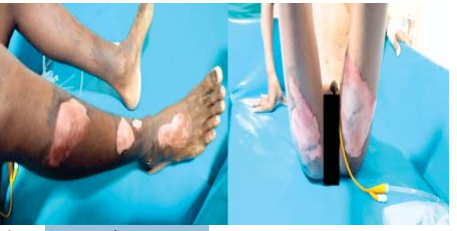
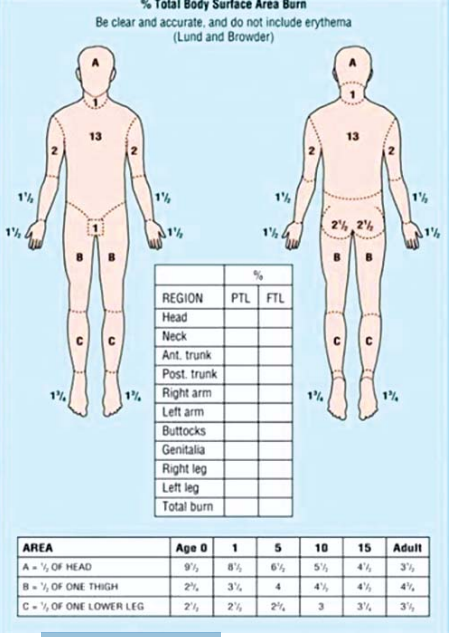
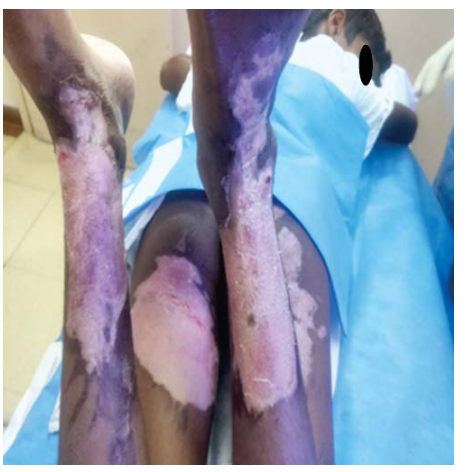
This article describes the evaluation and management of a child with severe burns in a tertiary care center with a dedicated tertiary-level burns unit. An 8-year-old child with 25% Second-degree scald burns was evaluated and treated with ATLS, WHO Guidelines, and assessed with Abbreviated Burn Severity Index (ABSI) score. We have used routine blood investigations, and microbiological investigations. The child was treated with intravenous fluids and antibiotics. In addition, regenerative treatment modalities were used to improve wound healing.
References
- 1. Jeschke MG, Williams FN, Gauglitz GG, Herndon DN. Burns. In: Sabiston Textbook of Surgery, Townsend M, Beauchamp RD, Evers MB, Kenneth ML (Eds), Elsevier, Philadelphia 2012. Vol 19, p.521.
- 2. Herndon DN, Tompkins RG. Support of the metabolic response to burn injury. Lancet2004; 363:1895.
- 3. Lundy JB, Swift CB, McFarland CC, et al. A descriptive analysis of patients admitted to the intensive care unit of the 10th Combat Support Hospital deployed in Ibn Sina, Baghdad, Iraq, from October 19, 2005, to October 19, 2006. J Intensive Care Med 2010; 25:156.
- 4. Potin M, Sénéchaud C, Carsin H, et al. Mass casualty incidents with multiple burn victims: rationale for a Swiss burn plan. Burns 2010; 36:741.
- 5. Branski LK.; Herndon, DN.; Barrow, RE. A Brief History of Acute Burn Care Management. In Herndon, DN. Editor (4th Ed) Total Burn Care (p. 1). Elsevier.
- 6. Mosier, MJ; Bernal, N; et al. National Burn Repository (2016). Report Dataset Version 12.0. pp 8-12; retrieved from Ameriburn. site-ym. com.
- 7. Cancio, LC.; Pruitt Jr, BA. (2012) Historical Perspective and the Development of Modern Burn Care. In Phillips, BJ. editor Pediatric Burns (p. 1). Amherst, NY: Cambria Press.
- 8. Branski LK.; Herndon, DN.; Barrow, RE. A Brief History of Acute Burn Care Management. In Herndon, DN. Editor (4th Ed) Total Burn Care (p. 1). Elsevier.
- 9. Artz, CP.; Soroff, HS. Modern Concepts in the Treatment of Burns. JAMA. (1955); 159(5):411-417
- 10. D. Greenhalgh, Management of burns, N Engl J Med, 380 (24) (2019), pp. 2349-2359.
Data Sharing Statement
There are no additional data available. All raw data and code are available upon request.
Funding
This research received no funding.
Author Contributions
All authors contributed significantly to the work and approve its publication.
Ethics Declaration
This article does not involve any human or animal subjects, and therefore does not require ethics approval.
Acknowledgements
We would like to express our gratitude to the patients, their families, and all those who have contributed to this study.
Conflicts of Interest
No conflicts of interest in this work.
About this article

Cite this article
Hemavathi Kumar Avel, Ravi Kumar Chittoria, Barath Kumar Singh P./Evaluation of Burns Patient in a Tertiary Care Hospital/Indian J Trauma Emerg Pediatr.2023;15(3):83–86.
Licence:
Attribution-Non-commercial 4.0 International (CC BY-NC 4.0)This license enables reusers to distribute, remix, adapt, and build upon the material in any medium or format for noncommercial purposes only, and only so long as attribution is given to the creator.
| Received | Accepted | Published |
|---|---|---|
| May 09, 2023 | June 15, 2023 | September 30, 2023 |
DOI: https://doi.org/10.21088/ijtep.2348.9987.15323.2
Keywords
EvaluationBurns PatientInvestigationManagementArticle Level Metrics
Last UpdatedSaturday 24 October 2026, 13:52:52 (IST)
1810
Accesses
14
249
00
Citations
NA
NA
NA
Download citation
Article Keywords
Keyword Highlighting
Highlight selected keywords in the article text.
Timeline
| Received | May 09, 2023 |
| Accepted | June 15, 2023 |
| Published | September 30, 2023 |
licence
Attribution-Non-commercial 4.0 International (CC BY-NC 4.0)
This license enables reusers to distribute, remix, adapt, and build upon the material in any medium or format for noncommercial purposes only, and only so long as attribution is given to the creator.