Full Text (PDF)
Physiotherapy and Occupational Therapy Journal 12(4):p 183-188, October-December 2019. | DOI: https://doi.org/10.21088/potj.0974.5777.12419.2
Original Article
Effect of Positioning on Pulmonary Functions in Unilateral Pleural Effusion
Author Information
Licence:
Attribution-Non-commercial 4.0 International (CC BY-NC 4.0)This license enables reusers to distribute, remix, adapt, and build upon the material in any medium or format for noncommercial purposes only, and only so long as attribution is given to the creator.
Physiotherapy and Occupational Therapy Journal 12(4):p 183-188, October-December 2019. | DOI: https://doi.org/10.21088/potj.0974.5777.12419.2
How Cite This Article:
Dipali Rana, Neepa Pandya. Effect of Positioning on Pulmonary Functions in Unilateral Pleural Effusion. Physiotherapy and Occupational Therapy Journal. 2019;12(4):183–188.Timeline
Received : October 30, 2019
Accepted : November 15, 2019
Published : December 25, 2019
Abstract
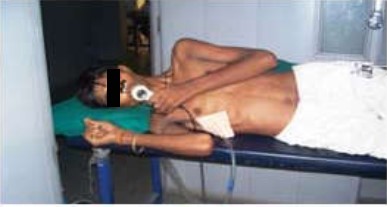
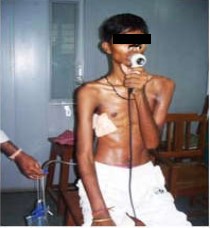
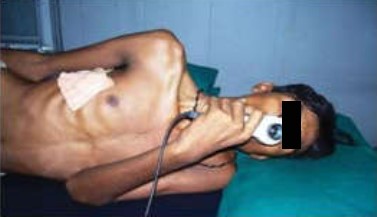
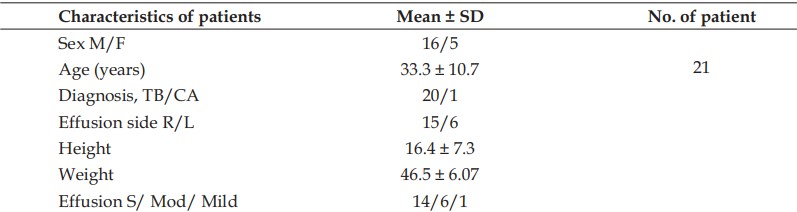
Background: Pleural effusion is an abnormal accumulation of fluid in the intra-pleural space. The relative annual incidence of pleural effusion is estimated to be 320 per 100,000 people in industrialized countries. In pleural effusion positioning may be used to optimize gas-exchange. The therapeutic body positioning is a primary non-invasive physical-therapy intervention. Methodology: The presence of pleural effusion was assessed by physical examination and chest X-ray. Pulmonary function testing (RMS HELIOS Spirometer) was conducted in sitting, right and left lateral decubitus positions. A forced expiratory maneuver was performed three times in each position after maintaining that position for 20 minutes and with rest as needed by the patient, between trials. It was made sure that subjects understood the instructions and performed the test with standard guideline (ATS Guidelines). The best values of forced vital capacity (FVC) and forced expiratory volume (FEV) were analyzed. Results: No significant difference (p >0.10) was noted in FVC, FEV1 and FEV1/FVC values between the three positions. Although, mean values of FVC, FEV1 in sitting position (41.6 ± 12.20) was higher than mean value of FVC, FEV1 of lateral positions. In lateral decubitus position the mean FVC, FEV1 value of effusion lung upper most (37.8 ± 11.50) was slightly higher than effusion lung dependant (36.5 ± 12.8). Conclusion: Position does not appear to have a significant effect on PFT in unilateral effusion patients.
References
- 1. Bill Wojciehowski: Pleural effusion—a review. Journal for respiratory care and sleep medicine June, 2004.
- 2. Adeoye PO, Johnson WR, Desalu OO, et al. Etiology, clinical characteristics, and management of pleural effusion in Ilorin, Nigeria. Niger Med J 2017;58(2):76–80. doi:10.4103/0300-1652.219349.
- 3. Donna Frownfelter, Elizabeth Dean: cardiovascular and pulmonary physical therapy—evidence and practice. Fourth edition 2006.p.117.
- 4. Alexandra Hough: Physiotherapy in respiratory care. Third edition-chap-4, 2001.p.99.
- 5. Ernst O. Attinger, J. Aaron Hershfus and Maurice S. Segal. The mechanics of breathing in different Body positions 1. In normal subjects. The journal of clinical investigation April 1956:904–11.
- 6. Neagley SR and Zwillich CW. The effect of positional changes on oxygenation in patients with pleural effusion. Chest. 1985 Nov;88(5):714–17.
- 7. Shi-Chuan Chang, Guang-Ming Shiao et al. Postural effect on gas exchange in patients with unilateral pleural effusion. Chest 1989 Jul;96(1):60–63.
- 8. Druz WS and Sharp JT. Activity of respiratory muscles in upright and recumbent humans. J Appl Physiol Respir Environ Exerc Physiol 1981 Dec;51(6):1552–61.
- 9. Sonnenblick M, Melzer E and Rosin AJ. Body positional effect on gas exchange in unilateral pleural effusion. Chest 1983 May;83(5):784–86.
- 10. Behrakis PK, Baydur A, Jaeger MJ, Milic-Emili J. Lung mechanics in sitting and horizontal body positions. Chest 1983;83(4):643–46.
Data Sharing Statement
There are no additional data available. All raw data and code are available upon request.
Funding
This research received no funding.
Author Contributions
All authors contributed significantly to the work and approve its publication.
Ethics Declaration
This article does not involve any human or animal subjects, and therefore does not require ethics approval.
Acknowledgements
We would like to express our gratitude to the patients, their families, and all those who have contributed to this study.
Conflicts of Interest
No conflicts of interest in this work.
About this article

Cite this article
Dipali Rana, Neepa Pandya. Effect of Positioning on Pulmonary Functions in Unilateral Pleural Effusion. Physiotherapy and Occupational Therapy Journal. 2019;12(4):183–188.
Licence:
Attribution-Non-commercial 4.0 International (CC BY-NC 4.0)This license enables reusers to distribute, remix, adapt, and build upon the material in any medium or format for noncommercial purposes only, and only so long as attribution is given to the creator.
| Received | Accepted | Published |
|---|---|---|
| October 30, 2019 | November 15, 2019 | December 25, 2019 |
DOI: https://doi.org/10.21088/potj.0974.5777.12419.2
Keywords
Pleural effusionPFT (pulmonary function test)body positionSearch for Similar Articles
Similar Articles
- Leadership in Physiotherapy: A Narrative Review
- Effectiveness of Low Level Laser Theapy in the Management of Temporomandibular J...
- The Impact of Air Pollution on Cardiopulmonary Health: Molecular Mechanisms, Pre...
- Efectiveness of Physiotherapy in Postpartum Women with Diastasis Recti: A Review
- Pain Neuroscience Education: Transforming Physiotherapy Practice
Article Level Metrics
Last UpdatedFriday 23 October 2026, 16:18:45 (IST)
4358
Accesses
34
739
00
Citations
NA
NA
NA
Download citation
Article Keywords
Keyword Highlighting
Highlight selected keywords in the article text.
Timeline
| Received | October 30, 2019 |
| Accepted | November 15, 2019 |
| Published | December 25, 2019 |
licence
Attribution-Non-commercial 4.0 International (CC BY-NC 4.0)
This license enables reusers to distribute, remix, adapt, and build upon the material in any medium or format for noncommercial purposes only, and only so long as attribution is given to the creator.