Full Text (PDF)
Journal of Forensic Chemistry and Toxicology 8(2):p 99-103, july-december 2022. | DOI: https://doi.org/10.21088/jfct.2454.9363.8222.10
Case Report
Dyadic Death: Roles Unveiled
Abhishek Yadav, Karthi Vignesh Raj K, Varun Chandran A, Zahid Ali C H, Gokul G, Sudhir K Gupta
Author Information
Licence:
Attribution-Non-commercial 4.0 International (CC BY-NC 4.0)This license enables reusers to distribute, remix, adapt, and build upon the material in any medium or format for noncommercial purposes only, and only so long as attribution is given to the creator.
Journal of Forensic Chemistry and Toxicology 8(2):p 99-103, july-december 2022. | DOI: https://doi.org/10.21088/jfct.2454.9363.8222.10
How Cite This Article:
Karthi Vignesh Raj K, Abhishek Yadav, Varun Chandran A et al./Dyadic Death: Roles Unveiled/J Forensic Chemistry Toxicol. 2022;8(2):99–103.Timeline
Received : October 06, 2022
Accepted : December 07, 2022
Published : December 25, 2022
Abstract
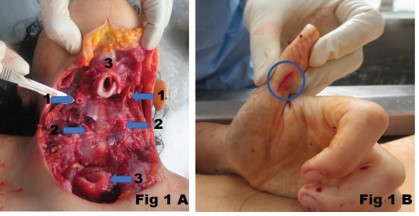
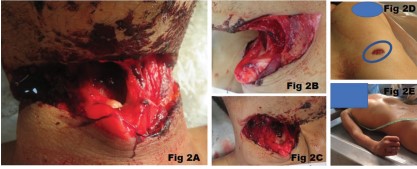
Dyadic death is a scenario of two persons dying in a series in a different manner, usually Homicide followed by suicide. Shooting, poisoning, and hanging are the methods used for committing dyadic death. Dyadic deaths by cutthroat methods are rarely reported in the literature due to the extremely painful and violent nature of the injury. The interpretations of cut-throat wounds and other incised wounds could fit into both homicide and suicide. Therefore, a thorough analysis ofthe crime scene is required for corroboration with post-mortem findings. A crime scene is a cluster of evidence like fingerprints, footprints, bloodstains, patterns, etc. The author’s report a case of Dyadic death involving cut-throat, stab and incised wounds. The authors intent to highlight the importance of correlating the crime scene findings, which unveiled the sequence of events thereby helping the investigating agency.
References
- 1. Lew EO. Homicidal hanging in a dyadic death. Am J Forensic Med Pathol. 1988;9(4):283-6.
- 2. Byard RW, Knight D, James RA, et al. Murdersuicides involving children. A 29-year study. Am J Forensic Med Pathol. 1999;20(4):323-7.
- 3. Jena S, Mountany L, Muller A. A demographic study of homicide-suicide in the Pretoria region over a 5 year period. J Forensic Legal Med. 2009;16:261-5.
- 4. Shiferaw K, Burkhardt S, Lardi C, Mangin P, La Harpe R. A half century retrospective study of homicide–suicide in Geneva–Switzerland: 1956– 2005. J Forensic Leg Med. 2010;17(2):62-6.
- 5. Prat S, Rérolle C, Saint-Martin P. Suicide pacts: six cases and literature review. J Forensic Sci.2013;58(4):1092-8.
- 6. Viero A, Giraudo C, Cecchetto G, Muscovich C, Favretto D, Puglisi M, Fais P, Viel G. An unusual case of “dyadic-death” with a single gunshot. Forensic Sci Int. 2014:244,e1–e5.
- 7. Aggrawal A. Injuries: Classification and Medicolegal Aspects. In: Textbook of Forensic Medicine and Toxicology. Avichal publishing company: New Delhi. 2014; p 209.
- 8. Avis SP, Hutton CJ. Dyadic suicide. A case study. Am J Forensic Med Pathol. 1994;15(1):18-20.
- 9. Liem M. Homicide followed by suicide: a review. Aggress Violent Beh. 2010;15:153-161.
- 10. Santoro JP, Dawood AW, Ayral G. The murdersuicide. A study of post-agressional suicide. Am J Forensic Med Pathol. 1985;6(3):222-5.
- 11. Chan CY, Beh SL, Broadhurst RG. Homicidesuicide in Hong Kong, 1989-1998. Forensic Sci Int. 2004;140:261-7.
- 12. Ateriya N, Saraf A, Kanchan T, Shekhawat RS. Dyadic death-an unusual case of post-mortem mutilation. J Forensic Sci. 2018;8(1):1-6.
- 13. Karger B, Niemeyer J, Brinkmann B. Suicides by sharp force: typical and atypical features. Int J Legal Med. 2000;113:259–62.
- 14. Chadly A, Marc B, Paraire F, Durigon M. Suicidal stab wounds of the throat. Med Sci Law. 1991;31(4):355–6.
- 15. Driever F, Schmidt P, Madea B. Differentiation between self-inflicted and homicidal stab wounds to the neck. Arch Kriminol. 2000;205:92–101.
- 16. Knight B and Saukko P.Self Inflicted injury. In: Knight’s forensic pathology, 4thed. London: CRC, 2016; p230–33.
- 17. Yadav A, Raheel MS, Kumar R L, Sharma SK, Kanwar H. Cut-throat wounds: Suicidal and homicidal—two case reports and review of literature. Med Sci Law. 2016;56(1):53-7.
- 18. Waghmare PB, Bhise SS, Nanandkar SD. Cut Throat Injury: Homicidal or Suicidal? Crime Scene Visit Solved the Mystery. IJHRLMP. 2016:2:138-40.
- 19. Reddy KSN. The essentials of forensic medicine and toxicology, 31sted. Hyderabad: K Suguna Devi, 2012; p179.
- 20. Rao NG. Textbook of forensic medicine and toxicology, 2nd ed. New Delhi: Jaypee Brother’s Medical Publishers Pvt Ltd, 2010; p.254.
- 21. Vij K. Textbook of forensic medicine and toxicology: Principles and practice, 5th ed. New Delhi: Elsevier, 2011; p226–227.
- 22. Mant K A. Taylor’s Principle and practice of medical jurisprudence, 13th ed. New Delhi: B I Churchill Livingstone,2000; p238.
- 23. Knight B and Saukko P. Incised wounds. In: Knight’s forensic pathology, 4th ed. London: CRC, 2016; p159.
- 24. Kumar SA, Kumar MS V, Babu YR, Prasad M. A case of “atypical homicidal” cut-throat injury. Med Leg J. 2016;84(3):156-8.
Data Sharing Statement
There are no additional data available. All raw data and code are available upon request.
Funding
This research received no funding.
Author Contributions
All authors contributed significantly to the work and approve its publication.
Ethics Declaration
This article does not involve any human or animal subjects, and therefore does not require ethics approval.
Acknowledgements
We would like to express our gratitude to the patients, their families, and all those who have contributed to this study.
Conflicts of Interest
No conflicts of interest in this work.
About this article

Cite this article
Karthi Vignesh Raj K, Abhishek Yadav, Varun Chandran A et al./Dyadic Death: Roles Unveiled/J Forensic Chemistry Toxicol. 2022;8(2):99–103.
Licence:
Attribution-Non-commercial 4.0 International (CC BY-NC 4.0)This license enables reusers to distribute, remix, adapt, and build upon the material in any medium or format for noncommercial purposes only, and only so long as attribution is given to the creator.
| Received | Accepted | Published |
|---|---|---|
| October 06, 2022 | December 07, 2022 | December 25, 2022 |
DOI: https://doi.org/10.21088/jfct.2454.9363.8222.10
Keywords
Murder-suicideDyadic deathHomicidal cut-throatCrime sceneDefense woundSearch for Similar Articles
Similar Articles
- Post Mortem Examination of COVID-19 Deceased and Collection Preservation of Spec...
- A Guide to Forensic Photography: An Indispensable Tool in Modern Forensic Medici...
- Evaluation of Total Carotenoids in Chilly: A Guide to Forensic Examination of Ch...
- "Masseur": A Therapist or Sexual Abuser?
- Sudden Death Due to 5-Fluorouracil-Induced Cardiotoxicity in a Case of Esophagea...
Article Level Metrics
Last UpdatedSaturday 17 October 2026, 11:49:38 (IST)
2002
Accesses
8
180
00
Citations
NA
NA
NA
Download citation
Article Keywords
Keyword Highlighting
Highlight selected keywords in the article text.
Timeline
| Received | October 06, 2022 |
| Accepted | December 07, 2022 |
| Published | December 25, 2022 |
licence
Attribution-Non-commercial 4.0 International (CC BY-NC 4.0)
This license enables reusers to distribute, remix, adapt, and build upon the material in any medium or format for noncommercial purposes only, and only so long as attribution is given to the creator.