Full Text (PDF)
Journal of Forensic Chemistry and Toxicology 8(1):p 21-27, January-June 2022. | DOI: https://doi.org/10.21088/jfct.2454.9363.8122.2
Original Article
Evaluation of Total Carotenoids in Chilly: A Guide to Forensic Examination of Chilly Powder by Spectrophotometry
Author Information
Licence:
Attribution-Non-commercial 4.0 International (CC BY-NC 4.0)This license enables reusers to distribute, remix, adapt, and build upon the material in any medium or format for noncommercial purposes only, and only so long as attribution is given to the creator.
Journal of Forensic Chemistry and Toxicology 8(1):p 21-27, January-June 2022. | DOI: https://doi.org/10.21088/jfct.2454.9363.8122.2
How Cite This Article:
A Visalakshi, G Jeyanthi/Evaluation of Total Carotenoids in Chilly: A Guide to Forensic Examination of Chilly Powder by Spectrophotometry/J Forensic Chemistry Toxicol. 2022;8(1): 21–27.Timeline
Received : December 16, 2021
Accepted : April 26, 2022
Published : June 25, 2022
Abstract
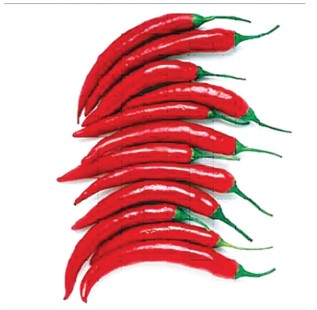
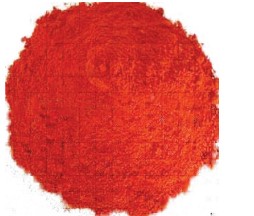
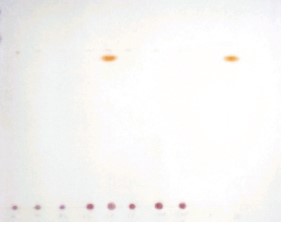
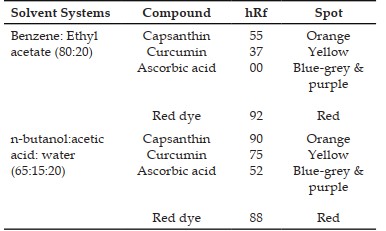
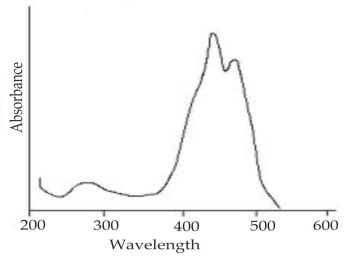
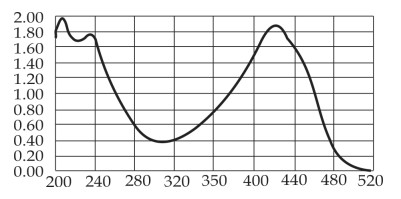
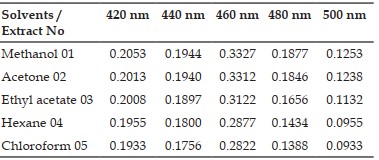
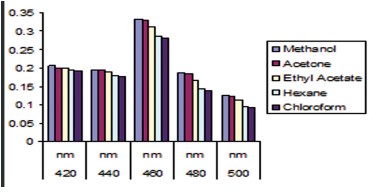
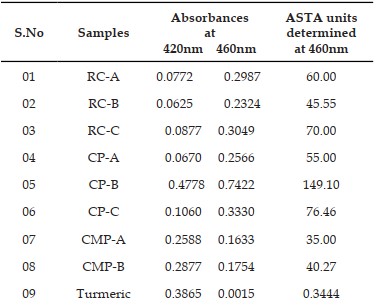
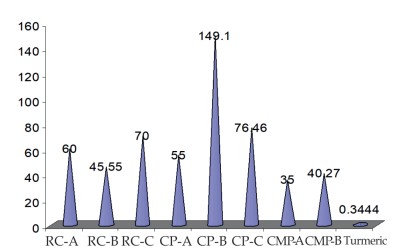
The frequent use of dried chilli powder in dacoity and murder cases is routine and quite common practice in criminology. The main active ingredient is “Capsaicin” a flavonoid which is highly pungent and causes lachrymatory effects. The next most important ingredient is “Capsanthin” a carotenoid which imparts colour to chilly (Capsicum). Capsicum is normally classified by its extractable colour and this important factor determines the quality of the final product. The extractable colour was determined by American Spice Trade Association (ASTA) which refers to the international standard for measuring the extractable colour by Spectrophotometry. Our study was carried out in three stages. Stage 1 involves the utility of various solvents namely methanol, acetone, hexane, chloroform and ethyl acetate and the contribution of these solvents for efficient pigment extraction was examined thoroughly and comparatively. Stage 2 involves the utility of ASTA method for the measurement of total extractable colour of Capsicum powder by UV-Vis Spectrophotometer. Stage 3 involves the identification of any added commercially available dyes by Thin Layer Chromatography and Spectrometry. Technical Application: The uniqueness of total extractable carotenoids property is made use of in this study and helps in connecting the crime with the criminal in murder and dacoit cases and also in trade mark violation cases of comparing questioned and standard brand samples and to find out the presence of adulterants such as commercially available dyes.
References
- 1. Jaffe, H.H. and Orchin, M.1962,”Theory and Applications of Ultraviolet Spectroscopy.”John Wiley and Sons, New York.
- 2. Brittion,G.1995,”UV/Visible Spectroscopy In Carotenoids”, Volume IB (G.Britton, S.Liaanen Jensen and H.Fander,eds.,) Brikhauser, Basel, Switzerland.
- 3. ASTA, 1985 Official Analytical Method of the American Spice Trade Association. Englewood Clifs,New Jersey.
- 4. Goodwin, T.W.(ed.,) 1988,” Plant Pigments” Acadenic Press,London.
- 5. KrishnamoorthyR,Malve M.K. and Shinde B.M. “Journal of Scientific & Industrial Research”,Vol.58. August 1999.
- 6. K.V. Peter, “Hand book of Herbs & Spices” volume 1.
- 7. David L.B.etzel, George haralambour, “Instrumental methods in food and beverage analysis” 1998.
- 8. K.John Scott, “Current protocols in Food Analytical chemistry” John wiley & Sons, Inc., 2001.
- 9. A.O.A.C.,2000. Official Methods of Analysis of the Association of Official Analytical chemists (17th edition) Association of Official Analytical Chemists, Arlington, Virginia, USA.
Data Sharing Statement
There are no additional data available. All raw data and code are available upon request.
Funding
This research received no funding.
Author Contributions
All authors contributed significantly to the work and approve its publication.
Ethics Declaration
This article does not involve any human or animal subjects, and therefore does not require ethics approval.
Acknowledgements
We would like to express our gratitude to the patients, their families, and all those who have contributed to this study.
Conflicts of Interest
No conflicts of interest in this work.
About this article

Cite this article
A Visalakshi, G Jeyanthi/Evaluation of Total Carotenoids in Chilly: A Guide to Forensic Examination of Chilly Powder by Spectrophotometry/J Forensic Chemistry Toxicol. 2022;8(1): 21–27.
Licence:
Attribution-Non-commercial 4.0 International (CC BY-NC 4.0)This license enables reusers to distribute, remix, adapt, and build upon the material in any medium or format for noncommercial purposes only, and only so long as attribution is given to the creator.
| Received | Accepted | Published |
|---|---|---|
| December 16, 2021 | April 26, 2022 | June 25, 2022 |
DOI: https://doi.org/10.21088/jfct.2454.9363.8122.2
Keywords
ASTAExtractable colourCarotenoidsSpectrometrySearch for Similar Articles
Similar Articles
- Post Mortem Examination of COVID-19 Deceased and Collection Preservation of Spec...
- A Guide to Forensic Photography: An Indispensable Tool in Modern Forensic Medici...
- "Masseur": A Therapist or Sexual Abuser?
- Sudden Death Due to 5-Fluorouracil-Induced Cardiotoxicity in a Case of Esophagea...
- Boerhaave Syndrome Masquerading as Sudden Death: A Virtual Autopsy Perspective
Article Level Metrics
Last UpdatedSaturday 17 October 2026, 09:42:47 (IST)
2002
Accesses
9
180
00
Citations
NA
NA
NA
Download citation
Article Keywords
Keyword Highlighting
Highlight selected keywords in the article text.
Timeline
| Received | December 16, 2021 |
| Accepted | April 26, 2022 |
| Published | June 25, 2022 |
licence
Attribution-Non-commercial 4.0 International (CC BY-NC 4.0)
This license enables reusers to distribute, remix, adapt, and build upon the material in any medium or format for noncommercial purposes only, and only so long as attribution is given to the creator.