Full Text (PDF)
Journal of Dermatology 10(2):p 65-70, July-December 2025. | DOI: 10.21088/jd.2582.3582 10225.4
Case Report
Delving into Wolf’s Isotopic Phenomenon: Tale of Two Cases of Psoriasis Localized to the site of Scars
Ujjwal Sanjay kumar Rathi, Vidya Kharkar, Vijay Deepak Joshi, Ketki Bhoite
Author Information
Licence:
Attribution-Non-commercial 4.0 International (CC BY-NC 4.0)This license enables reusers to distribute, remix, adapt, and build upon the material in any medium or format for noncommercial purposes only, and only so long as attribution is given to the creator.
Journal of Dermatology 10(2):p 65-70, July-December 2025. | DOI: 10.21088/jd.2582.3582 10225.4
How Cite This Article:
Rathi US, Kharkar V, Joshi V, et al. Delving into Wolf’s isotopic phenomenon: tale of two cases of psoriasis localized to the site of scars. RFP Jr of Drea. 2025;10(2):65-70.Timeline
Received : May 21, 2025
Accepted : July 21, 2025
Published : December 24, 2025
Abstract
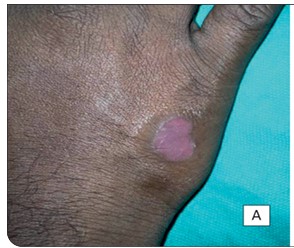
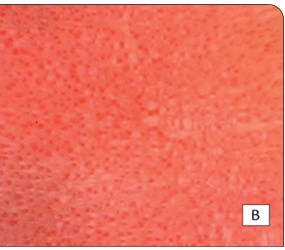
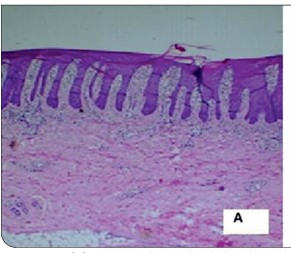
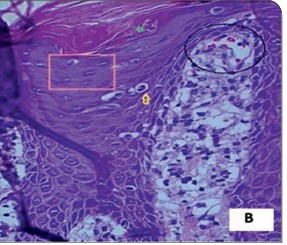
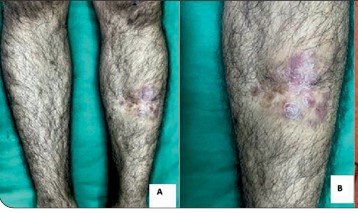
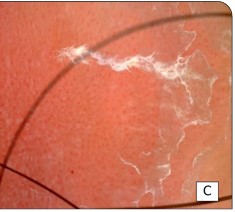
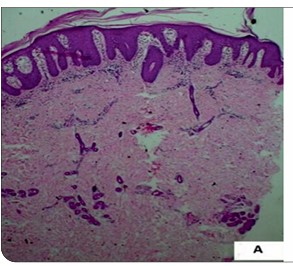
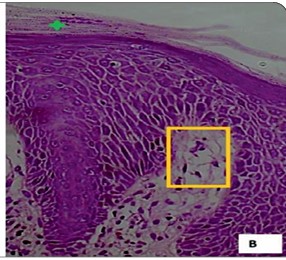
Wolf’s isotopic response refers to the occurrence of a new dermatosis at the site of a previously healed and unrelated skin condition. While commonly associated with viral triggers such as herpes simplex or zoster, non-viral initiators are rarely reported. We present two unique cases of psoriasis developing exclusively at sites of old scars from non-viral causes. The first case involved a 33-year-old male who developed a psoriatic plaque over a thermal burn scar on the dorsum of the hand. The second case featured a 28-year-old male with psoriatic lesions localized to an atrophic scar following a traumatic injury to the shin. Both cases lacked involvement of other body areas. Diagnosis was confirmed by clinical features, dermoscopy, and histopathology. These cases highlight an atypical presentation of Wolf’s isotopic phenomenon and underscore the potential role of localized immune dysregulation and scar-mediated vulnerability in the development of secondary dermatoses.
References
- 1. Mahajan R, De D, Saikia UN. Wolf’s Isotopic Response: Report of a Case and Review of Literature. Indian J Dermatol. 2014 May;59(3):275-82. doi: 10.4103/0019 5154.131401. PMID: 24891660; PMCID: PMC4037950.
- 2. Ruocco V, Ruocco E, Ghersetich I, Bianchi B, Lotti T. Isotopic response after herpesvirus infection: an update. J Am Acad Dermatol 2002; 46: 90–94.
- 3. Wyburn-Mason R. Malignant change arising in tissues affected by herpes. BMJ. 1955;2:1106–9. doi: 10.1136/bmj.2.4948.1106.
- 4. Wolf R, Wolf D. Tinea in a site of healed herpes zoster (isoloci Response) Int J Dermatol. 1985;24:539. doi: 10.1111/j.1365-4362.1985. tb05844.x. 5. Wolf R, Brenner S, Ruocco V, Filioli FG. Isotopic response. Int J Dermatol. 1995;34:341–8. doi: 10.1111/j.1365-4362.1995.tb03616.x.
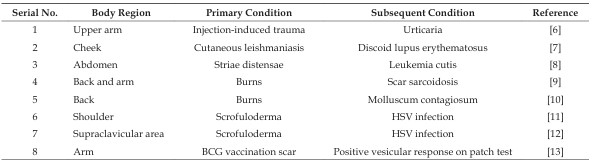
- 6. Fröhlich S, Geidel C, Lauener R, Ring J, Möhrenschlager M. Chronic relapsing urticaria confined to injection sites of upper arms. Pediatr Dermatol. 2012;29:663–5. doi: 10.1111/j.1525-1470.2011.01511.x.
- 7. Bardazzi F, Giacomini F, Savoia F, Misciali C, Patrizi A. Discoid chronic lupus erythematosus at the site of a previously healed cutaneous leishmaniasis: An example of isotopic response. Dermatol Ther. 2010;23:S44–6. doi: 10.1111/j.1529-8019.2010.01300.x.
- 8. Liu CI, Hsu CH. Leukaemia cutis at the site of striae distensae: An isotopic response? Acta Derm Venereol. 2010;90:422–3. doi: 10.2340/00015555-0858.
- 9. Sardana K, Relhan V, Sehgal VN, Garg VK, Kochhar AM. Occurrence of acne comedones over healed linear scar of herpes zoster: A neurogenic perception. J Eur Acad Dermatol Venereol. 2007;21:431–2. doi: 10.1111/j.1468 3083.2006.01932.x.
- 10. Karakass M, Durdu M, Ozbilen A. Molluscum contagiosum on region of burned skin: Wolf’s isotopic response. J Eur Acad Dermatol Venereol. 2006;20:1014–6. doi: 10.1111/j.1468 3083.2006.01608.x.
- 11. Sharma RC, Sharma NL, Mahajan V, sharma AK. Wolf’s isotopic response: Herpes simplex appearing on scrofuloderma scar. Int J Dermatol. 2003;42:664–6. doi: 10.1046/j.1365 4362.2003.01570.x.
- 12. Bell HK, King CM. An isotopic response to patch testing. Contact Dermatitis. 2003;49:171 2. doi: 10.1111/j.0105-1873.2003.0185o.x.
- 13. Sanli H, Anadolu R, Arat M, Ekmekci P, Birol A, Erdem C, et al. Dermatomal lichenoid graft-versus-host disease within herpes zoster scars. Int J Dermatol. 2003;42:562–4. doi: 10.1046/j.1365-4362.2003.01723_2.x.
- 14. Rode H. Burn injuries in pediatric patients. J Healthcare Professionals 2001; 43: 6-14.
- 15. Thappa D. Isotopic response versus isomorphic response. Indian J Dermatol Venereol Leprol 2004;70:376
Data Sharing Statement
There are no additional data available.
Funding
This research received no funding.
Author Contributions
All authors contributed significantly to the work and approve its publication.
Ethics Declaration
This article does not involve any human or animal subjects, and therefore does not require ethics approval.
Acknowledgements
Information Not Provided
About this article

Cite this article
Rathi US, Kharkar V, Joshi V, et al. Delving into Wolf’s isotopic phenomenon: tale of two cases of psoriasis localized to the site of scars. RFP Jr of Drea. 2025;10(2):65-70.
Licence:
Attribution-Non-commercial 4.0 International (CC BY-NC 4.0)This license enables reusers to distribute, remix, adapt, and build upon the material in any medium or format for noncommercial purposes only, and only so long as attribution is given to the creator.
| Received | Accepted | Published |
|---|---|---|
| May 21, 2025 | July 21, 2025 | December 24, 2025 |
DOI: 10.21088/jd.2582.3582 10225.4
Keywords
Wolf’s Isotopic ResponsePsoriasis • Burn ScarPost-Traumatic ScarLocus Minoris ResistentiaeNon-Viral Primary Dermatosis Isotopic PhenomenonScar-Associated DermatosisSearch for Similar Articles
Similar Articles
- Role of Topical Cholecalciferol Granules in the Recovery and Management of Therm...
- Chitosan Liquid Wound Dressing in the Use of Deep Scald Burns
- Role of Biocellulose Occlusive Dressing in Partial Thickness Burn Wound Manageme...
- Artificial Intelligence in the Digital Transformation of Dermatology: Current E...
- Artificial Intelligence in Dermatology in India: A PRISMA-Compliant Systematic...
Article Level Metrics
Last UpdatedSaturday 05 September 2026, 22:04:52 (IST)
1128
Accesses
12
109
00
Citations
NA
NA
NA
Download citation
Article Keywords
Keyword Highlighting
Highlight selected keywords in the article text.
Timeline
| Received | May 21, 2025 |
| Accepted | July 21, 2025 |
| Published | December 24, 2025 |
licence
Attribution-Non-commercial 4.0 International (CC BY-NC 4.0)
This license enables reusers to distribute, remix, adapt, and build upon the material in any medium or format for noncommercial purposes only, and only so long as attribution is given to the creator.