Full Text (PDF)
New Indian Journal of Surgery 13(1):p 21-26, January_March 2022. | DOI: https://doi.org/10.21088/nijs.0976.4747.13122.3
Original Article
Current Trends in the Management of Lower Limb Amputations
Anchita Bhattacharya, Sushanth PT, Padmanabh Bhat
Author Information
Licence:
Attribution-Non-commercial 4.0 International (CC BY-NC 4.0)This license enables reusers to distribute, remix, adapt, and build upon the material in any medium or format for noncommercial purposes only, and only so long as attribution is given to the creator.
New Indian Journal of Surgery 13(1):p 21-26, January_March 2022. | DOI: https://doi.org/10.21088/nijs.0976.4747.13122.3
How Cite This Article:
Sushanth PT, Anchita Bhattacharya, Padmanabh Bhat/Current Trends in the Management of Lower Limb Amputations/New Indian J Surg. 2022;13(1): 21–26.Timeline
Received : November 15, 2021
Accepted : January 11, 2022
Published : March 30, 2022
Abstract
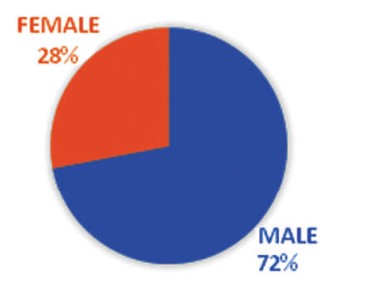
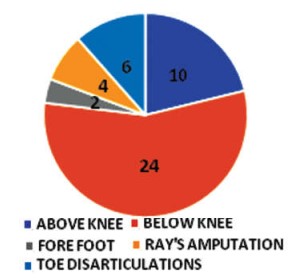
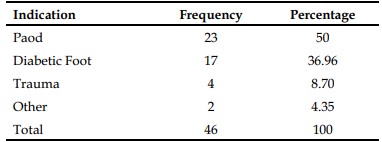
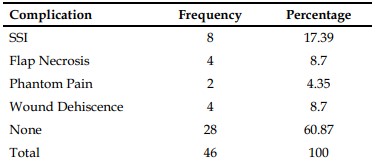
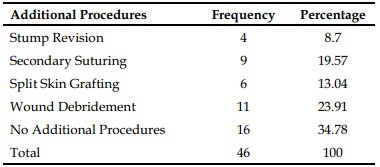
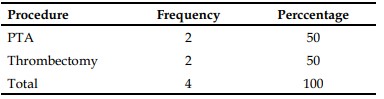
Background: Lower limb amputation is a major but preventable public health problem in a developing nation such as India. It is a burden for the patients as well as their families not only economically but also socially and psychologically. The duration of treatment lasts from a few days to several months and depends on the extent of disease, level of amputation and patient’s comorbid status. The purpose of this study is to outline the demographics, various indications and the complications of lower limb amputations, the newer interventions in the management of lower limb amputations and to evaluate our experience in managing such patients presenting at a tertiary care hospital in South India. Methodology: This is a prospective study done between the period of December 2019 and December 2020 at Sapthagiri Medical College and Research Centre, Bengaluru, Karnataka, India. All patients undergoing lower limb amputation during this time period were included in the study. Results: A total of 50 patients were included into the study. Majority of the patients were males (72%). The most common indication for major limb amputation is peripheral arterial occlusive disease (PAOD) 50% and Diabetic foot in 36.96%. Below knee amputation was the most common procedure performed in 52.17%. The most common additional procedures performed were wound debridement in 23.91%, secondary suturing in 19.57%. Revision amputation rate was 8.7%. Post-operative complication rate was 39.13% and surgical site infection was the most common complication accounting for 17.39%. 8% of the patients underwent vascular interventions which prevented major limb loss. Conclusion: Diabetic foot and PAOD of lower limbs that progressed to gangrene are the most common indications for lower limb amputations, majority of which can be prevented by health education and early presentation. Appropriate management by applying newer trends such as vascular intervention can help in reducing morbidity.
References
- 1. Van der Meij W: K N: No leg to stand on. Historical relation between amputations. Surgery and Prostheseology 1995, 1:1–256.
- 2. Paudel B, Shrestha BK, Banskota AK: Two faces of major lower limb amputations. Kathmandu University Medical Journal 2005, 3(11):212– 216.
- 3. Chalya PL, Mabula JB, Dass RM, Ngayomela IH, Chandika AB, Mbelenge N, Gilyoma JM. Major limb amputations: A tertiary hospital experience in northwestern Tanzania. J orthopaedic surgery and research. 2012;7(1):18
- 4. Mohan D. A report on amputees in India. Orthot Prosthet 1986;40:16-32.
- 5. Sahu A, Sagar R, Sarkar S, Sagar S. Psychological effects of amputation: A review of studies from India. Industrial psychiatry journal. 2016 Jan;25(1):4.
- 6. Akiode O, Shonubi AO, Musa A, Sule G. Major limb amputations: an audit of indications in a suburban surgical practice. J National Medical Association. 2005;97(1):74.
- 7. Unwin N. Epidemiology of lower extremity amputation in centres in Europe, North America and East Asia. British J Surgery. 2000;87(3):328-37.
- 8. Heikkinen M, Saarinen J, Suominen VP, Virkkunen J, Salenius J. Lower limb amputations: differences between the genders and long-term survival. Prosthetics and orthotics international. 2007;31(3):277-86.
- 9. Moxey PW, Hofman D, Hinchliffe RJ, Jones K, Thompson MM, Holt PJ. Epidemiological study of lower limb amputation in England between 2003 and 2008. British J Surgery. 2010;97(9):1348-53.
- 10. Unnikrishnan EP, Rollands R, Parambil SM. Epidemiology of major limb amputations: a cross sectional study from a South Indian tertiary care hospital. International Surgery Journal. 2017 Apr 22;4(5):1642-6.
- 11. Essoh JB, Bamba I, Dje Bi Dje V, Traore A, Lambin Y: Limb amputations in adults in an Ivorian Teaching Hospital. Niger J Ortho & Trauma 2007, 6(2):61–63.
- 12. Nwankwo OE, Katchy AU: Surgical limb amputation: a fiveyear experience at Hilltop orthopaedic hospital Enugu, Nigeria. Nig J Orthop Trauma 2004, 3:139–149.
- 13. Onuminya JE, Obekpa PO, Ihezue HC, Ukegbu ND, Onabowale BO: Major amputations in Nigeria: a plea to educate traditional bonesetters. Trop Doct 2000, 30:133–135.
- 14. Yinusa W, Ugbeye ME: Problems of amputation surgery in developing country. Int Orthop 2003, 27:121–124.
- 15. Hiramoto JS, Teraa M, de Borst GJ, Conte MS. Interventions for lower extremity peripheral artery disease. Nature Reviews Cardiology. 2018 Jun;15(6):332-50.
- 16. Metts R. Disability issues, trends and recommendations for the World Bank. Washington, DC: World Bank; 2000.
- 17. Census of India. Disabled population by type of disability, age, sex and type. New Delhi: Registrar General Office; 2001.
- 18. Pooja GD, Sangeeta L. Prevalence and aetiology of amputation in Kolkata, India: a retrospective analysis. Hong Kong Physiotherapy Journal. 2013 Jun 1;31(1):36-40.
- 19. Jenyo MS, Diya KS, Olakulehin OA: Limb amputations in Osogbo, Nigeria. Afr J Trauma 2004, 2:80–82.
- 20. Solagberu BA: The scope of amputations in a Nigerian teaching hospital. Afr J Med Med Sci 2001, 30:225–227.
- 21. Kidmas AT, Nwadiaro CH, Igun GO: Lower limb amputation in Jos, Nigeria. East Afr Med J 2004, 81:427–429.
- 22. Masood J, Irfan A, Ghulam M: Current indications for major lower limb amputation. Pakistan J. Surg 2008, 24(4):228–231
- 23. Abbas AD, Musa AM: Changing pattern for extremity amputations in University of Maiduguri Teaching Hospital, Nigeria. J.R. Coll Surg Edinb 1996, 41(2):102–4.
- 24. Umaru RH, Gali BM, Ali N: Role of inappropriate traditional splintage in limb amputation in Maiduguri, Nigeria. Annals of African Medicine 2004, 3(3):138–140.
- 25. Hazmy W, Mahamud M, Ashikin N: Major limb amputations in Seremban Hospital: a review of 204 cases from 1997–1999. Med J Malaysia 2001, 56:3–7.
- 26. Naaeder SB: Amputation of the lower limb in Korle-Bu Teaching hospital, Accra. West Afr J Med 1993, 12:21–26
- 27. Awori KO, Ating’a JE: Lower limb amputation at the Kenyatta National Hospital, Nairobi. East Afr. Med J 2007, 84(3):121–6.
- 28. Ofiaeli RO: Indication’s level and outcome of lower extremity amputations in Nnewi, Nigeria. Journal of Medical Investigation and Practice 2001, 2:18–21.
- 29. International Institute for Population Sciences (IIPS), Ministry of Health and Family Welfare (MoHFW), Government of India Global Adult Tobacco Survey India report (GATS India), 2019– 20. New Delhi: MoHFW, Government of India; Mumbai: IIPS
- 30. Yusof MI, Sulaiman AR, Muslim DA: Diabetic foot complications: a twoyear review of limb amputation in a Kelantanese population. Singapore Med J 2007, 48(8):729–732
- 31. Nwadiaro HC, Obekpa PO, Kidmas AT, Deshi PJ: Amplitudes of amputation. Nig J.Surg Sci 2000, 10:44–48.
- 32. Holcombe C, Hassan S: Major limb amputation in northern Nigeria. Brit J. Surg 1991, 78:885–886.
- 33. Kim J, Chun DI, Kim S, Yang HJ, Kim JH, Cho JH, Yi Y, Kim WJ, Won SH. Trends in lower limb amputation in patients with diabetic foot based on vascular intervention of peripheral arterial disease in Korea: a population-based nationwide study. Journal of Korean medical science. 2019 Jul 8;34(26).
Data Sharing Statement
There are no additional data available. All raw data and code are available upon request.
Funding
This research received no funding.
Author Contributions
All authors contributed significantly to the work and approve its publication.
Ethics Declaration
This article does not involve any human or animal subjects, and therefore does not require ethics approval.
Acknowledgements
We would like to express our gratitude to the patients, their families, and all those who have contributed to this study.
Conflicts of Interest
No conflicts of interest in this work.
About this article

Cite this article
Sushanth PT, Anchita Bhattacharya, Padmanabh Bhat/Current Trends in the Management of Lower Limb Amputations/New Indian J Surg. 2022;13(1): 21–26.
Licence:
Attribution-Non-commercial 4.0 International (CC BY-NC 4.0)This license enables reusers to distribute, remix, adapt, and build upon the material in any medium or format for noncommercial purposes only, and only so long as attribution is given to the creator.
| Received | Accepted | Published |
|---|---|---|
| November 15, 2021 | January 11, 2022 | March 30, 2022 |
DOI: https://doi.org/10.21088/nijs.0976.4747.13122.3
Keywords
Lower LimbComorbid StatusVascular InterventionDiabetic FootSearch for Similar Articles
Similar Articles
- Role of Bates-Jenson Wound Assessment Tool (BJWAT) in Wound Management
- Role of New Antimicrobial Solution in the Management of a Chronic Left Foot Woun...
- Laparoscopic Excision of a Giant Retroperitoneal Benign Mesenteric Cyst Encasing...
- Endoscopic-Assisted Sural Nerve and Biceps Femoris Muscle Biopsy in a Young Woma...
- Amniotic Membrane in Wound Healing: Biological Basis, Clinical Evidence and Futu...
Article Level Metrics
Last UpdatedTuesday 24 November 2026, 13:40:08 (IST)
9659
Accesses
6
883
00
Citations
NA
NA
NA
Download citation
Article Keywords
Keyword Highlighting
Highlight selected keywords in the article text.
Timeline
| Received | November 15, 2021 |
| Accepted | January 11, 2022 |
| Published | March 30, 2022 |
licence
Attribution-Non-commercial 4.0 International (CC BY-NC 4.0)
This license enables reusers to distribute, remix, adapt, and build upon the material in any medium or format for noncommercial purposes only, and only so long as attribution is given to the creator.