Full Text (PDF)
Journal of Emergency and Trauma Nursing 3(1):p 17-21, January-June 2022. | DOI: NA
Original Article
Cross Sectional Study to Assess the Types of Domestic Violence and its Coping Strategies
Bayagalla Rajitha, GNK Parameswari
Author Information
Licence:
Attribution-Non-commercial 4.0 International (CC BY-NC 4.0)This license enables reusers to distribute, remix, adapt, and build upon the material in any medium or format for noncommercial purposes only, and only so long as attribution is given to the creator.
Journal of Emergency and Trauma Nursing 3(1):p 17-21, January-June 2022. | DOI: NA
How Cite This Article:
GNK Parameswari, Bayagalla Rajitha/Cross Sectional Study to Assess the Types of Domestic Violence and its Coping Strategies/Journal of Emergency and Trauma Nursing. 2022;3(1):17–21.Timeline
Received : February 24, 2022
Accepted : March 28, 2022
Published : June 25, 2022
Abstract
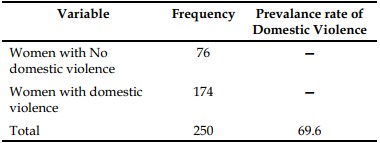
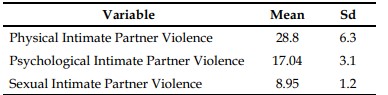
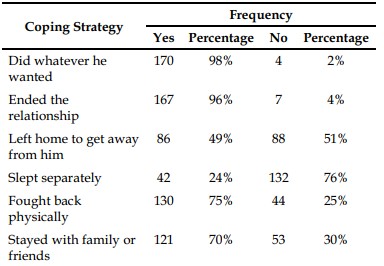
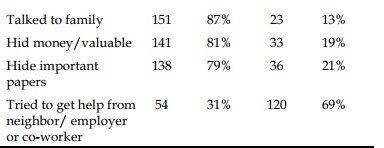
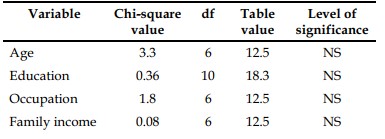
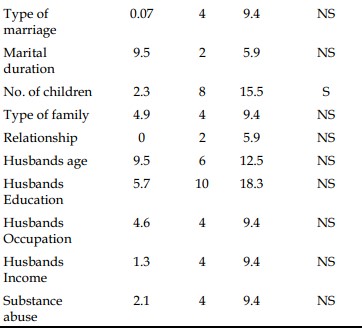
Aims: (1)To assess the prevalence and types of domestic violence in married women. (2) To assess the coping strategies used by married women. (3) To seek association between types of domestic violence and selected demographic variables. (4) To conduct an awareness programme on domestic violence. Settings and Design: Pulkal Village, Sangareddy and a descriptive design (Cross sectional study). Methods and Material: Multilayer Purposive sampling Technique was used all the married women in the respected Villages has been assessed using HITS scale (Hurt, Insult, Torture and Scolding)and the women showed mild, moderate and severe Domestic violence has been selected and give a structured tool of types of domestic violence and coping strategy. Statistical analysis used: Descriptive and inferential statistics. Results: Screening for prevalence of domestic violence has been done among the 250 married women at pulkal village using HITS Likert scale among them 174 (69.6%) married women is facing some form of domestic violence among them physical violence ranked 1 with the modified mean of 2.8, followed by psychological violence stands in 2nd rank with the modified mean of 2.05 and 3rd rank goes to sexual violence with the modified mean of 2. The majority of married women 98% coped up from domestic violence by doing whatever their husband wanted them to do. but 4 ie 2% didn’t do it and the least number of married women i.e. 24% of married women coped up from domestic violence by sleeping separately still 76% of married women did not follow it. The calculated chi square values of selected demographic variables like age, education, occupation, family income, type of marriage, marital duration, type of family, relationship, relationship, husband age, husbands education, husbands occupation, husbands income and substance abuse were less than the table values at the probability level of 0.05, which shows there was no significant association between demographic variables and levels of domestic violence. The computed chi square value for number of children was greater than the table value which shows significant association. The researcher had conducted the awareness programme on domestic violence to the married women with the age group of 18-60 years. Conclusions: —Majority of the married women have faced severe form of physical violence. — Among 250 married women, 174(69.6%) married women faced some form of domestic violence. —The study also showed that there was significant association between number of children and domestic violence among married women. — Based on pre planned activity for conducting awareness programme on coping strategies of domestic violence was provided to married women. Key Messages: Among 250 married women, 174(69.6%) married women faced some form of domestic violence.
References
- 1. Archer, J. 1991 The influence of testosterone on human aggression. British Journal of Psychology 82:1-28.
- 2. Crowe, L.C., and W.H. George 1989 Alcohol and human sexuality: Review and integration. Psychological Bulletin 105:374-386.
- 3. Daly, M., and M. Wilson 1988 Evolutionary social psychology and family homicide. Science 242:519-524.
- 4. Darke, J.L. 1990 Sexual aggression: Achieving power through humiliation. Pp. 55-72 in W.L. Marshall, D.R. Laws, and H.E. Barbaree, eds., Handbook of Sexual Assault: Issues, Theories, and Treatment of the Offender. New York: Plenum Press.
Data Sharing Statement
There are no additional data available. All raw data and code are available upon request.
Funding
This research received no funding.
Author Contributions
All authors contributed significantly to the work and approve its publication.
Ethics Declaration
This article does not involve any human or animal subjects, and therefore does not require ethics approval.
Acknowledgements
We would like to express our gratitude to the patients, their families, and all those who have contributed to this study.
Conflicts of Interest
No conflicts of interest in this work.
About this article

Cite this article
GNK Parameswari, Bayagalla Rajitha/Cross Sectional Study to Assess the Types of Domestic Violence and its Coping Strategies/Journal of Emergency and Trauma Nursing. 2022;3(1):17–21.
Licence:
Attribution-Non-commercial 4.0 International (CC BY-NC 4.0)This license enables reusers to distribute, remix, adapt, and build upon the material in any medium or format for noncommercial purposes only, and only so long as attribution is given to the creator.
| Received | Accepted | Published |
|---|---|---|
| February 24, 2022 | March 28, 2022 | June 25, 2022 |
DOI: NA
Keywords
Awareness booklet was prepared for the women suffering with domestic violenceSearch for Similar Articles
Similar Articles
- Transfusion-Related Acute Lung Injury: Trali
- Fall Risk Assessment and Management: Nursing Role and Responsibilities
- A Study to assess the Effectiveness of a Structured Teaching Programme on Knowle...
- Non-randomized Control Trial to assess the Effectiveness of Structured Teaching...
- Peripheral Nerve Damage: Local “Pehalwan” or Injection Induced? The Challenge
Article Level Metrics
Last UpdatedSunday 27 September 2026, 13:38:11 (IST)
1029
Accesses
8
206
00
Citations
NA
NA
NA
Download citation
Article Keywords
Keyword Highlighting
Highlight selected keywords in the article text.
Timeline
| Received | February 24, 2022 |
| Accepted | March 28, 2022 |
| Published | June 25, 2022 |
licence
Attribution-Non-commercial 4.0 International (CC BY-NC 4.0)
This license enables reusers to distribute, remix, adapt, and build upon the material in any medium or format for noncommercial purposes only, and only so long as attribution is given to the creator.