Full Text (PDF)
Indian Journal of Dental Education 18(2):p 53-59, May. Aug 2025. | DOI: https://doi.org/10.21088/ijde.0974.6099.18225.2
Original Article
Correlation of Salivary Malondialdehyde (MDA) and 8-Hydroxydeoxyguanosine (8-OHdG) in Residual Ridge Resorption in Completely Edentulous Diabetic and Non Diabetic Patients
Disha Bhandari, Pankaj Datta, Karvika Nayak, Rajani Mamadapur, Nupur Chaudhary
Author Information
Licence:
Attribution-Non-commercial 4.0 International (CC BY-NC 4.0)This license enables reusers to distribute, remix, adapt, and build upon the material in any medium or format for noncommercial purposes only, and only so long as attribution is given to the creator.
Indian Journal of Dental Education 18(2):p 53-59, May. Aug 2025. | DOI: https://doi.org/10.21088/ijde.0974.6099.18225.2
How Cite This Article:
Disha Bhandari, Pankaj Datta, Karvika Nayak et. al, Correlation of Salivary Malondialdehyde (MDA) and 8-Hydroxy deoxyguanosine (8-OHdG) in Residual Ridge Resorption in Completely Edentulous Diabetic and Non Diabetic Patients. Ind J Dent Educ. 2025; 18(2): 53-59.Timeline
Received : May 30, 2025
Accepted : July 11, 2025
Published : August 15, 2025
Abstract
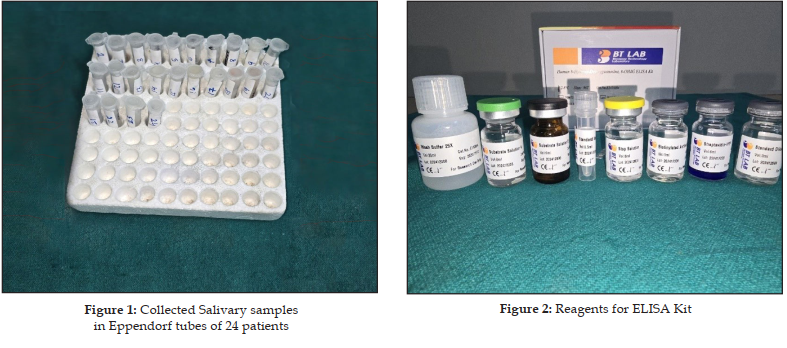
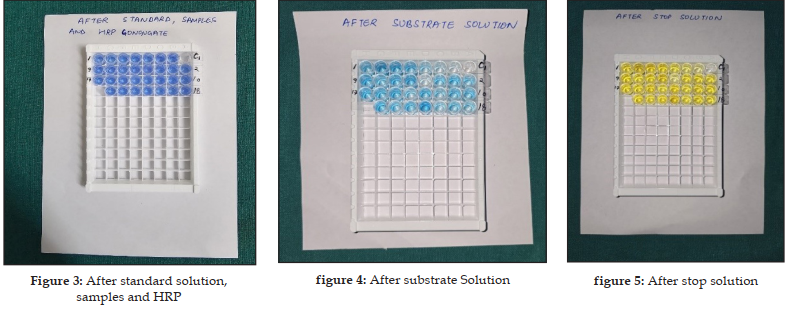
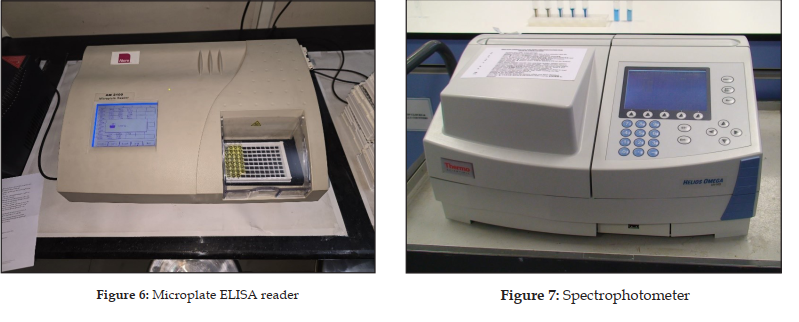
Aim: The aim of this study is to correlate the salivary Malondialdehyde (MDA) and 8-Hydroxy-deoxyguanosine (8-OHdG) in residual ridge resorption in completely edentulous diabetic patients. Materials and Method: The study included completely edentulous diabetic and non-diabetic patients, selected based on specific inclusion/exclusion criteria. A total of 48 saliva samples were collected from 24 participants. Saliva was collected under standardized conditions and analyzed for oxidative stress markers Malondialdehyde (MDA) using spectrophotometry and 8-hydroxydeoxyguanosine (8-OHdG) using ELISA. Residual ridge resorption was assessed radiographically using orthopantomograms and categorized per ADA (1999) criteria. Statistical analyses, including Pearson’s correlation and regression models, were employed to evaluate the relationship between oxidative stress markers and resorption severity. Ethical approval and informed consent were obtained. Statistical Analysis and Results: 48 saliva samples from diabetic and nondiabetic edentulous patients (n=24 per group). Biomarkers MDA and 8-OHdG were measured using spectrophotometry and ELISA, respectively. Statistical analysis (SPSS v23.0) included parametric and non-parametric tests based on data distribution, with significance set at p<0.05. Results showed higher mean absorbance levels of MDA and 8-OHdG in nondiabetics compared to diabetics, though differences were not statistically significant. A positive correlation between MDA and 8-OHdG indicated a link between lipid peroxidation and oxidative DNA damage. These findings suggest elevated oxidative stress markers in non-diabetics, potentially reflecting adaptive metabolic responses in diabetics. Conclusion: within the limitations of the study, Significant role of oxidative stress in residual ridge resorption (RRR), as evidenced by elevated levels of salivary biomarkers MDA and 8-OHdG in edentulous patients. Non-diabetic individuals exhibited higher levels of both biomarkers, suggesting variability in oxidative stress responses, possibly due to adaptive mechanisms in diabetic patients. A strong positive correlation between MDA and 8-OHdG further supports their reliability as salivary indicators for assessing the severity of RRR.
References
- 1. Klemetti E. A review of residual ridge resorption and bone density. The Journal of prosthetic dentistry. 1996 May 1;75(5):512-4.
- 2. Tallgren A. Changes in adult face height due to ageing, wear and loss of teeth and prosthetic treatment. Acta odontol scand. 1957;15(24): 1-22.
- 3. Bergman BO, Carlsson GE. Clinical long-term study of complete denture wearers. Journal of Prosthetic Dentistry. 1985 Jan 1;53(1):56-61.
- 4. Pudi S, Gade RR, Vudi S, Bn VK, Thota SS, VUDI S. Assessment of Salivary Malondialdehyde and Superoxide Dismutase Levels in Completely Edentulous Patients: An In Vivo Study. Cureus. 2022 Aug 12;14(8).
- 5. Zhang YB, Zhong ZM, Hou G, Jiang H, Chen JT. Involvement of oxidative stress in agerelated bone loss. J Surg Res 2011;169(1):37-42.
- 6. Lima CL, Acevedo AC, Grisi DC, Taba M Jr, Guerra E, De Luca Canto G. Host-derived salivary biomarkers in diagnosing periodontal disease: systematic review and meta-analysis. J Clin Periodontol 2016;43(6):492–502.
- 7. Alsaggaf A, Fenlon MR. A case control study to investigate the effects of denture wear on residual alveolar ridge resorption in edentulous patients. Journal of dentistry. 2020;98:103373.
- 8. Paredes-Sánchez E, José María MontielCompany, Iranzo-Cortés JE, Almerich-Torres T, Bellot-Arcís C, Almerich-Silla JM. Metaanalysis of the use of 8-OHdG in saliva as a marker of periodontal disease. Dis Markers 2018;2018:1–9.
- 9. Srivastava A, Raghav P, Pradhan S. Effectiveness of orthopantomograph in vertical mandibular measurements: A systematic review. J Oral Maxillofac Radiol 2021;9(2):45–51.
- 10. Chandimali N, Bak SG, Park EH, Lim H-J, Won Y-S, Kim E-K, et al. Free radicals and their impact on health and antioxidant defenses: a review. Cell Death Discov 2025;11(1):19.
- 11. Chang CH, Lee CY, Feng SW, Miao NF, Lin PH, Lin CT, Tsai SH, Huang YK. Effects of salivary oxidative markers on edentulous patients’ satisfaction with prosthetic denture treatments: a pilot study. PloS one. 2016;11(3):0151605.
- 12. Nguyen TT, Ngo LQ, Promsudthi A, Surarit R. Salivary lipid peroxidation in patients with generalized chronic periodontitis and acute coronary syndrome. J Periodontol 2016;87(2):134–41.
- 13. Ozkan Karasu Y, Maden O, CanakcI CF. Oxidative damage biomarkers and antioxidant enzymes in saliva of patients with peri-implant diseases. Int J Implant Dent 2024;10(1):43.
- 14. Totan A, Miricescu D, Parlatescu I, Mohora M, Greabu M. Possible salivary and serum biomarkers for oral lichen planus. Biotech Histochem 2015;90(7):552–8.
- 15. Nguyen TT, Ngo LQ, Promsudthi A, Surarit R. Salivary lipid peroxidation in patients with generalized chronic periodontitis and acute coronary syndrome. J Periodontol 2016;87(2):134–41.
- 16. Shigenaga MK, Ames BN. Assays for 8-hydroxy-2’-deoxyguanosine: a biomarker of in vivo oxidative DNA damage. Free Radic Biol Med 1991;10(3–4):211–6.
- 17. Islayem D, Fakih FB, Lee S. Comparison of colorimetric methods to detect malondialdehyde, A biomarker of reactive oxygen species. ChemistrySelect 2022;7(11).
- 18. Li X-Y, Chow CK. An improved method for the measurement of malondialdehyde in biological samples. Lipids 1994;29(1):73–5.
- 19. Marques-Carvalho A, Kim H-N, Almeida M. The role of reactive oxygen species in bone cell physiology and pathophysiology. Bone Rep 2023;19(101664):101664.
- 20. Spoto B, Politi C, Pizzini P, Parlongo RM, Testa A, Mobrici M, et al. 8-hydroxy-2’- deoxyguanosine, a biomarker of oxidative DNA injury, in diabetic kidney disease. Nutr Metab Cardiovasc Dis 2025;35(2):103722.
- 21. Kondo T, Kanayama K, Egusa H, Nishimura I. Current perspectives of residual ridge resorption: pathological activation of oral barrier osteoclasts. J Prosthodont Res 2023;67(1):12-22.
- 22. Veljovic T, Duric M, Gusic I, Mirnic J, Cakic S, Maletin A, et al. The influence of periodontal disease treatment on 8-hydroxydeoxyguanosine concentrations in saliva and plasma of chronic periodontitis patients. Acta Clin Croat 2020;59(4):615–22.
- 23. Kaur J, Politis C, Jacobs R. Salivary 8-hydroxy- 2-deoxyguanosine, malondialdehyde, vitamin C, and vitamin E in oral pre-cancer and cancer: diagnostic value and free radical mechanism of action. Clin Oral Investig 2016;20(2):315–9.
- 24. Khurshid Z, Zafar MS, Khan RS, Najeeb S, Slowey PD, Rehman IU. Role of salivary biomarkers in oral cancer detection. Adv Clin Chem 2018;86:23–70.
- 25. Zygula A, Kosinski P, Zwierzchowska A, Sochacka M, Wroczynski P, MakarewiczWujec M, et al. Oxidative stress markers in saliva and plasma differ between dietcontrolled and insulin-controlled gestational diabetes mellitus. Diabetes Res Clin Pract 2019;148:72–80.
Data Sharing Statement
There are no additional data available.
Funding
This research received no funding.
Author Contributions
All authors contributed significantly to the work and approve its publication.
Ethics Declaration
This article does not involve any human or animal subjects, and therefore does not require ethics approval.
Acknowledgements
Information not provide.
Conflicts of Interest
The authors report no conflicts of interest in this work.
About this article

Cite this article
Disha Bhandari, Pankaj Datta, Karvika Nayak et. al, Correlation of Salivary Malondialdehyde (MDA) and 8-Hydroxy deoxyguanosine (8-OHdG) in Residual Ridge Resorption in Completely Edentulous Diabetic and Non Diabetic Patients. Ind J Dent Educ. 2025; 18(2): 53-59.
Licence:
Attribution-Non-commercial 4.0 International (CC BY-NC 4.0)This license enables reusers to distribute, remix, adapt, and build upon the material in any medium or format for noncommercial purposes only, and only so long as attribution is given to the creator.
| Received | Accepted | Published |
|---|---|---|
| May 30, 2025 | July 11, 2025 | August 15, 2025 |
DOI: https://doi.org/10.21088/ijde.0974.6099.18225.2
Keywords
Zirconia crownsCAD/CAMDigital impressionConventional impressionMarginal fitProsthodontic outcomesPatient satisfactionSearch for Similar Articles
Similar Articles
- One Step Apexification using PRF as Matrix and MTA Apical Barrier
- Infective Ulcers in the Oral Cavity: A Review
- Effect of COVID-19 Lockdown on Patients Undergoing Orthodontic Therapy in Distri...
- Wire Splinting: An Effective Management Approach for Lateral Luxation: A Clinica...
- Prosthodontics in Healthy Ageing and Longevity Medicine: A Critical Narrative R...
Article Level Metrics
Last UpdatedSunday 18 October 2026, 19:25:54 (IST)
3439
Accesses
26
611
00
Citations
NA
NA
NA
Download citation
Article Keywords
Keyword Highlighting
Highlight selected keywords in the article text.
Timeline
| Received | May 30, 2025 |
| Accepted | July 11, 2025 |
| Published | August 15, 2025 |
licence
Attribution-Non-commercial 4.0 International (CC BY-NC 4.0)
This license enables reusers to distribute, remix, adapt, and build upon the material in any medium or format for noncommercial purposes only, and only so long as attribution is given to the creator.